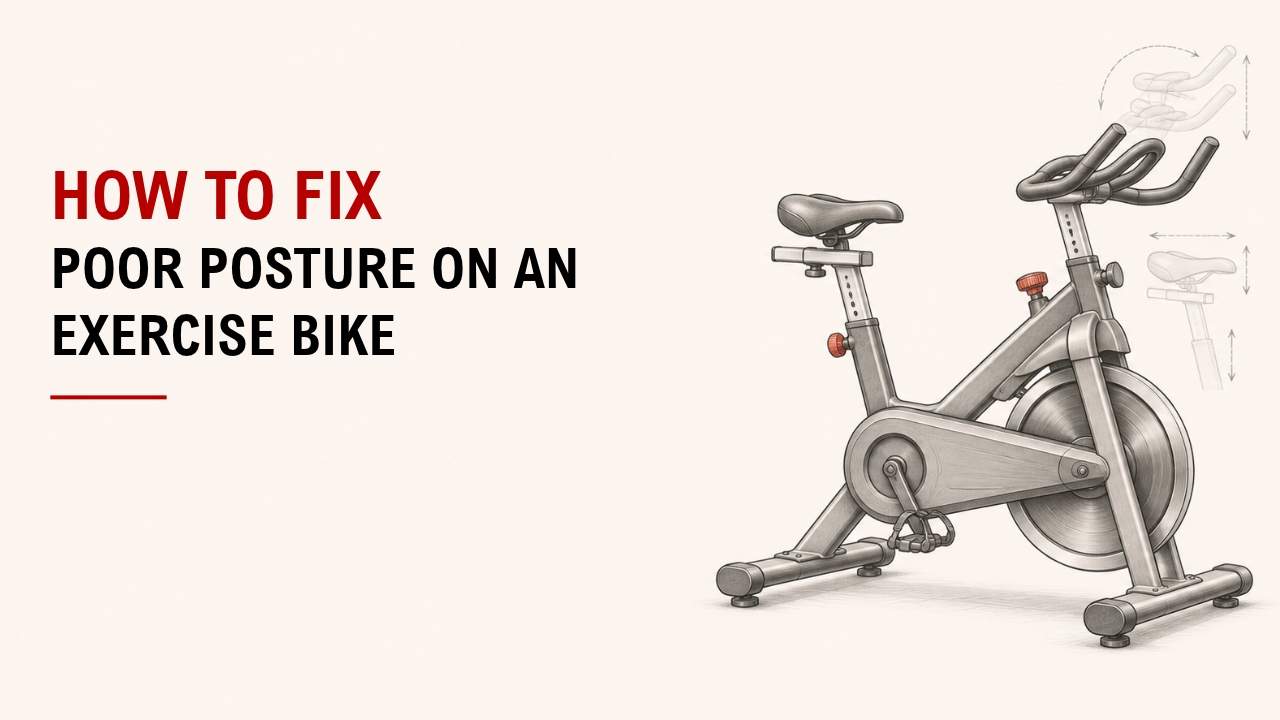

Does your back hurt or your neck feel stiff after riding an exercise bike? Do you often catch yourself hunching over the handlebars?
You can fix poor cycling posture by adjusting your seat, raising your handlebars, and keeping your body properly aligned. A few small changes can make your rides more comfortable.
As an Exercise Physiology and Biomechanics Expert at YR Fitness, I’ve seen how incorrect bike setups affect riding comfort. I often notice that riders blame their posture when their bike simply needs adjusting.
In this guide, I’ll show you six simple ways to correct your posture on an exercise bike. Follow these steps to ride more comfortably and avoid common mistakes.
1. Adjust Your Seat Height
Your seat height affects your knees, hips, and lower back. If it’s too high or too low, maintaining good posture becomes harder.
Here’s how to fix it:
- Sit on the bike and place your heel on the pedal.
- Move the pedal to its lowest position.
- Your leg should be nearly straight without locking your knee.
- Place the ball of your foot on the pedal and check for a slight knee bend.
- Keep your hips level while pedaling.
How do you know if your seat is wrong?
If your hips rock from side to side, your seat may be too high. If your knees bend too much, it may be too low.
The Hospital for Special Surgery’s exercise bike setup guide also recommends checking your knee bend and adjusting the seat to match your body.
I recommend checking your seat height before every ride, especially if you share a bike at the gym.
2. Set the Right Handlebar Height
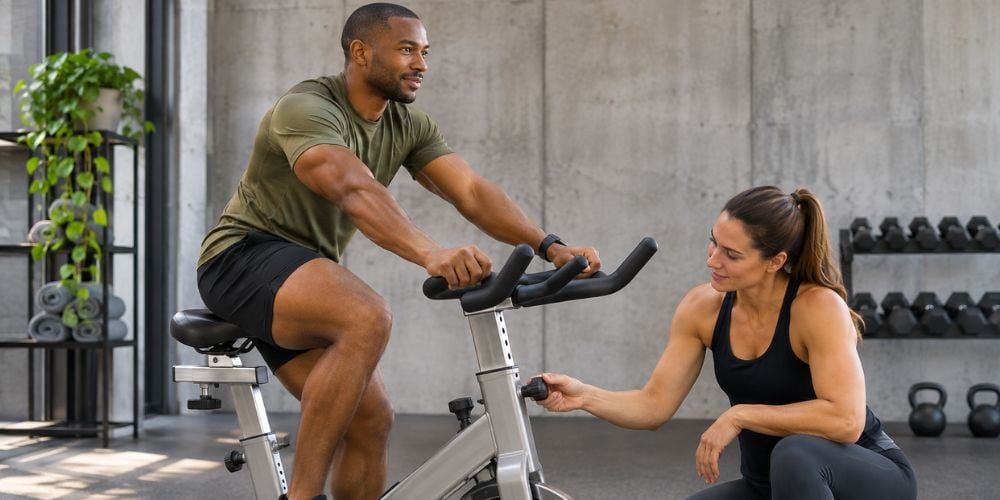
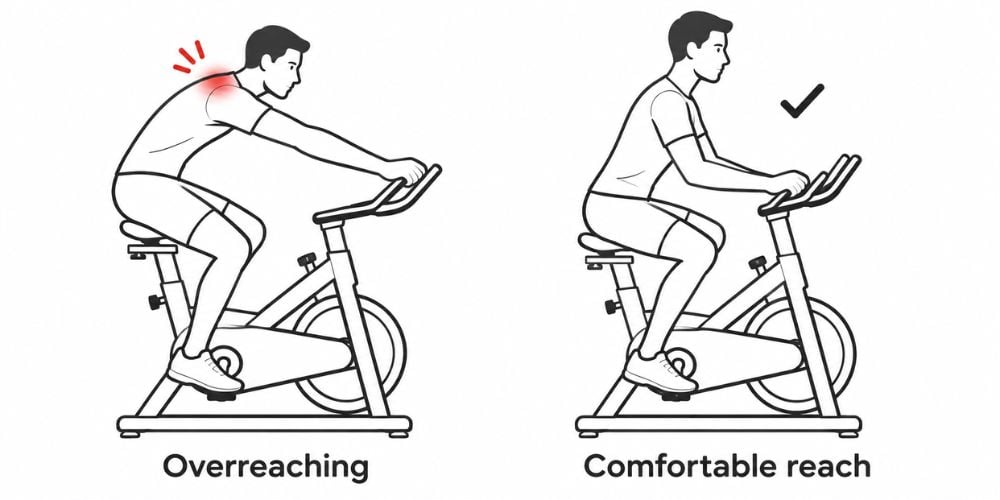
Handlebars that are too low can make you lean forward too much. This often leads to rounded shoulders, neck tension, and back discomfort.
Here’s how to fix it:
- Raise the handlebars if you’re hunching forward.
- Keep your elbows slightly bent.
- Place your hands where they can reach comfortably.
- Avoid stretching your arms too far forward.
- Relax your shoulders while holding the handlebars.
For beginners, handlebars around seat height or slightly higher often feel more comfortable on spin bikes.
However, not every exercise bike has the same adjustments. You can learn more about the different types of exercise bikes and compare stationary bike designs to understand how riding positions vary.
Quick Bike Setup Guide
What to Check | Correct Position |
Seat height | Slight knee bend at the bottom of the pedal stroke |
Handlebar height | Comfortable reach without excessive forward bending |
Elbows | Slightly bent, not locked |
Shoulders | Relaxed and away from your ears |
Hips | Stable without rocking side to side |
Quick tip: If you feel like you’re reaching too far forward, adjust the handlebars first. If your bike allows it, you can also check the seat’s forward or backward position.
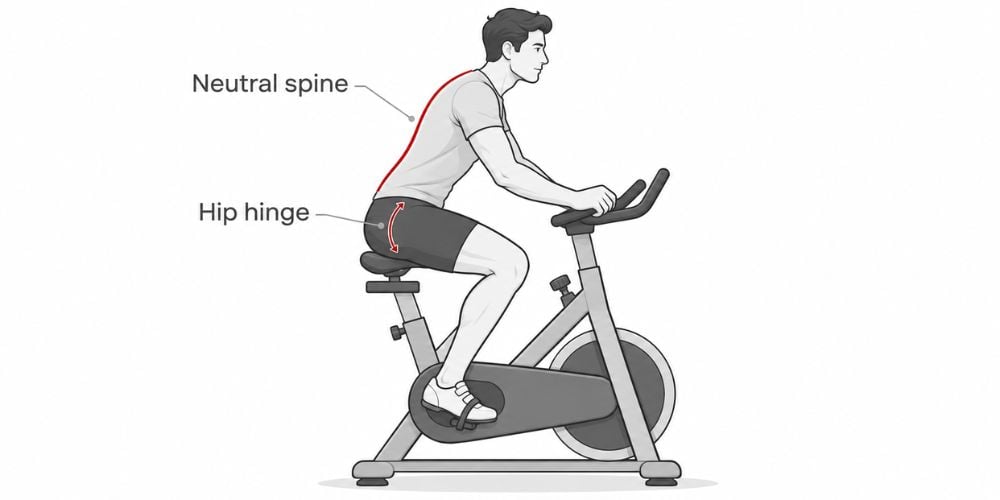
3. Keep Your Back in a Neutral Position
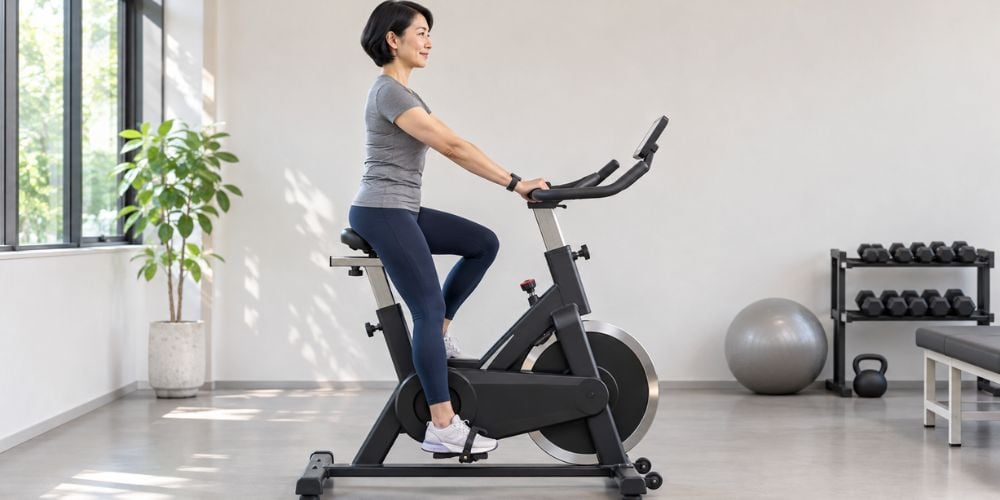
A rounded back is a common mistake during indoor cycling. It can make your lower back uncomfortable, especially during longer rides.
Here’s how to fix it:
- Sit comfortably on the saddle.
- Keep your spine in its natural position.
- Lean forward slightly from your hips.
- Avoid rounding your upper back or over-arching your lower back.
- Gently engage your core muscles for support.
Should your back be completely straight?
Not necessarily. A slight forward lean is normal, especially when using a spin bike.
What matters is keeping your back in a comfortable, neutral position without forcing it.
If your back keeps rounding, check your handlebar height and seat position again.
If you’ve adjusted everything but still feel uncomfortable, the bike itself may not fit your body well.
At YR Fitness, we design commercial cardio equipment for regular gym use, with a focus on comfort and reliable performance. We recommend comparing seat positions, reach, and available adjustments before choosing a bike.
Explore our exercise bike collection to compare different models and find a setup that works for you.
4. Relax Your Shoulders and Neck
Do your shoulders feel tight after cycling? You may be gripping the handlebars too hard or putting too much weight on your arms.
Here’s how to fix it:
- Keep your shoulders down and relaxed.
- Hold your head in a natural position.
- Look forward without raising your chin too high.
- Grip the handlebars gently.
- Keep your wrists straight and elbows slightly bent.
Avoid constantly looking down at the bike’s display. Keeping your neck in one position for too long can cause discomfort.
According to Cleveland Clinic’s cycling posture guidance, keeping your elbows slightly bent and avoiding excessive pressure on your arms can help you maintain a more comfortable riding position.
I often remind riders to check their shoulders every few minutes. If they’re moving toward your ears, loosen your grip and relax your arms.
Remember: Your hands should help you maintain balance, not carry most of your upper-body weight.
5. Position Your Knees and Feet Correctly
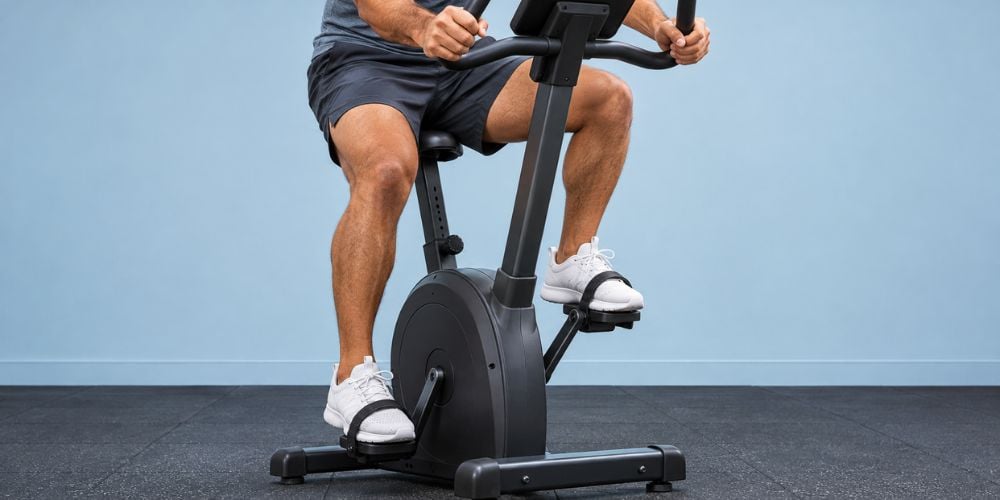
Your knees and feet should move naturally while pedaling. Poor alignment can cause discomfort and make it harder to maintain a stable riding position.
Here’s how to fix it:
- Place the balls of your feet over the pedal axles.
- Keep your knees moving roughly in line with your feet.
- Avoid letting your knees collapse inward.
- Keep your feet stable throughout each pedal stroke.
- Adjust your seat forward or backward if needed.
Your knees should follow a comfortable path without twisting or excessive side-to-side movement.
What about your ankles?
Avoid pointing your toes too far downward. Keep your ankles relaxed and let your feet move naturally as you pedal.
A bike that fits your body can make these adjustments easier. For example, you can look at an upright exercise bike model to understand how its seat, pedals, and riding position are arranged.
Before starting your workout, pedal slowly and check whether your knees and feet feel comfortable.
6. Avoid These Common Posture Mistakes
Even with the right bike setup, it’s easy to develop poor habits during a workout.
Here are the most common mistakes and how to fix them:
Common Mistake | How to Fix It |
Rounded back | Keep your spine neutral and adjust your handlebars |
Raised shoulders | Relax your shoulders and loosen your grip |
Locked elbows | Keep a slight bend in your arms |
Rocking hips | Lower your seat slightly and recheck the fit |
Knees moving inward | Keep your knees aligned with your feet |
Leaning too far forward | Raise your handlebars or adjust your reach |
Quick Posture Check Before Riding
Before starting your workout, take a few seconds to check these five things:
- Seat: Make sure the height feels comfortable.
- Handlebars: Check that you can reach them without stretching.
- Back: Keep your spine neutral and shoulders relaxed.
- Knees and feet: Pedal slowly to check your alignment.
- Resistance: Start light and increase gradually without losing good posture.
What if your posture gets worse during the workout?
Reduce the resistance and check your position again. If you’re tired and struggling to maintain good form, take a short break.
If you experience pain, tingling, or numbness, stop and readjust your position. If symptoms continue, speak with a qualified healthcare professional.
Conclusion
Good posture on an exercise bike starts with the right setup. Adjust your seat and handlebars, keep your back neutral, relax your shoulders, and maintain proper knee alignment.
These small changes can help you ride more comfortably and focus on your workout.
If your current bike still feels uncomfortable, consider a different riding style. YR Fitness offers commercial cardio equipment, including recumbent bikes with supported seating, which may be more comfortable for riders who prefer a backrest.
Related articles: