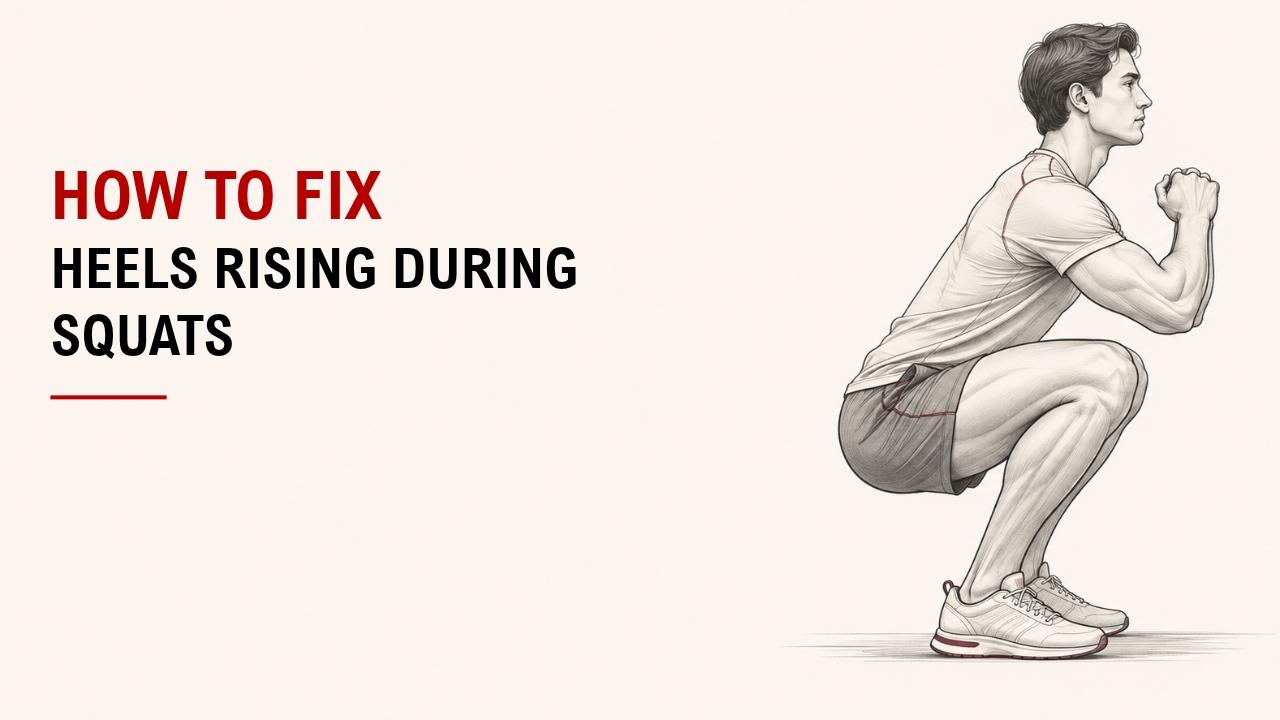

Do your heels lift when you squat? This can affect your balance and control.
To keep your heels down, improve ankle mobility, adjust your stance, balance your weight, and control your squat depth. Small changes can make your squats more stable.
As an Exercise Physiology & Biomechanics Expert at YR Fitness, I specialize in proper body positioning and squat mechanics. I’ve seen how simple form corrections help people squat more safely and comfortably.
Here are seven easy ways to stop your heels from lifting. Try each fix to see what works best for you.
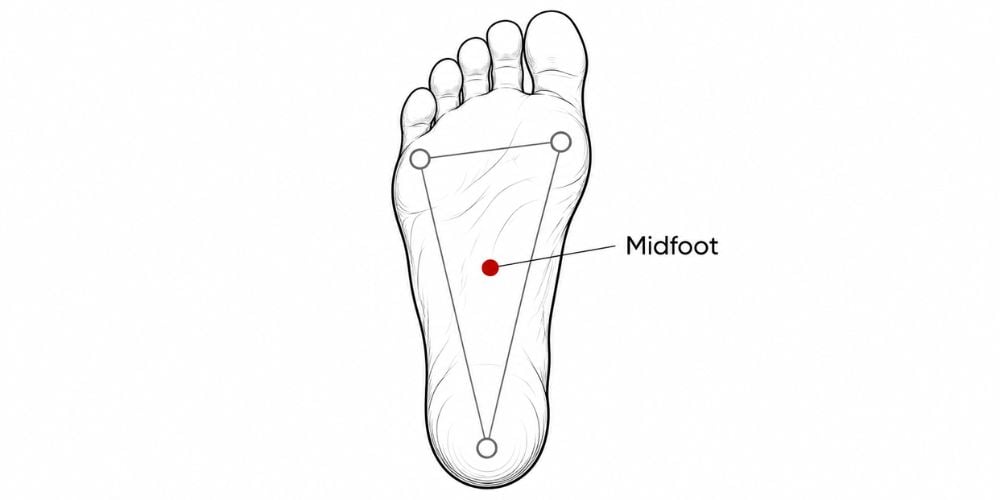
1. Keep Your Weight Over Your Midfoot
Are you putting too much weight on your toes? This can make your heels lift and cause you to lose balance.
Here’s how to fix it:
- Keep your entire foot flat on the floor.
- Balance your weight over your midfoot.
- Maintain contact through your heel, big toe, and little toe.
- Push through your whole foot when standing up.
Quick Tip: Try bodyweight squats barefoot on a safe, firm surface to feel how your weight shifts. Avoid gripping the floor with your toes.
I often recommend practicing slow bodyweight squats before adding resistance. This helps you notice when your weight moves too far forward.

2. Adjust Your Foot Position
Your foot position affects how comfortably you can squat. If your stance feels awkward, your heels may lift as you lower your body.
Try these adjustments:
- Stand with your feet about shoulder-width apart.
- Turn your toes slightly outward.
- Widen your stance a little if needed.
- Keep your knees moving in the same direction as your toes.
- Practice a few slow squats to test your position.
Quick Tip: Don’t force your toes to point straight ahead if that feels uncomfortable. Find a stance that lets you squat naturally while keeping your feet flat.
The National Academy of Sports Medicine (NASM) explains how ankle mobility and joint positioning affect squat mechanics.
3. Improve Your Ankle Mobility
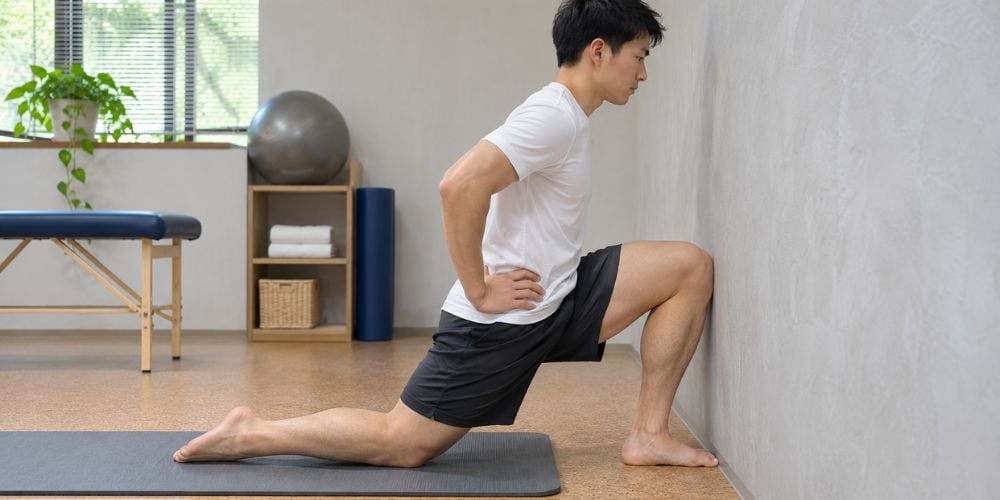
Stiff ankles are one of the common reasons your heels rise during squats. Your ankles need enough movement to let your knees travel forward while your feet stay planted.
Try these simple exercises:
Exercise | How to Do It | Suggested Amount |
Knee-to-wall drill | Move your knee toward a wall without lifting your heel | 10 reps per side |
Calf stretch | Keep your heel down while leaning toward a wall | 20–30 seconds |
Bent-knee calf stretch | Bend your back knee slightly while keeping your heel down | 20–30 seconds |
These are suggested starting amounts. Move gently and avoid forcing painful positions.
Quick tip: Practice these drills before squatting, especially when your ankles feel stiff.
In my experience, ankle mobility is one of the first things worth checking when someone’s heels lift during deep squats. However, balance and foot position can also contribute.
Want to check your ankle mobility? Try the knee-to-wall test explained by MedStar Sport Physio to see whether limited ankle movement might be affecting your squat.
4. Reduce Your Squat Depth
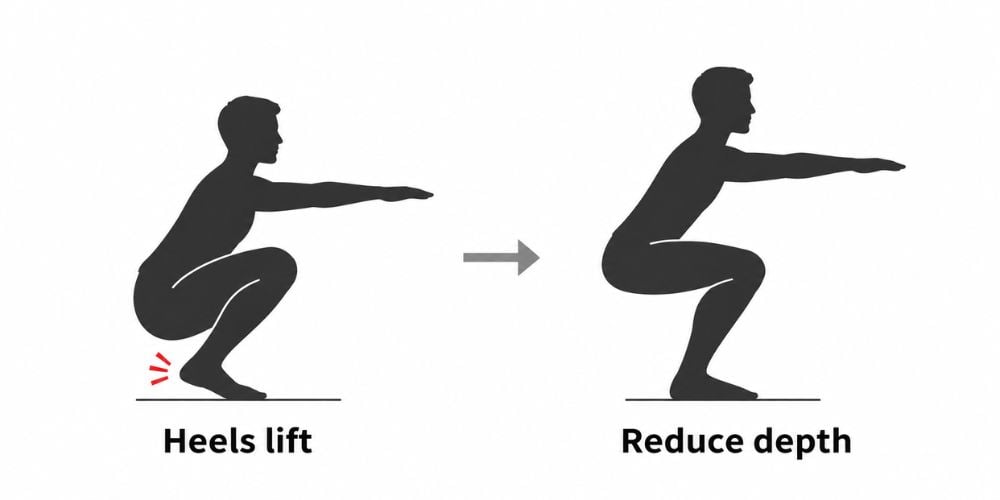
Do your heels lift only when you squat very low? You may be going deeper than your current mobility allows.
Here’s what to do:
- Lower your body slowly.
- Stop before your heels begin lifting.
- Keep your feet flat at that depth.
- Stand up with control.
- Gradually squat deeper as your mobility improves.
Remember: You don’t need to force a deep squat. A controlled squat at a comfortable depth is better than losing your balance.
If you prefer machine workouts, choose equipment that allows a comfortable range of motion and stable body positioning.
At YR Fitness, we design commercial lower-body strength machines with carefully developed movement angles and durable construction. Explore our strength equipment to find options that support comfortable, controlled leg training.
5. Control Your Squat Movement
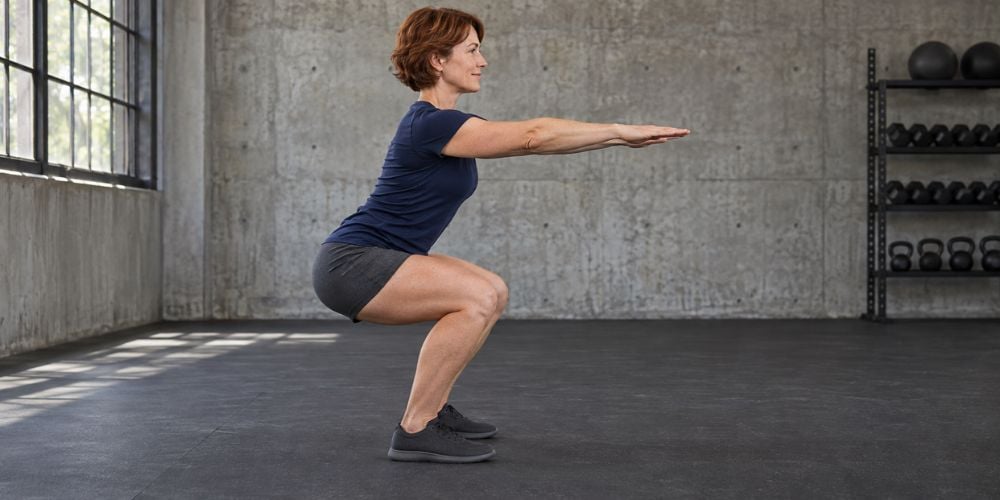
Squatting too quickly can make you lose balance and shift your weight forward. Slowing down helps you control your foot position.
Follow these steps:
- Stand with both feet firmly planted.
- Gently brace your core.
- Lower yourself for about 2–3 seconds.
- Keep your heels on the floor.
- Stand up smoothly without bouncing.
Quick Tip: Record your squat from the side. Check whether your heels lift while lowering or standing up.
I like using slow repetitions when correcting squat form. They make it easier to spot problems before adding speed or weight.
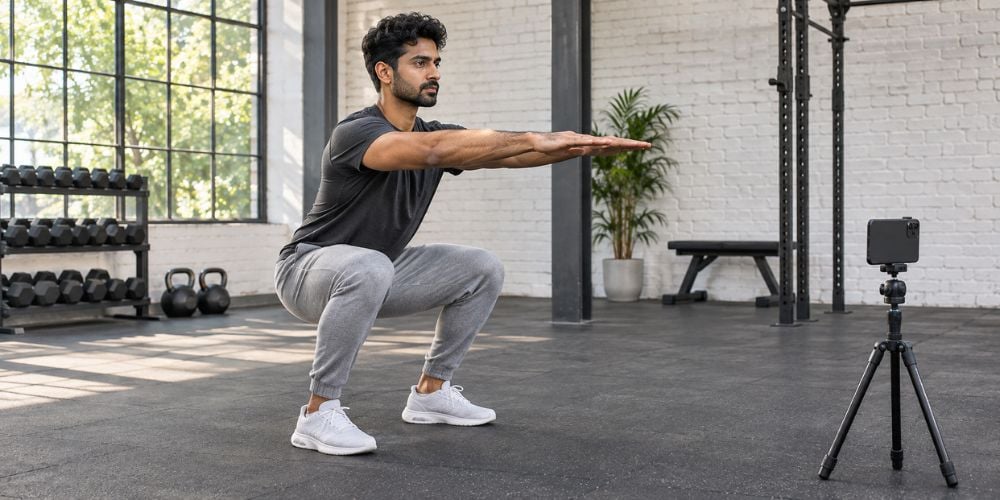
6. Reduce the Weight
Are your heels lifting when you squat with heavy weights? The resistance may be making it harder to maintain proper control.
Try this approach:
- Start with bodyweight squats.
- Practice keeping your feet flat.
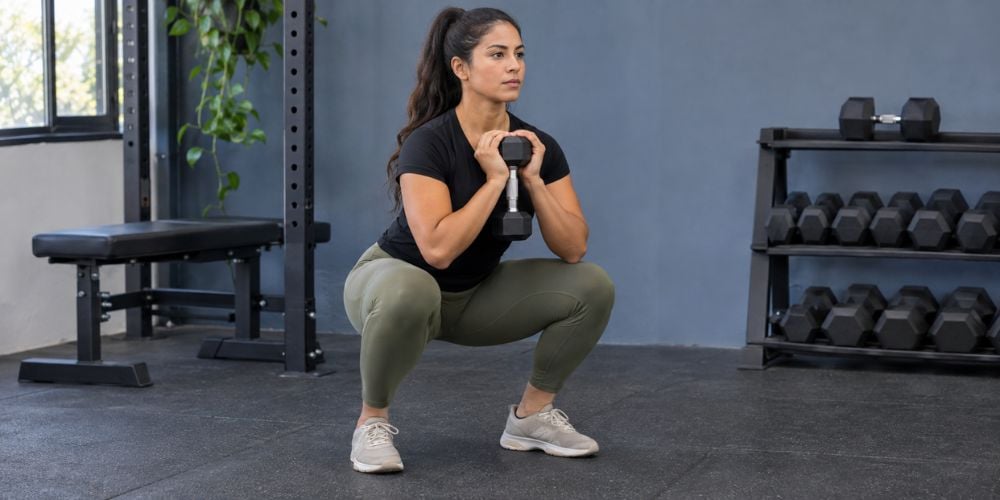
- Add a light dumbbell or kettlebell when ready.
- Increase the weight gradually.
- Reduce resistance if your heels start lifting again.
When should you add more weight?
You should be able to complete your repetitions with steady balance, comfortable depth, and consistent foot contact.
For additional guidance, NASM’s goblet squat exercise guide explains how to maintain body position and control when squatting with a weight.
7. Practice Supported Squats
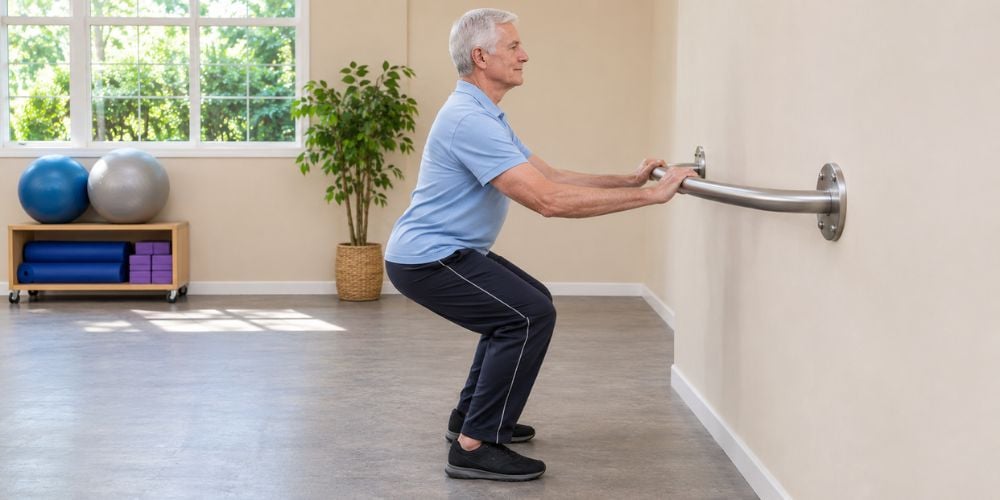
If keeping your balance feels difficult, supported squats can help. Holding a stable object allows you to focus on foot placement and movement.
Here’s how to do them:
- Stand in front of a sturdy, fixed support.
- Hold it lightly with both hands.
- Place your feet about shoulder-width apart.
- Slowly lower into a comfortable squat.
- Keep your heels planted.
- Push through your feet to stand up.
Start with 2 sets of 8–10 controlled repetitions.
As your balance improves, use less support. The goal is to squat comfortably without relying on your hands.
Which Fix Should You Try First?
Not sure why your heels keep lifting? Use this quick guide to find a starting point.
What You Notice | What to Try First |
Weight shifts toward your toes | Keep weight over your midfoot |
Squat stance feels uncomfortable | Adjust your foot position |
Ankles feel stiff | Practice ankle mobility drills |
Heels lift at the bottom | Reduce squat depth |
Heels lift when squatting quickly | Slow down your movement |
Heels lift with heavy weights | Reduce resistance |
You struggle with balance | Practice supported squats |
What if your heels still lift?
Try combining ankle mobility drills with slower bodyweight squats. Sometimes, improving one part of your movement isn’t enough.
If the problem continues, consider asking a qualified fitness professional to check your squat technique. If squatting causes pain, seek an assessment from a healthcare professional.
Conclusion
To stop your heels rising during squats, improve ankle mobility, adjust your stance, control your depth, and keep your weight balanced. Start with bodyweight squats and gradually add resistance as your control improves.
Want more comfortable lower-body workouts? Explore YR Fitness commercial strength equipment to find reliable machines that support controlled leg training.
Related articles: