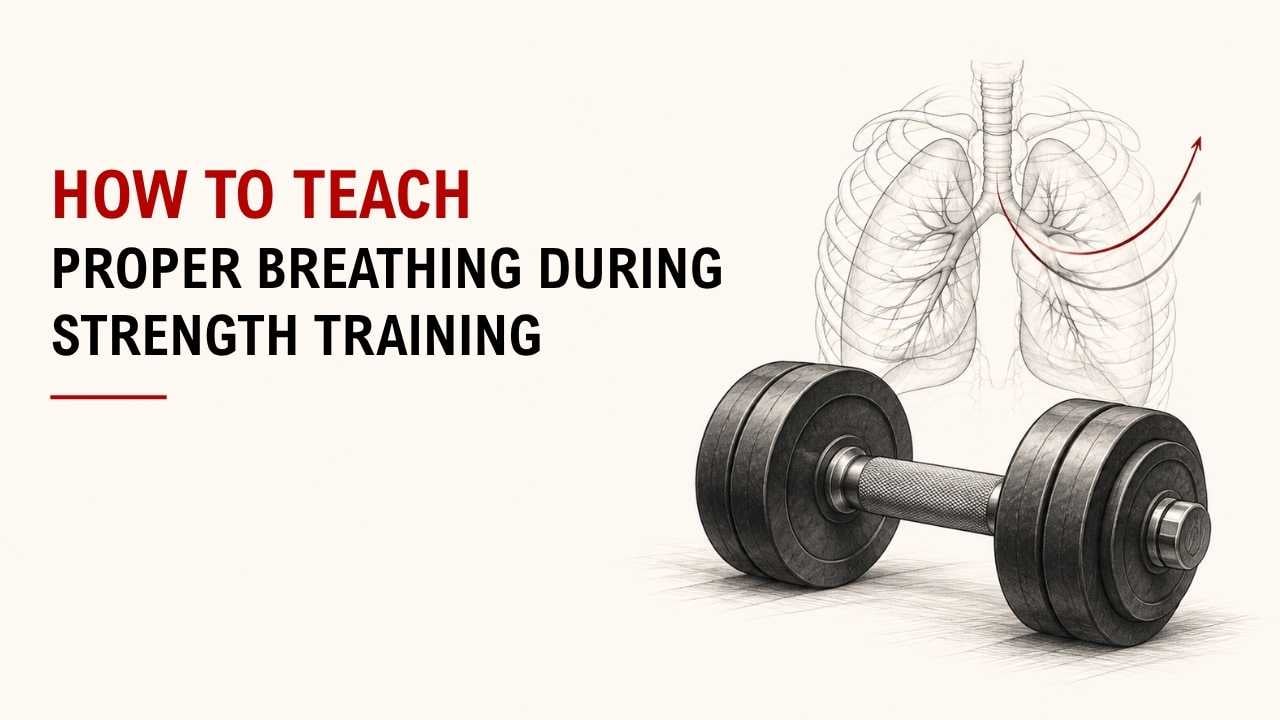

Not sure when to breathe while lifting weights? Poor breathing can make your movements harder to control.
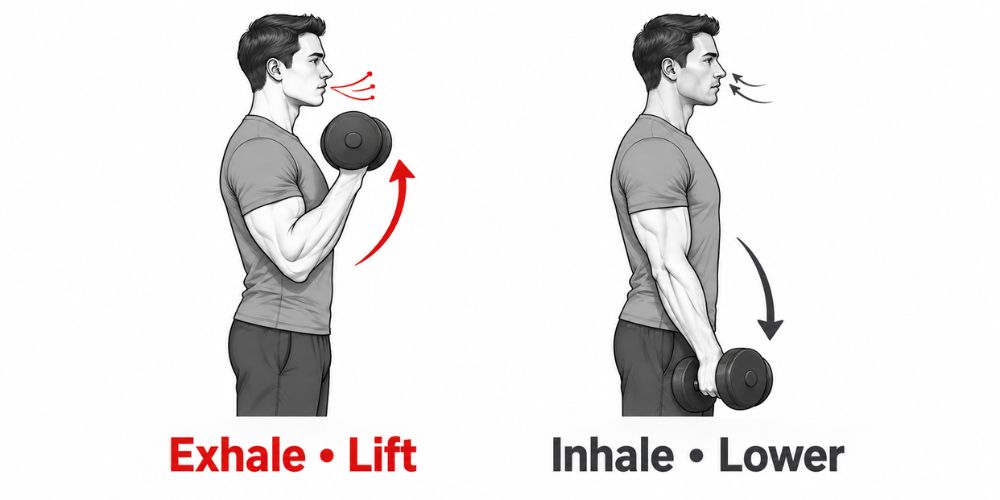
Breathe out during the lifting effort and breathe in during the return. This simple pattern helps you maintain control during strength training.
As an Exercise Physiology & Biomechanics Expert at YR Fitness, I focus on safe exercise techniques and proper body mechanics. I’ve helped beginners understand how simple breathing adjustments can improve their comfort and control during workouts.
Below are five simple ways to teach proper breathing during strength training. Follow these steps to build better breathing habits.
1. Teach When to Inhale and Exhale
Start with one basic rule: exhale during effort and inhale during the return.
You don’t need complicated breathing techniques for everyday strength exercises.
Here’s how to teach it:
- Inhale: Breathe in when lowering the weight or returning to the starting position.
- Exhale: Breathe out when lifting, pushing, or pulling the weight.
- Keep breathing: Avoid holding your breath unnecessarily.
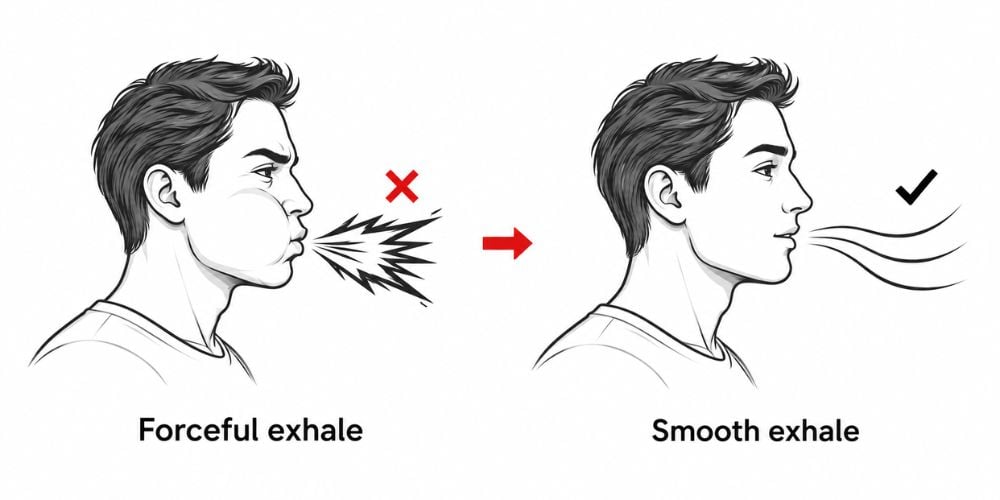
- Stay relaxed: Breathe smoothly without forcing air in or out.
For example, during a biceps curl, exhale as you lift the dumbbell. Inhale as you lower it.
What should you tell a beginner?
Simply say, “Breathe out when you lift, breathe in when you lower.”
According to Mayo Clinic’s weight training guidelines, breathing out while lifting and breathing in while lowering helps maintain proper breathing during strength exercises.
This pattern works for most basic exercises. Heavy lifting may require different breathing and bracing techniques.
2. Demonstrate Breathing Before Adding Weights
Beginners often understand breathing better when they can see the movement.
Start without weights so they can focus on one thing at a time.
Follow these five steps:
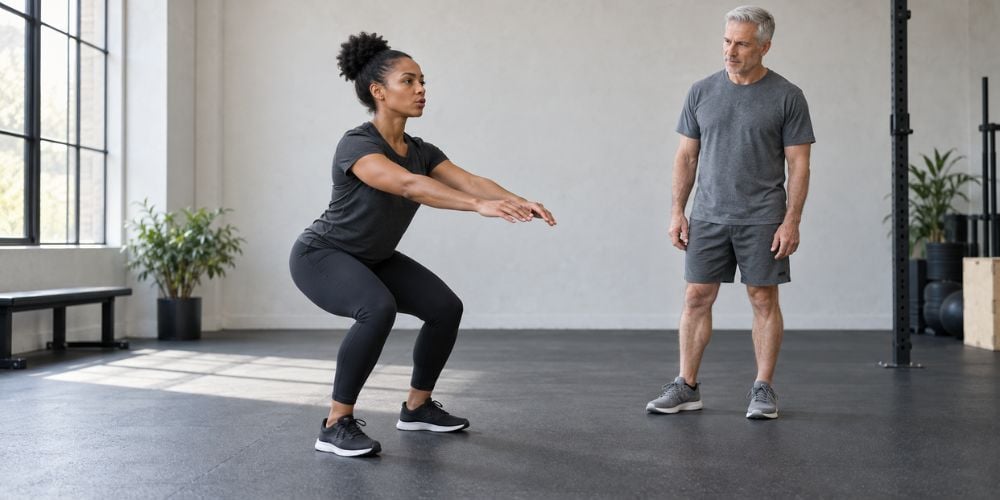
- Choose a simple exercise, such as a bodyweight squat or biceps curl.
- Demonstrate movement slowly.
- Show exactly when to inhale and exhale.
- Ask the learner to copy your breathing pattern.
- Repeat a few times before adding light resistance.
For example, during a bodyweight squat, inhale before lowering your body. Exhale as you stand while keeping your core stable.
Why start without weights?
It removes the distraction of heavy resistance and makes breathing easier to practice.
In my experience, beginners develop better control when they learn the breathing pattern before increasing the weight.
The NHS breathing guidance also explains a useful technique called blow as you go. It means breathing in before an effort and breathing out while making that effort.
3. Match Breathing With Each Repetition
Once you understand when to inhale and exhale, practice matching your breathing with every repetition.
Start with light weights and controlled movements.
Here’s what to do:
- Begin with a stable body position.
- Exhale smoothly during the lifting effort.
- Inhale during the controlled return.
- Repeat the pattern with each repetition.
- Rest if breathing becomes difficult to control.
What if you keep forgetting to breathe?
Try five slow repetitions while saying “breathe out” and “breathe in” during each movement. Once the rhythm feels comfortable, gradually increase your repetitions or resistance.
I often recommend slowing down instead of adding more instructions. Moving at a controlled pace gives you more time to focus on breathing.
Smooth, adjustable strength machines can also help you concentrate on technique without unnecessary movement.
At YR Fitness, we design commercial strength equipment with stable frames, adjustable features, and controlled movement paths. Our machines are built to support smooth repetitions, making it easier for users to focus on breathing and proper exercise form.
Explore our strength equipment to find machines that support comfortable, controlled training.

4. Use Simple Breathing Cues for Common Exercises
You don’t need different breathing rules for every machine.
For most everyday strength exercises, remember to exhale during effort and inhale during the return.
Use this table as a quick guide.
Exercise | When to inhale | When to exhale |
Chest Press | Lowering the handles | Pushing forward |
Leg Press | Bending the knees | Pressing the platform away |
Lat Pulldown | Returning the bar upward | Pulling the bar down |
Biceps Curl | Lowering the weight | Curling upward |
Shoulder Press | Lowering the handles | Pressing upward |
Squat | Before and during the descent | During the upward effort |
How can you remember these patterns?
Use short reminders that match the movement:
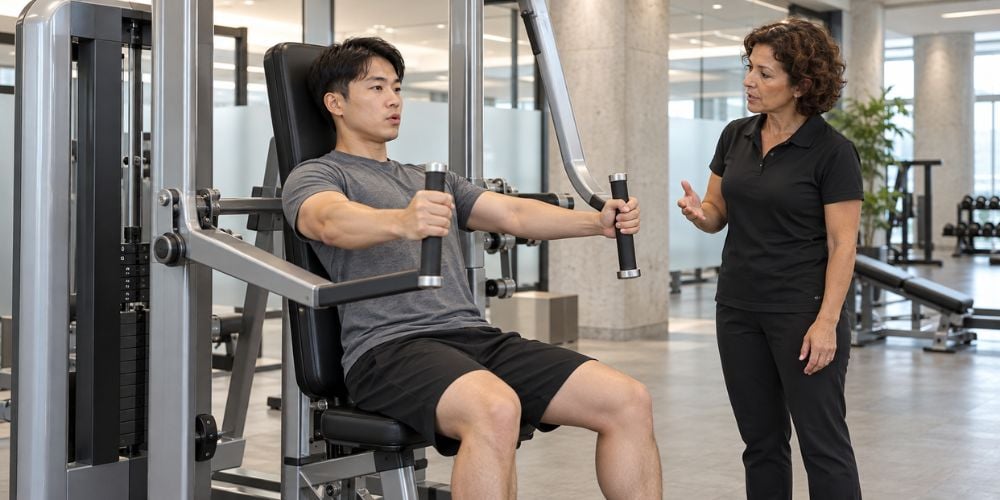
- Chest Press: “Push and breathe out.”
- Lat Pulldown: “Pull down and breathe out.”
- Biceps Curl: “Curl up and breathe out.”
- Squat: “Breathe in before going down, breathe out as you stand.”
These simple cues help connect breathing with movement.
Need to see how each exercise works? The Mayo Clinic strength training video collection shows proper techniques for bodyweight exercises, free weights, and weight machines.
Watching the movements can make it easier to understand when to breathe during each repetition.
5. Correct Common Breathing Mistakes
Even when you know the correct pattern, breathing mistakes can still happen.
The goal is to recognize them and make small corrections without interrupting your workout.
Common Breathing Mistakes and How to Fix Them
Breathing mistake | How to fix it |
Holding your breath unnecessarily | Exhale during the lifting effort |
Breathing too quickly | Slow down each repetition |
Forgetting when to inhale | Practice without weights |
Exhaling too forcefully | Breathe out smoothly |
Losing your breathing rhythm | Reduce the weight and try again |
Breathing becomes difficult | Stop and rest before continuing |
Should you correct every mistake immediately?
Not necessarily. Focus on one breathing correction at a time.
I’ve seen beginners improve when they use lighter weights and simple reminders instead of trying to fix several things at once.
What About Holding Your Breath During Heavy Lifting?
Experienced lifters sometimes use brief breath-holding with abdominal bracing to support trunk stability during heavy lifts.
However, this technique requires proper instruction and may not be suitable for people with certain health conditions, especially those involving blood pressure or cardiovascular health.
For everyday strength training, focus on steady breathing and avoid unnecessary breath-holding. If you experience dizziness, chest pain, or unusual shortness of breath, stop exercising and seek appropriate medical advice.
Conclusion
Proper breathing during strength training starts with one simple habit: exhale during effort and inhale during the return. Practice with light weights, follow short breathing cues, and build a steady rhythm.
Good breathing works best with controlled movements and proper exercise technique.
Explore YR Fitness strength equipment to find stable, adjustable machines that support comfortable everyday workouts.
Related articles: