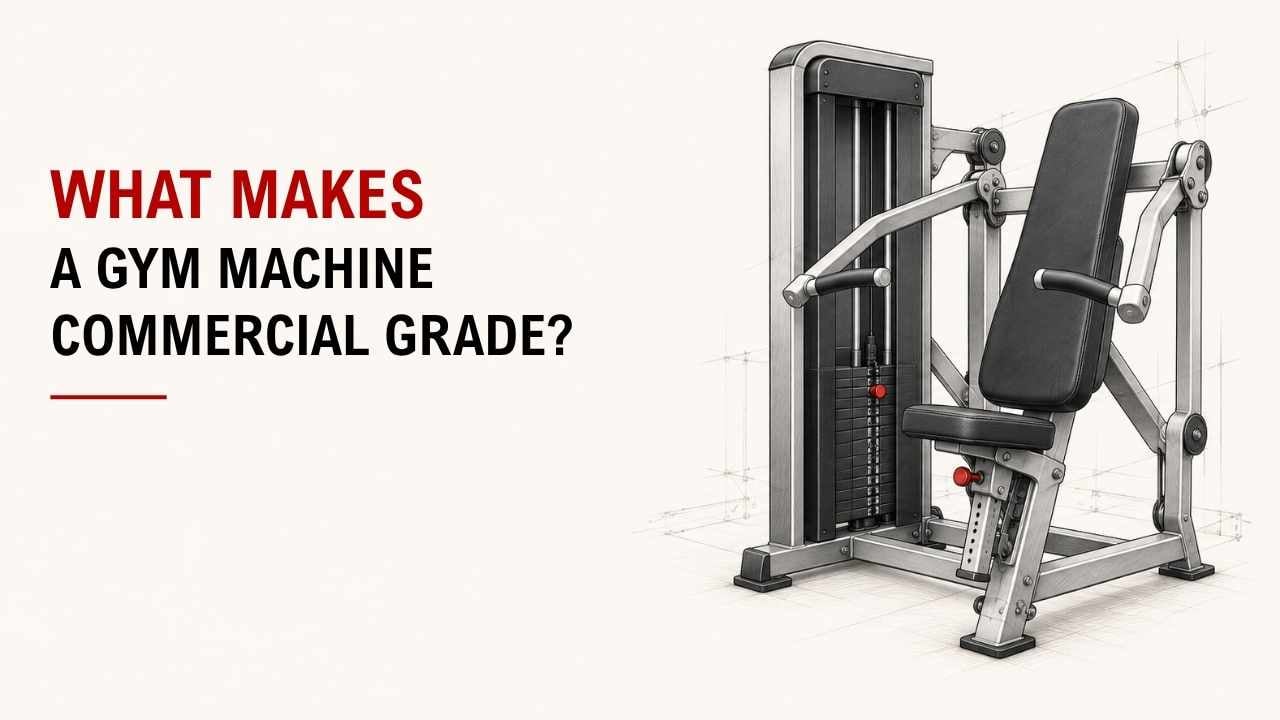

Have you ever used one gym machine that felt solid and smooth, while another shook or felt cheap? That difference often comes down to what is underneath the padding and covers.
The short answer is: commercial-grade machines use stronger frames, durable moving parts, higher load capacity, and components made for repeated daily use. They should stay stable, smooth, and reliable even after heavy training.
As a Machinery & Structural Engineer at YR Fitness, I pay close attention to frames, welds, cables, bearings, and other high-stress parts. In my experience, those details tell you much more about machine quality than appearance alone.
Below, I’ll show you six simple signs of a commercial-grade gym machine. Check them one by one, and you can quickly understand what separates serious commercial equipment from lighter-duty machines.
Commercial Grade at a Glance
Want the quick version first? Here are the main differences to look for.
Area | Commercial-Grade Machine | Lighter-Duty Machine |
Frame | Thick, stable steel structure | Usually lighter construction |
Daily use | Built for repeated workouts | Better suited to lower use |
Resistance | Handles higher training loads | Usually lower capacity |
Movement | Smooth under light and heavy loads | May feel less consistent |
Moving parts | Durable cables, bearings, pulleys | Components may wear sooner |
Upholstery | Made for frequent contact and cleaning | Usually designed for lighter use |
These are not just comfort features. International standards such as ISO 20957-1 for stationary training equipment cover general safety requirements, testing, and equipment classifications for home and professional training environments.
1. Heavy-Duty Frame Construction
Start with the frame.
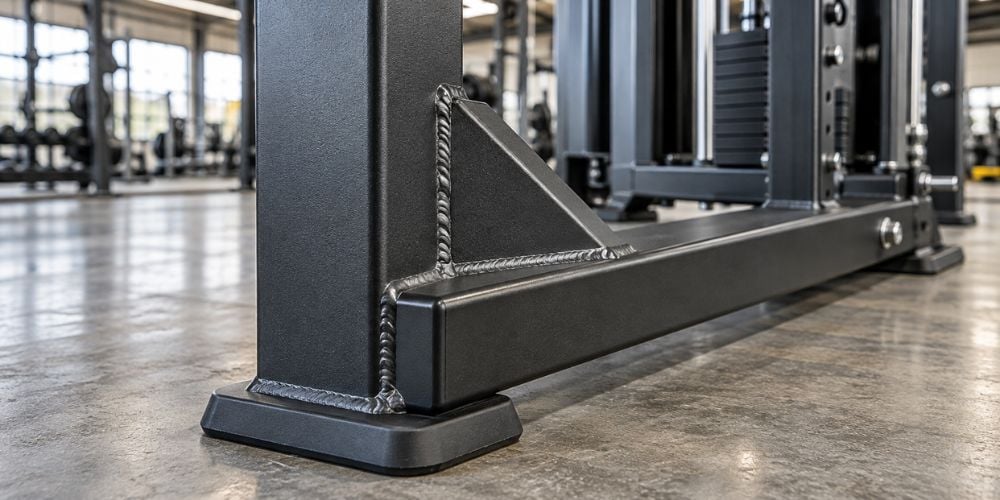
Commercial machines usually use thick steel tubing, strong welds, and reinforced high-stress areas. The structure should handle heavy resistance without excessive bending, twisting, or shaking.
I normally look at three things first:
- Steel construction
- Weld quality
- Frame stability
A strong machine should feel planted when you push or pull hard.
Why does the frame matter?
Every repetition sends force through the structure.
If the frame is too light or poorly joined, you may notice vibration, flexing, or movement. Repeated stress can also speed up wear over time.
Quick question: Does the machine stay stable when the exercise gets heavy?
If yes, that is a good first sign.
2. Built for Frequent Daily Use
Home gym equipment may only be used a few times each week.
Commercial equipment can be used again and again throughout the day. That means the whole machine—not just the frame—needs to handle repeated movement.
Think about the parts people constantly touch or move:
- Adjustment pins
- Cables
- Pulleys
- Bearings
- Bolts
- Handles
- Pads
These parts may go through thousands of movements over their service life.
I often tell people to ask one simple question: Will this machine still feel good after years of regular use?
That is where commercial-grade construction starts to show.
3. Higher Weight and User Capacity
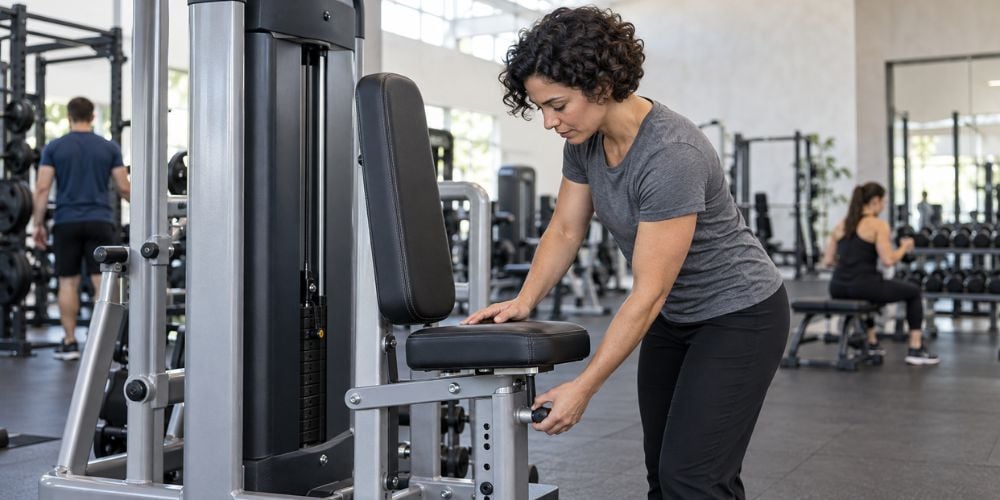
Commercial machines need to work for many different people.
That may include beginners using light resistance, stronger lifters using heavy loads, taller or shorter users, and people with different body weights.
Because of this, several parts need to work together:
Part | What to Look For | Why It Matters |
Frame | Solid under heavy resistance | Supports the full structure |
Seat and pads | Firm and securely mounted | Keeps your position stable |
Moving arms | Little unwanted side movement | Helps maintain controlled motion |
Adjustments | Lock firmly in place | Fits different body sizes |
Weight system | Stable as load increases | Supports heavier training |
A selectorized machine may use a larger weight stack, while a plate-loaded machine needs strong loading arms and supports.
ASTM’s F2216 specification for selectorized strength equipment includes design and stability requirements for this type of equipment, including stability under loaded conditions.
Simple test: Does the machine still feel controlled when the weight gets heavy?
If it starts shaking, shifting, or flexing too much, pay attention.
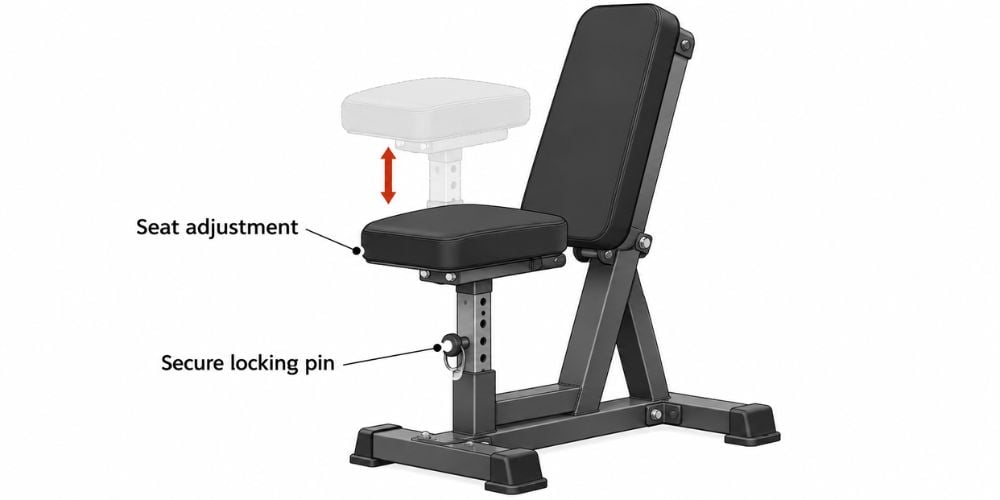
4. Smooth and Consistent Movement
A heavy machine is not automatically a good machine.
Movement quality matters just as much.
Good commercial machines usually combine:
- Properly aligned joints
- Quality bearings
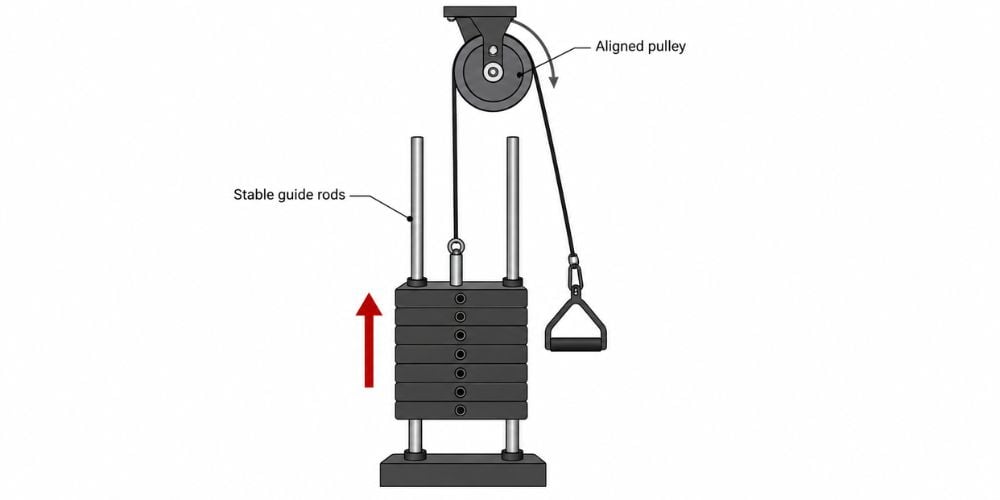
- Smooth pulleys
- Correct cable routing
- Stable guide rods
- Well-designed movement paths
These parts help keep resistance smooth from the beginning of a repetition to the end.
As an engineer, I often see how a small alignment problem can make an otherwise strong machine feel rough. A thick frame does not help much if the moving parts stick, scrape, or pull unevenly.
Try the machine with both light and heavier resistance.
The movement should stay controlled without obvious grinding, sticking, or sudden changes in resistance.
For strength machines specifically, ISO 20957-2 adds safety requirements and test methods for equipment using weight stacks, externally loaded weights, hydraulic systems, magnetic resistance, and several other resistance systems.
Want to see what these details look like on real commercial equipment? At YR Fitness, we design our commercial machines around repeated daily training, structural stability, and controlled movement, so you can compare the frame, resistance system, and construction details for yourself.
5. Strong Cables, Bearings, and Moving Parts
Some of the most important parts are also the easiest to overlook.
Take a cable machine.
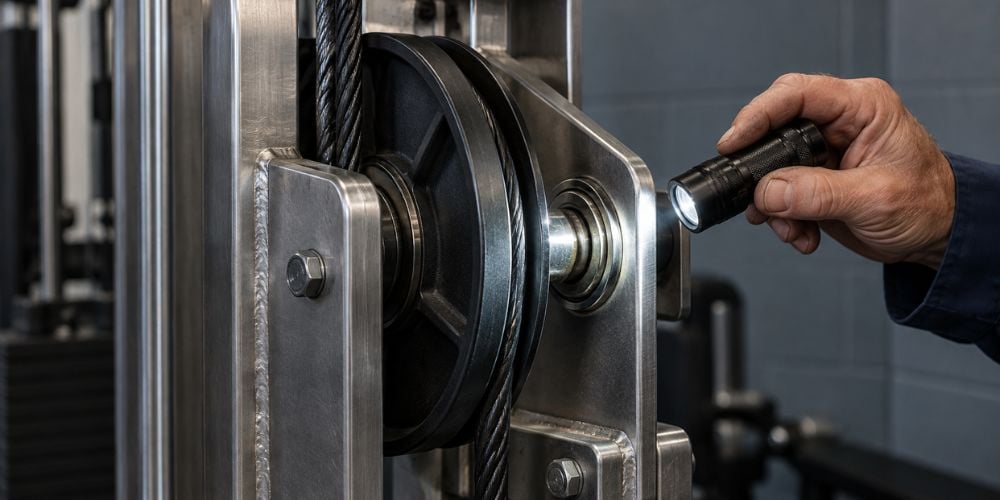
The cables, pulleys, bearings, bushings, and adjustment points move every time you perform a repetition. These smaller components often reveal how seriously the machine was built.
Look closely at:
- Cable thickness and condition
- Pulley construction
- Bearing movement
- Adjustment pins
- Bushings
- Guide rods
- Bolts and pivot points
Good components should move smoothly and stay firmly in place.
Want a quick quality check?
Move the machine without much resistance first.
Listen for grinding, clicking, scraping, or rattling. Then increase the resistance and check whether the movement stays smooth.
You can often learn a lot about a machine in less than a minute.
6. Durable Upholstery and Contact Points
Commercial quality does not stop at the steel frame.
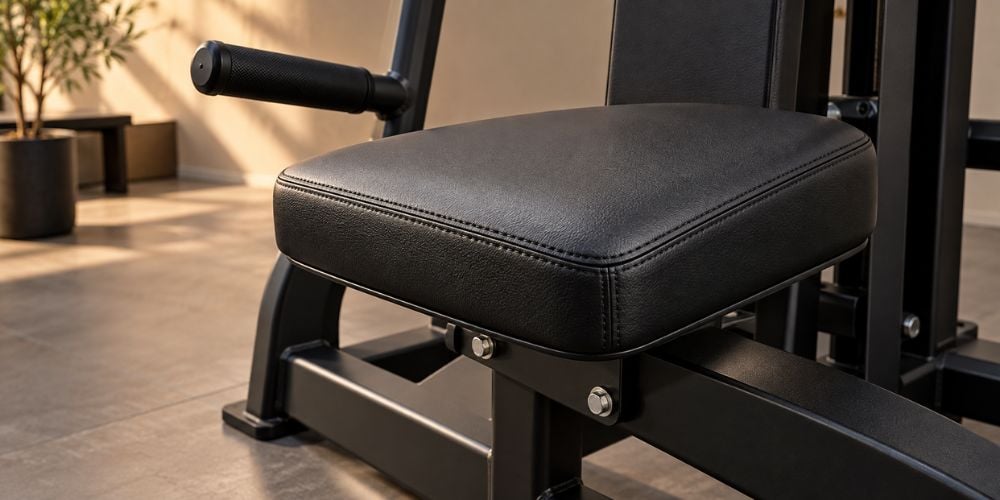
Seats, back pads, handles, grips, and footplates also take frequent wear.
Good upholstery should be:
- Firm enough to support you
- Resistant to tearing
- Easy to clean
- Securely attached
- Comfortable without feeling too soft
Handles should feel solid too.
Loose grips, weak stitching, thin padding, or unstable pads may not stop the machine from working today. But repeated use can make these small problems much more noticeable.
I often see people focus only on frame size or the weight stack. Do not ignore the parts your body actually touches.
They can tell you a lot about overall build quality.
Conclusion
A commercial gym machine should feel strong, stable, smooth, and dependable. Those qualities come from good engineering throughout the machine, not simply from making it bigger or heavier.
When comparing equipment, check the frame, movement system, cables, bearings, resistance capacity, and upholstery together.
To see how those details come together in equipment built for heavy daily training, explore YR Fitness commercial gym equipment and compare the construction for yourself.
Related articles: