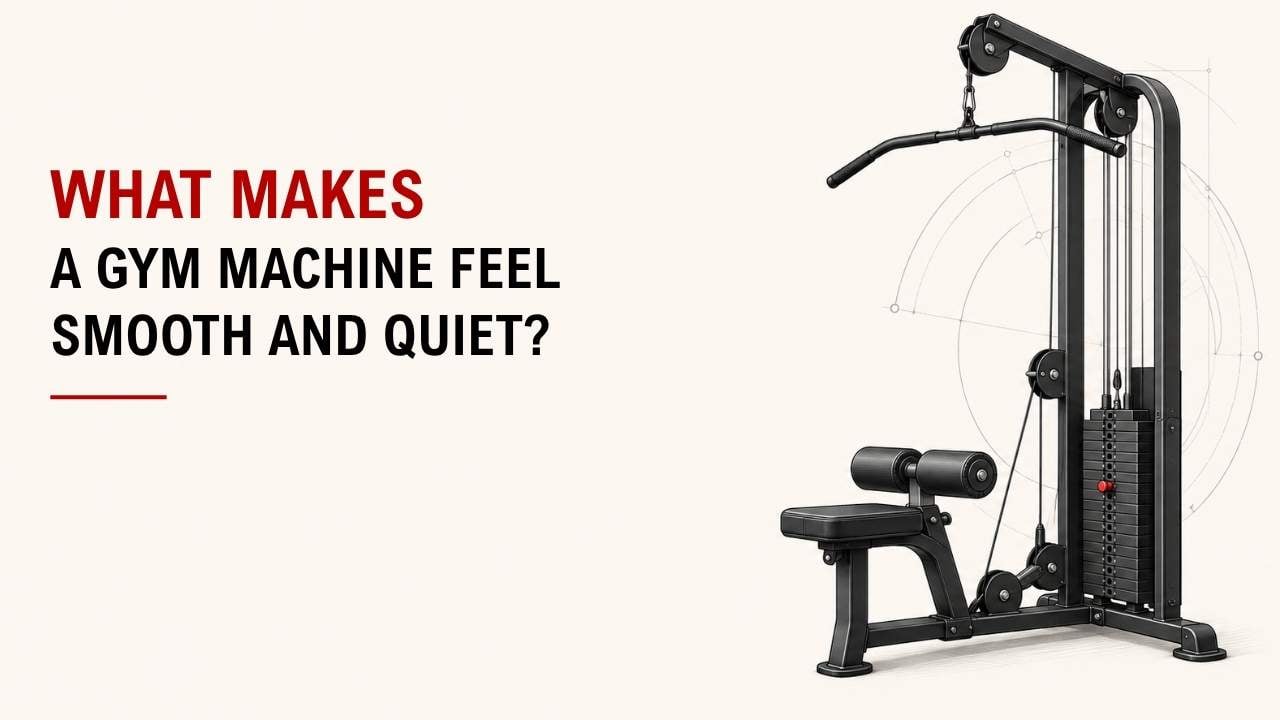

Have you ever used a gym machine that felt smooth and quiet, while another felt rough or noisy? The difference usually comes from how well its moving parts work together.
The short answer is simple: good pulleys, proper cable tension, straight guide rods, a strong frame, and precise alignment create smoother movement. They also help reduce friction, shaking, and unnecessary noise.
As a Machinery & Structural Engineer at YR Fitness, I work closely with these mechanical systems and see how small design details affect machine feel. That experience helps me quickly spot the parts that usually make the biggest difference.
Below, I’ll show you what to check first. You can use these points to judge a machine within just a few repetitions.
1. What Makes a Gym Machine Feel Smooth and Quiet?
A smooth machine does not depend on one special part. Several components need to work together correctly.
Here are the main ones:
Part | What It Does | What You Should Feel |
Pulleys | Guide the cable | Smooth, quiet rotation |
Cables | Transfer resistance | Consistent tension |
Guide rods | Guide the weight stack | Easy up-and-down travel |
Frame | Supports the machine | Stable, solid movement |
Alignment | Keeps parts on the correct path | Consistent resistance |
I can usually feel the difference within the first few repetitions. A good machine should move consistently without sudden catching, shaking, or excessive noise.
Quick question: Does quiet always mean good quality?
Not necessarily. But grinding, scraping, repeated clicking, or obvious rattling are signs worth paying attention to.
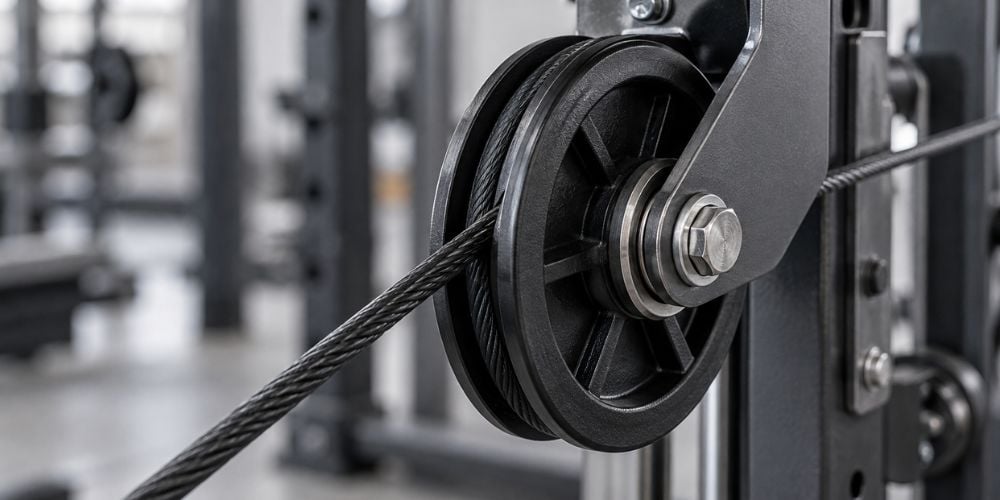
2. Good Pulleys Keep Cable Movement Smooth
Pulleys guide the cable as you perform exercise. When they rotate freely, the resistance feels more continuous from the beginning of the movement to the end.
Good pulleys should:
- Rotate easily
- Stay correctly aligned
- Hold the cable securely
- Produce little unnecessary friction
- Avoid excessive side-to-side movement
A worn or poorly aligned pulley can make the cable feel jerky. You may also hear clicking, squeaking, or rubbing.
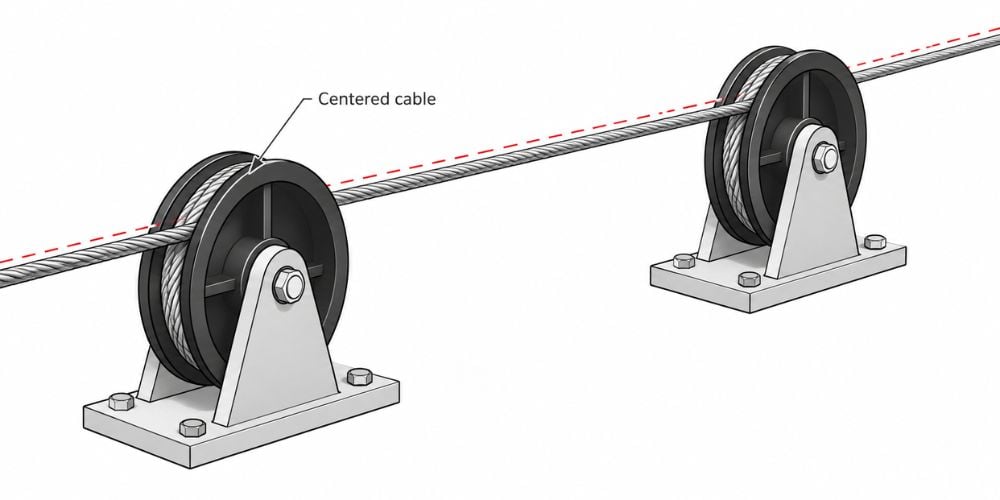
Here is why this matters: the cable changes direction every time it passes around a pulley. If that pulley does not rotate properly, you can feel the extra resistance in your hands.
3. Proper Cable Tension Prevents Slack and Jerking
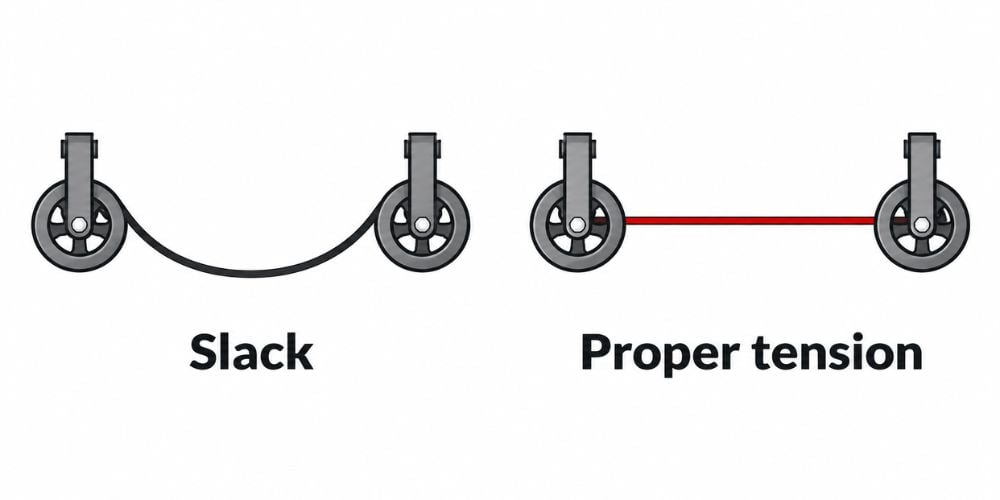
Cable tension has a big effect on how resistance feels.
If a cable is too loose, you may feel a short delay before the weight starts moving. The resistance can then engage suddenly and make the repetition feel jerky.
A properly tensioned cable should:
- Stay controlled throughout exercise
- Engage resistance quickly
- Move smoothly around each pulley
- Avoid excessive slack
- Stay centered in the pulley groove
I often check the first few centimeters of movement. If the cable suddenly snaps tight instead of engaging smoothly, something may need adjustment.
Worn or stretched cables can also make resistance feel less consistent. Precor’s preventive maintenance guidance recommends checking strength-machine cables, cable connections, and proper cable tension as part of regular maintenance.
What Does the Problem Usually Feel Like?
What You Notice | Possible Cause |
Delay before resistance starts | Excess cable slack |
Small jerks during the rep | Pulley or cable issue |
Scraping noise | Cable rubbing or poor alignment |
Weight stack sticks | Guide rod or plate problem |
Machine shakes | Frame or hardware movement |
Resistance changes unexpectedly | Alignment or friction issue |
If you want to compare how these parts are arranged on commercial strength equipment, explore our YR Fitness gym equipment. We focus on stable structures, cable routing, movement paths, and other small mechanical details that help equipment feel controlled during daily training.
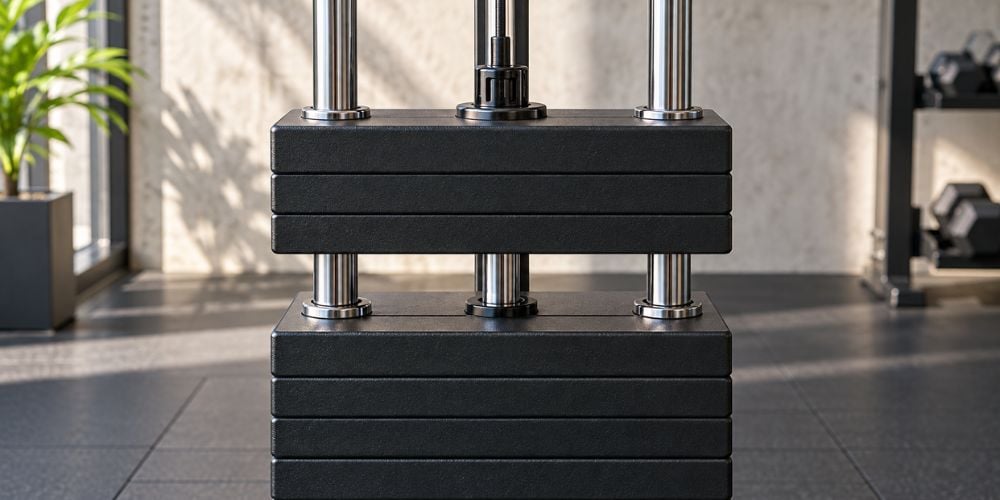
4. Straight Guide Rods Help Weight Stacks Glide
On selectorized machines, the weight plates move along guide rods.
Those rods need to stay straight, clean, and correctly positioned. When they do, the weight stack should rise and fall smoothly.
Problems can appear when:
- Guide rods become dirty
- Rust develops
- Plates become misaligned
- Bushings become worn
- Rods become bent or poorly positioned
You may notice the plates shaking, sticking, or making scraping sounds.
From an engineering point of view, guide-rod condition makes a bigger difference than many people expect. Even a small increase in friction can make the resistance feel less natural.
Maintenance matters here too. Life Fitness recommends regularly cleaning guide rods and checking cables, hardware, frames, and cable tension in its strength equipment maintenance guidelines.
Simple check: Watch the stack while doing a slow repetition. The plates should travel cleanly without catching or twisting.
5. Strong Frames Reduce Vibration
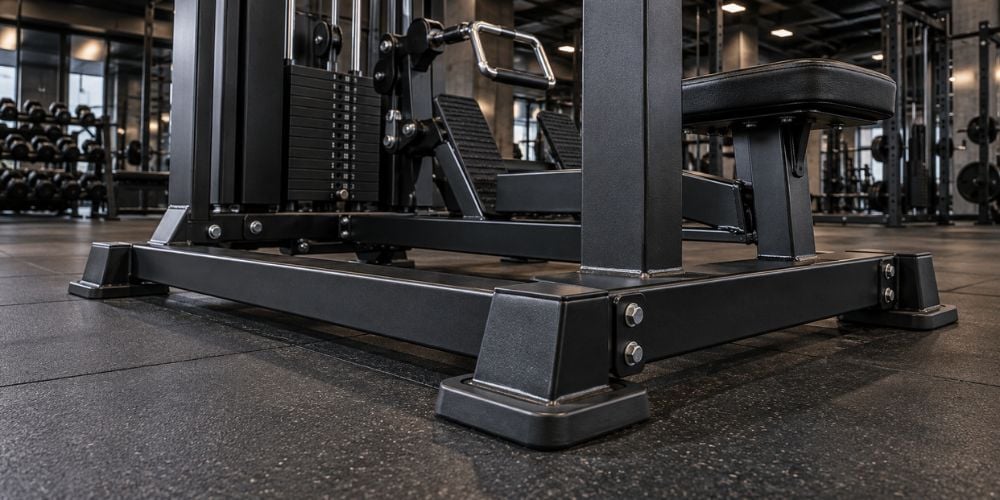
Even good moving parts will not feel right if the frame is unstable.
A strong frame keeps the machine steady while you exercise. It also reduces vibration when the weight stack moves or when you change direction during a repetition.
A stable machine should:
- Stay planted during exercise
- Have secure joints and bolts
- Avoid unnecessary frame flex
- Keep pulleys and cables aligned
- Produce minimal rattling
You will usually notice frame stability more when using heavier resistance.
I often see fitness lovers focus only on whether a machine feels comfortable at light weight. Add a little more resistance, and frame movement becomes much easier to notice.
What should you do?
Perform a few slow, controlled repetitions. The machine should feel solid rather than loose, shaky, or noisy.
6. Precise Alignment Keeps Parts Moving Correctly
Alignment ties the whole system together.
The pulleys, cables, guide rods, weight plates, bearings, and pivot points all need to follow the intended path. If one part sits slightly out of position, friction can increase.
Poor alignment may cause:
- Uneven resistance
- Cable rubbing
- Weight-stack sticking
- Clicking noises
- Faster wear on moving parts
I often see people assume uneven resistance is simply part of the machine. Sometimes, the real problem is mechanical alignment.
A well-aligned machine should feel predictable through every repetition. It should not suddenly become harder at one point because of extra friction.
Quick Smoothness Checklist
Before you move to the next machine, ask yourself:
- Does resistance engage smoothly?
- Can I hear scraping or repeated clicking?
- Does the weight stack move evenly?
- Does the frame stay stable?
- Does resistance feel consistent from start to finish?
If the answer is yes to the last three and you are not hearing unusual mechanical noise, the machine is probably moving the way it should.
Conclusion
A gym machine feels smooth and quiet when its pulleys, cables, guide rods, frame, and moving parts work together correctly. Good mechanical design and regular maintenance reduce friction, vibration, jerking, and unnecessary noise.
At YR Fitness, we pay attention to these small mechanical details because they directly affect how equipment feels during everyday training.
If you want to compare different machine designs yourself, browse the YR Fitness commercial gym equipment range and look closely at how the frames, cables, pulleys, and movement systems are put together.
Related articles: