


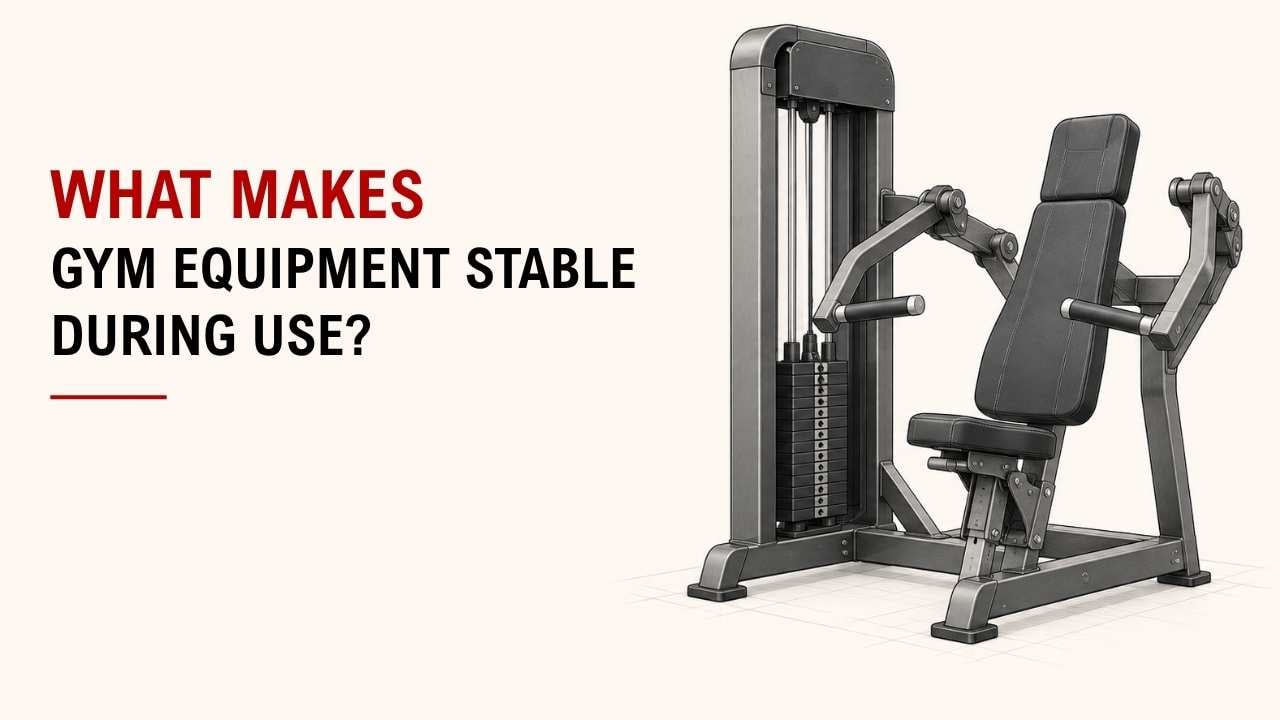

Why does one gym machine feel solid while another shakes during exercise? The difference usually comes from how the machine is built and supported.
The short answer is simple: a wide base, rigid frame, enough weight, strong connections, solid floor contact, and balanced resistance placement. These features work together to keep the machine steady.
As a Machinery & Structural Engineer at YR Fitness, I work closely with frames, joints, load paths, and machine structures. I’ve seen that even a heavy machine can feel unstable if one key structural detail is weak.
Below, I’ll show you the 6 main things that affect stability. You can use them as a quick check the next time you train.
What Actually Controls Machine Stability?
Here is the simple picture before we go deeper.
Stability Factor | What It Does | What You May Notice |
Wide base | Supports the machine against movement | Less rocking or tipping |
Rigid frame | Controls bending and twisting | More solid exercise feel |
Machine weight | Helps keep equipment planted | Less sliding or lifting |
Strong connections | Holds frame sections firmly together | Less shaking or clicking |
Floor contact | Keeps every support point stable | Less rocking |
Balanced resistance | Controls how forces move through the frame | Smoother, more balanced movement |
These are not just nice design features. ASTM F2276-23 includes stability among the design and construction requirements for fitness equipment.
1. A Wide, Well-Designed Base
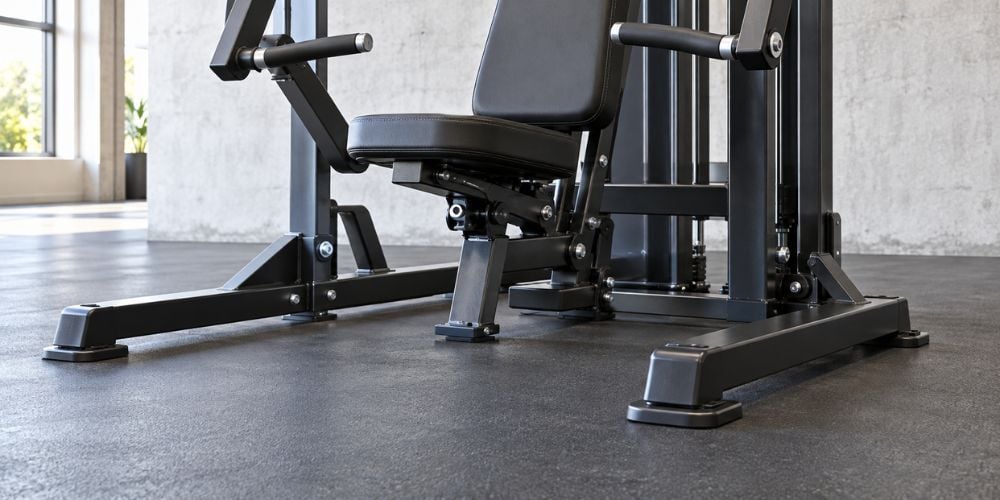
The base is one of the first things keeping a machine from rocking or tipping.
A wider base usually creates more contact with the floor. This helps the equipment handle force when you push, pull, or press.
But does wider always mean better?
No. The shape of the base matters too.
It should support the areas where the strongest forces are created during exercise.
For example, a rowing machine or chest press may experience more force in one direction. The base should provide enough support in that direction.
Quick check: Gently push the machine from different sides before using it. It should not rock easily.
I usually notice poor base design quickly because the whole machine starts moving before the exercise even becomes difficult.
2. A Strong, Rigid Frame
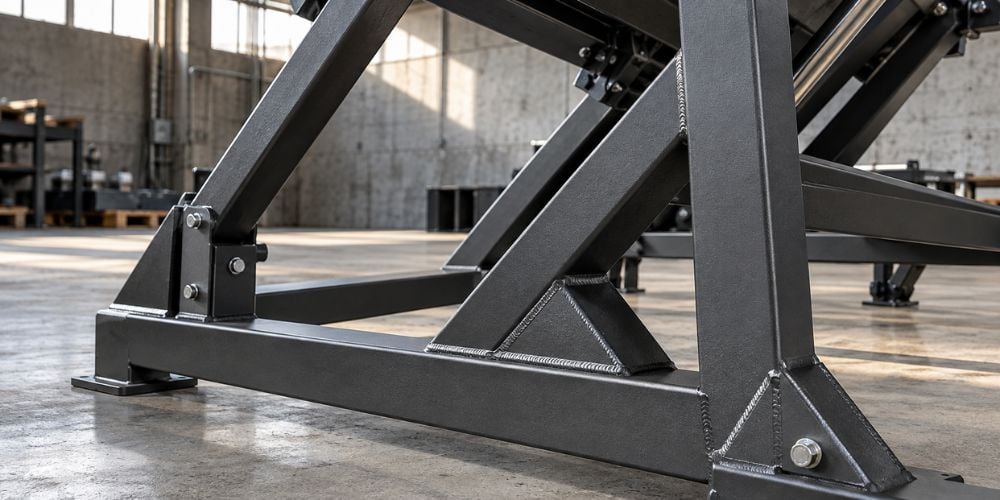
The frame carries the force you create during exercise.
A stable machine normally uses strong structural tubing and good frame geometry. Together, they spread the load through the structure instead of allowing one section to bend or twist too much.
Some slight movement can be normal under heavy resistance.
What should concern you?
Excessive flex that makes the machine feel loose or uncontrolled.
Ask yourself:
Does the frame move, or only the exercise arm that is supposed to move?
That difference matters.
International fitness-equipment standards also look beyond appearance alone. ISO 20957-1:2024 sets general safety requirements and test methods for stationary training equipment used in homes and professional training environments.
So do not judge a machine simply because the tubing looks thick. Good geometry and load control matter just as much.
3. Enough Equipment Weight
Machine weight can also improve stability.
A heavier machine is generally harder to slide, lift, or tip during normal exercise. This is especially useful during movements that create strong horizontal forces.
But weight alone is not enough.
A very heavy machine can still feel unstable if:
- The base is too narrow.
- The frame geometry is poor.
- The feet do not sit properly on the floor.
- The weight is concentrated in the wrong area.
I prefer to think of machine weight as one part of the stability system, not the entire solution.
That is why commercial equipment often feels more planted. Its frame, base, and overall mass are designed to work together.
At YR Fitness, we build commercial equipment around the complete structure rather than relying on machine weight alone. If you want to compare how different strength and cardio machines use their frames, bases, and support points, explore our commercial gym equipment and look closely at how each machine is constructed.
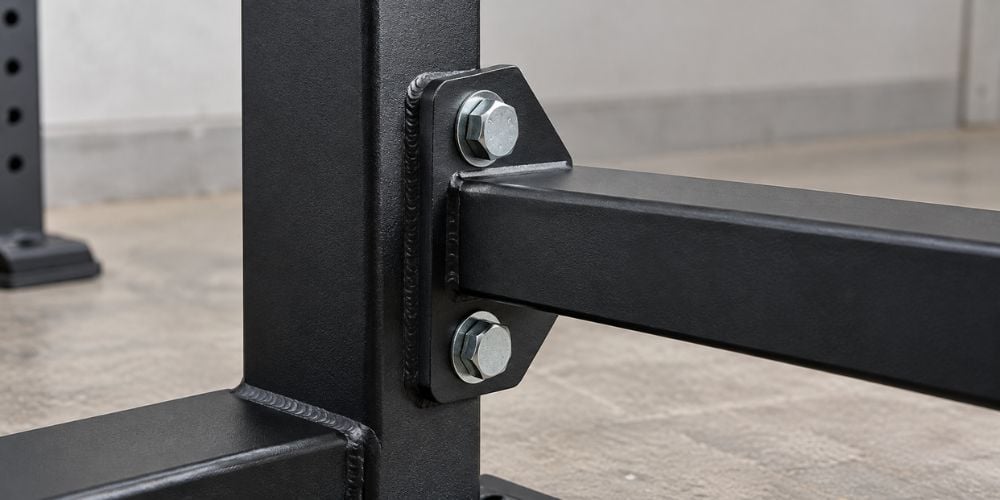
4. Strong Welds, Bolts, and Connection Points
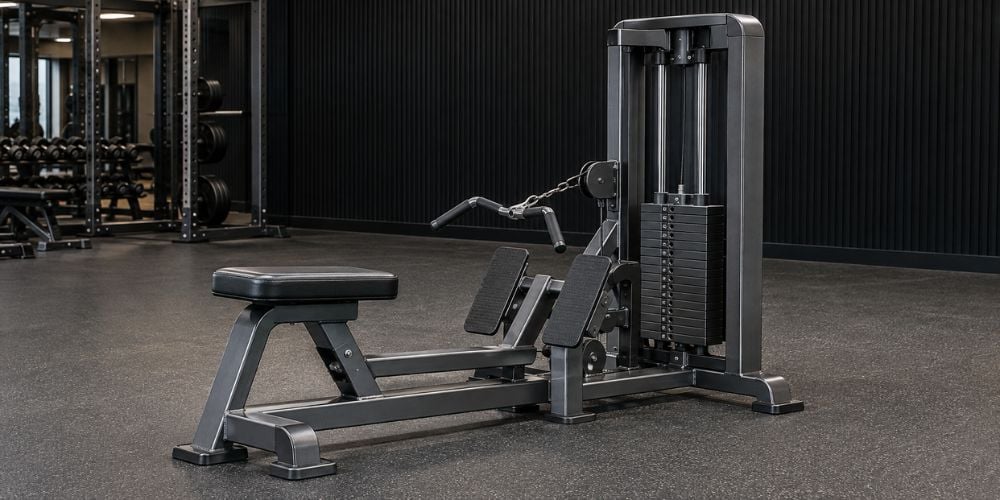
A strong frame still depends on secure connection points.
Gym equipment may use:
- Welded joints
- Bolts
- Fasteners
- A combination of these methods
These areas transfer force from one part of the machine to another.
When a connection becomes loose, you may notice:
- Shaking
- Clicking sounds
- Side-to-side movement
- Uneven frame movement
- A loose feeling during exercise
In my experience, one small loose bolt can make an otherwise solid machine feel much worse than it really is.
Should you inspect every bolt before training?
No. But if a machine suddenly starts moving more than usual, visible fasteners are one of the first things worth checking.
If you are using equipment in a public gym, tell the staff instead of trying to repair it yourself.
5. Good Contact With the Floor
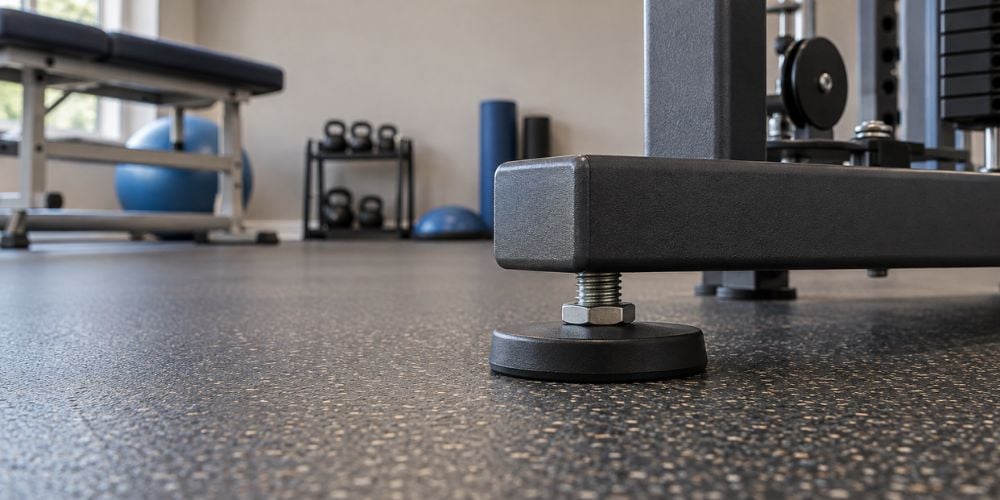
Even a well-built machine can rock if it does not sit properly on the floor.
All major contact points should sit firmly against the surface. If one foot is slightly raised, the machine may move every time your body weight shifts.
Common causes include:
- Uneven flooring
- Worn rubber feet
- Poor leveling
- Debris under the machine
- Incorrect installation
Some machines use adjustable leveling feet to correct small differences in the floor.
How can you check it?
Place your hands on the machine and gently shift your weight against it. If you feel a repeated rocking motion, floor contact may be the problem.
Rubber feet can also improve grip and reduce unwanted sliding.
I often see people blame the frame first when the actual problem is simply poor floor contact.
Installation matters too. A Cybex strength-equipment safety notice advises that its strength machines be properly anchored to a level floor and directs facilities to follow the equipment manual for the correct anchoring method.
For you as a gym user, the lesson is simple: if a machine rocks badly, do not assume that is normal.
6. Proper Weight and Resistance Placement
Where resistance sits also affects stability.
Weight stacks, plates, cables, and other resistance systems change how force moves through the machine.
A good design keeps the machine’s center of mass controlled during exercise.
For example, adding plates to a plate-loaded machine changes both:
1. Total machine weight
2. Weight distribution
The frame needs to support that load without becoming unbalanced.
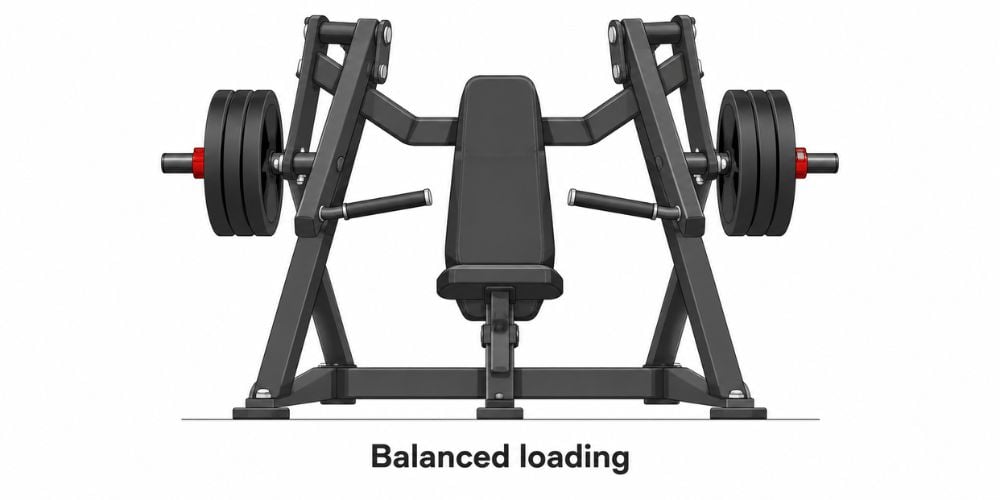
You should also load plates correctly.
If a machine has loading points on both sides, keep the weight reasonably balanced unless the manufacturer specifically allows another setup.
Uneven loading can affect:
- Machine balance
- Exercise feel
- Wear on moving parts
- Stability during movement
This is why I never judge stability by frame thickness alone. The whole structure has to work together.
Quick Stability Checklist
You do not need to be an engineer to spot the basics. Run through these six checks before using a machine that does not feel right.
What to Check | What You Want | Warning Sign |
Base | Wide enough to resist rocking | Machine tips or shifts |
Frame | Solid with little unwanted flex | Excessive bending or twisting |
Machine weight | Enough mass to stay planted | Equipment slides during use |
Bolts and welds | Secure and firm | Clicking, looseness, or shaking |
Floor contact | All feet touching properly | Repeated rocking |
Weight placement | Balanced and controlled | Uneven or unstable movement |
If several of these areas feel right, the machine will usually feel much more stable during your workout.
If something suddenly feels different, though, do not ignore it. A machine that was stable last week but rocks today may need inspection rather than a harder workout.
Final Thoughts
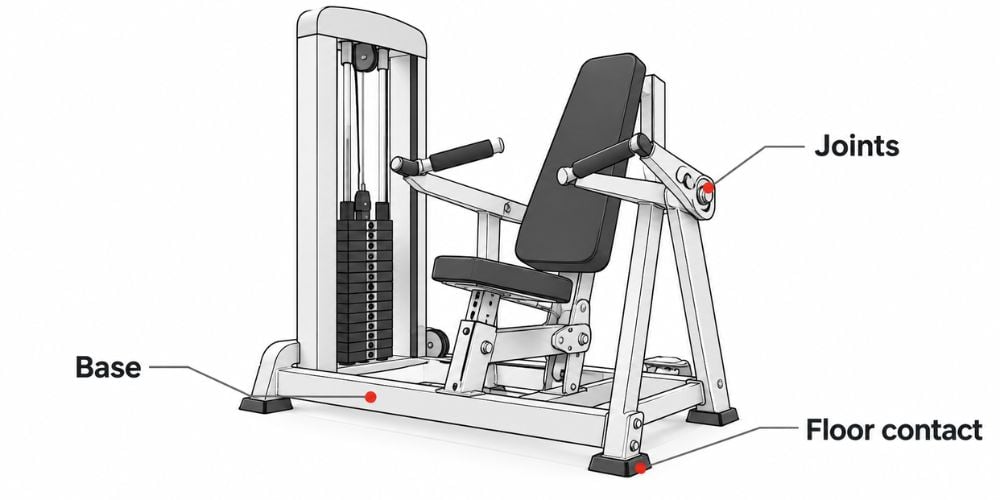
Stable gym equipment comes from a well-designed base, rigid frame, enough machine weight, strong connections, solid floor contact, and proper resistance placement. No single feature does all the work.
You can use the same simple checks whenever you want to judge whether a machine feels solid before you start training.
Want to see how these details look on real commercial equipment? Browse YR Fitness strength and cardio equipment and compare the bases, frames, loading systems, and overall structures for yourself.
Related articles:



