









Are your gym machines getting old or costly to repair? Replacing them without a plan can quickly strain your budget.
The simple answer is to track equipment condition, estimate replacement costs, and save toward them each year. A basic plan is usually enough.
As a Machinery & Structural Engineer at YR Fitness, I work closely with equipment wear, structural condition, moving parts, and long-term machine performance. I often see that early planning helps avoid rushed and expensive replacement decisions.
Below, I’ll show you six simple steps to build a practical replacement budget. Follow them in order and keep the process easy.
1. List All Equipment You May Need to Replace
Start with a simple list of your major equipment.
You might include:
- Treadmill
- Exercise bike
- Rowing machine
- Cable machine
- Bench
- Squat rack
- Adjustable dumbbells
- Strength machines
Next to each item, record:
- Purchase date
- Original price
- Current condition
- Repairs already completed
- How often do you use it
You do not need to track every resistance band or small accessory. Focus first on equipment that would be expensive or inconvenient to replace unexpectedly.
A basic spreadsheet is enough.
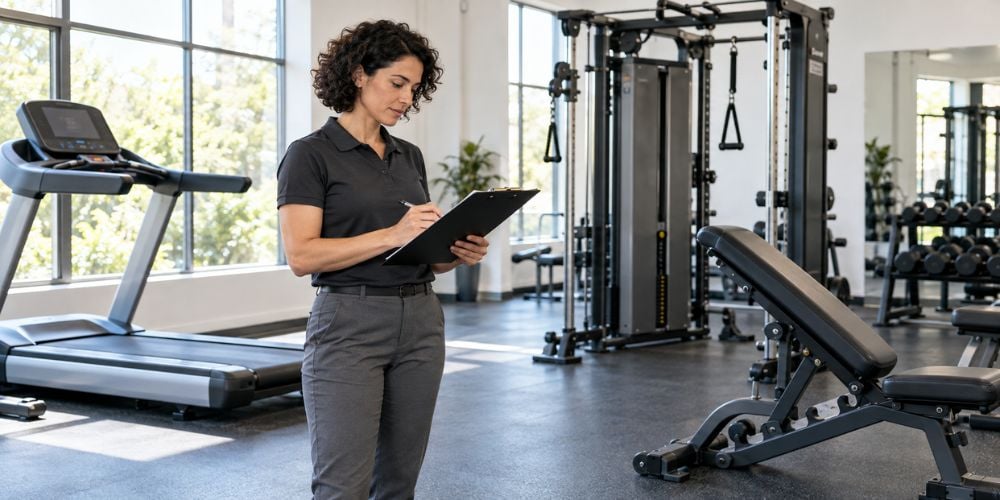
2. Estimate the Remaining Life of Each Machine
Now ask yourself:
How much useful life does this machine probably have left?
Age matters, but condition often tells you more.
Check for:
- Frame damage
- Loose components
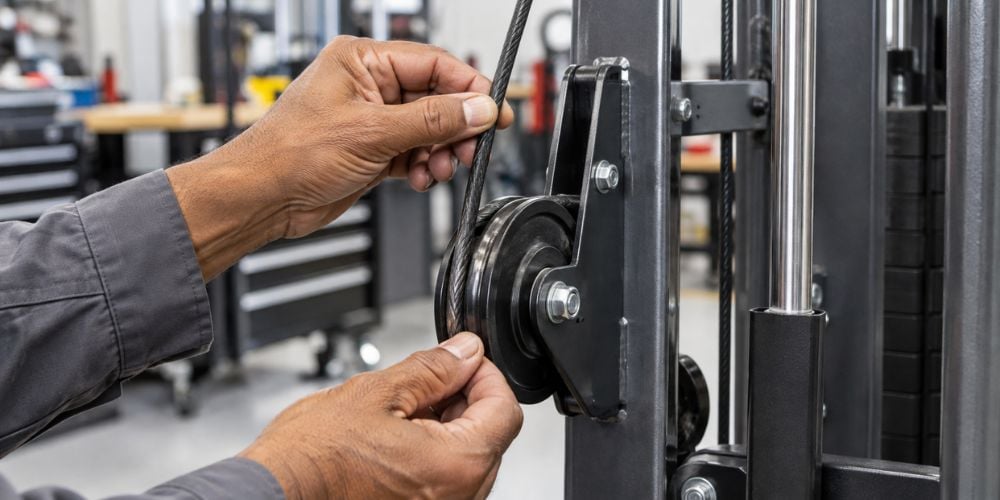
- Worn cables
- Cracked upholstery
- Noisy bearings
- Belt problems
- Electronics that fail regularly
- Increasing repair frequency
Regular inspections can help you spot these problems earlier. For example, Precor’s preventative maintenance guidance includes checks for frames, welds, cables, belts, upholstery, and other wear points depending on the equipment type.
I usually pay more attention to changes in performance than age alone. A heavily used five-year-old machine may need replacing before a lightly used machine that is much older.
Use this simple guide:
Condition | What You May Notice | Replacement Plan |
Poor | Frequent problems, heavy wear, safety concerns | Replace soon |
Fair | Aging parts or occasional repairs | Budget for the next 1–3 years |
Good | Works safely and reliably | Keep using and monitor |
Review the list once or twice each year.
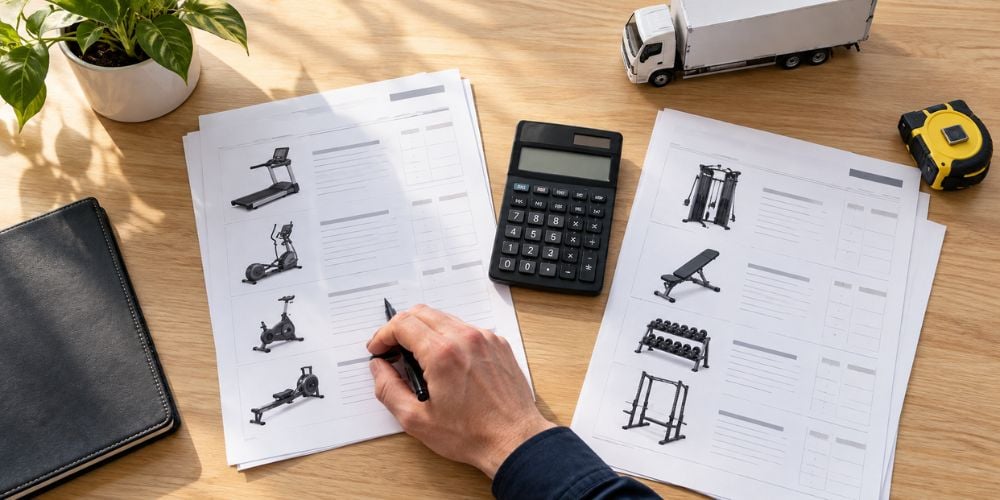
3. Estimate Replacement Costs
Next, check what similar equipment costs today.
Do not rely only on the price you originally paid. Equipment prices can change, and different designs can vary widely in cost.
Include:
- New equipment price
- Delivery
- Installation
- Disposal of old equipment
- Replacement parts
- Taxes or other fees
For example, imagine you expect to replace:
- Treadmill: $2,500
- Strength machine: $1,500
Your estimated replacement cost is:
$2,500 + $1,500 = $4,000
It is also useful to add a small buffer in case the final cost is higher than your estimate.
Not sure what newer equipment actually costs? Look at current manufacturer and retailer listings rather than guessing from an old purchase receipt.
For example, Rogue Fitness’s current cable-machine listings show how widely prices can vary between cable towers, functional trainers, and larger multi-function systems.
Here is why this matters: the cheapest purchase is not always the cheapest equipment to own. A lower-priced machine that needs frequent repairs may not save much money over time.
If you are comparing commercial-grade equipment, we recommend looking at construction, expected use, maintenance needs, and price together. You can browse YR Fitness commercial gym equipment and use our equipment options as another reference when planning your replacement budget.
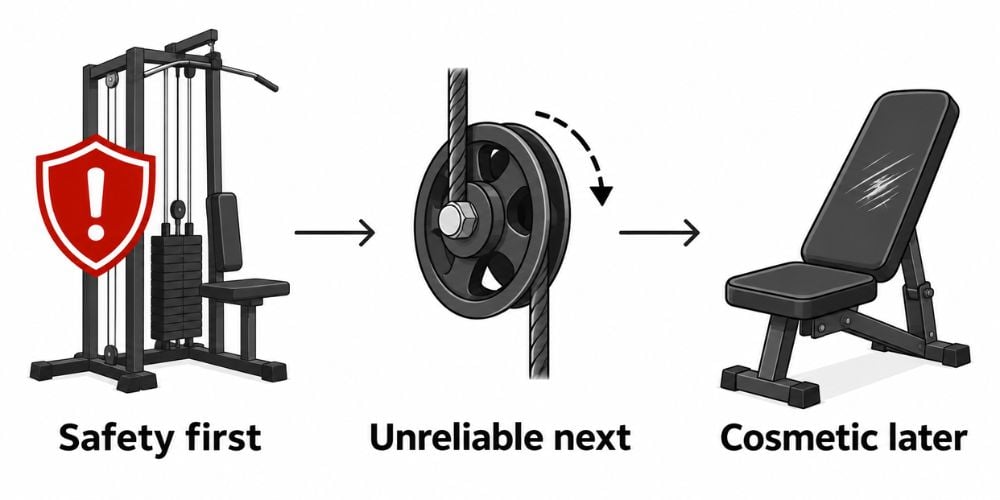
4. Prioritize the Most Important Equipment
You probably do not need to replace everything at once.
Start with the equipment that affects your workouts most.
Replace First
- Unsafe equipment
- Machines that regularly stop working
- Equipment with structural damage
- Machines with repeated expensive repairs
Replace Next
- Equipment you use several times per week
- Machines becoming uncomfortable or unreliable
- Equipment with parts that are becoming difficult to find
Replace Later
- Lightly used equipment
- Machines mainly with cosmetic wear
- Equipment that still works safely and smoothly
Does the machine have a safety problem?
That should move it up your list. It is also worth checking the U.S. Consumer Product Safety Commission exercise-equipment recalls when you notice unusual failures or before continuing to use equipment you suspect may have a known safety issue.
On the other hand, an old-looking machine does not automatically need replacing.
Ask yourself:
Does this machine actually need replacing, or does it only need maintenance?
That simple question can prevent unnecessary spending.
5. Create an Annual Replacement Budget
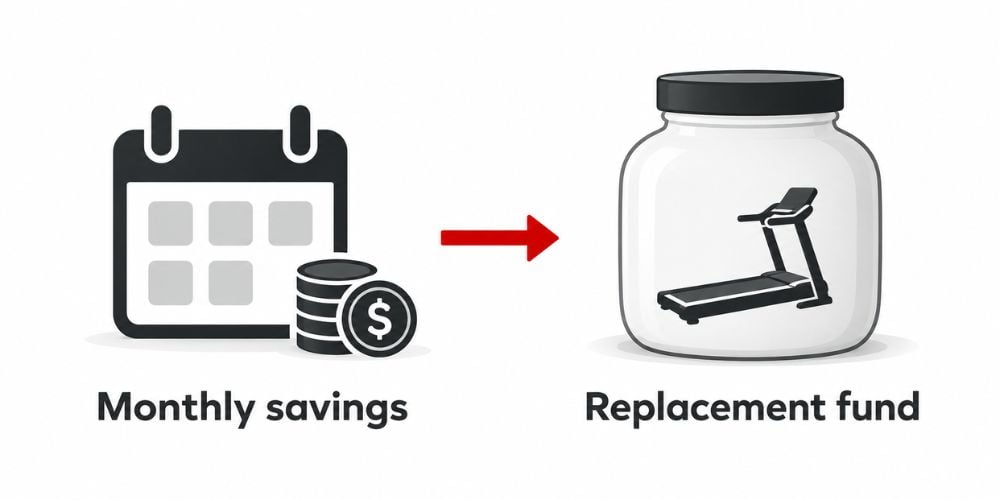
Now turn your expected costs into a yearly savings target.
Suppose you expect to spend $6,000 over the next three years.
The calculation is simple:
$6,000 ÷ 3 years = $2,000 per year
Then break it down monthly:
$2,000 ÷ 12 months = about $167 per month
Saving around $167 each month gradually builds the money you need instead of leaving you with one large expense.
Here are a few more examples:
Expected Replacement Cost | Time Until Replacement | Annual Saving | Monthly Saving |
$1,200 | 2 years | $600 | $50 |
$2,400 | 3 years | $800 | about $67 |
$4,800 | 4 years | $1,200 | $100 |
$6,000 | 3 years | $2,000 | about $167 |
I find that smaller monthly contributions are much easier to manage than suddenly paying the full cost after equipment fails.
Planning early also gives you time to compare brands, specifications, warranties, construction quality, and current prices.
6. Review Repair Cost vs Replacement Cost
Old equipment does not automatically need replacing.
Sometimes a simple repair can keep a good machine working for years. Other times, repeated repairs stop making financial sense.
Compare:
- Current repair cost
- Previous repair costs
- How often it breaks
- Replacement price
- Expected remaining life
- Safety and reliability
For example, spending $100 to repair a solid machine may make sense.
But what if you keep spending hundreds of dollars on the same aging machine? If another major repair is likely, replacement may be the better choice.
I also look at downtime. Even affordable repairs become frustrating when you regularly lose access to the machine.
Ask yourself:
If this machine breaks again next year, will I wish I had replaced it today?
If the answer is yes, move it higher on your replacement list.
Conclusion
Budgeting for gym equipment replacement can stay simple. List your equipment, estimate its remaining life, check current prices, prioritize important machines, and save toward future costs each year.
The key is to plan before something completely fails. That gives you more control over both timing and spending.
When you are ready to compare replacement options, YR Fitness offers commercial-grade strength and cardio equipment built for regular, heavy use. Browse the available equipment and compare durability, features, and long-term value before deciding where your replacement budget should go.
Related articles:



