








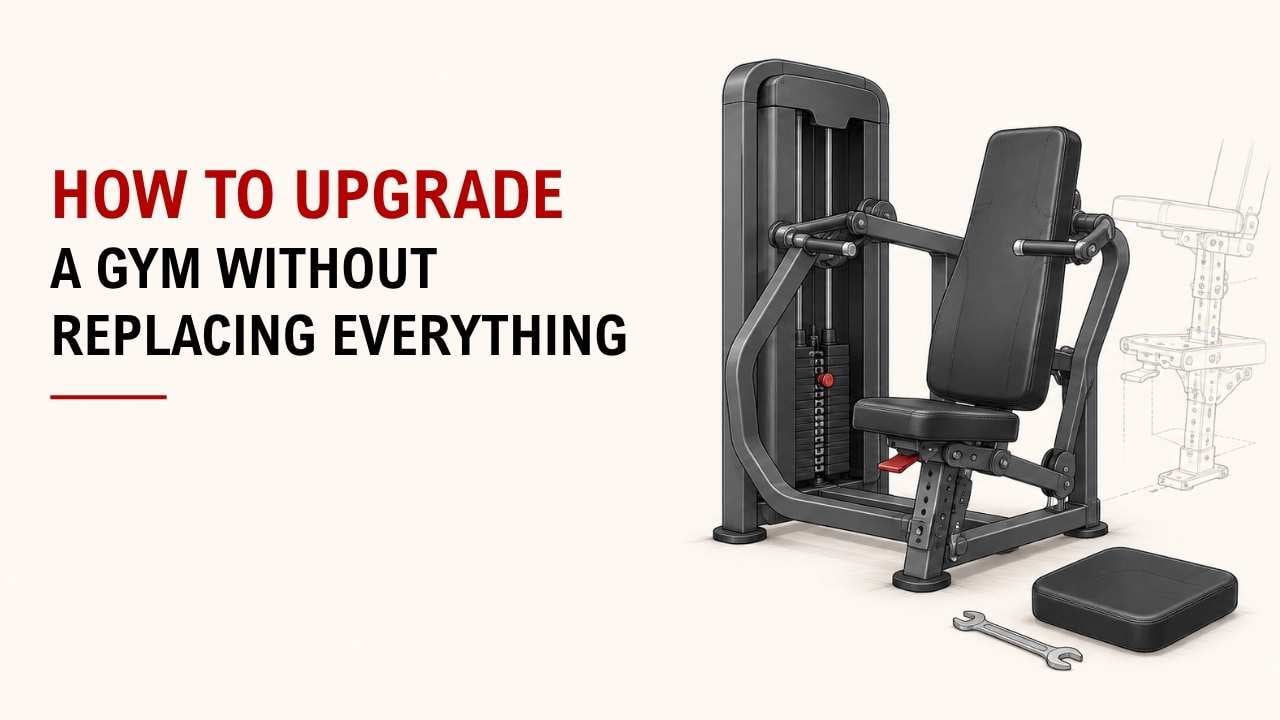

Does your gym feel outdated even though most of the equipment still works? You may not need to replace everything.
The simple approach is to repair what still works, replace worn parts, improve popular areas, and add only what is missing.
As the founder and chief designer of YR Fitness, I have spent decades working with commercial gym equipment and gym layouts. In my experience, smart upgrades usually matter more than large replacements.
Below are the practical ways to upgrade your gym without starting from zero.
1. Inspect What You Already Have
Start by walking through the gym and checking every major piece of equipment.
Do not judge a machine only by its age. Check whether:
- It still moves smoothly
- The frame feels solid
- Adjustments work properly
- Cables, belts, pads, and grips are in good condition
- The machine still feels comfortable
- People actually use it
Then sort everything into 3 groups.
Equipment Condition | Best Action | Priority |
Good and frequently used | Keep it | Low |
Good frame but worn parts | Repair or refresh | Medium |
Unreliable or uncomfortable | Inspect for replacement | High |
Safety concern or repeated failure | Stop using and assess | Immediate |
A ten-year-old machine that still works smoothly may be more useful than a newer machine nobody wants to use.
What should you check first?
Safety comes before appearance. The U.S. Consumer Product Safety Commission maintains an official exercise-equipment recall database, which is worth checking when you are unsure about an older model or known product issue.
Cosmetic scratches can usually wait. Repeated failures, unstable parts, or known safety problems cannot.
2. Replace Worn Parts Instead of Whole Machines
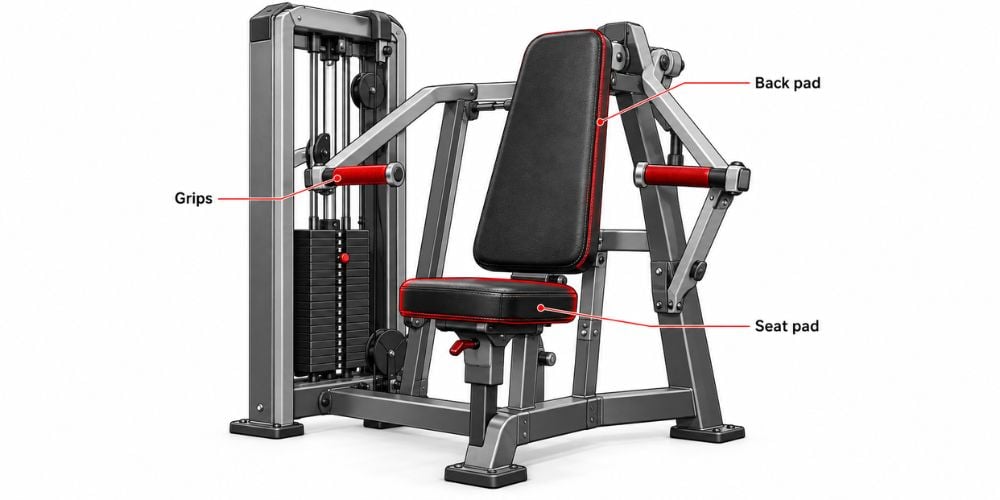
A worn seat does not automatically mean you need a new machine.
Many older machines can feel much better after replacing a few high-wear parts:
- Upholstery
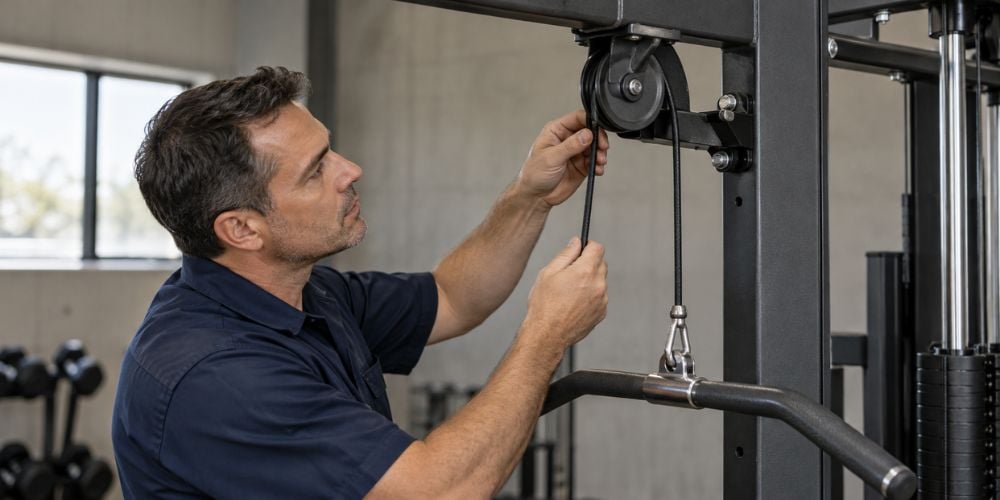
- Cables
- Handles and grips
- Adjustment pins
- Belts
- Foot pads
- Bearings
- Pulleys
You can also clean the frame, remove rust where appropriate, tighten loose hardware, and replace damaged labels.
In my decades of design experience, I look at the main structure first. If the frame and movement system are still sound, replacing wear parts can be far more practical than removing the entire machine.
Repair or Replace?
Situation | Repair | Replace |
Torn upholstery | ✓ | |
Worn grip or handle | ✓ | |
Damaged cable or pulley | ✓ | Sometimes |
Minor cosmetic damage | ✓ | |
Repeated breakdowns | ✓ | |
Major structural concern | ✓ | |
Machine rarely used | Evaluate first | Evaluate first |
The point is simple: do not replace a complete machine because one replaceable part looks tired.
3. Upgrade the Most Popular Equipment First
Do not upgrade every area equally.
Start with the equipment people use most.
High-use equipment may include:
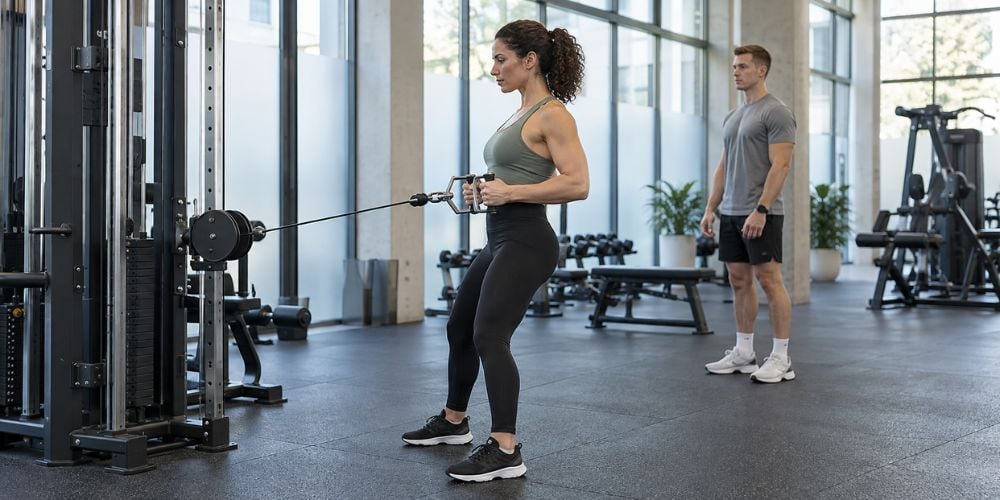
- Cable machines
- Dumbbells
- Adjustable benches
- Treadmills
- Lat pulldowns
- Chest presses
- Leg presses
- Squat racks
If people regularly wait for one machine while another stays empty, that gives you a clear clue.
For example, another cable station may improve the training experience more than three specialty machines that only a few people use.
How do you know what is popular?
Watch the floor during busy hours. I often find that queues, empty machines, and crowded zones tell you more than a long equipment inventory.
You can also ask regular users what they struggle to access. The same requests coming up again and again are worth paying attention to.
4. Add a Few Machines That Fill Real Gaps
You do not need a completely new equipment line to improve training variety.
Look for exercises people want to perform but currently cannot do easily.
Possible additions include:
- Hack squat
- Hip thrust machine
- Pendulum squat
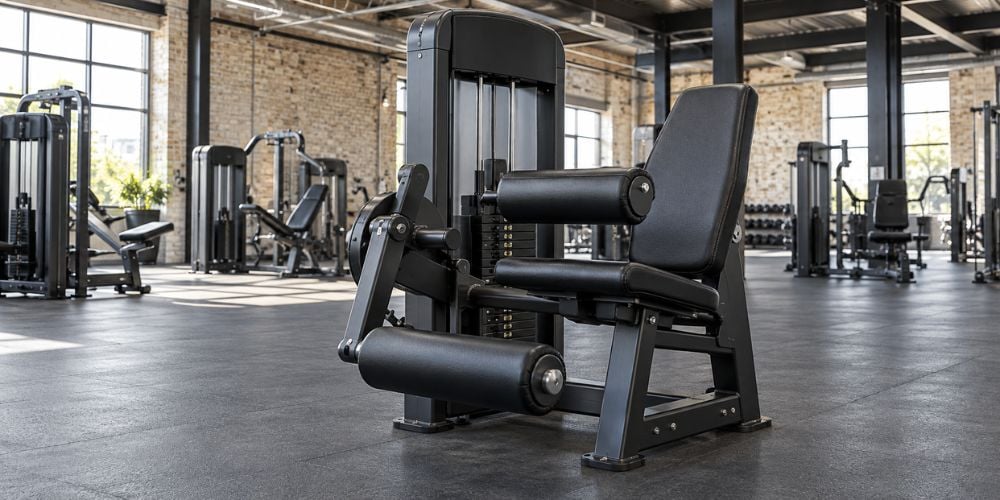
- Seated leg curl
- Plate-loaded row
- Functional trainer
Think about training gaps, not simply what looks new.
For example, if you already have several chest machines but only one good leg station, another upper-body machine probably will not change much.
Ask yourself: What exercise do people want to perform but currently struggle to do here?
That question gives you a much better starting point.
If your current machines still work but you need to fill a few clear training gaps, we can help you compare compatible options at YR Fitness rather than rebuilding the whole floor. Start with our commercial strength equipment range and focus on the machines that add something your existing setup does not already provide.
5. Improve the Free-Weight Area
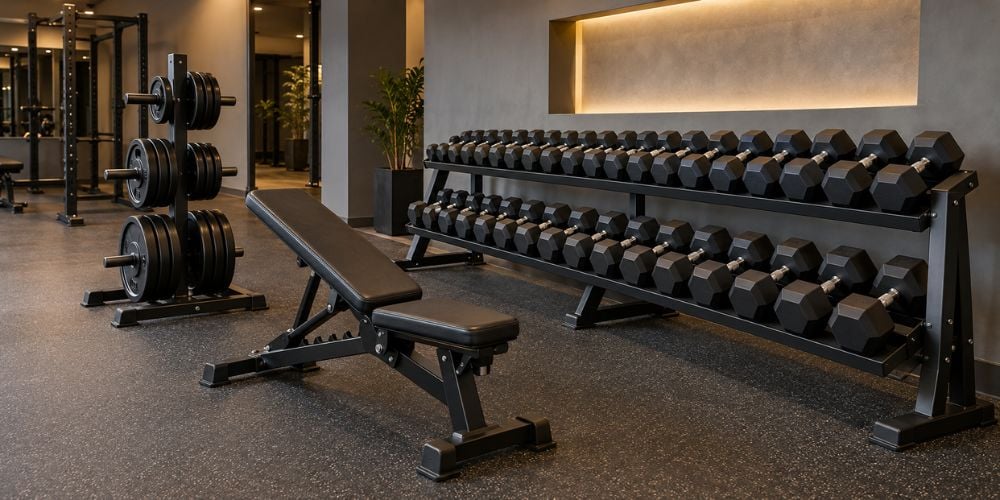
The free-weight area can often be improved without a major investment.
Check for missing dumbbells, damaged benches, poor storage, and accessories that disappear when people need them.
Simple Free-Weight Upgrades
Problem | Practical Upgrade |
Missing dumbbell sizes | Complete the set |
Too few benches | Add adjustable benches |
Damaged bars | Replace worn barbells |
Not enough plates | Add high-use plate sizes |
Plates left everywhere | Improve storage |
No lifting area | Add a platform |
Missing accessories | Add collars and basic attachments |
Storage matters more than people sometimes expect.
A good free-weight area can still feel frustrating when plates are scattered around and users cannot find the equipment they need.
I would rather see a smaller free-weight area that is complete and organized than a large area filled with mismatched equipment.
6. Refresh the Cardio Area Selectively
Cardio equipment can be expensive, so replacing the entire row at once may not make sense.
Keep machines that still:
- Run smoothly
- Hold speed consistently
- Have responsive controls
- Feel stable
- Receive regular use
- Can still be maintained reasonably
Then look closely at machines with repeated problems.
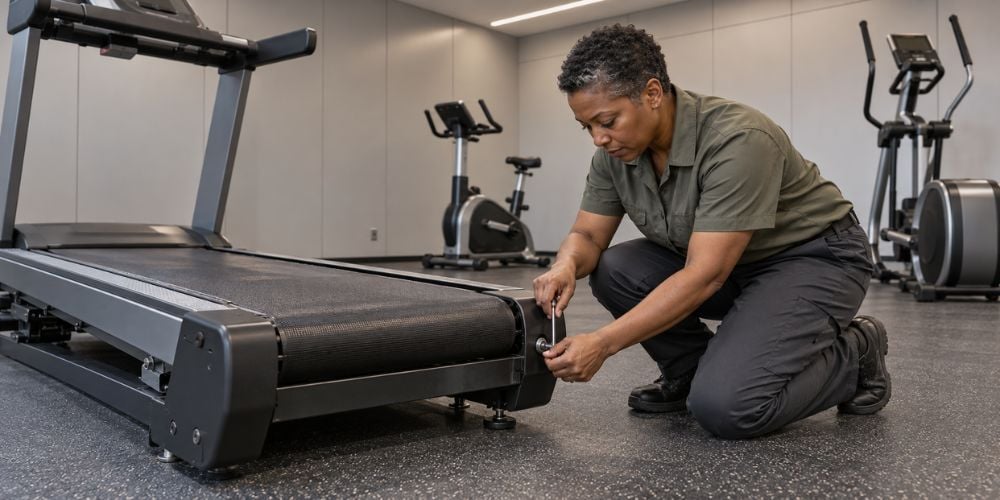
An older treadmill that only needs normal servicing may be worth keeping. One that frequently stops, slips, overheats, or needs repeated repairs may be a stronger replacement candidate.
Do you need another treadmill?
Maybe not.
If you already have plenty of treadmills, you could improve variety with a:
- Bike
- Elliptical
- Rowing machine
- Stair-climbing machine
The goal is not to make the cardio area look newer. It is to make it work better.
7. Improve the Gym Layout
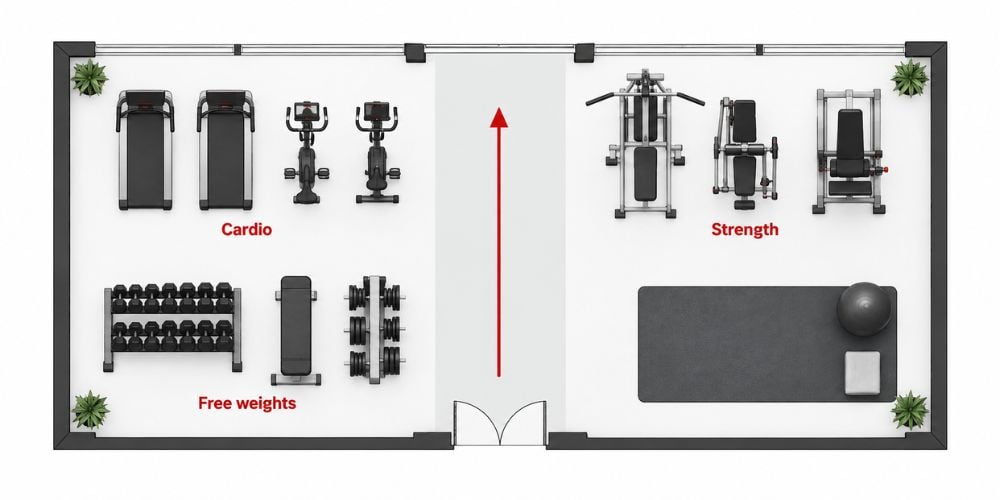
Sometimes the equipment is fine. The layout is what makes the gym feel crowded or outdated.
Look for machines placed too close together, benches blocking walkways, or popular equipment squeezed into one corner.
Try dividing the gym into clear zones:
- Cardio
- Selectorized strength
- Plate-loaded strength
- Free weights
- Functional training
- Stretching and mobility
Then look at how people move between them.
Can someone carry dumbbells without crossing a busy machine area? Is there enough room around benches and popular stations?
If your facility is in the United States, accessibility should also be part of the layout review. The 2010 ADA Standards for Accessible Design include requirements covering accessible routes to exercise equipment and clear floor space at certain exercise machines.
Quick Layout Check
Check | What You Want |
Walkways | Clear movement between zones |
Popular equipment | Easy access during busy periods |
Benches | Enough working space around them |
Free weights | Storage close to lifting areas |
Cardio | Clear entry and exit space |
Accessibility | Appropriate routes and floor space |
Empty areas | A clear training purpose |
I often see gyms gain usable space simply by moving equipment into better positions.
Before ordering another machine, ask yourself whether the existing floor could work better first.
Conclusion
You do not need to replace everything to make a gym feel better.
Start with what already works. Repair equipment that still has life left, improve high-use areas, fill real training gaps, and reorganize the floor before making larger purchases.
A few smart upgrades can often improve both the training experience and the way the entire space feels.
If you want to modernize your setup without buying new equipment you don’t need, YR Fitness can help you choose commercial machines. Explore our equipment options and invest where the upgrade will be noticed.
Related articles:



