









Does your treadmill belt slip or feel unusually tight? Belt tension may be the reason.
A loose belt often slips or feels unstable, while a tight belt can feel restricted and make the treadmill work harder. The difference is usually easy to spot once you know the signs.
As a Machinery & Structural Engineer at YR Fitness, I work closely with treadmill belts, rollers, motors, and drive systems. I’ve seen how catching the wrong belt tension early can prevent unnecessary wear and bigger mechanical problems.
Below, I’ll show you five simple checks for belt tension. Keep reading to quickly tell whether your belt is too tight or too loose.
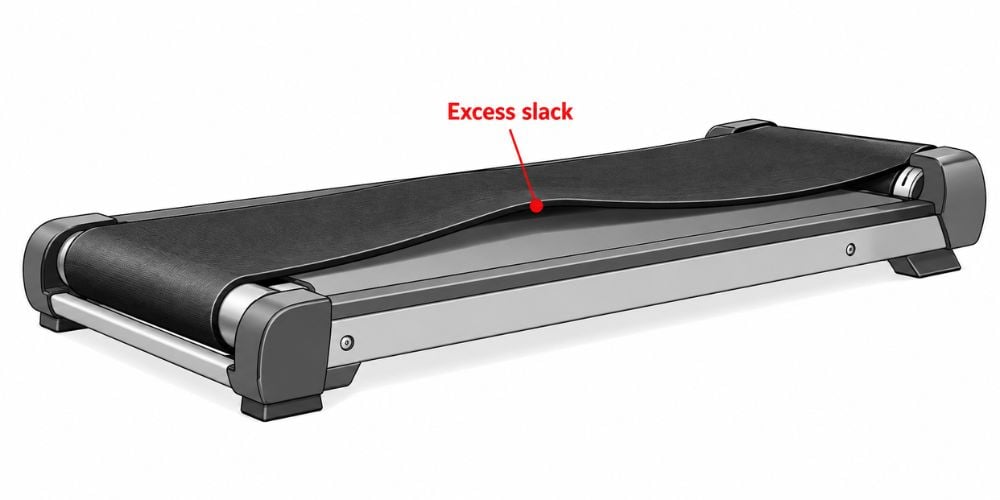
1. Signs Your Treadmill Belt Is Too Loose
A loose belt usually becomes obvious once you start walking or running.
The clearest sign is slipping. Your foot lands, but the belt briefly hesitates or slides instead of moving smoothly.
Watch for these signs:
- The belt feels unstable under your feet.
- The belt suddenly jerks during use.
- You can lift the belt very easily from the deck.
- The belt moves farther from side to side than normal.
- Slipping becomes worse as speed increases.
What does a loose belt feel like?
It may feel as if the belt pauses for a moment while your body keeps moving forward. That can make your stride feel awkward and less stable.
Manufacturer guidance supports using slipping as an important warning sign. For example, Horizon Fitness’s running-belt tension guide says a slipping sensation can indicate that the running belt needs more tension.
I would not ignore repeated slipping. It usually means the belt needs inspection or adjustment.
2. Signs Your Treadmill Belt Is Too Tight
Tighter does not always mean better.
If the belt is pulled too tightly around the rollers, the treadmill has to work against extra resistance. That can also place unnecessary stress on the belt and other moving parts.
Look for:
- The belt is unusually difficult to lift.
- Belt movement feels restricted or heavy.
- The treadmill seems to work harder than normal.
- You hear unusual motor or roller noises.
- The belt does not move as smoothly as before.
- The motor area becomes unusually warm.
Just tightened a slipping belt?
Be careful not to overcorrect it. I often see people solve a loose belt problem only to make the belt too tight.
Life Fitness also warns that overtightening can overstretch or damage the running belt and roller components. Its treadmill belt guidance also notes that a worn belt or one drawing unusually high current may need replacement rather than more tightening.
At YR Fitness commercial gym equipment, we pay close attention to how the running belt, rollers, deck, drive system, and frame work together. If your current treadmill is becoming difficult to maintain, compare the construction and design of equipment made for consistent daily use.
3. Do the Belt Lift Test
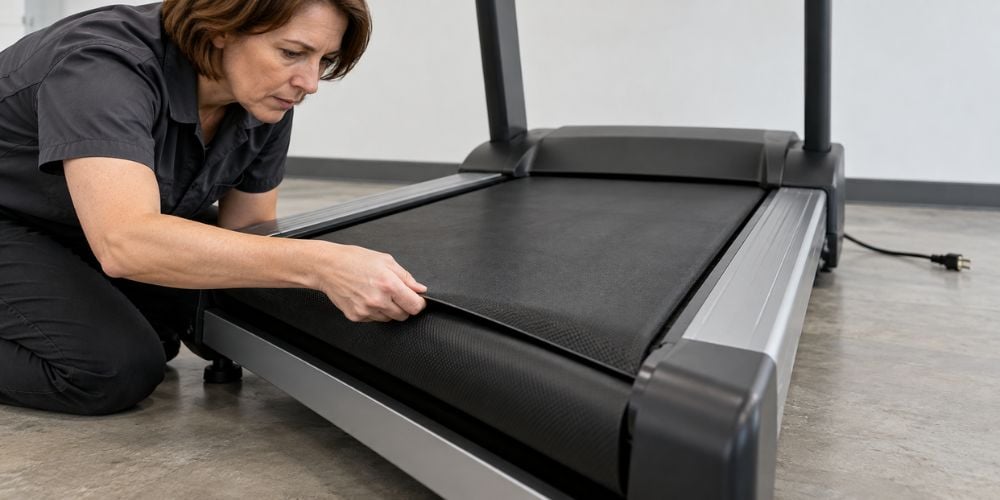
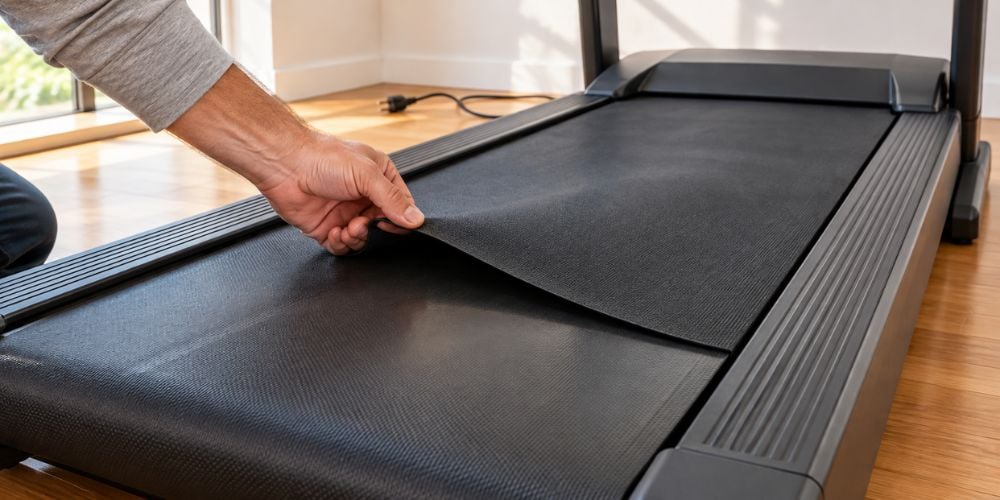
The belt lift test is one of the quickest checks you can do.
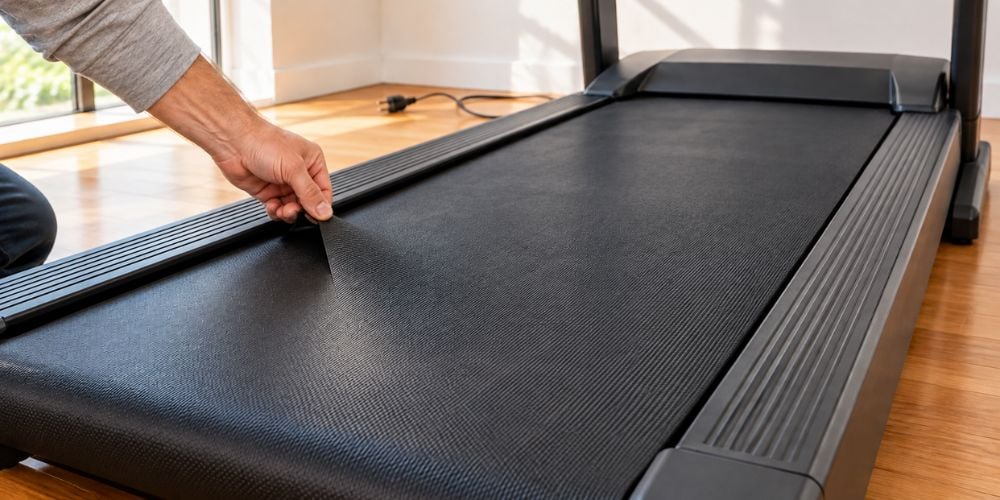
First, turn the treadmill off and unplug it. Then lift one side of the belt near the middle of the running deck.
Ask yourself:
Does the belt lift very easily?
It may be too loose.
Can you barely lift it?
It may be too tight.
But do not rely on a random measurement you found online.
There is no single correct lift height for every treadmill. Belt length, roller design, and manufacturer specifications can all change what is considered normal.
That is why I recommend checking the manual for your exact model before making adjustments. SOLE’s treadmill service and manuals page, for example, lets owners find instructions for specific treadmill models rather than relying on one rule for every machine.
Simple rule: your manufacturer’s specification comes first.
What Each Check Tells You
Check | What You Are Looking For | What It May Mean |
Lift the belt | Very easy to lift | Belt may be loose |
Lift the belt | Very little give | Belt may be too tight |
Walk slowly | Belt hesitates underfoot | Belt may be loose |
Listen while running | Strained or unusual noise | Check tension and drive system |
Watch the belt | Moves repeatedly to one side | Check tracking/alignment |
Feel the movement | Heavy or restricted | Belt may be too tight |
These checks work best together. Do not tighten the belt based on one test alone.
4. Check for Belt Slipping While Walking
Next, see how the belt behaves under your feet.
Start the treadmill at a slow walking speed. Walk normally and pay attention to what happens when each foot lands.
A loose belt may:
- Pause briefly.
- Slip backward.
- Feel jerky.
- Lose smooth movement under your foot.
Does the problem become clearer when your foot puts more force on the belt?
That is another clue that the tension may be too loose.
If you adjust the tension, keep the changes small. Manufacturer procedures commonly use small increments rather than large turns; Horizon, for example, recommends quarter-turn adjustments when correcting belt tension.
I prefer a simple pattern: adjust a little, test again, then decide whether it needs more. This makes it much harder to turn a loose belt into an overly tight one.
Still slipping afterward?
Do not assume tension is the only problem. A worn running belt, drive belt, roller, poor lubrication, or another drive-system issue can create similar symptoms.

5. Check Belt Tracking
Now watch where the belt sits on the running deck.
A properly adjusted belt should generally stay centered while the treadmill is running. If it continually moves toward one side, something may need adjustment.
Watch for:
- The belt moves toward the left edge.
- The belt moves toward the right edge.
- The belt rubbing against the side.
- Uneven gaps between the belt and frame.
- The belt moves out of position again after adjustment.
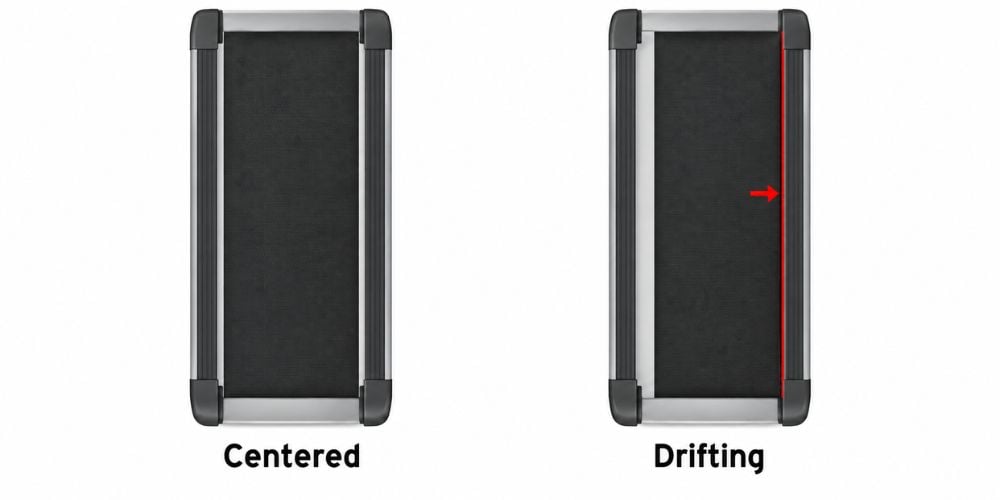
Does sideways movement always mean the belt is loose?
No. Tracking can also be affected by rear roller adjustment and belt alignment.
That distinction matters. Simply tightening the whole belt because it moves sideways can turn an alignment problem into a tension problem.
If the belt repeatedly refuses to stay centered, or slipping continues after reasonable adjustments, it is better to inspect the machine further rather than keep tightening the rear bolts.
Conclusion
A loose treadmill belt usually slips, lifts easily, or feels unstable. A tight belt feels overly firm, moves with more resistance, and may make the treadmill work harder.
Check the belt by lifting it, walking slowly, and watching how it tracks. Make small adjustments and follow the instructions for your specific treadmill whenever possible.
At YR Fitness explore our commercial fitness equipment. We design cardio equipment with mechanical stability, regular use, and long-term durability in mind.
Related articles:



