








Are you unsure whether a gym machine is really made for commercial use? Looks alone are not enough.
The quick answer is simple: check the intended use, warranty, specifications, construction, safety standards, and testing. These points give you a much clearer answer.
As a Machinery & Structural Engineer at YR Fitness, I work closely with frames, cables, pulleys, joints, and other parts that affect long-term durability. I often see machines labeled “heavy duty” even when the technical details do not fully support that claim.
Below, I’ll show you six simple checks you can use before trusting a commercial-use rating. Start with the manufacturer’s intended-use statement, then work through the rest.
1. Check the Manufacturer’s Intended-Use Statement
Start with the easiest check.
Look at the product page, specification sheet, manual, or product label. You want to see clear wording such as:
- Commercial use
- Full commercial
- Professional fitness facility
- Commercial gym use
- Institutional use
Be careful with terms such as home use, residential, or light commercial. They do not mean the same thing as full commercial use.
What if it only says “heavy duty”?
That is not enough.
“Heavy duty” is mainly a marketing description unless the manufacturer clearly explains where and how the equipment is designed to be used.
A useful reference is the ISO 20957 stationary training equipment standard from BSI. It separates equipment intended for home use from equipment classes used in professional environments.
I always check the written intended-use statement first. It removes a lot of guesswork.
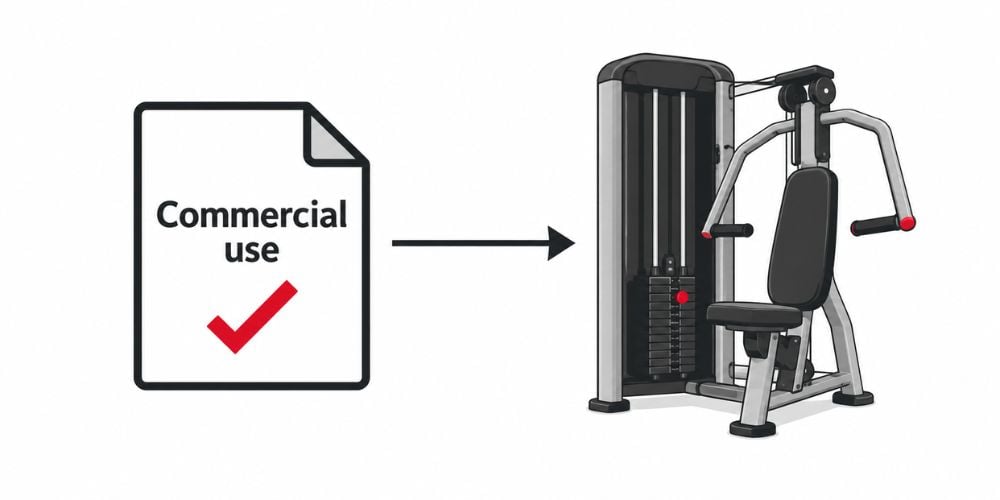
2. Read the Warranty Carefully
Next, check the warranty.
A machine may look commercial, but the warranty can tell a different story.
Look for wording that confirms coverage when the equipment is used in:
- Commercial gyms
- Fitness centers
- Training facilities
- Hotels
- Schools
- Other high-use environments
Also check what happens when the machine is placed in a commercial facility.
Some equipment comes with a long residential warranty but a much shorter commercial warranty. Others may exclude commercial use completely.
What should you check?
Pay attention to coverage for:
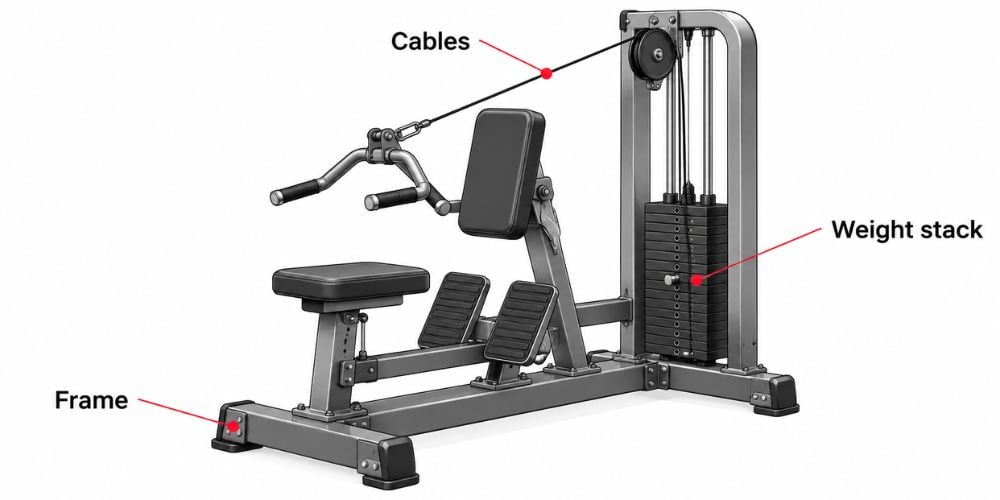
- Frame
- Cables
- Bearings
- Pulleys
- Upholstery
- Electronics
- Labor
If commercial use cancels the warranty, that is a strong warning sign.

3. Check the Product Specifications
Now look at the numbers.
Specifications do not prove quality by themselves, but they can help you judge whether the machine is suitable for frequent use.
Specification | What to Check |
Maximum user weight | Whether it suits different users |
Machine weight | General stability and structure |
Frame material | Steel size, thickness, and construction |
Weight stack | Available training resistance |
Cables | Material and rated capacity |
Dimensions | Stability and training space |
Cardio motor | Motor type and continuous-use rating |
Do not judge the whole machine from one impressive number.
For example, a high maximum user weight sounds good, but it tells you little about the bearings, pulleys, cables, welds, or adjustment system.
Here is why this matters: commercial performance comes from the whole machine working together, not one strong-looking specification.
At YR Fitness, we look at the complete machine, including structure, movement systems, cables, pulleys, adjustment points, and repeated-use demands. If you want a reference while comparing specifications, review our commercial gym equipment here and use the same checks on every machine you consider.
4. Inspect the Construction
If you can see the machine in person, spend a few minutes checking it.
You do not need engineering experience.
Check the Frame
Push or lightly shake the machine.
It should feel stable without excessive movement.
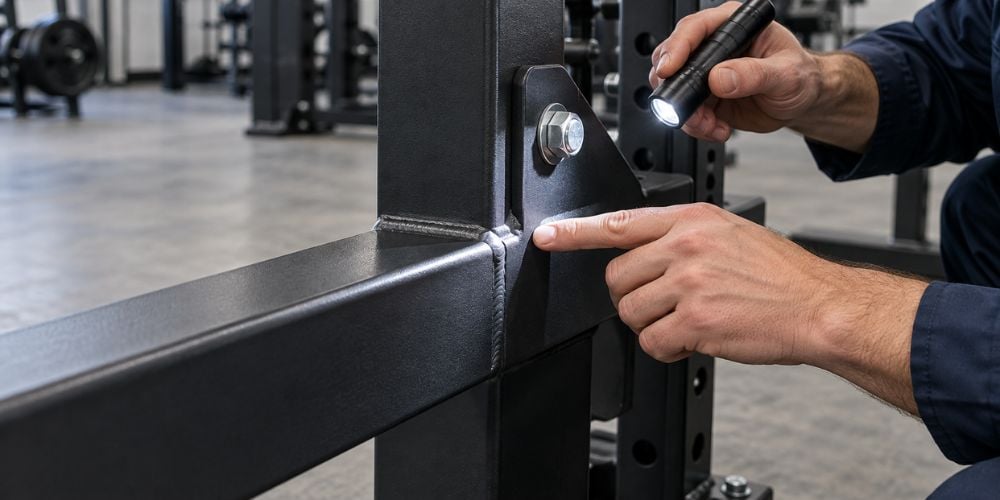
Check the Welds
Look at where the frame sections connect.
Welds should appear consistent and properly finished, not rough, incomplete, or irregular.
Check the Cables and Pulleys
Move the machine slowly.
The cable should travel smoothly without rubbing, jumping, or catching.
Check the Adjustment Points
Test the seat, handles, pads, and selector pins.
They should move easily but lock firmly into position.
Check the Moving Joints
Perform a few controlled repetitions.
Watch for:
- Grinding
- Excessive side movement
- Large gaps
- Repeated knocking
- Rough movement
I often find that movement quality reveals problems faster than appearance does. A machine can look excellent but still feel loose or poorly aligned once you use it.
5. Check Testing and Safety Standards
Do not stop at the words “commercial grade.”
Ask what standards or testing methods were used.
Depending on the equipment and market, manufacturers may test areas such as:
- Structural stability
- Maximum loads
- Repeated loading
- Moving components
- Entrapment risks
- Electrical safety
- Emergency stopping systems
- User-accessible adjustment points
For strength machines, the BS EN ISO 20957-2:2024 standard covers additional safety requirements and test methods for stationary strength-training equipment.
Another useful reference is ASTM F2276 for fitness equipment design and safety, which covers design and safety requirements used across fitness equipment.
Does certification automatically mean the machine is good?
No.
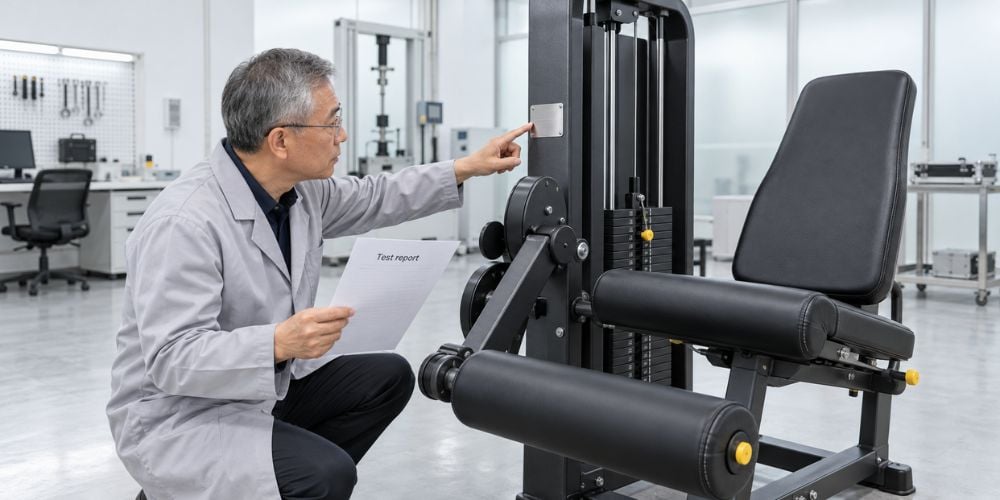
Certification or a test report can provide useful evidence, but you still need to know what was tested and whether the document applies to the exact model you are considering.
I would always ask for the actual documentation rather than relying only on a sales description.
6. Ask How the Equipment Was Tested
Finish with one direct question:
How was this machine tested for repeated commercial use?
Then ask for details.
Useful questions include:
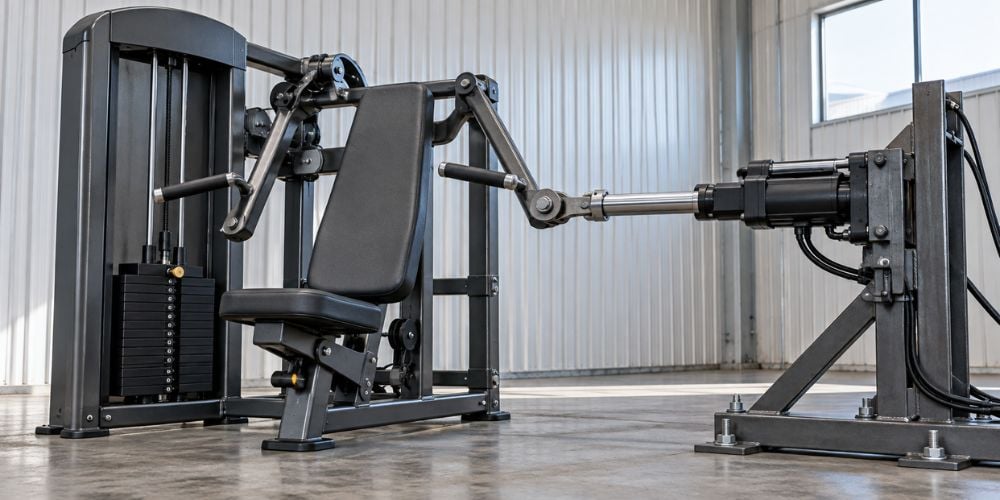
- Was the machine cycle tested?
- How many repetitions or cycles were completed?
- What load was used?
- Were moving parts tested separately?
- Were cables and pulleys tested?
- Was the frame tested under load?
- Are test reports available?
Why does cycle testing matter?
Commercial machines may perform thousands of repetitions over their working life.
Repeated-cycle testing helps show whether parts can continue working after repeated movement and loading.
From an engineering point of view, this matters because weaknesses do not always appear on the first workout. They often show up only after the machine has been used again and again.
Conclusion
So, how can you verify that equipment is really rated for commercial use? Check the intended use, warranty, specifications, construction, safety information, and testing evidence.
At YR Fitness, we build commercial gym equipment around durable structure, reliable movement systems, solid materials, and repeated-use performance. If you want to compare what properly specified commercial equipment looks like, explore YR Fitness here and use these six checks before making your decision.
Related articles:



