









Not sure how to build a full-body workout machine without using half the gym? A few well-chosen machines are usually enough.
The simple approach is to train legs, pushing, pulling, shoulders, and core. For most people, 6–8 machines can cover the whole body well.
As an Exercise Physiology & Biomechanics Expert at YR Fitness, I work closely with exercise movement, resistance paths, and strength-machine design. I have seen that balanced exercise selection matters far more than simply adding more machines.
Below, I’ll show you which machines to choose, how to order them, and how many sets and reps to use. Follow the steps, and you can build your workout quickly.
1. Start With the Main Muscle Groups
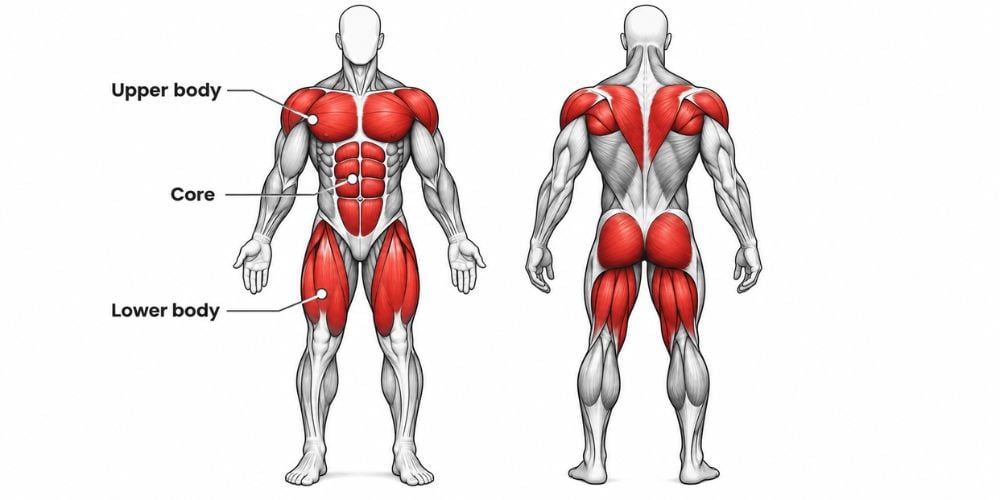
Before choosing machines, check whether your workout covers the main areas of your body.
The CDC recommends muscle-strengthening activity that works all major muscle groups, including the legs, hips, back, abdomen, chest, shoulders, and arms.
For a simple machine workout, focus on:
- Quads
- Glutes
- Hamstrings
- Chest
- Back
- Shoulders
- Core
Do you need one machine for every muscle? No.
Choose exercises that cover several muscles at once. A leg press, for example, trains your quads and glutes, while a chest press works your chest, shoulders, and triceps.
I like to check a routine from top to bottom before starting. If I see three chest exercises but nothing for the hamstrings, the workout needs adjusting.
2. Choose One Main Machine for Each Movement
Next, match each main movement with a machine.
Movement | Machine | Main Focus |
Lower-body push | Leg Press | Quads, glutes |
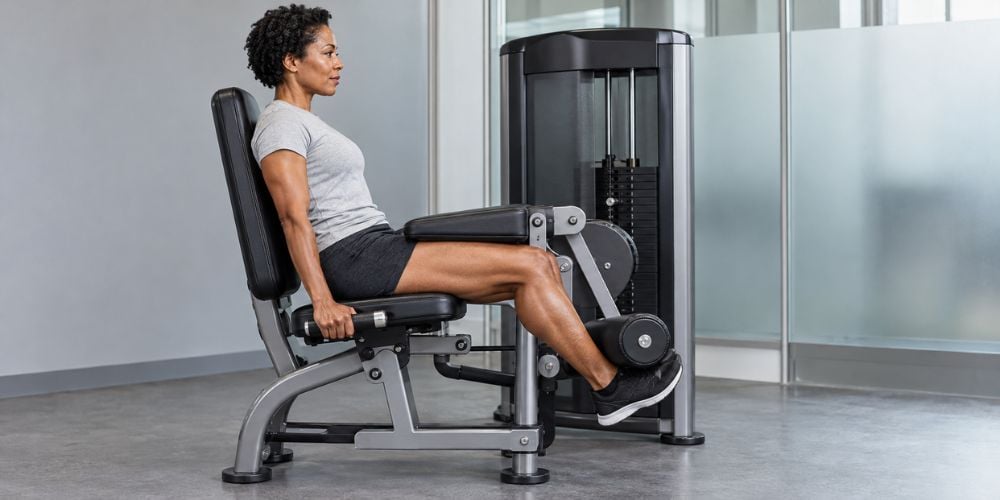
Knee flexion | Leg Curl | Hamstrings |
Upper-body push | Chest Press | Chest, shoulders, triceps |
Vertical pull | Lat Pulldown | Back, biceps |
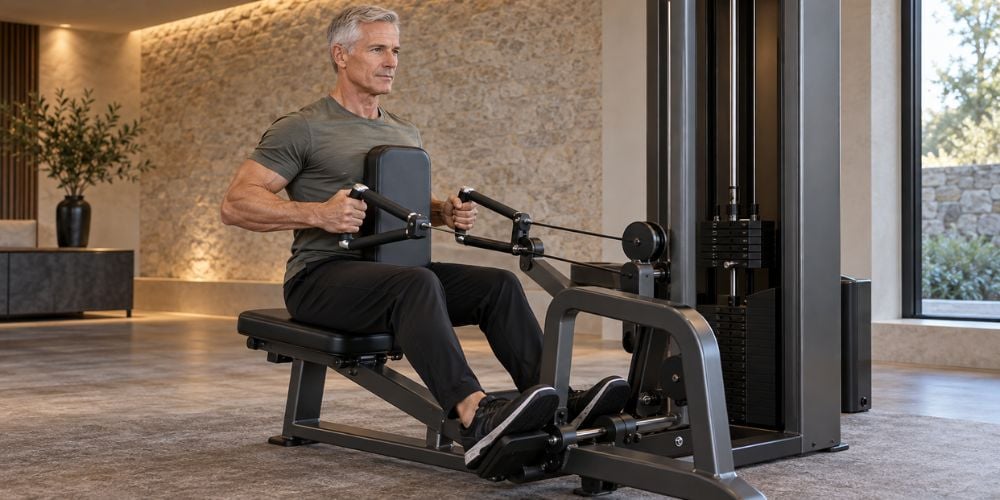
Horizontal pull | Seated Row | Back, biceps |
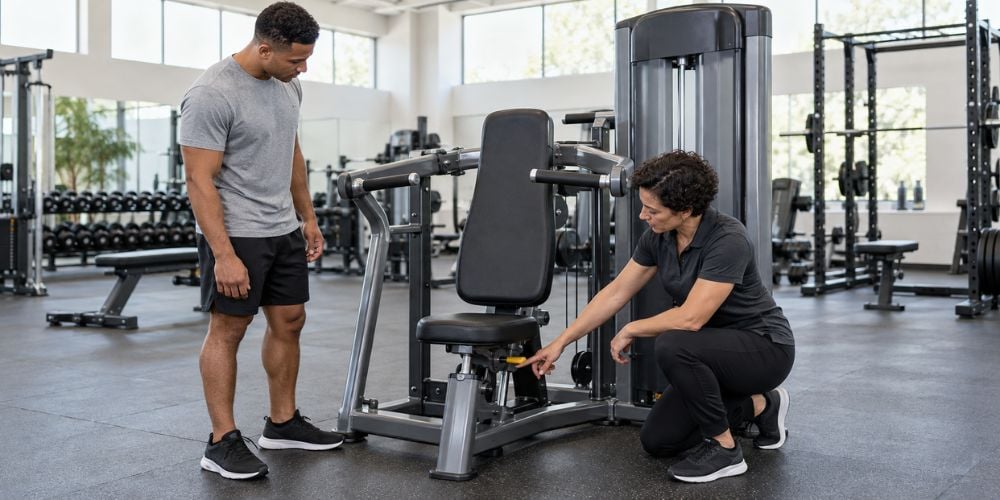
Shoulder push | Shoulder Press | Shoulders, triceps |
Core | Abdominal Machine | Abdominals |
This gives you a full-body routine without turning your workout into a long list of machines.
Your gym does not have one of these? That is fine.
A hack squat can replace a leg press, while an assisted pull-up machine can replace a lat pulldown. The important part is covering the movement pattern, not using one exact machine.
When I review a full-body workout, this is one of the first things I check: does every major movement have a place?
Not sure how different machines fit into a complete routine? At YR Fitness, we design commercial strength equipment around different training movements, so you can compare machine types and see how each one fits into a full-body program.
3. Put the Bigger Exercises First
Start with exercises that use larger muscle groups and require more effort.
A practical order is:
- Leg Press
- Chest Press
- Lat Pulldown
- Seated Row
- Leg Curl
- Shoulder Press
- Abdominal Machine
Why put the bigger exercises first?
The American College of Sports Medicine recommends performing larger-muscle and multi-joint exercises before smaller-muscle and single-joint exercises when structuring resistance training. This helps preserve exercise intensity while you are less fatigued.
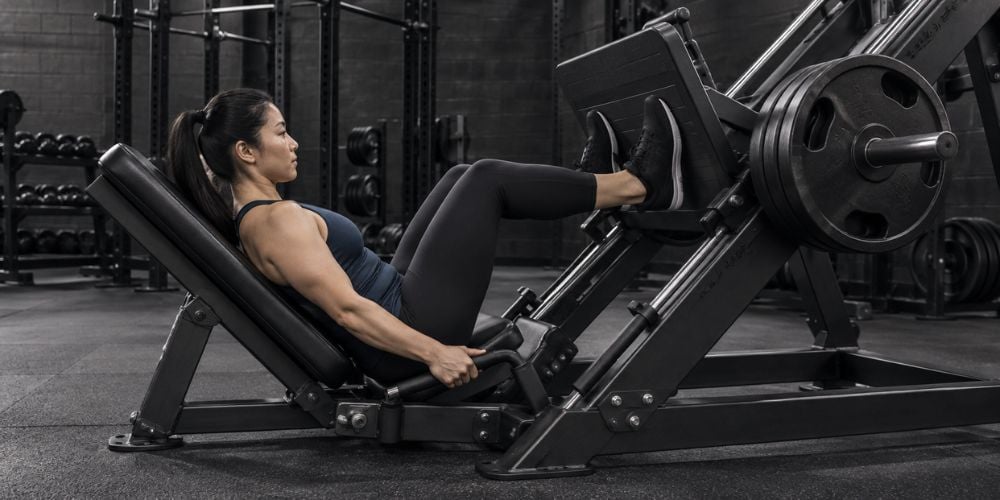
The leg press comes early because your legs can handle relatively heavy resistance and several large muscles are involved.
Chest presses, pulldowns, and rows also use several muscles. Doing them earlier means you are less likely to reach them already tired.
Smaller or simpler exercises can come later.
You do not have to follow this exact order every session. I simply prefer putting the most demanding movements before fatigue starts affecting your form.
4. Use Simple Sets and Reps
You do not need a complicated rep system.
A good starting point is:
- 2–3 sets per exercise
- 8–12 reps for most exercises
- 10–15 reps for abdominal work
- 60–90 seconds of rest between sets
This keeps the workout easy to follow.
ACSM’s Resistance Training for Health guidance also gives a practical benchmark of 2–3 sets of 8–12 repetitions performed with good form, using exercises that stress the major muscle groups.
Here is how your workout could look:
Exercise | Sets | Reps |
Leg Press | 3 | 8–12 |
Chest Press | 3 | 8–12 |
Lat Pulldown | 3 | 8–12 |
Seated Row | 2–3 | 8–12 |
Leg Curl | 2–3 | 10–12 |
Shoulder Press | 2 | 8–12 |
Abdominal Machine | 2–3 | 10–15 |
How heavy should you go?
Choose a resistance that becomes challenging near the end of the set but still lets you control the movement.
Do not increase the weight just because the first few reps feel easy. If you need to bounce, twist, or dramatically shorten your range of motion, the resistance is probably too heavy.
5. Balance Pushing and Pulling
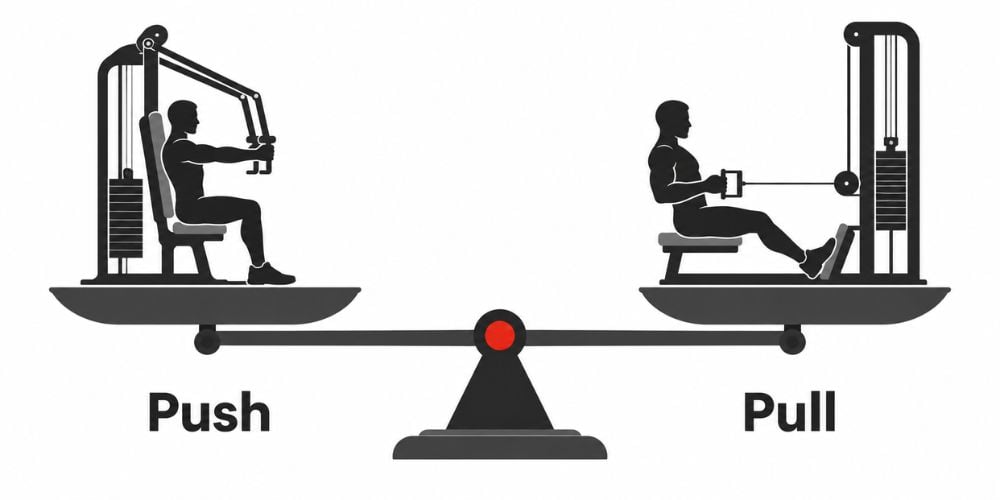
One common mistake is doing too much pushing.
Your main pushing exercises are:
- Chest Press
- Shoulder Press
Your main pulling exercises are:
- Lat Pulldown
- Seated Row
A simple way to check your workout is to put the two sides next to each other.
Two pushes and two pulls? You have a good starting balance.
This gives both the front and back of your upper body meaningful work instead of loading the session heavily toward your chest and shoulders.
I often use this quick push-pull check when reviewing a routine. If one side clearly has much more work than the other, I look at the exercise selection again.
6. Do Not Forget Both Sides of the Legs
A leg press is useful, but it should not be your only lower-body exercise.
The leg press mainly emphasizes:
- Quads
- Glutes
- Adductors to some extent
Your hamstrings also deserve direct work.
That is why I usually pair the leg press with a leg curl.
Leg Press
- Main focus: quads and glutes
Leg Curl
- Main focus: hamstrings
Want more lower-body work?
You can add a calf raise, hip abduction machine, or hip adduction machine. These are useful additions, but they do not need to replace your main leg movements.
For a basic full-body routine, keep it simple: one strong lower-body pushing exercise plus one hamstring-focused exercise gives you a solid foundation.
Conclusion
A balanced full-body machine workout does not need dozens of exercises. Cover your main muscle groups, balance pushing and pulling, train both the front and back of your legs, and keep every rep controlled.
For most people, 6–8 machines are enough. Start with the bigger movements, use 2–3 sets, and gradually increase resistance as you get stronger.
If you want to compare commercial-grade machines built around different full-body movement patterns, explore the strength equipment at YR Fitness.
Related articles:



