








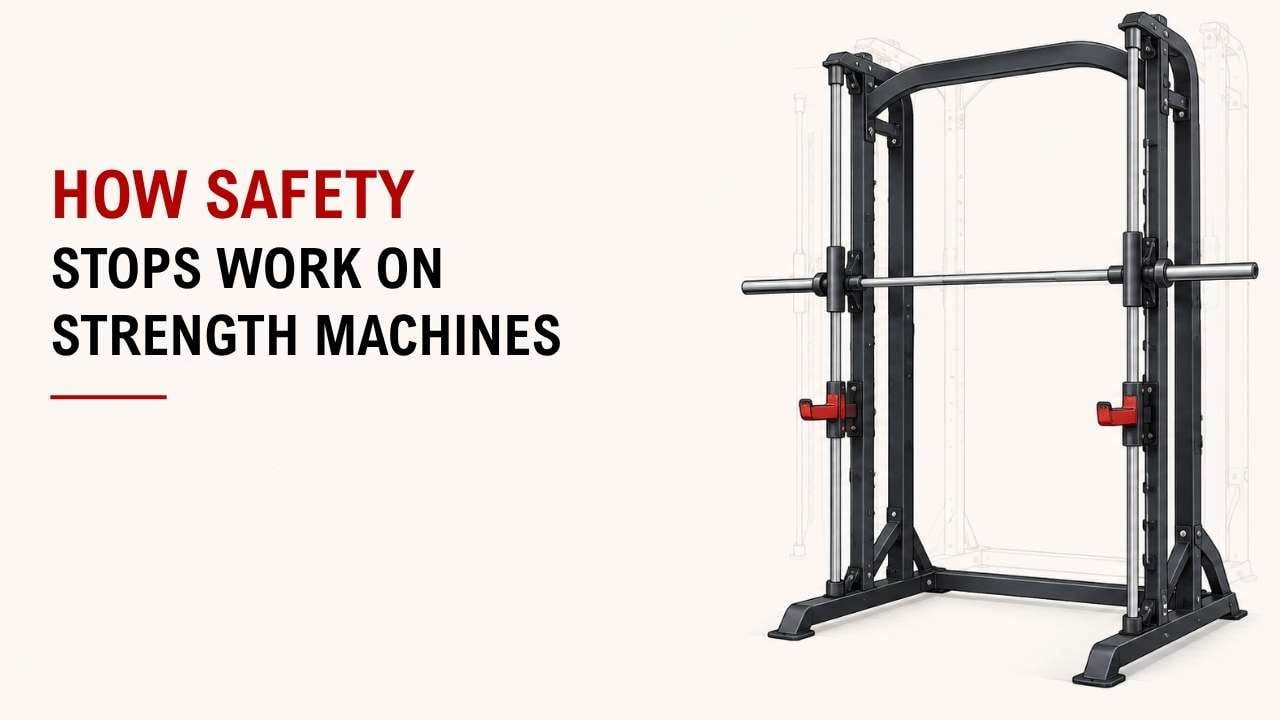

Have you ever wondered what stops heavy weights from falling too far on a strength machine? Safety stops help protect you when you lose control of a lift.
Safety stops block the weight at a preset position, preventing it from moving farther down. They act as a backup when you cannot finish a rep.
As a Machinery & Structural Engineer at YR Fitness, I focus on machine stability, moving parts, and safety mechanisms. I know how proper safety stop design and adjustment help prevent dangerous weight movement.
Below, I’ll explain six simple steps showing how safety stops work. You’ll also learn how to adjust them and reset the weight safely.
1. Limit How Far the Weight Can Move
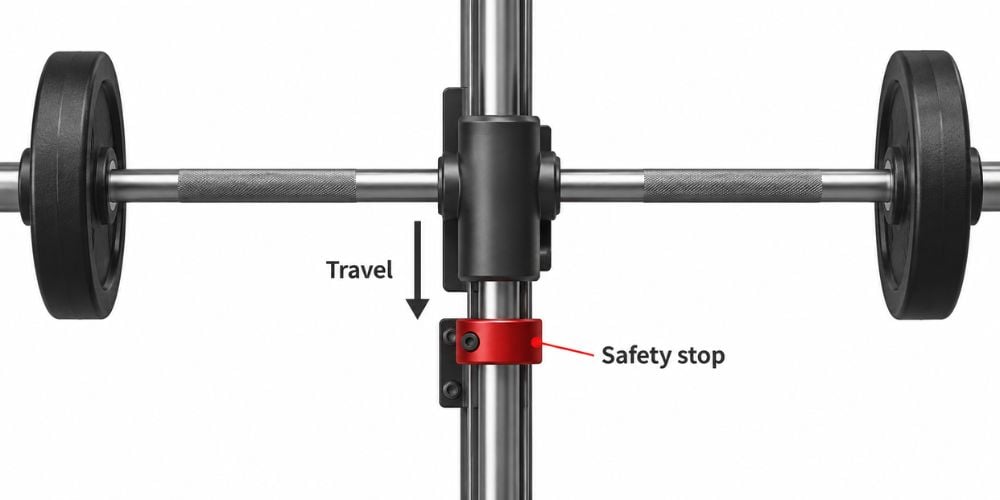
Safety stops prevent a bar or weight carriage from moving beyond a certain point.
They create a physical barrier that limits the weight’s movement, especially if you lose control during a heavy lift.
Here’s how they work:
- The machine has built-in or adjustable safety stops.
- The stops create a limit along the weight’s movement path.
- The weight moves normally until it reaches that limit.
- The stops prevent further movement in the protected direction.
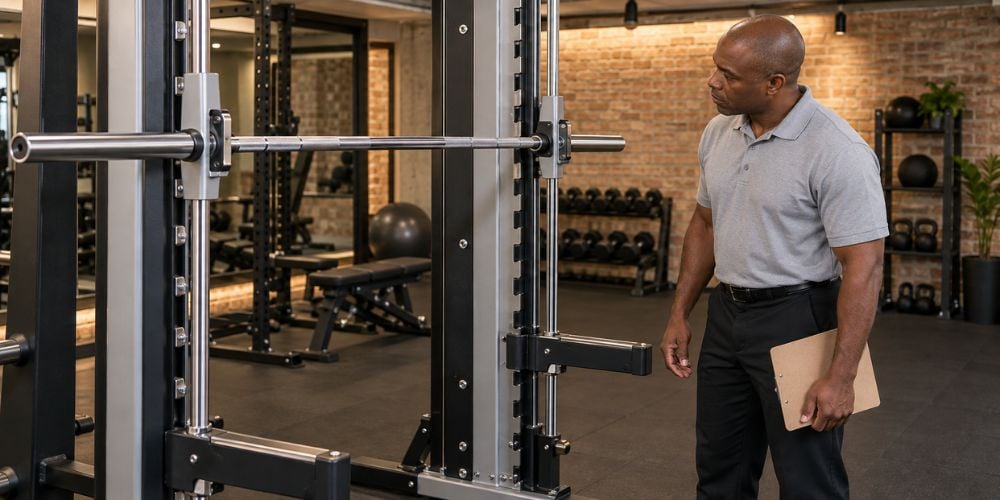
For example, on a Smith machine, safety catches stop the bar from descending below a selected height.
Why does this matter? Without properly positioned stops, the bar could travel too far downward if you lose control.
Different machines use different stopping mechanisms. Here’s a quick comparison.
Strength Machine | How the Safety Stop Works |
Smith Machine | Adjustable catches block the bar below a selected height. |
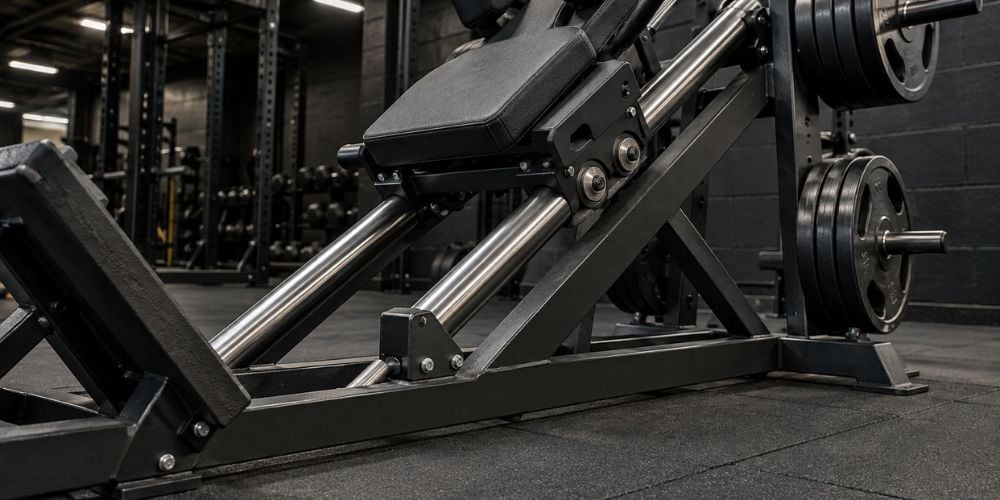
Leg Press | Mechanical stops limit how far the sled can descend. |
Hack Squat | Safety stops prevent the carriage from traveling too far down. |
Power Rack | Safety pins or bars catch the barbell at a set height. |
For a closer look at how different rack systems work, check this guide to rack safety systems from Rogue Fitness.
2. Set the Safety Stop Position Before Lifting
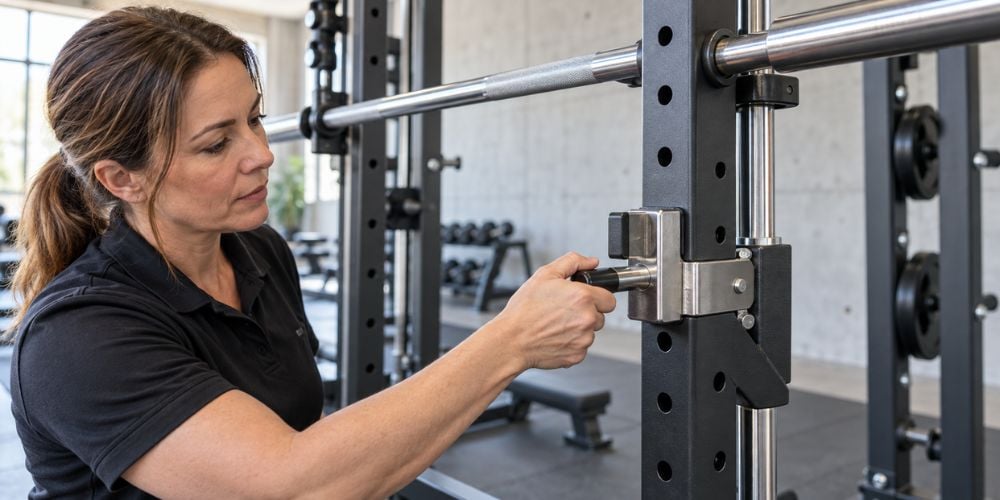
Before lifting, adjust the safety stops to the correct position.
Most adjustable systems use pins, bars, catches, or locking mechanisms. The design depends on the machine you’re using.
Follow these steps:
- Find the safety stops: Locate the pins, bars, or catches on the machine.
- Adjust the height: Set them for your exercise and body position.
- Check the stopping point: Position them just below your lowest safe lifting position.
- Lock them securely: Make sure both sides are properly engaged.
- Test the stops: Use an empty bar or light weight before lifting heavy.
I always recommend testing the stops before adding heavy plates. If they’re too low, they may not protect you; if they’re too high, they can interrupt your movement.
How do you know the height is correct? The stops should allow your normal exercise movement while still preventing the weight from reaching an unsafe position.
Here’s a quick guide to common setup mistakes.
Setup Mistake | What Can Happen | What to Do |
Stops too low | Weight may reach your body before the stop catches it. | Raise them to a protective position. |
Stops too high | Normal exercise movement gets interrupted. | Lower them slightly while keeping a safe limit. |
Loose safety pin | Stop may shift or fail to support the load. | Fully engage and secure the pin. |
Uneven stop positions | Weight may contact one side first. | Set both sides correctly. |
No test before lifting | You may discover a poor setup under heavy load. | Test with an empty bar or light load. |
Quick Tip: Some machines have fixed stops rather than adjustable ones. Always follow the manufacturer’s instructions.
3. Weight Moves Normally Until It Reaches the Stop
Once the safety stops are set, you can perform your exercise normally.
The stops stay in position while the bar or weight carriage moves through its intended range.
Here’s what happens:
- You begin lifting or lowering the weight.
- The weight moves along its normal path.
- The safety stops remain stationary.
- If the weight descends too far, it touches the stops.
For example, on a hack squat machine, the carriage moves downward as you squat. If it reaches the safety stops, it cannot move farther down.
Do safety stops activate automatically?
Most mechanical stops do not detect when you’re struggling. They simply block the weight when it reaches them.
This is why adjusting the stops before lifting is so important. They cannot protect you properly if they are positioned incorrectly.
4. Physically Blocks the Weight
This is where the safety stop does its main job.
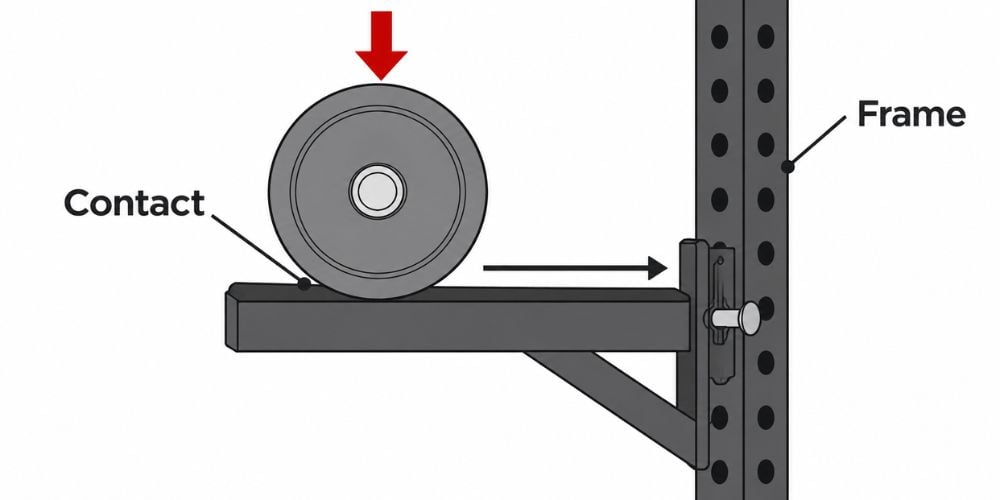
When the weight reaches the stopping point, the bar or carriage contacts a strong metal component that blocks further movement.
Here’s the process:
- The weight moves toward the stopping point.
- The bar or carriage touches the safety stop.
- The stop resists further downward movement.
- The load transfers to the machine’s supporting frame.
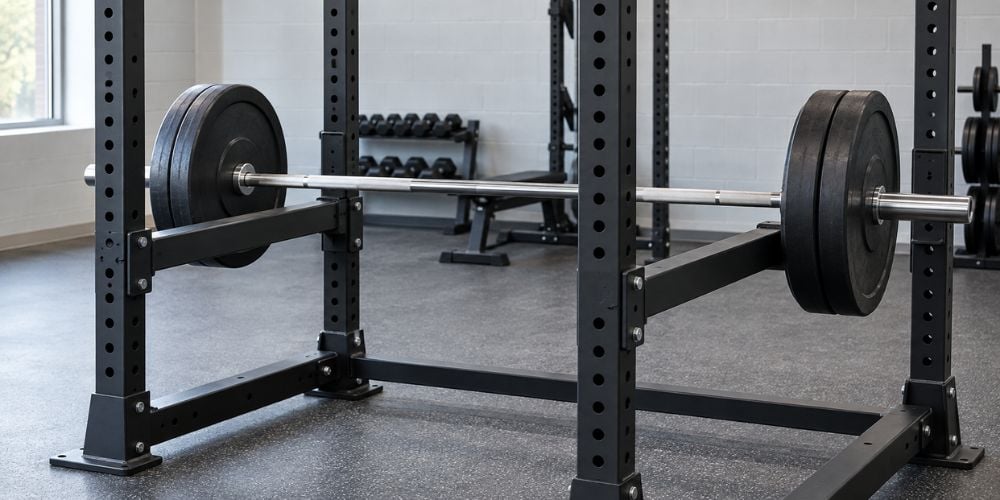
On a power rack, for example, safety pins or bars catch the barbell when it reaches their height.
As an engineer, I pay close attention to these contact points because they must support the intended loads without slipping or failing.
You can see how these components are built in Rogue Fitness’s safety spotter arm specifications. The design uses reinforced steel components, secure mounting pins, and protective surfaces.
Remember: Safety stops have load limits. Never deliberately drop heavy weights onto them, as sudden impacts can damage the mechanism.
At YR Fitness, we focus on sturdy frames, durable moving parts, and safety mechanisms designed for commercial strength equipment. We understand that even small details, such as secure catches and stable stopping points, can affect how confidently people train.
Explore our strength machines to see different equipment designs and the safety features available on each model.
5. Holds the Weight in Place
After the weight reaches the stop, the mechanism supports it at that position.
This prevents further downward movement when the safety stop is correctly installed and used within its rated capacity.
Let’s look at a few examples:
- Smith machine: Safety catches support the bar at the selected height.
- Leg press: Mechanical stops limit how far the sled moves downward.
- Hack squat: Safety stops prevent the carriage from traveling too far.
- Power rack: Safety pins or bars support the barbell when it reaches them.
Keep in mind that safety stops do not always lock the weight completely. They mainly prevent movement in the direction they’re designed to block.
Can you release the weight once it reaches the stop?
Not immediately. First, make sure the load is stable and follow the machine’s instructions.
Here is why this matters: a safety stop may support the weight from below, but the bar or carriage could still move in another direction.
A reliable stop helps reduce the risk of the weight dropping too far. It does not remove every risk associated with heavy lifting.
6. Secure or Reset the Weight Before Continuing
If the safety stop catches the weight, don’t rush into another repetition.
First, make sure the weight is stable and the machine is safe to use.
Follow these steps:
- Stop exercising: Do not force another repetition.
- Keep clear: Move your hands and body away from pinch points.
- Secure the weight: Use the machine’s designated locking system.
- Unload if necessary: Reduce the weight only when it is safe to do so.
- Check the stops: Make sure everything is properly positioned before continuing.
If you cannot secure the weight safely, ask gym staff for help.
I often remind lifters that safety stops are backup protection. They do not replace proper technique, manageable weights, or a spotter when needed.
The American Council on Exercise also recommends using a spotter for exercises such as squats and bench presses, especially when learning a movement or increasing the weight.
Quick reminder: Never remove a safety pin or force a stuck mechanism while it is supporting a heavy load.
If you notice a damaged stop, loose pin, or broken locking mechanism, stop using the equipment and report it to gym staff.
Conclusion
Safety stops limit movement, blocks weight, and support the load at a preset position. Always adjust and test them before heavy lifting.
At YR Fitness, we focus on durable strength equipment with practical safety features. Explore our machines to see how thoughtful equipment design supports safer workouts.
Related articles:



