








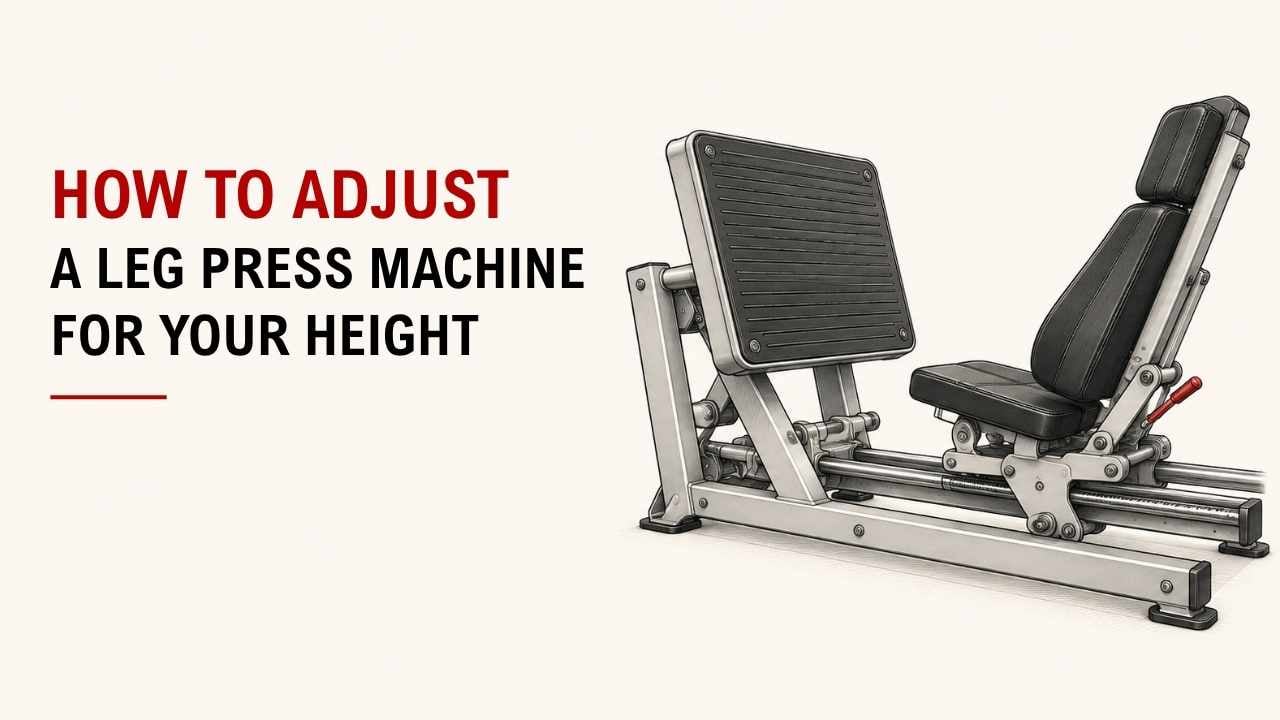

Not sure how to set the leg press for your height? The wrong position can move and feel cramped or awkward.
The quick answer: adjust the seat so your feet reach the platform comfortably, your knees can bend freely, and your hips stay against the pad.
As an Ergonomics Engineer at YR Fitness, I work closely with seat position, backrest support, and user fit. I often see small setup changes make the leg press feel much more natural and controlled.
Below are six simple checks to help you find the right position before you start training.
1. Sit on the Machine Before Adjusting Anything
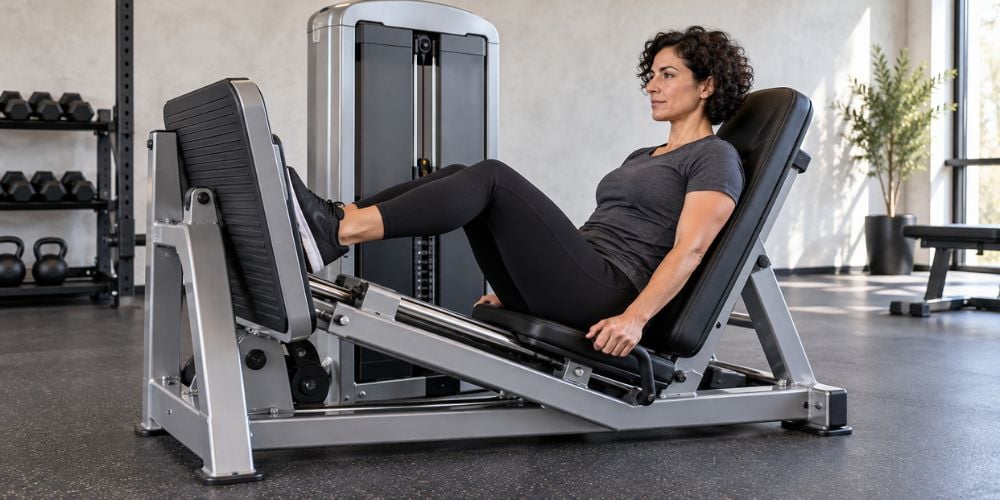
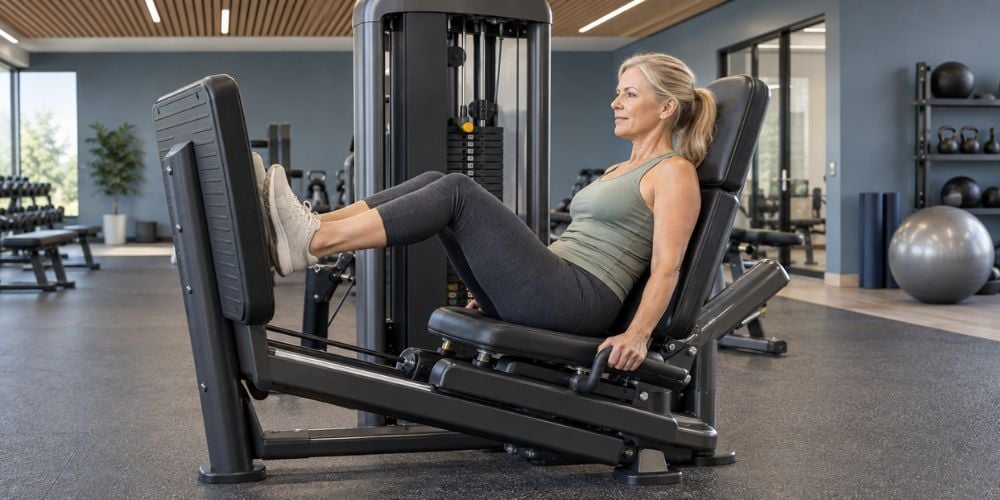
Sit fully against the back pad first.
Keep your hips, lower back, and shoulders supported. Then place both feet on the footplate and check how the position feels.
Feel cramped already?
If your knees are pushed very close to your chest, the seat is probably too close.
Struggling to reach the platform?
The seat may be too far away.
The American Council on Exercise’s seated leg press guide also recommends keeping your back and tailbone against the backrest while setting your feet and seat position.
I always recommend checking your natural seated position first. It is a better starting point than copying someone else’s setting.
Quick Setup Check
What You Feel | What It May Mean | What to Try |
Knees pushed tightly toward chest | Seat is too close | Move seat farther back |
Hard to reach footplate | Seat is too far away | Move seat closer |
Hips lift at the bottom | Depth or seat position needs adjusting | Reduce depth or move seat back |
Position feels natural and supported | Setup is close | Test with light weight |
2. Adjust the Seat Distance
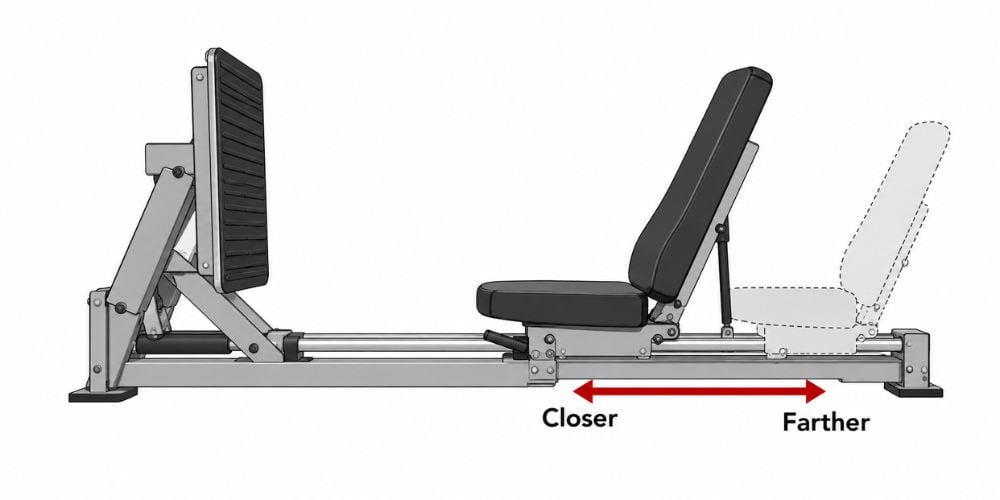
Seat distance is usually the most important adjustment for your height.
If You Are Taller
Move the seat or backrest farther away from the footplate.
You want enough room for your knees to bend without being pushed tightly into your chest. Your hips should stay against the pad.
If You Are Shorter
Move the seat closer to the footplate.
Your feet should rest firmly on the platform without needing to stretch your legs just to reach it.
Quick check: Can you place your whole foot on the platform and still bend your knees comfortably?
If yes, your seat distance is probably close.
Your height gives you a starting point, but do not rely on height alone. Leg length, torso length, and hip mobility can all change which setting feels right.
3. Check Your Knee Position
Once the seat feels right, check your knees.
Lower the sled slowly and watch how your knees move. They should generally track in the same direction as your toes.
Your hips should stay against the pad.
If your knees feel pushed too tightly toward your chest, move the seat slightly farther back. If you cannot reach a comfortable depth, you may need to move a little closer.
How deep should you go?
Go only as deep as you can while keeping your hips and lower back supported.
I would rather see a slightly shorter, controlled rep than a deep rep that makes your hips lift. This also matches the general strength-training advice from Mayo Clinic, which emphasizes proper form and controlled movement instead of forcing resistance or range.
4. Adjust the Backrest Angle If Available
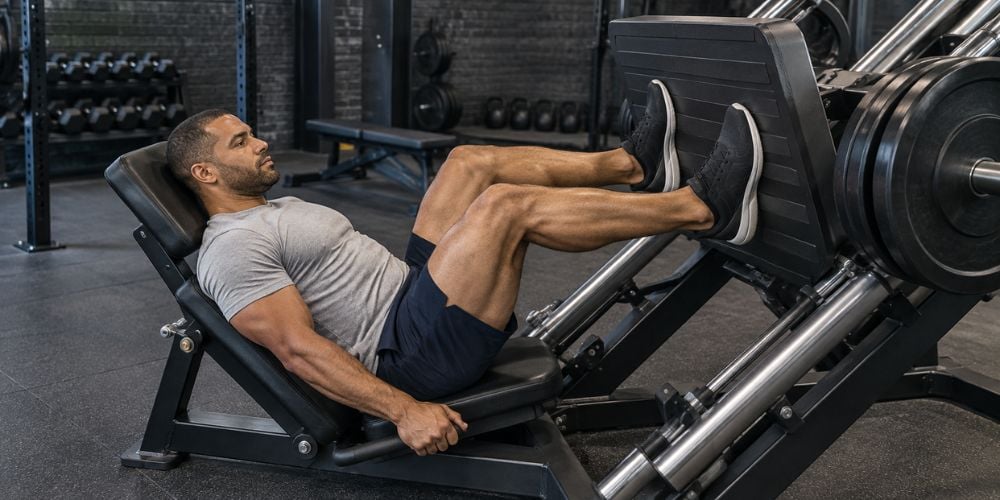
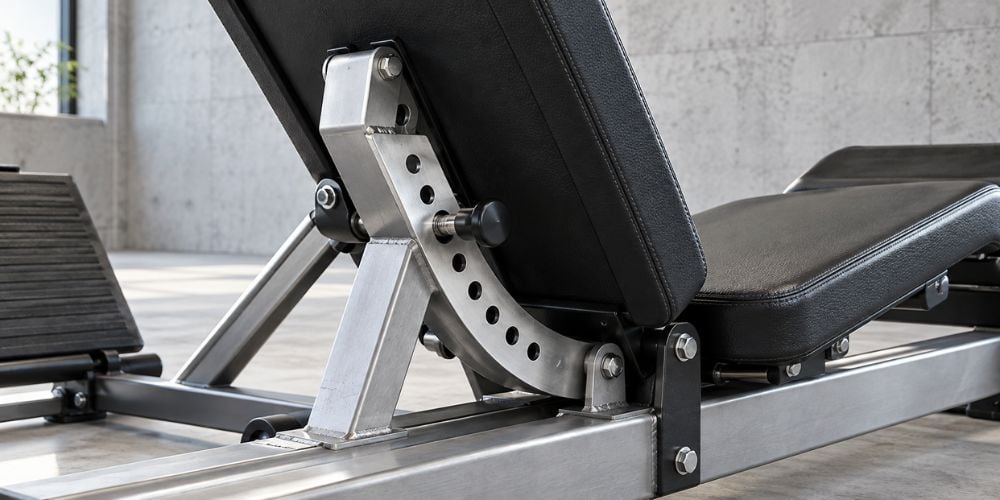
Some leg press machines also let you adjust the backrest.
Choose an angle that keeps your torso supported and gives your hips enough room to move.
A more upright position may feel better for some people. Others may prefer a slightly more reclined position.
Height matters, but body proportions and hip mobility matter too.
I usually check three things:
- Your back stays against the pad.
- Your hips do not roll forward.
- Your thighs have enough room to move.
Do not worry about finding one perfect angle. Choose the position that feels stable and natural.
A good leg press should give you enough adjustment range to find a comfortable position without forcing your knees or hips into an awkward angle. At YR Fitness, we design our commercial strength equipment with practical user adjustment in mind, so if you want to compare different leg press and lower-body machine designs, you can explore our strength equipment here.
5. Set Your Foot Position
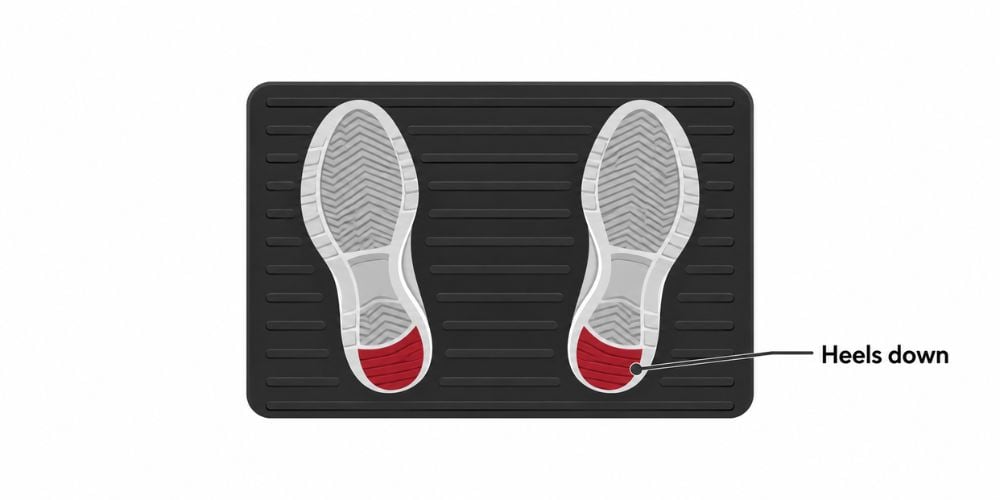
Now set your feet on the platform.
Start around shoulder-width apart with your whole foot supported.
Keep your heels down.
If your feet are too low, your knees may feel more crowded. If they are too high, the movement may feel awkward at your hips.
Make small changes until the movement feels comfortable.
Your feet should not slide, twist, or hang partly off the platform.
What Should a Good Setup Feel Like?
Area | Good Sign | Warning Sign |
Feet | Whole foot stays supported | Heels lift or feet slide |
Knees | Move smoothly with toes | Collapse inward or feel cramped |
Hips | Stay against the pad | Lift or roll forward |
Lower back | Remains supported | Rounds at the bottom |
Movement | Smooth and controlled | Forced or awkward |
6. Test the Setup With Light Weight
Do not load the machine heavily right away.
Use light resistance and perform 3 to 5 slow repetitions.
Check these points:
- Are your feet staying flat?
- Are your knees moving smoothly?
- Are your hips standing against the pad?
- Is your lower back supported?
- Do you feel cramped anywhere?
If something feels wrong, adjust the seat again.
I often see people need one or two small changes before the position feels right. Even moving the seat one setting forward or backward can make a clear difference.
Starting light also gives you a chance to check your form before adding resistance. The U.S. government’s Physical Activity Guidelines support gradual progression in muscle-strengthening exercise rather than rushing the load.
Conclusion
Adjust the leg press so your feet reach the platform comfortably, your knees can bend without feeling cramped, and your hips and back stay supported.
Test the position with light weight before adding resistance. If you want to compare adjustable leg press and lower-body equipment, visit YR Fitness and choose a design that gives you enough room to train comfortably.
Related articles:



