








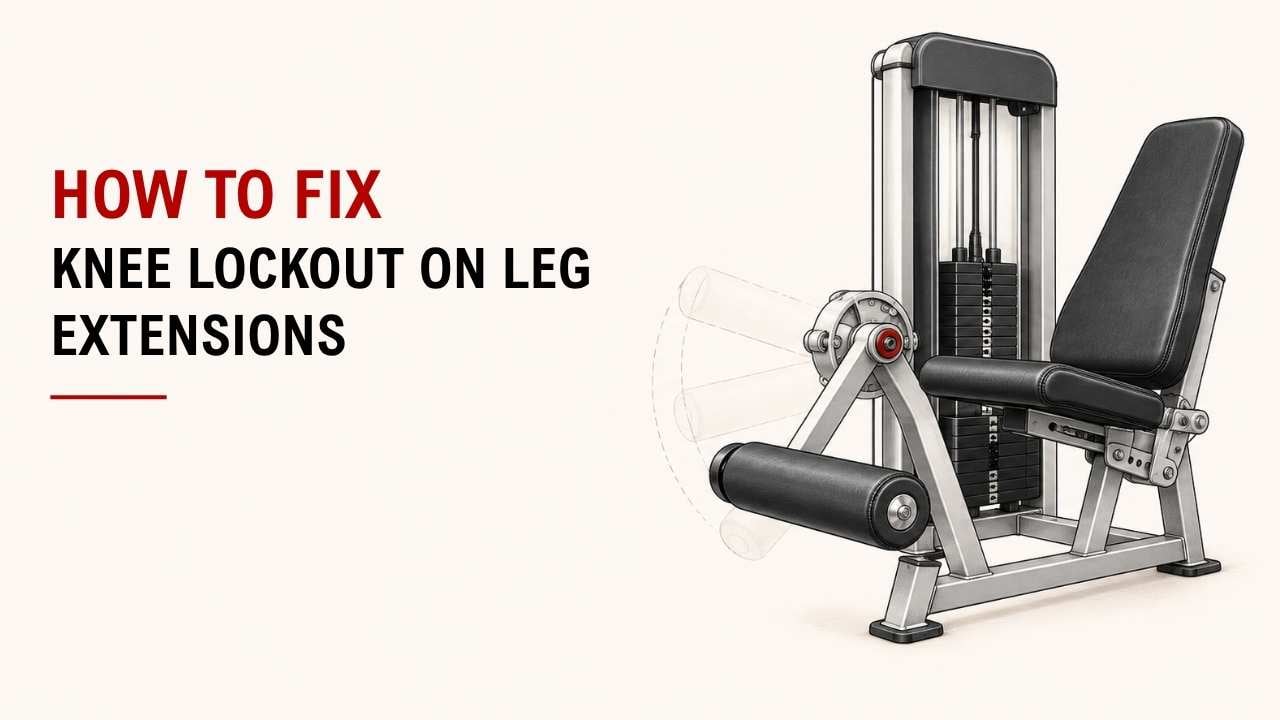

Do your knees snap at the top of a leg extension? That usually means you need more control near the end of the rep.
The quick fix is simple: use less weight, slow down, and avoid forcing your knees straight. Keep the movement smooth and let your quadriceps do the work.
As an Exercise Physiology & Biomechanics Expert at YR Fitness, I work closely with knee movement, resistance, and exercise mechanics. I often see this problem improve quickly once the setup, load, and rep speed are corrected.
Below are six simple fixes you can use during your next leg extension workout. Start with the first one and only change what you need.
Knee Lockout Fixes at a Glance
Want the short version first? Use this table before your next set.
Problem | Quick Fix | What You Should Feel |
Knees snap straight | Stop before a forceful lockout | Quadriceps stay under control |
Weight feels uncontrollable | Reduce the load | Smooth resistance |
Leg accelerates at the top | Slow the final part | Controlled quad contraction |
Machine feels awkward | Adjust seat and roller | Natural knee movement |
Body swings during reps | Remove momentum | Quads doing the work |
End range hurts | Shorten the range | Comfortable movement |
1. Stop Just Short of a Hard Lockout
You do not need to snap your knees straight at the top.
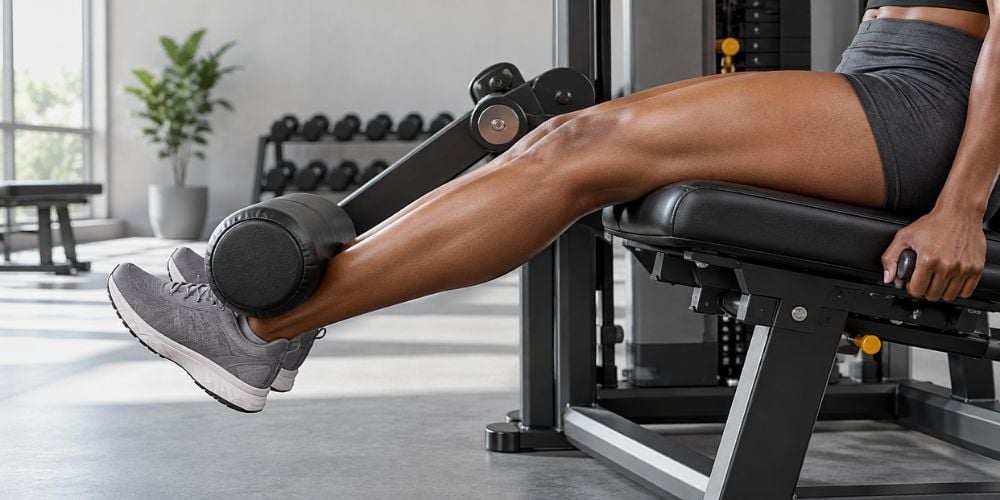
Extend your legs smoothly. If your knees tend to hyperextend or snap backward, stop just before that happens and keep your quadriceps tight.
Think about it this way: finish the rep with your muscles, not by throwing your knee into the end position.
I usually prefer seeing a controlled finish rather than a fast, aggressive snap.
Quick fix:
- Extend smoothly.
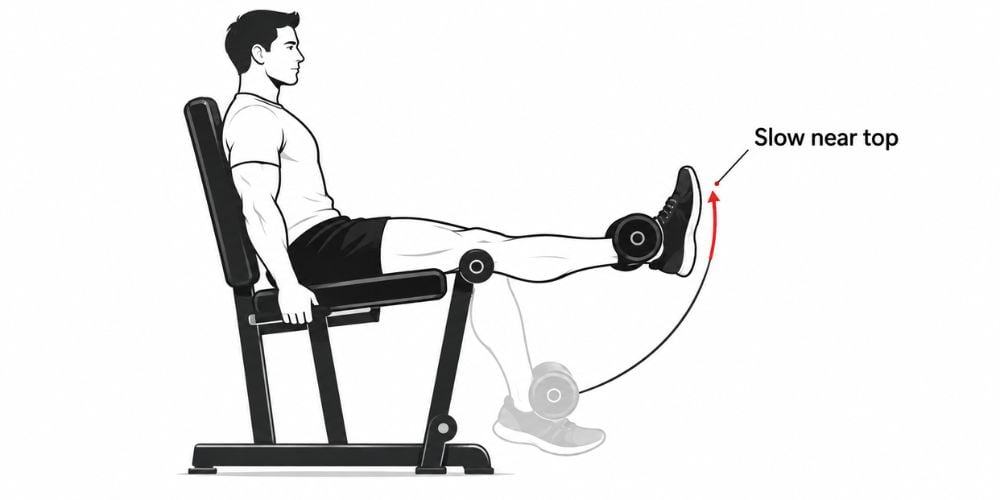
- Slow down near the top.
- Avoid forcing the knee backward.
- Squeeze your quadriceps.
- Lower under control.
Straightening the knee itself is not automatically a problem. The issue here is forceful or uncontrolled lockout.
2. Reduce the Weight
Do you have to kick the weight up?
If so, lower it.
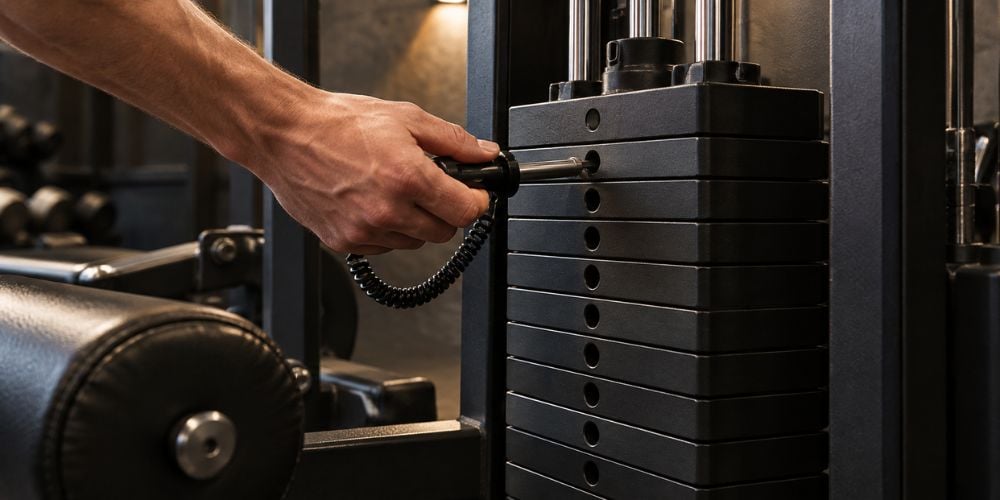
Too much resistance often makes the final part of the rep harder to control. The American College of Sports Medicine notes that resistance-training load should be matched to the individual’s goal rather than simply made as heavy as possible. ACSM resistance-training guidelines
Choose a load that lets you control the movement from start to finish.
A lighter weight can still challenge your quadriceps when you stop relying on momentum.
Ask yourself: Could I pause the weight at any point during this rep?
If the answer is no, try reducing the load.
3. Slow Down the Top of the Rep
Many people control the first half of the leg extension and then suddenly accelerate near the top.
That is exactly where you want more control.
Try this simple pace:
Part of the Rep | Simple Tempo |
Lift the weight | 1–2 seconds |
Near the top | Slow down |
Top position | Brief quad squeeze |
Lower the weight | 2–3 seconds |
I often see knee snapping improve immediately when someone makes this one change.
You do not need an exaggerated pause. Just give yourself enough time to feel where the movement ends instead of letting momentum decide.
The American Academy of Orthopaedic Surgeons gives similar advice in its knee-conditioning guidance: straighten the leg slowly and avoid swinging or using forceful momentum.
Smooth resistance and useful adjustment points make controlled repetitions much easier. At YR Fitness, we design our commercial strength equipment around stable positioning, practical adjustments, and controlled movement, so if you want to compare how different strength machines are built, you can explore our equipment range directly.
4. Adjust the Machine Correctly
Before blaming your knees, check the machine setup.
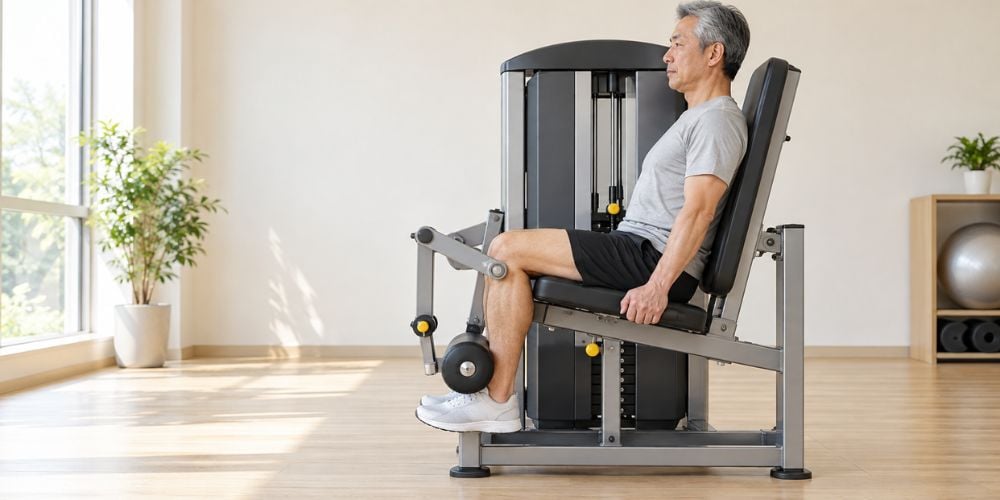
Your knee should line up closely with the machine’s rotation point. The roller should sit comfortably around your lower shin, just above the ankle area.
Check these five things:
- Keep your back against the backrest.
- Keep your hips firmly on the seat.
- Align your knee with the machine pivot.
- Position the roller comfortably above the ankle.
- Choose a starting position that does not feel cramped.
Does the machine still feel awkward?
Do not force your body to fit it. Change the seat, backrest, or roller position first.
I often see a lifter’s technique improve immediately after one small seat adjustment.
5. Do Not Use Momentum
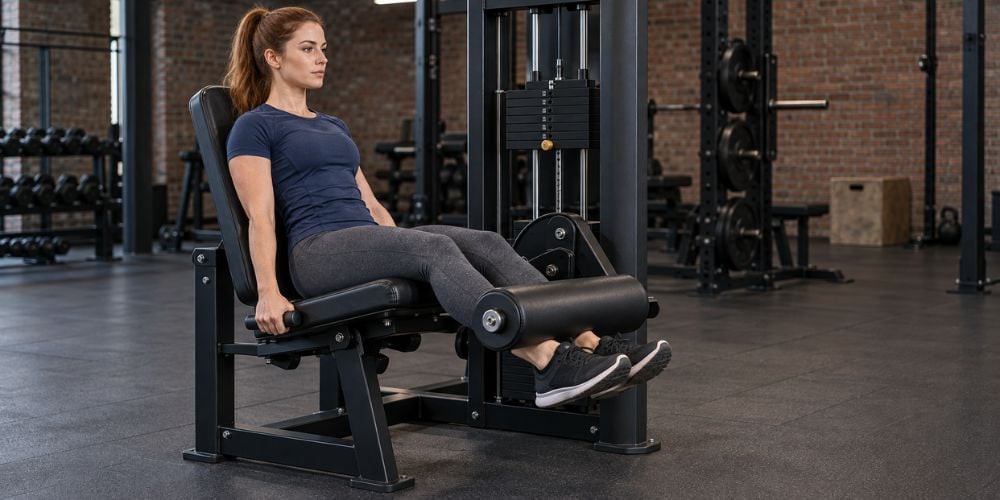
If your whole body moves, your quadriceps are no longer controlling the exercise as well as they could.
Watch for these signs:
- Kicking the roller upward
- Bouncing at the bottom
- Throwing your torso backward
- Lifting your hips from the seat
- Letting the weight stack slam down
- Snapping the knees straight
A smooth repetition may look less dramatic, but that is usually a good thing.
Simple test: Can you perform the same rep without your torso or hips moving?
If not, lower the weight and try again.
6. Use a Comfortable Range of Motion
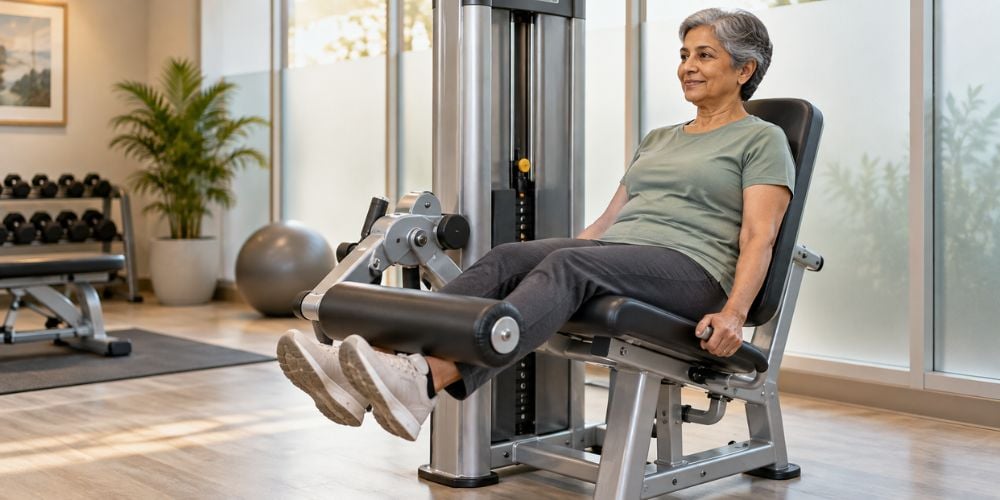
Do you feel discomfort only during the final few degrees?
You do not have to force yourself through it.
The American Council on Exercise recommends extending the knee within your comfortable movement limit rather than pushing beyond what you can control.
If the final part of the extension causes discomfort, stop slightly earlier. You can still train your quadriceps while keeping the movement smooth.
Ask yourself:
Can I complete the rep without pain, snapping, or losing control?
If yes, stay within that range.
Quick Leg Extension Form Check
Before your next working set, run through this:
Check | What to Do |
Weight | Use a load you can fully control |
Top position | Avoid forceful snapping |
Rep speed | Slow down near the top |
Knee alignment | Line up with the machine pivot |
Roller position | Keep it comfortably above the ankle |
Back and hips | Keep them against the pads |
Momentum | Do not kick or swing |
Range | Stay within a comfortable motion |
Pain | Stop if you feel sharp or unusual pain |
Conclusion
Knee lockout on leg extensions is often a control problem rather than something you need to train through aggressively. Reduce the weight, slow down near the top, adjust the machine correctly, remove momentum, and use a range that feels comfortable.
At YR Fitness, we focus on strength equipment that supports smooth resistance, stable positioning, and practical adjustments. Explore the available strength-equipment options and compare which setup best fits your training needs.
Related articles:



