








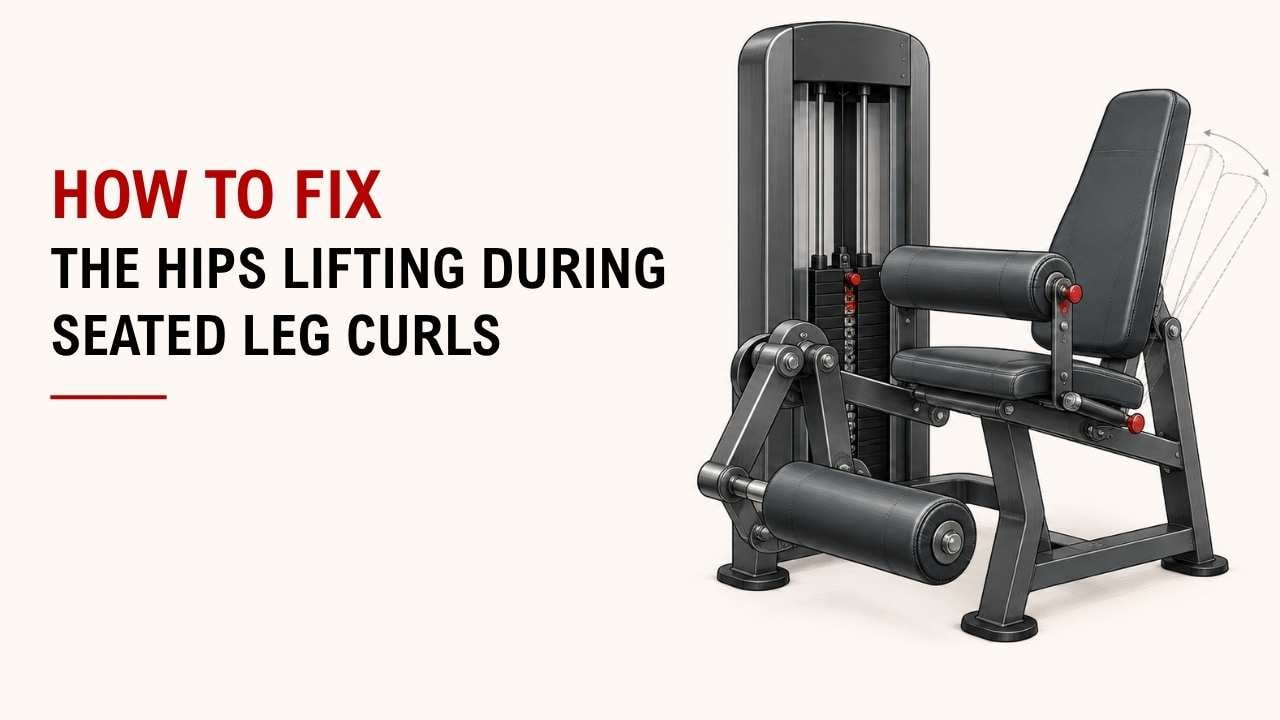

Do your hips lift off the seat during seated leg curls? This usually happens because of poor machine setup, heavy weight, or a lack of movement control.
The quick fix is simple: adjust the seat, secure the thigh pad, reduce the weight, and control each repetition. These changes help keep your hips stable while training your hamstrings.
As an Exercise Physiology & Biomechanics Expert at YR Fitness, I focus on body positioning and proper movement during strength training. I often see lifters improve their leg curl form with just a few adjustments.
Below are six simple ways to stop your hips from lifting during seated leg curls. Start with the first fix and work your way down.
1. Adjust the Seat Position
Does your body slide forward when you curl? Your seat position might be the problem.
If you sit too far forward or your knees are poorly aligned, your hips may lift as you move the weight.
How to fix it:
- Sit with your hips fully supported by the seat.
- Adjust the backrest until your back feels comfortable.
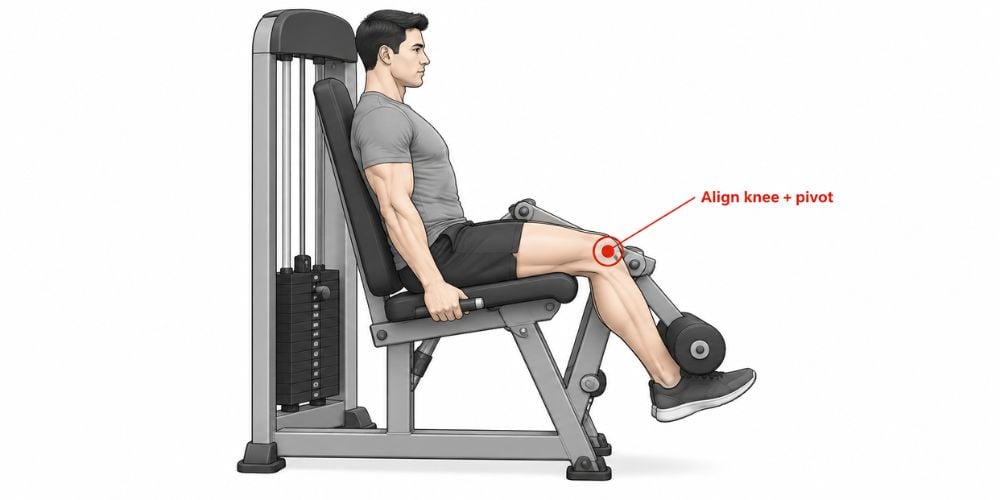
- Align your knees with the machine’s pivot point.
- Keep your thighs resting naturally on the seat.
- Test your position with a few light repetitions.
The National Academy of Sports Medicine (NASM) also recommends aligning your knees with the machine’s hinge and maintaining proper posture throughout the movement.
Quick tip: If your hips slide forward, stop, adjust the backrest, and then continue.
2. Secure the Thigh Pad
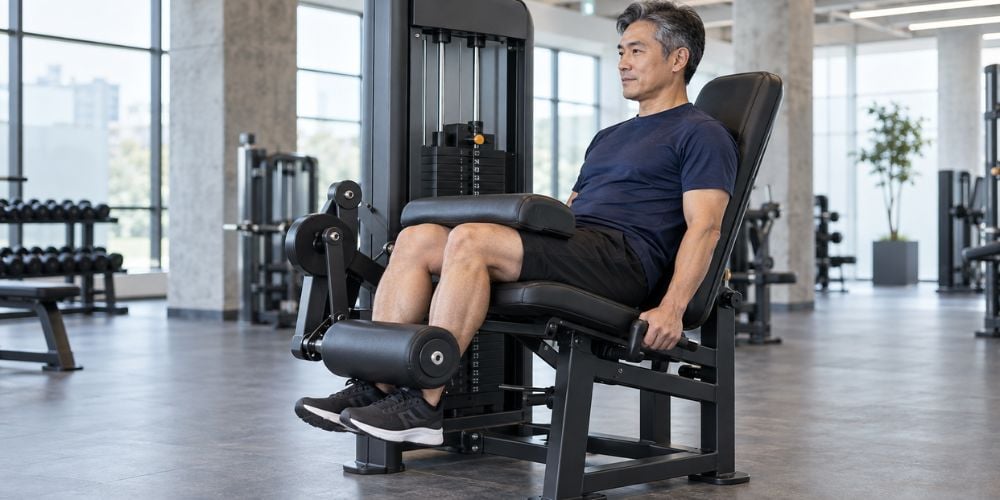
A loose thigh pad is another common reason your hips lift.
The pad should hold your thighs securely while allowing your lower legs to move freely.
How to fix it:
- Position the thigh pad across the tops of your thighs, just above your knees.
- Lower it until it feels snug.
- Make sure it does not cause pain or excessive pressure.
- Check that your thighs stay against the seat.
- Test the setup with a light weight.
I often see people adjust the ankle roller but forget about the thigh pad. Sometimes, securing this one part makes the biggest difference.
As explained in this Verywell Fit leg curl guide, correct pad positioning helps support proper seated leg curl technique.
Quick tip: The thigh pad should feel secure, not painfully tight.
3. Reduce the Weight
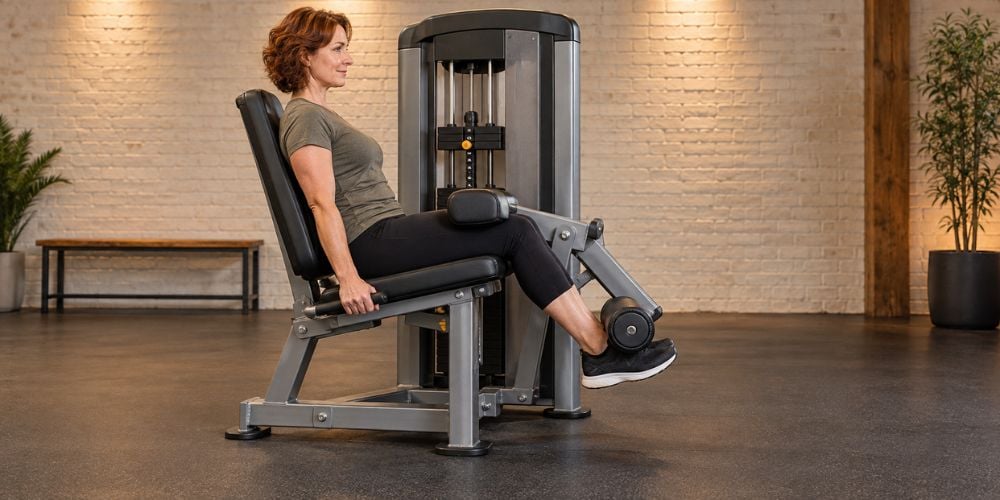
Are your hips lifting when you try to finish a heavy repetition? The weight might be more than you can control.
When resistance becomes too heavy, your body may compensate by lifting your hips, leaning forward, or using momentum.
How to fix it:
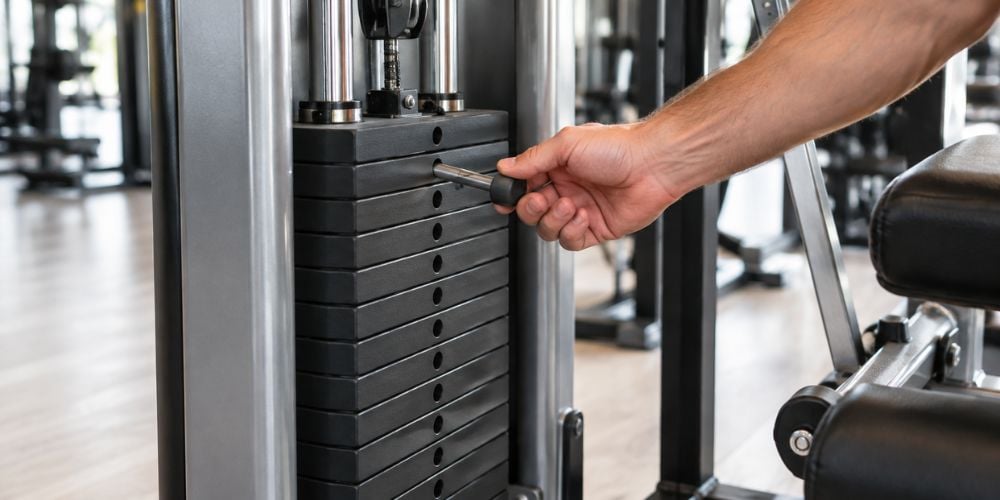
- Reduce the weight by one or two stack increments.
- Perform 8–12 slow, controlled repetitions.
- Keep your hips comfortably against the seat.
- Increase the weight only when every rep feels stable.
You should feel your hamstrings doing the work without needing to move your entire upper body.
Common Signs Your Weight Is Too Heavy
What You Notice | What to Do |
Hips lift during the curl | Reduce the weight |
Upper body rocks forward | Hold the handles and brace |
Weight moves too quickly | Slow down each repetition |
Thighs rise off the seat | Check the thigh pad |
You cannot finish a controlled rep | Use lighter resistance |
Quick tip: Choose a weight you can control from the first repetition to the last.
4. Keep Your Back Against the Backrest
Your back position affects how stable your hips remain during seated leg curls.
Leaning forward or rocking your body can make it harder to keep your pelvis supported.
How to fix it:
- Sit upright with your back against the backrest.
- Keep your pelvis comfortably positioned on the seat.
- Hold the machine’s handles if available.
- Gently brace your abdominal muscles.
- Avoid leaning forward to pull the weight down.
I recommend checking your back position before every working set. It is a small habit that makes it easier to focus on your hamstrings.
Does Machine Design Affect Hip Stability?
Yes. A properly adjusted backrest and thigh pad can help you stay in position during the exercise.
According to NASM’s seated leg curl exercise guide, the seated position provides back support and stability while helping isolate the hamstrings.
When using a leg curl machine, look for:
- Adjustable backrest: Helps you find the right seating position.
- Comfortable thigh support: Helps keep your upper legs stable.
- Smooth resistance: Makes controlled repetitions easier.
At YR Fitness, we design commercial strength equipment with practical adjustment features and controlled movement in mind. Our goal is to help users train comfortably while giving gyms reliable equipment for daily use.
If you’re comparing leg curl machines, explore our commercial strength equipment and look for designs that support comfortable positioning and smooth movement.
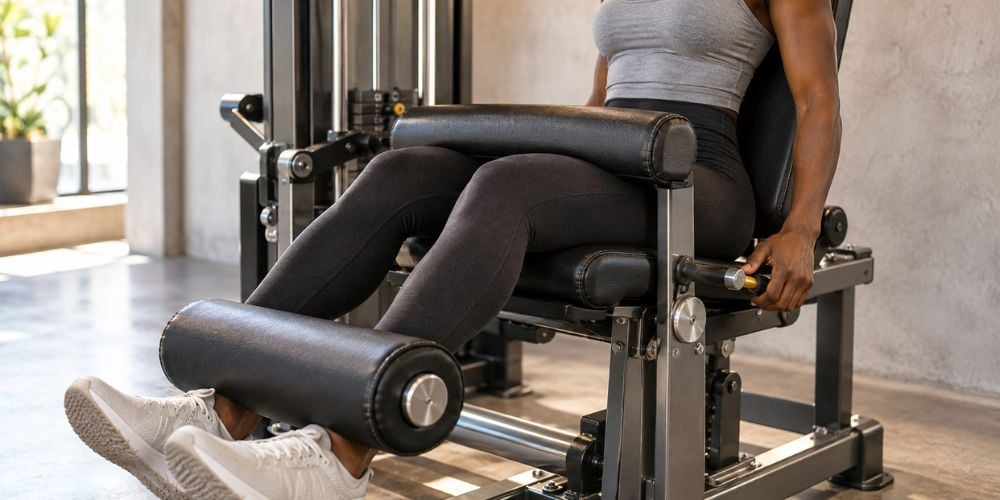
5. Control the Curling Movement
Pulling the weight too quickly can create momentum that causes your hips to rise.
Instead of rushing, let your hamstrings control the movement.
How to fix it:
- Start with your thighs secured and your back supported.
- Bend your knees smoothly to pull the ankle roller downward.
- Pause briefly at a comfortable end position.
- Return slowly to the starting position.
- Repeat without bouncing or jerking.
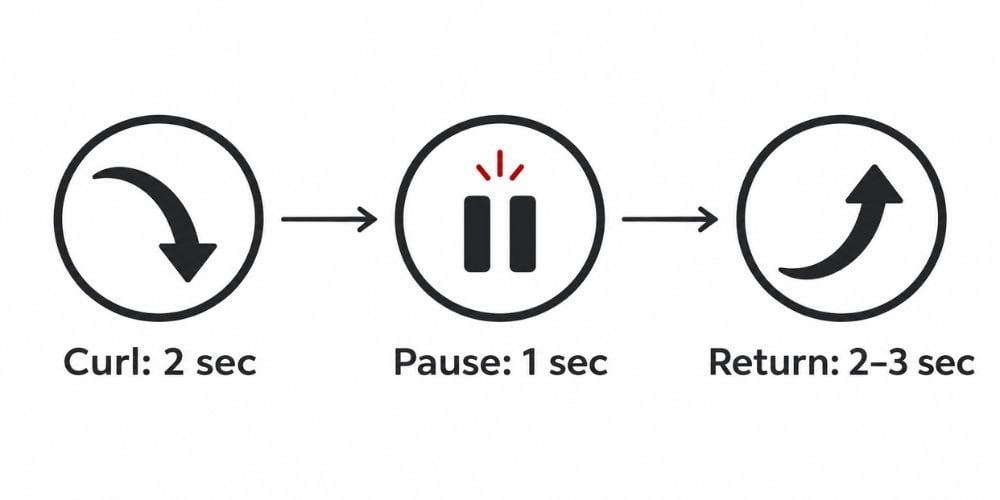
Try this simple tempo:
- Curl down: 2 seconds.
- Pause: 1 second.
- Return: 2–3 seconds.
Avoid letting the weight stack crash between repetitions. That usually means you are losing control.
Quick tip: Keep your thighs still and focus on moving only your lower legs.
6. Adjust Your Range of Motion
Do your hips lift when you try to curl farther? You may be forcing a range your current setup or strength cannot comfortably handle.
You do not need to force the machine through its full travel if your hips begin lifting.
How to fix it:
- Start from a comfortable knee position.
- Curl only as far as you can while keeping your thighs stable.
- Stop before your hips begin to rise.
- Return slowly without forcing your knees into an uncomfortable position.
- Gradually increase your range as your control improves.
I often recommend starting with a smaller range when someone struggles to stay seated. Once the setup and weight improve, a comfortable range of motion usually becomes easier.
Quick tip: A shorter, controlled curl is better than forcing a deeper movement that lifts your hips.
Conclusion
To stop your hips from lifting during seated leg curls, adjust the machine, secure your thighs, reduce the weight, and control each rep. Focus on stable movement rather than lifting heavier.
At YR Fitness, we believe proper equipment design can make workouts more comfortable and controlled. Explore our commercial strength equipment to see how adjustable features can support better training.
Related articles:



