









Do your shoulders rise toward your ears during seated rows? That usually means the weight or your pulling position needs a small fix.
The simple answer: use less weight, keep your shoulders down, pull with your elbows, and control every rep. These changes help your back work better without letting your upper traps take over.
As an Exercise Physiology & Biomechanics Expert at YR Fitness, I study how shoulder position and resistance affect rowing mechanics. I often see this issue improve quickly once the load and movement pattern are corrected.
Below, I’ll show you six simple fixes. Use them in your next workout and keep each rep clean.
1. Lower the Weight
Start with the easiest fix.
If the weight is too heavy, your body may lift your shoulders to help finish the rep. Reduce the load until you can pull without shrugging.
This matches general weight-training guidance from Mayo Clinic: if you cannot maintain good form, reduce the weight or the number of repetitions.
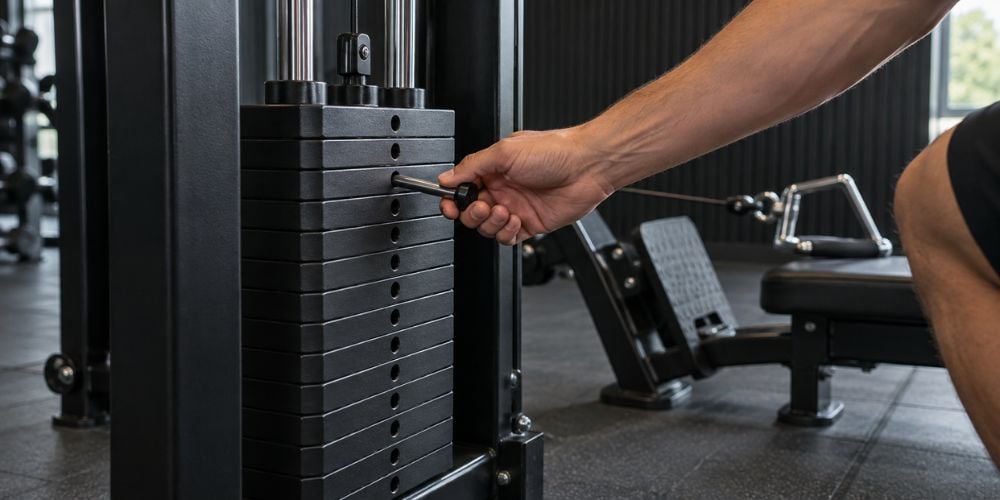
Quick check: Can you complete the whole set with your shoulders staying down?
If not, lower the weight again.
I would rather see a clean lighter row than a heavy row where the shoulders rise on every rep.
What You Notice | What It May Mean | What to Change |
Shoulders rise near the last reps | Weight may be too heavy | Reduce the load |
You have to jerk the handle | You are losing control | Slow the rep |
Torso leans farther back | Momentum is taking over | Use less weight |
Form stays the same all set | Load is easier to control | Keep that weight |
2. Set Your Shoulders Before You Pull
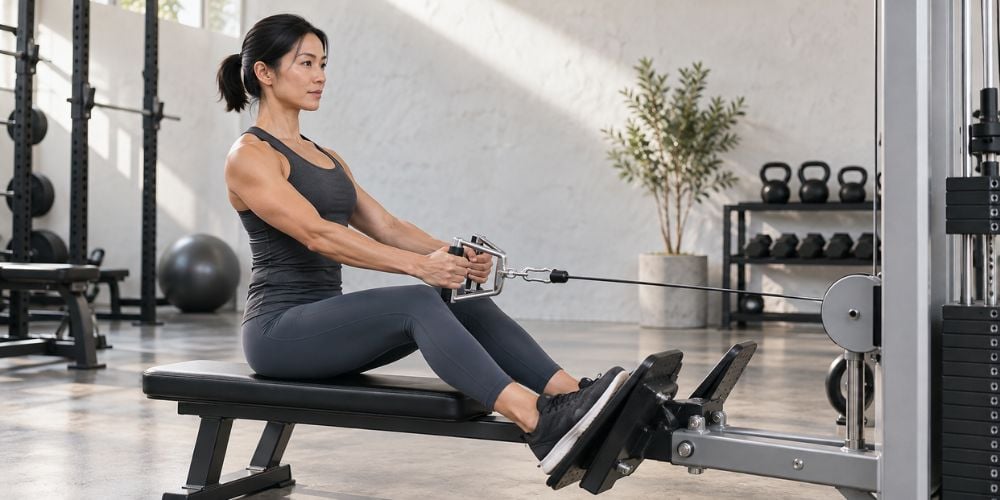
Before starting, sit tall and let your shoulders move down and away from your ears.
Do not force them aggressively backward. Just keep your neck relaxed and create a stable starting position.
Think:
Chest up. Shoulders down. Neck relaxed.
Then begin the pull.
The ACE seated row guide also recommends starting upright, stabilizing your torso, and positioning the shoulder blades back and down before pulling.
Why does this matter?
If you begin the rep with your shoulders already raised, it becomes much harder to correct them halfway through the pull.
3. Pull With Your Elbows
Do not focus only on pulling the handle.
Instead, think:
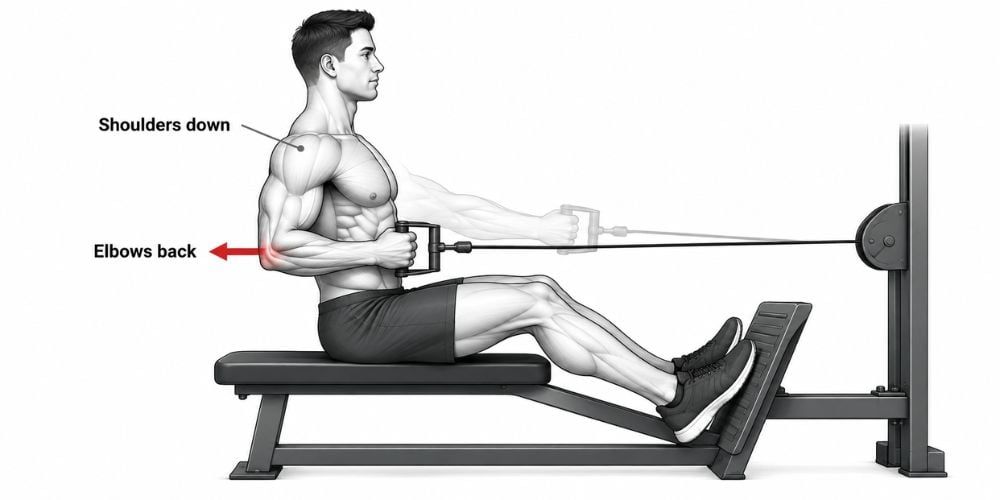
“Drive my elbows backward.”
Your hands mainly connect you to the handle. Your elbows guide the movement.
Keep your grip secure, but do not squeeze harder than necessary.
When people focus too much on their hands, I often see their arms and upper traps start taking over. Thinking about the elbows usually makes it easier to keep the shoulders relaxed.
A simple cue works well:
Elbows back. Shoulders down.
ACE also describes the seated row as a movement where you pull the elbows backward while maintaining an upright position.
4. Stop Pulling Too Far Back
More range is not always better.
Once your elbows reach a natural position beside or slightly behind your torso, finish the rep. Do not keep forcing the handle farther backward just to make the movement look bigger.
Pulling too far may cause you to:
- Shrug your shoulders
- Lean backward
- Push your chest forward too much
- Lose control of your shoulder blades
Ask yourself:
Am I still pulling with my back, or am I forcing the last part of the rep?
If you are forcing it, shorten the range slightly.
Good technique is easier when the machine gives you a comfortable starting position and a smooth resistance path. At YR Fitness, we design commercial strength equipment with practical movement angles, adjustable positions, and controlled resistance in mind, so you can explore equipment that supports cleaner rowing mechanics.
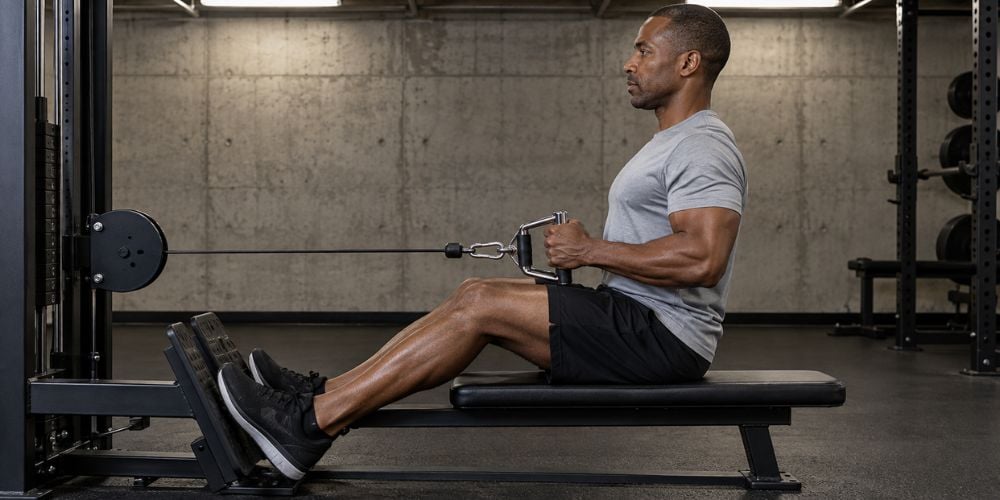
5. Keep Your Chest and Torso Stable
Your torso should stay mostly still during the row.
Avoid leaning backward every time you pull. That usually means you are using momentum instead of controlling the resistance.
Keep your chest naturally upright and your core lightly braced. Let your back and arms move the weight.
A small amount of natural torso movement can happen depending on the machine, but you should not be rocking back and forth.
From a biomechanics point of view, I look for consistency. If your torso position changes a lot from the first rep to the last, the weight may be too heavy.
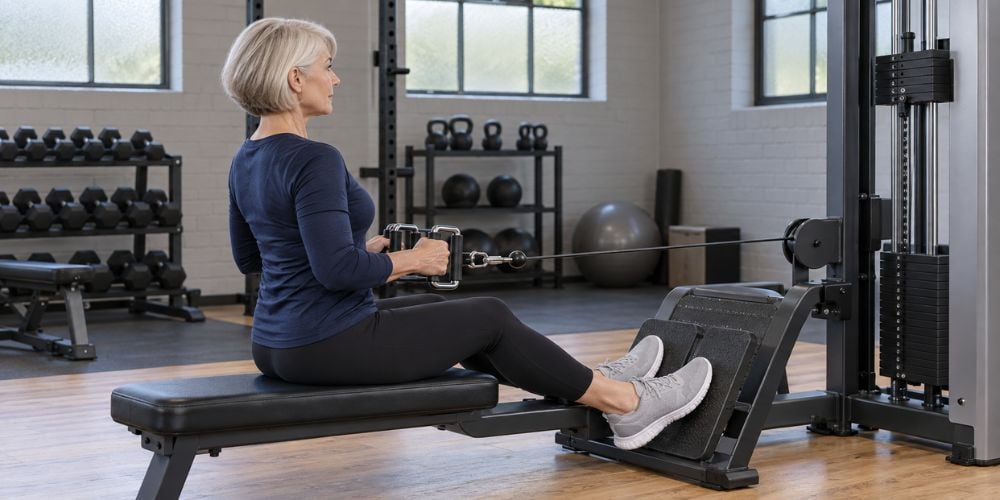
Here is a quick way to check your form:
Body Area | Good Position | Common Mistake |
Head | Neutral and relaxed | Chin pushing forward |
Shoulders | Down and controlled | Rising toward ears |
Chest | Naturally upright | Excessively pushed forward |
Torso | Mostly stable | Rocking backward |
Elbows | Travel backward | Flare or move unpredictably |
Hands | Secure grip | Over-gripping handle |
6. Control the Return
Do not only focus on the pulling part.
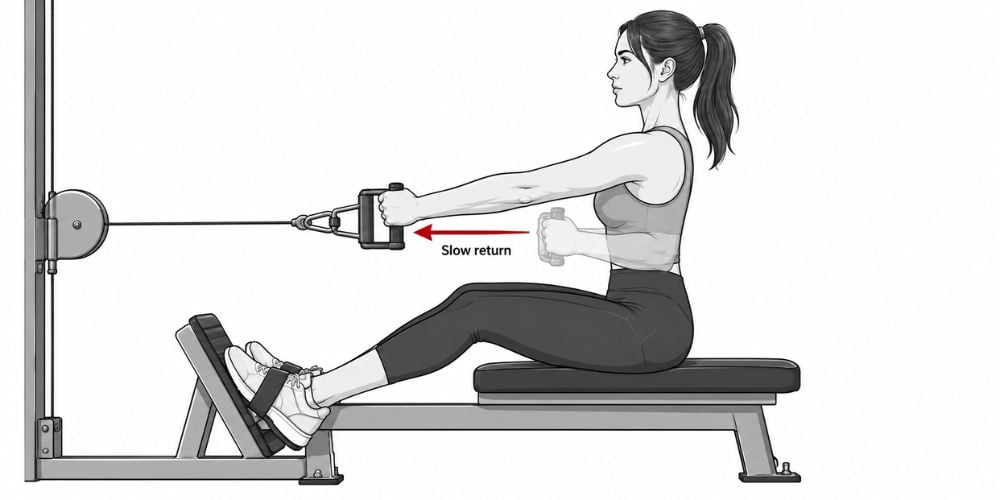
After bringing the handle toward your body, slowly extend your arms again. Do not let the weight suddenly drag your shoulders forward.
Allow your shoulder blades to move naturally as your arms extend, but keep your neck relaxed.
Try this simple rhythm:
Pull → brief pause → slow return
The idea is simple: stay in control instead of letting momentum decide the speed. Harvard Health’s strength-training guidance also recommends slow, smooth lifting and controlled lowering to help maintain proper form.
Should your shoulders move at all?
Yes, naturally. The goal is not to freeze them completely; it is to stop them from jumping upward toward your ears.
If that happens during the return, slow the movement down.
Conclusion
Shrugging during seated rows is usually something you can fix with better control. Use less weight, keep your shoulders down, pull with your elbows, stop at a natural range, and control the return.
Clean reps will usually help you feel your back working more effectively.
If you want to explore strength equipment designed around smooth, controlled movement, visit YR Fitness and compare the available rowing and strength-machine options.
Related articles:



