








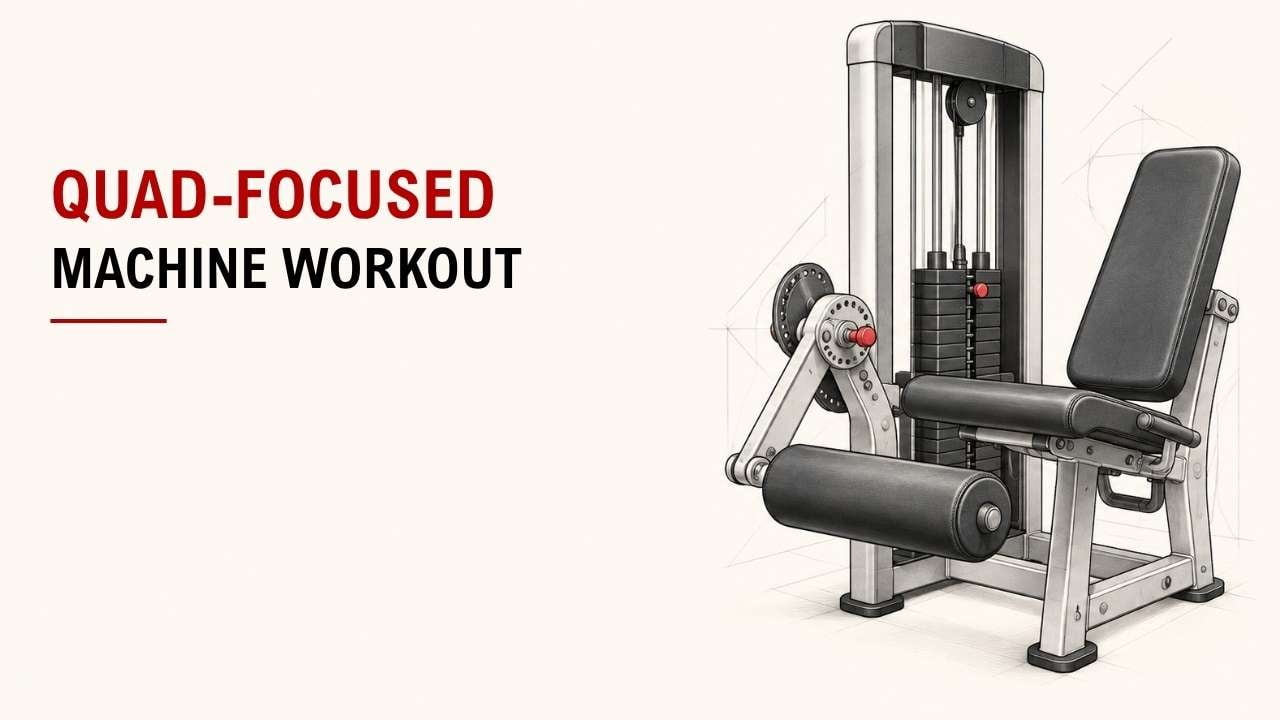

Want stronger quads without making leg day complicated? A few good machines can do the job.
The simple plan is: leg extensions, hack squats, leg presses, a squat machine, and single-leg extensions. At YR Fitness, we work with commercial strength equipment built for controlled training.
As an Exercise Physiology & Biomechanics Expert, I study how knee position, foot placement, and range of motion affect each rep. I often see small setup changes make quad training feel more effective and much easier to control.
Below, I’ll show you the five exercises, sets, reps, and main form tips. Follow them in order and keep the workout simple.
Quad-Focused Workout at a Glance
Want the whole workout first? Here it is.
Exercise | Sets | Reps | Rest |
Leg Extension | 3 | 12–15 | 60 sec |
Hack Squat Machine | 4 | 8–12 | 90–120 sec |
Leg Press | 3 | 10–12 | 90 sec |
Pendulum Squat / Squat Machine | 3 | 8–12 | 90–120 sec |
Single-Leg Leg Extension | 2–3 | 12–15 | 45–60 sec |
The current ACSM resistance-training guidance also emphasizes keeping training practical and consistent rather than making programs unnecessarily complicated.
1. Leg Extension
Sets: 3
Reps: 12–15
Rest: 60 seconds
Start with the leg extension to warm up your quads before the heavier exercises.
Adjust the seat so your knees line up with the machine pivot. Place the roller just above your ankles and keep your back against the pad.
Extend your legs smoothly, pause briefly near the top, and lower the weight under control.
What should you avoid? Do not kick the weight up or let the stack slam down.
I usually prefer a moderate weight here. The goal is to feel your quads working, not to chase the heaviest number.
2. Hack Squat Machine
Sets: 4
Reps: 8–12
Rest: 90–120 seconds
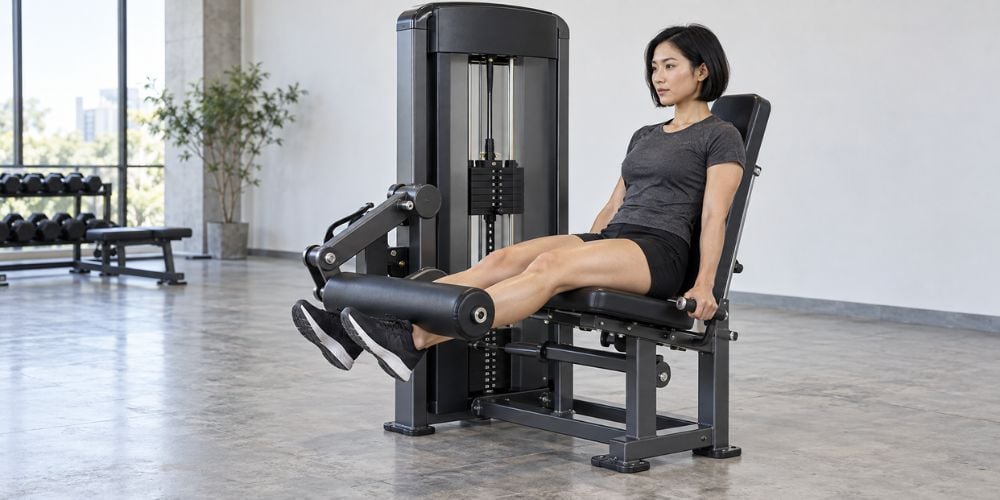
The hack squat is one of the main quad exercises here because your torso stays supported while your legs do the work.
Place your feet around shoulder-width apart and keep your back and shoulders firmly against the pads.
Lower yourself slowly until you reach a comfortable depth. Push back up while keeping your knees moving in the same direction as your toes.
Want more quad emphasis? A slightly lower foot position can increase knee bend and make the quads work harder.
Do not move your feet so low that your heels lift or the position feels uncomfortable.
3. Leg Press
Sets: 3
Reps: 10–12
Rest: 90 seconds
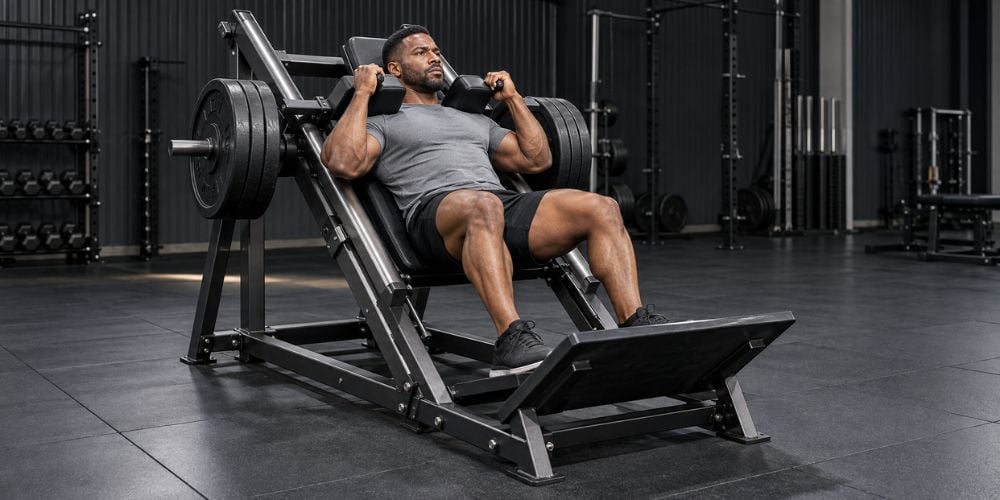
The leg press lets you train your quads hard without having to balance a barbell.
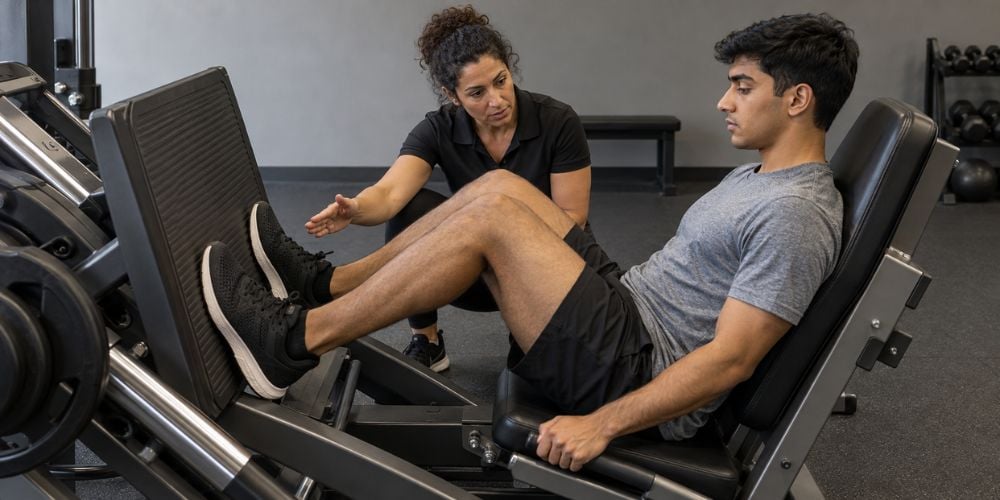
Place your feet around shoulder-width apart and keep your lower back against the pad. Lower the platform slowly while keeping your hips stable.
Then press the platform away without aggressively locking your knees. The ACE seated leg press guide similarly recommends keeping the back supported, heels in contact with the platform, and the movement controlled.
I often see people shorten the movement once the weight gets too heavy. Reducing the load usually makes it easier to use a better range of motion.
Quick Check: Are your knees collapsing inward? If yes, reduce the weight and keep them aligned with your feet.
At YR Fitness, we design our commercial strength machines around stable support, controlled movement, and heavy daily use. Browse our equipment if you want to compare different machine designs and see how features such as platforms, pads, and movement paths differ.
4. Pendulum Squat or Squat Machine
Sets: 3
Reps: 8–12
Rest: 90–120 seconds
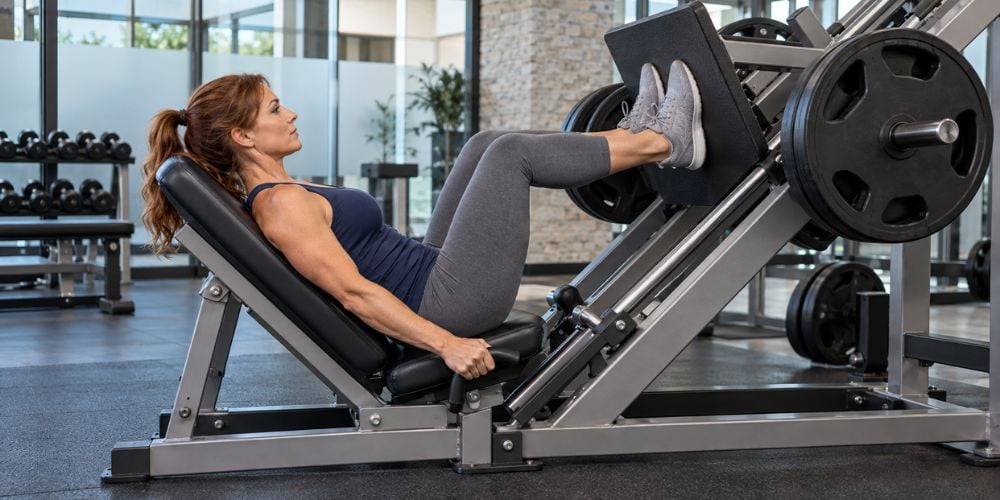
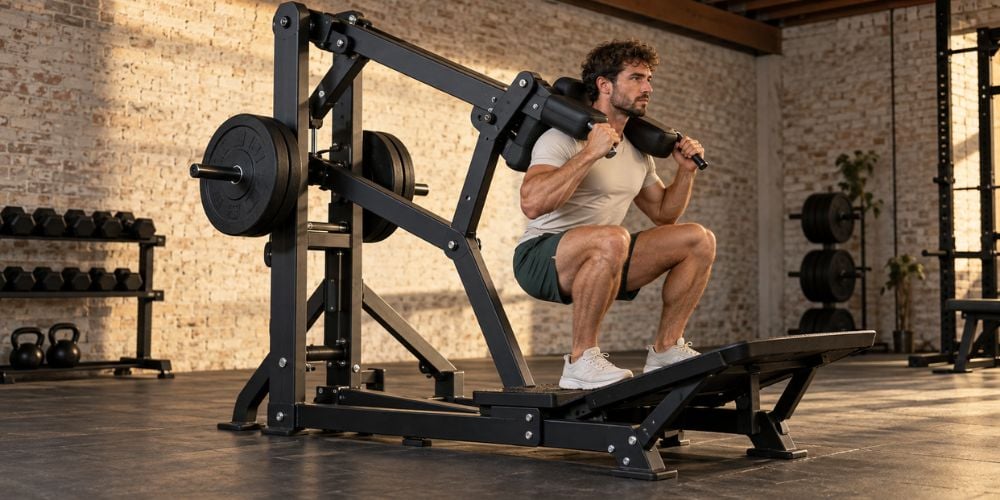
A pendulum squat or similar squat machine gives you another controlled way to load your quads.
Place your feet in a comfortable position and keep your body supported against the pads.
Lower yourself slowly while letting your knees bend naturally. Keep your heels down, then drive back up without bouncing out of the bottom.
I prefer a smooth lowering phase here. It keeps movement controlled and makes it easier to feel where the load is going.
No pendulum squat? A plate-loaded squat machine, leverage squat, or another supported squat machine can work well.
5. Single-Leg Leg Extension
Sets: 2–3 per leg
Reps: 12–15
Rest: 45–60 seconds
Finish with single-leg extensions.
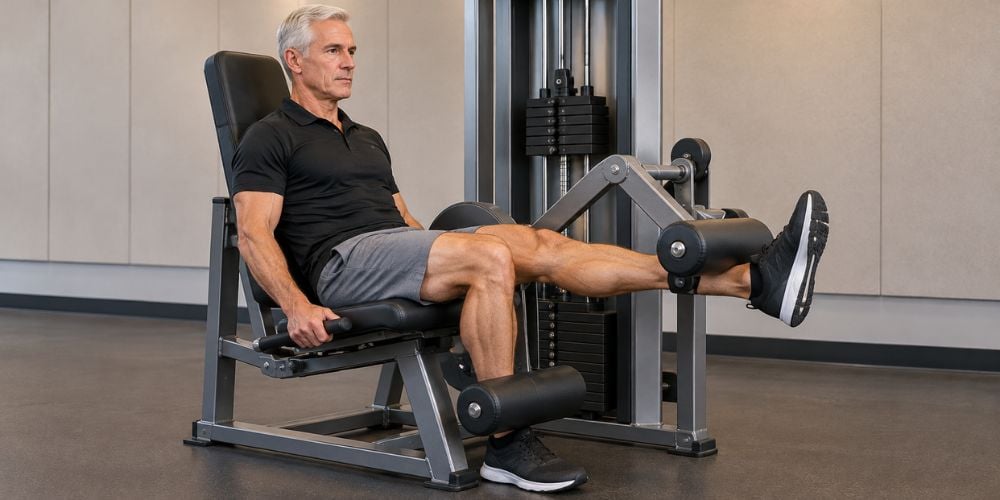
Training one leg at a time lets you focus on each quad separately. It can also help you notice if one side feels weaker.
Sit firmly against the back pad and keep your hips level.
Extend one leg smoothly, pause briefly, and lower it slowly. Use less weight than you would with both legs together.
Should you train the weaker leg first? Usually, yes.
Start with the weaker side, then match the same number of reps with the stronger side.
Quick Form Checklist
Before adding more weight, check these simple points.
Check | What to Look For |
Knees | Track naturally with your feet |
Heels | Keep them stable on the platform |
Back | Stay supported against the pad |
Range | Use a depth you can control |
Speed | Lower and lift without bouncing |
Weight | Challenging, but still manageable |
How Heavy Should You Go?
Choose a weight that makes the last few reps challenging without ruining your form.
If you have to bounce, shorten the movement, or lift your hips off the pad, the weight is probably too heavy.
Keep the reps controlled first. Add weight only when you can complete your target reps cleanly.
Do you need to train to complete failure? Not necessarily. ACSM’s current evidence review notes that training for momentary muscle failure is not required for the average healthy adult to make progress.
How Often Should You Do This Workout?
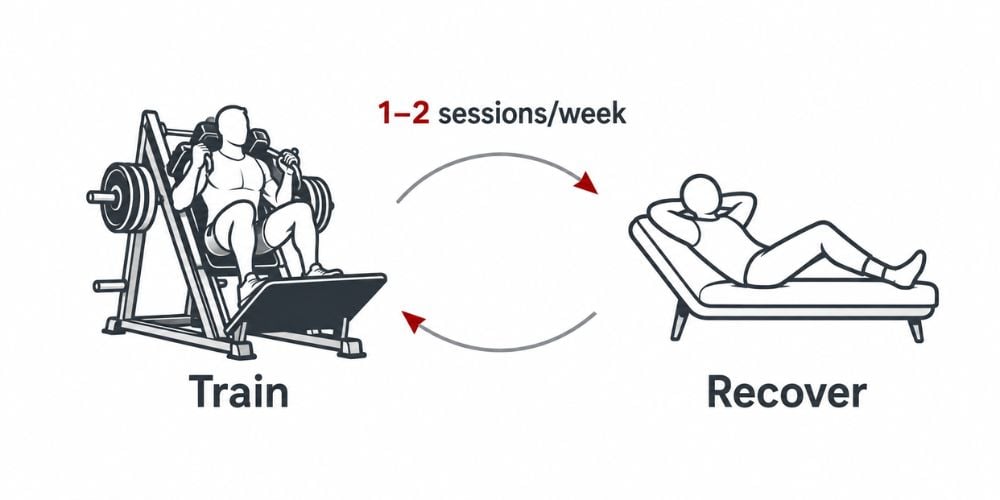
For most fitness lovers, 1–2 quad-focused sessions per week is enough.
Give your legs time to recover between hard sessions, especially if you also train your hamstrings, glutes, or calves on other days.
The NSCA guidance on resistance-training frequency stresses that recovery and your total training workload should help determine how often you train.
You can also reduce the number of sets if your total weekly leg volume is already high.
Conclusion
A strong quad workout does not need to be complicated. Use leg extensions, hack squats, leg presses, squat machines, and single-leg work, then focus on clean reps and steady progression.
If you also want to compare lower-body strength machines, explore YR Fitness to see which designs best match your preferred training style.
Related articles:



