









Do you sometimes feel heavy, awkward, or off balance when running on a treadmill? A few small changes to your posture and stride can make your run feel much smoother.
The short answer is simple: stand tall, stay centered, land under your body, use natural steps, and relax your arms. You do not need to completely rebuild the way you run.
As an Exercise Physiology & Biomechanics Expert at YR Fitness, I study how posture, stride, and joint position affect movement. I often see runners improve quickly when they focus on a few simple cues instead of trying to make every step perfect.
This guide shows you how to set up the treadmill, position your body, control your stride, and adjust your form as speed increases. Start with the first step and work through the cues one at a time.
1. Start with the Right Treadmill Setup
Good form starts before you run.
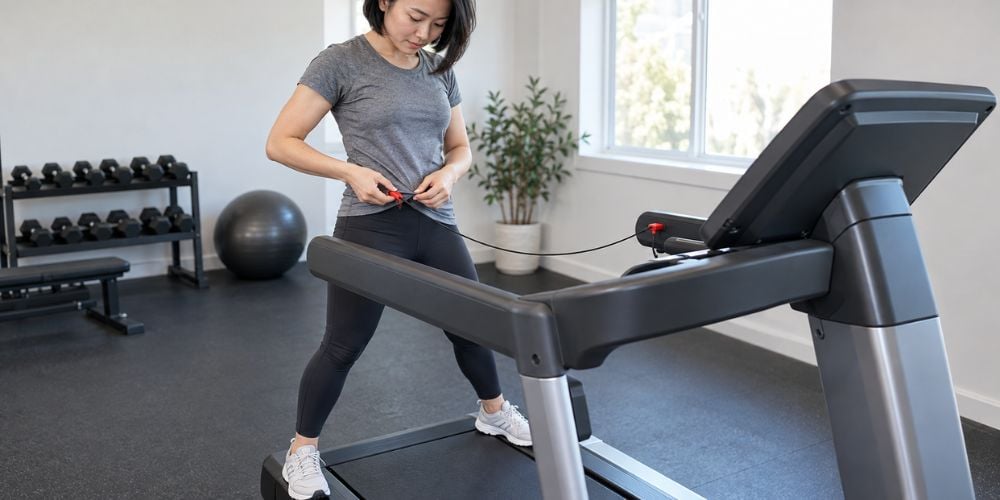
Step onto the side rails first and attach the safety clip. Start the belt slowly, step on, and gradually increase your speed.
For most normal treadmill runs, begin around 0–1% incline.
Before speeding up, check:
- Is the belt moving smoothly?
- Do you have enough space behind you?
- Can you run without touching the handles?
- Does the pace feel controlled?
Treadmill safety matters too. Mayo Clinic recommends knowing where the emergency stop is, using the safety key, looking forward, and allowing the belt to stop completely before stepping off. See Mayo Clinic’s treadmill safety guidance
I usually suggest starting with easy walking or jogging. It gives your body time to settle into a comfortable rhythm.
Quick Setup Check
Check | What to Do |
Safety clip | Attach it before starting |
Starting speed | Begin slowly |
Incline | Start around 0–1% |
Body position | Stay clear of the front cover |
Handrails | Avoid holding them during normal running |
Pace | Increase only when you feel controlled |
2. Stand Tall While You Run
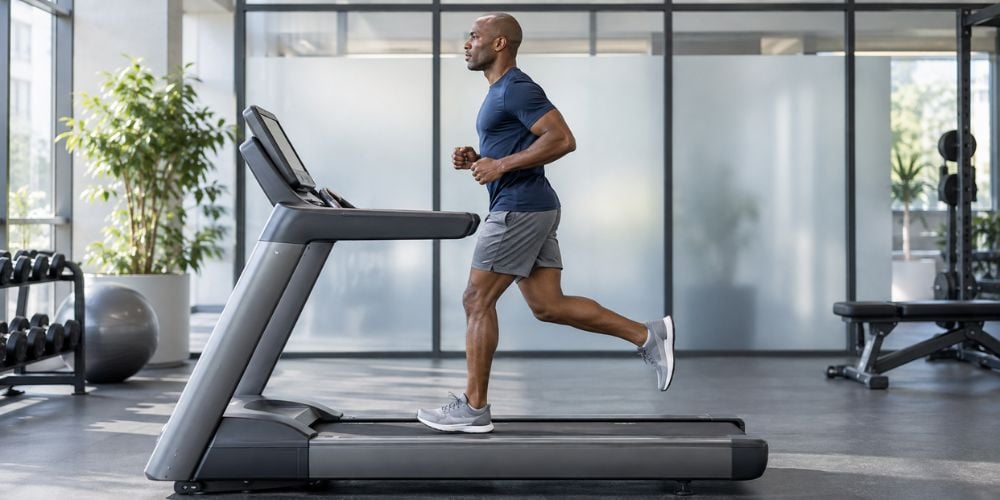
Keep your posture natural, not stiff.
Aim for:
- Head upright
- Eyes forward
- Shoulders relaxed
- Chest open
- Back in a comfortable neutral position
Try not to stare down at your feet. Looking down can pull your upper body forward and make your stride feel less natural.
A slight forward lean is fine. Just let it come naturally rather than bending heavily at your waist.
Quick question: Are your shoulders creeping toward your ears?
If yes, loosen them.
3. Run in the Right Position on the Belt
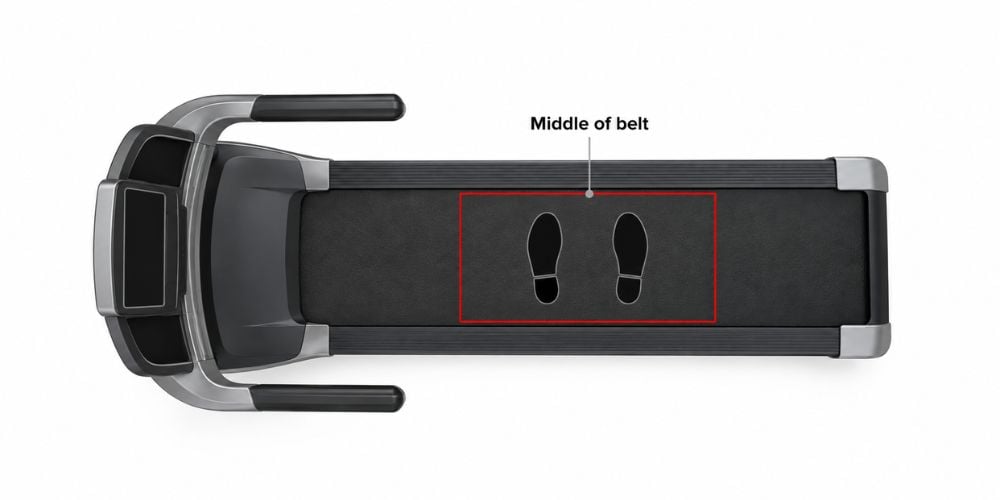
Stay around the middle of the running area.
Do not run so close to the front that your feet nearly touch the motor cover. On the other hand, do not drift so far back that you feel like you are chasing the belt.
You want enough space for your normal stride.
I often see runners move too close to the console without realizing it. That can shorten the stride and restrict the natural arm swing.
Simple cue: Give yourself room to run.
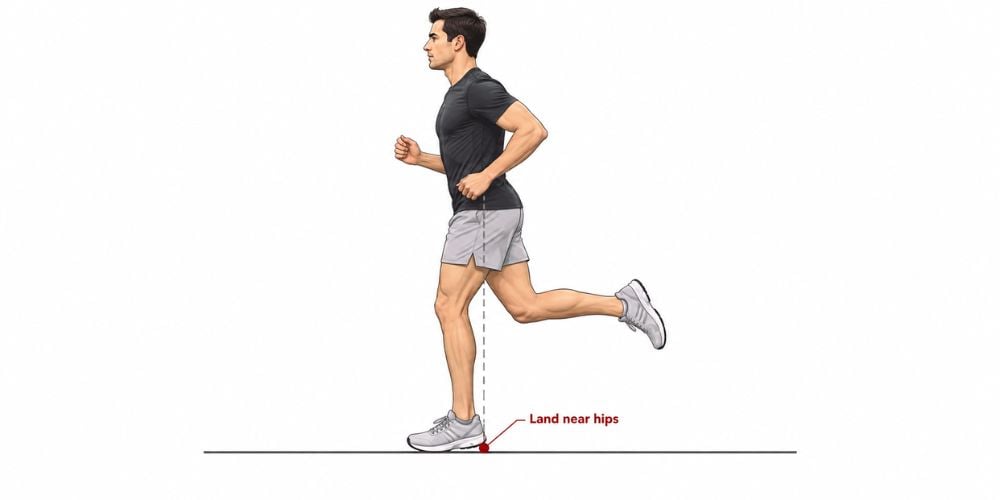
4. Keep Your Foot Strike Under Your Body
Try not to reach your foot far in front of you.
Instead, let your foot land reasonably close to under your hips and center of mass.
Here is why this matters.
Reaching too far forward can create a braking effect every time your foot lands. Your stride may start to feel heavier and less smooth.
Use this cue:
Land under yourself, not far ahead of yourself.
You also do not need to force yourself into a heel, midfoot, or forefoot strike.
HSS notes that landing under your center of mass is generally more important than trying to force one specific type of foot strike.
For everyday fitness running, focus on a comfortable landing and controlled stride.
5. Use Short, Natural Steps
Longer is not always better.
If your front leg keeps reaching forward, shorten your stride slightly.
Think:
Quick steps, light feet.
As treadmill speed increases, your stride will naturally change. Let that happen instead of deliberately stretching each step farther forward.
Do not suddenly increase your:
- Speed
- Incline
- Stride length
Change things gradually.
I often see runners look smoother almost immediately when they stop trying to take oversized steps.
ACE Fitness also suggests focusing on just one or two running elements at a time, such as posture, pace, stride length, or stride rate.
A stable treadmill makes it easier to focus on your posture and stride instead of adjusting to unwanted machine movement. At YR Fitness, we build commercial cardio equipment for repeated daily training, with attention to frame stability and smooth operation. If you want to see how our treadmills and cardio machines are designed, explore the YR Fitness website.
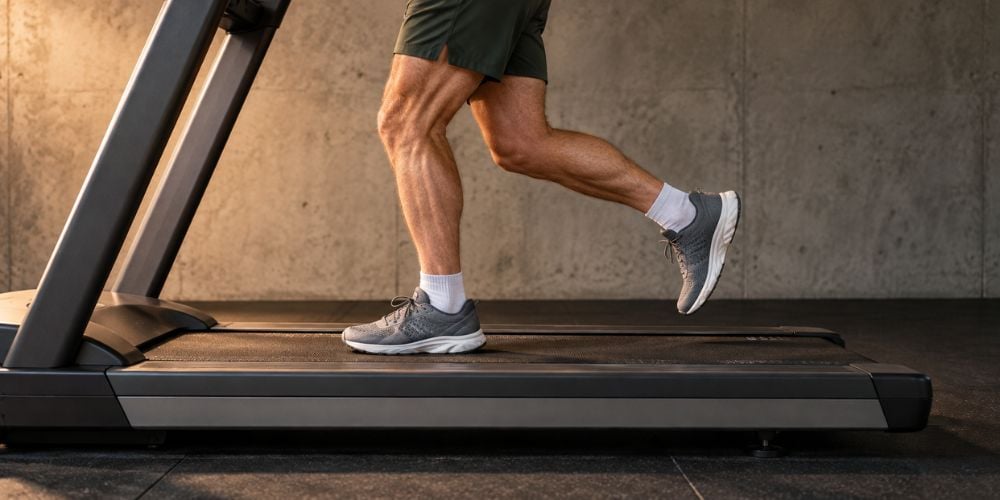
6. Let Your Arms Swing Naturally
Your arms help balance your running movement.
Keep your elbows comfortably bent and let your arms swing forward and backward. Your hands should stay relaxed.
Avoid:
- Clenching your fists
- Raising your shoulders
- Swinging heavily across your chest
- Holding the treadmill handles while running
Holding the rails can change your normal running mechanics.
Unless you need them briefly for safety, let your arms move freely.
What should your arms feel like?
Relaxed and rhythmic.
Your hands should move naturally beside your body rather than sweeping widely across your chest.

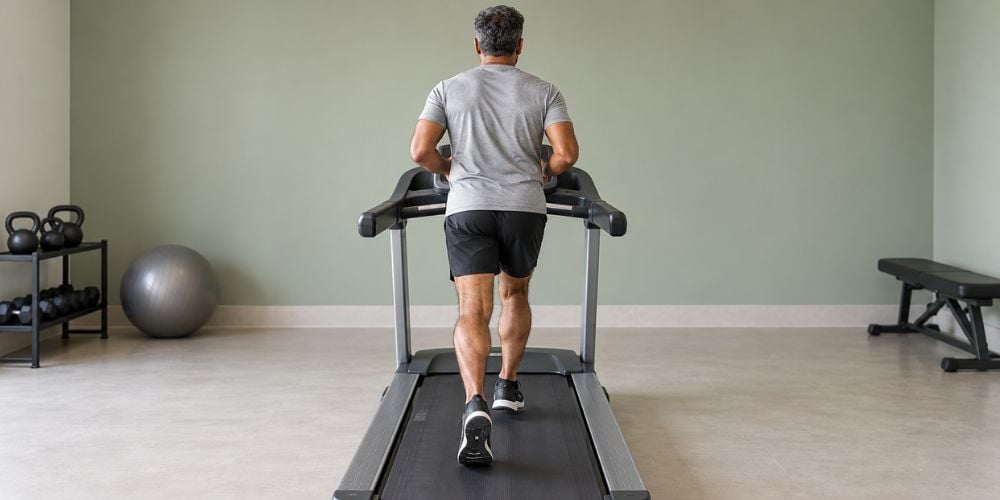
7. Keep Your Hips Stable
Keep your hips facing forward and relatively steady.
Some movement is completely normal. What you want to avoid is excessive bouncing or large side-to-side movement.
Lightly engage your core.
You do not need to brace as hard as possible. You only need enough control to keep your upper and lower body working together.
If you start bouncing a lot, check your speed first.
You may simply be running faster than you can comfortably control. Reduce the speed slightly and find your rhythm again.
Common Form Problems and Quick Fixes
What You Notice | Simple Fix |
Shoulders feel tense | Relax your arms and hands |
You keep looking down | Look forward |
Feet land far ahead | Shorten your stride slightly |
Steps sound very heavy | Think “light feet” |
You drift toward the front | Move back toward the middle |
You bounce excessively | Reduce speed and regain control |
You need the handrails | Lower the speed or incline |
8. Match Your Form to the Speed
Your form should stay controlled even as the treadmill gets faster.
Do not sacrifice posture just to reach a higher number on the console.
Running Level | Main Form Focus |
Walking | Stand tall and relax your arms |
Easy jog | Keep steps light and comfortable |
Moderate run | Stay centered and land under your body |
Faster run | Use quicker turnover while keeping posture controlled |
At easy speeds, focus on relaxation.
At moderate speeds, pay more attention to your stride and foot placement.
At faster speeds, your arm movement and turnover will naturally increase.
The main rule is simple:
If your form starts falling apart, reduce the speed.
Running slightly slower with good control is usually more useful than forcing a pace that makes your movement messy.

Conclusion
Better treadmill form comes down to good posture, controlled foot placement, natural steps, relaxed arms, and stable hips. Small adjustments are usually enough to make running feel smoother.
Keep your pace controlled and build better habits one cue at a time. If you also want to explore cardio equipment built for regular training, visit the YR Fitness website and see the available options.
Related articles:



