








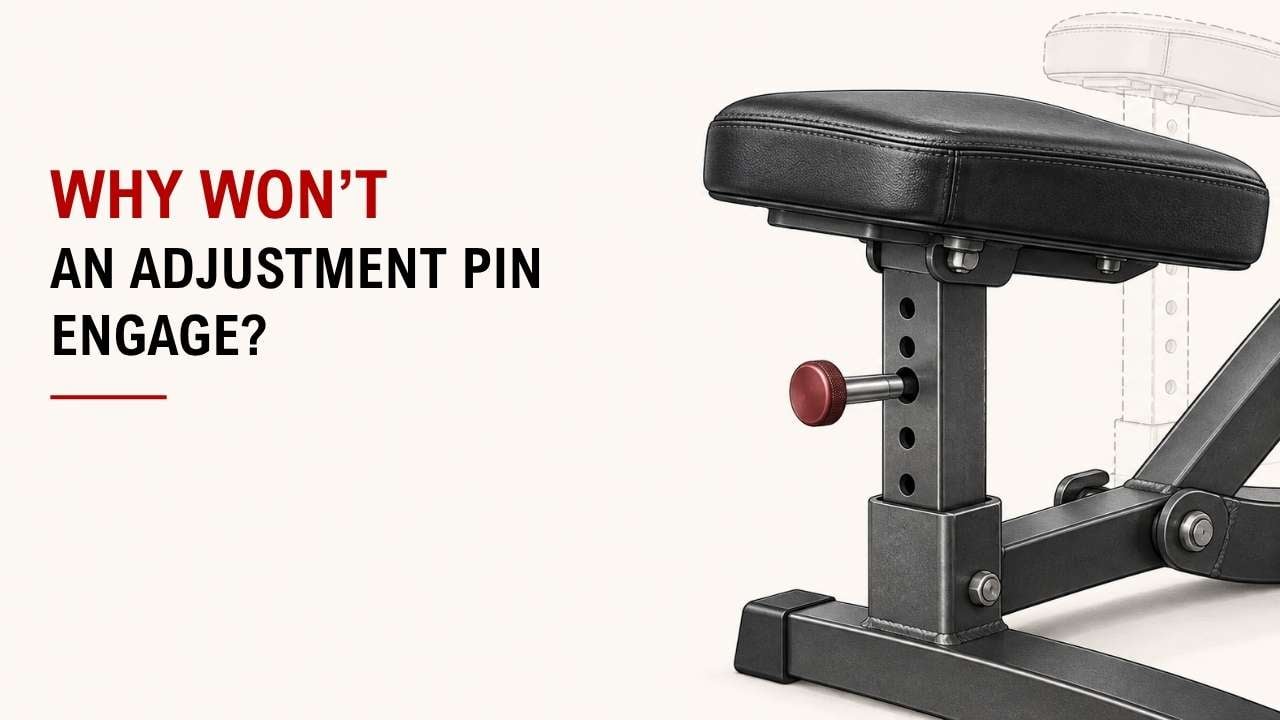

Trying to adjust a gym machine, but the pin will not lock? The cause is usually easy to find.
The short answer: check the hole alignment, pressure, dirt, pin condition, spring, and adjustment hole wear. One of these is usually stopping the pin from engaging.
As a Machinery & Structural Engineer at YR Fitness, I work closely with locking systems, adjustment parts, and equipment frames. I’ve seen these small issues many times, so I know where to check first and which signs should not be ignored.
Below, I’ll show you the six main causes and what to do about each one. Start with the simple checks first.
- Quick Check Before You Start
- 1. The Adjustment Holes Are Not Aligned
- 2. There Is Too Much Pressure on the Adjustment Point
- 3. Dirt or Debris Is Blocking the Hole
- 4. The Adjustment Pin Is Bent
- 5. The Spring-Loaded Pin Is Sticking
- 6. The Adjustment Holes Are Worn or Damaged
- Should You Keep Using the Machine?
- Conclusion
Quick Check Before You Start
Before taking anything apart, look at what the pin is actually doing.
What You Notice | Most Likely Cause | First Thing to Try |
Pin will not enter | Holes misaligned | Move the adjustable part slowly |
Pin is hard to pull | Pressure on the pin | Remove your body weight |
Pin stops halfway | Dirt or debris | Clean the pin and hole |
Pin enters at an angle | Bent pin | Inspect the pin |
Pin does not spring back | Spring problem | Test the return action |
Pin locks but feels loose | Worn hole | Stop using that position |
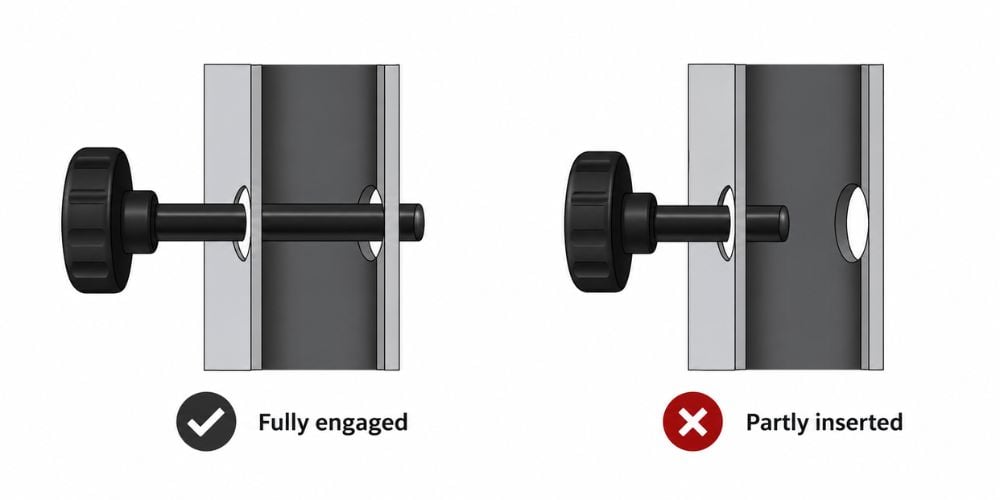
One important rule: never assume “almost engaged” is good enough. Precor’s equipment guidance warns that adjustment features should be securely locked and that an adjustment pin should be completely inserted before use.
1. The Adjustment Holes Are Not Aligned
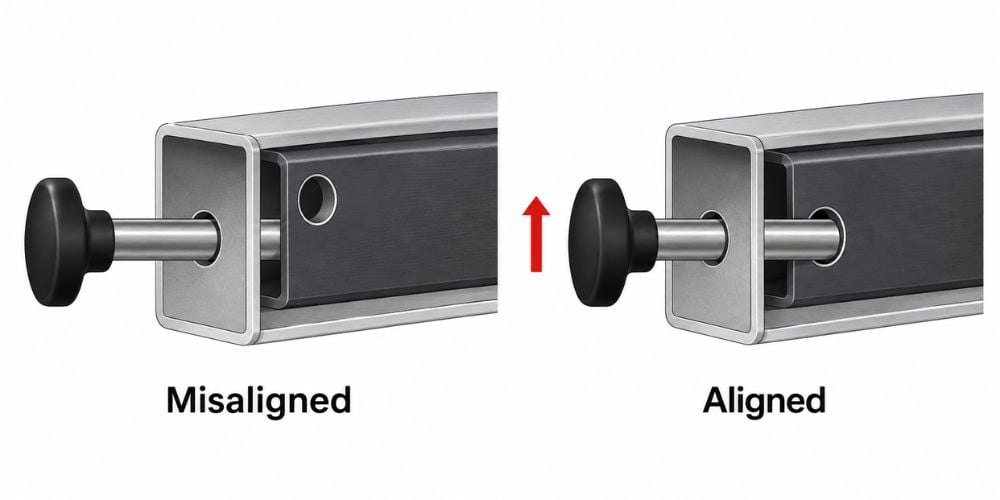
This is the most common cause.
The pin can only enter when the holes line up correctly. Even a small difference can stop it.
Try this:
- Pull the pin out fully.
- Move the seat, pad, or handle slowly.
- Watch or feel for the next adjustment position.
- Release the pin.
- Check that it enters completely.
I often see people move the seat too quickly and skip straight past the correct position.
Do not force the pin. If you need to hit or push it hard, the holes are probably still misaligned.
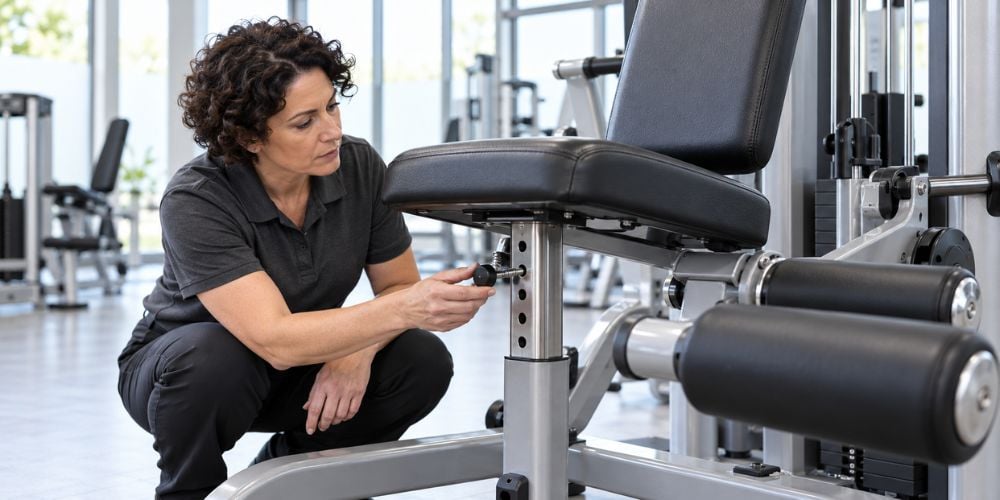
Why does alignment change?
The adjustable part may be sitting slightly forward, backward, or under load. Supporting the seat or pad with one hand can often help the holes line up.
2. There Is Too Much Pressure on the Adjustment Point
Is the pin hard to pull even though nothing looks damaged?
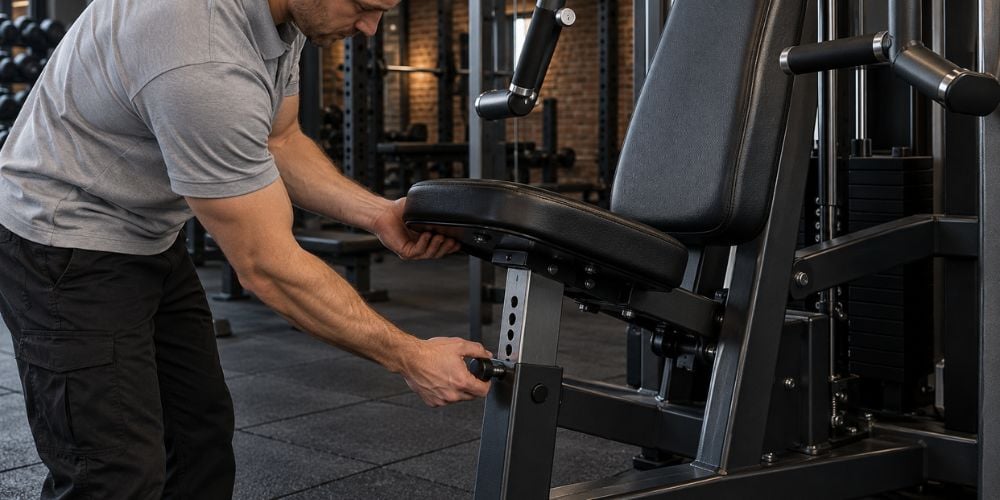
Your body weight may be pressing the adjustable tube against the pin.
This commonly happens with:
- Adjustable seats
- Back pads
- Leg pads
- Bench positions
- Moving support arms
Take your weight off the machine first.
Then:
- Support the adjustable part.
- Pull the pin.
- Move the part into position.
- Release the pin.
- Make sure it locks before adding your weight again.
Here is why this matters: the pin is a locking part, not a tool for forcing two loaded pieces into alignment.
General machine-safety guidance from OSHA also emphasizes keeping machinery in safe working condition and not using equipment when defects affect safe operation.
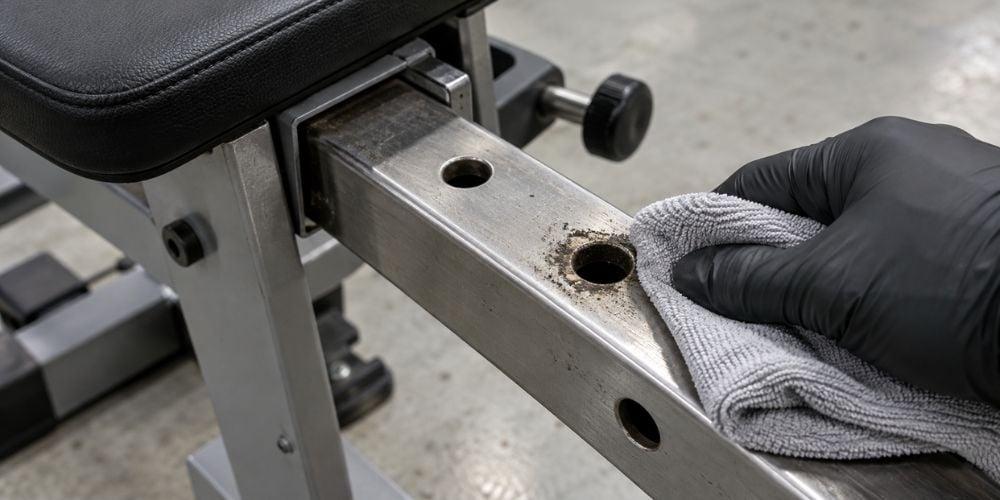
3. Dirt or Debris Is Blocking the Hole
Still not engaging?
Take a closer look at the adjustment area. Dust, sweat residue, old lubricant, or small debris may be blocking the pin.
Check these points:
- Adjustment holes
- Pin shaft
- Spring area
- Sliding tube
Clean the area with a dry or slightly damp cloth. Avoid leaving excess moisture on exposed metal.
When I inspect equipment, I normally check dirt and buildup before assuming the mechanism itself has failed.
If your machine constantly has stiff adjustments, loose locking points, or worn parts, the design itself may be worth comparing. At YR Fitness, we design our commercial strength equipment for repeated daily adjustment, with practical locking systems and durable structural components. You can explore our strength equipment and machine designs before deciding whether continued repair or replacement makes more sense.
4. The Adjustment Pin Is Bent
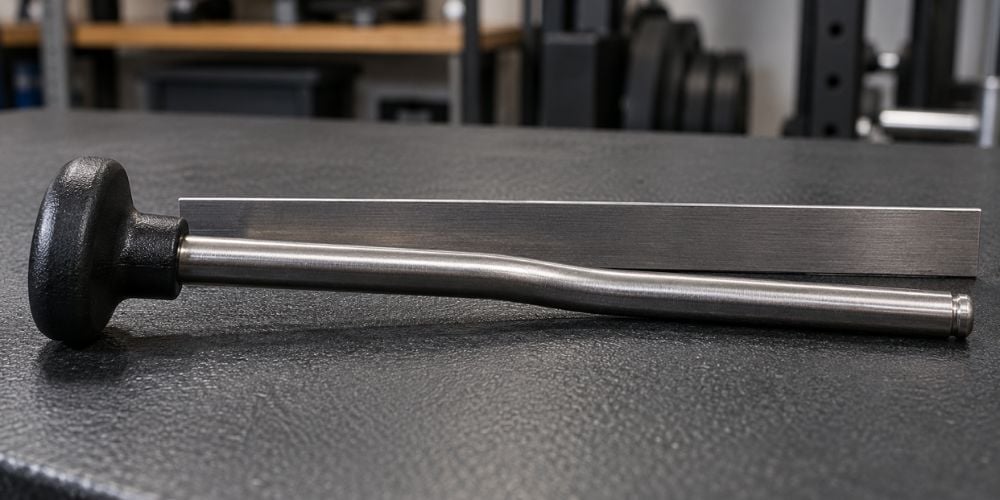
A pin can look fine at first glance but still be slightly bent.
This often happens when someone repeatedly forces the adjustment while the holes are misaligned or while heavy pressure is still on the mechanism.
What does a bent pin feel like?
You may notice:
- The pin enters only partway.
- It feels tight in one direction.
- You need to twist it.
- It enters at an angle.
- It no longer slides smoothly.
If the machine design allows it, remove the pin and check whether the shaft is straight.
Bent? Replace it.
Do not keep pushing harder. A damaged pin may enter the hole without locking correctly.
5. The Spring-Loaded Pin Is Sticking
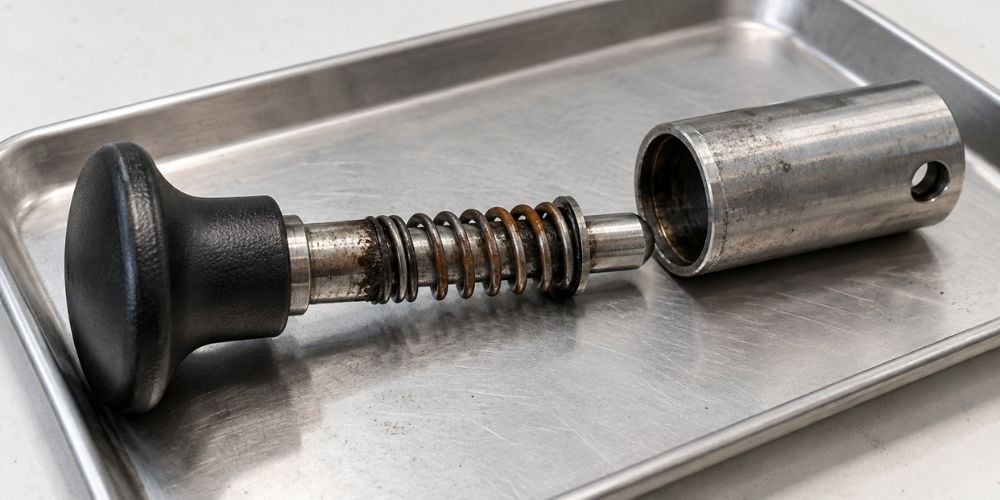
Many adjustment pins use a spring to push the pin back into its locking position.
If that spring becomes dirty, rusty, worn, or damaged, the pin may stop returning normally.
A quick test helps.
Pull the pin out and release it while the machine is unloaded.
Does it return smoothly?
If not, look for these signs:
What the Pin Does | What It May Mean |
Returns slowly | Dirt or internal friction |
Feels rough | Debris, corrosion, or wear |
Has weak return force | Spring may be worn |
Stays partly retracted | Spring or mechanism may be sticking |
Makes a grinding feeling | Internal parts need inspection |
Cleaning may help when dirt is the problem.
If the spring has lost tension or an internal part is damaged, replacement is usually the safer option. Do not exercise on the machine until the pin locks fully.
6. The Adjustment Holes Are Worn or Damaged
This is the most serious problem.
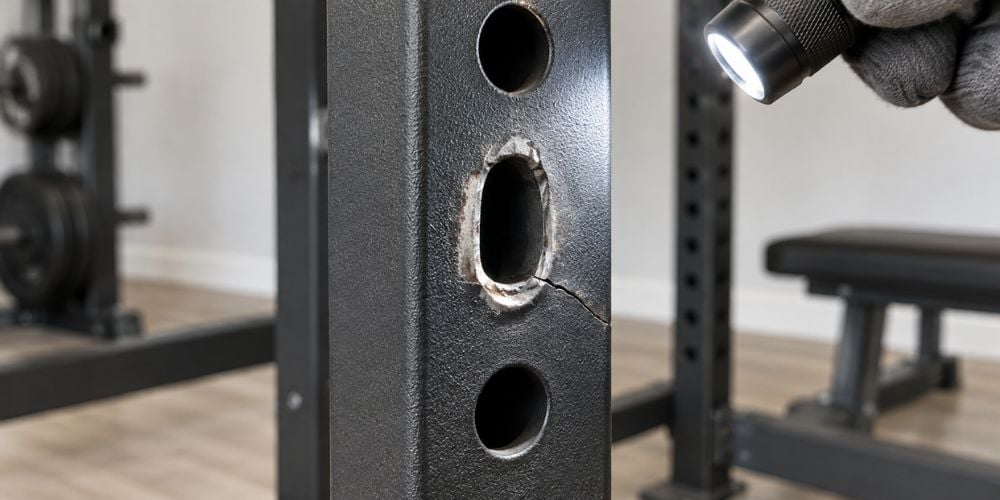
Repeated use can gradually enlarge, round, or deform an adjustment hole. The pin may still enter, but the adjustable part can remain loose.
Look closely for:
- Uneven hole edges
- A stretched or oval hole
- Cracks around the opening
- Metal deformation
- Excessive movement after locking
If you see these signs, stop using that adjustment position.
A worn hole can allow the seat, pad, or lever to move while you are exercising.
I would also avoid the quick fix of simply installing a larger pin. Changing the pin size does not repair damaged material around the hole, and it may create new fit problems.
The damaged section should be properly inspected first.
Should You Keep Using the Machine?
Ask one simple question:
Does the pin go all the way in and hold the adjustable part firmly?
If yes, check the machine normally before training.
If not, stop using it.
The seat, pad, or adjustment arm should not move unexpectedly after the pin is locked. A small adjustment issue can become a much bigger problem once you add body weight or resistance.
Conclusion
When an adjustment pin will not engage, start with the easy checks: alignment, pressure, dirt, and the condition of the pin. If those are fine, inspect the spring mechanism and adjustment holes for wear or damage.
As a Machinery & Structural Engineer, I would not recommend training on a machine that cannot lock securely.
If recurring adjustment problems are making your equipment difficult to use, you can explore YR Fitness equipment and compare machines designed for secure, repeatable daily adjustments.
Related articles:



