




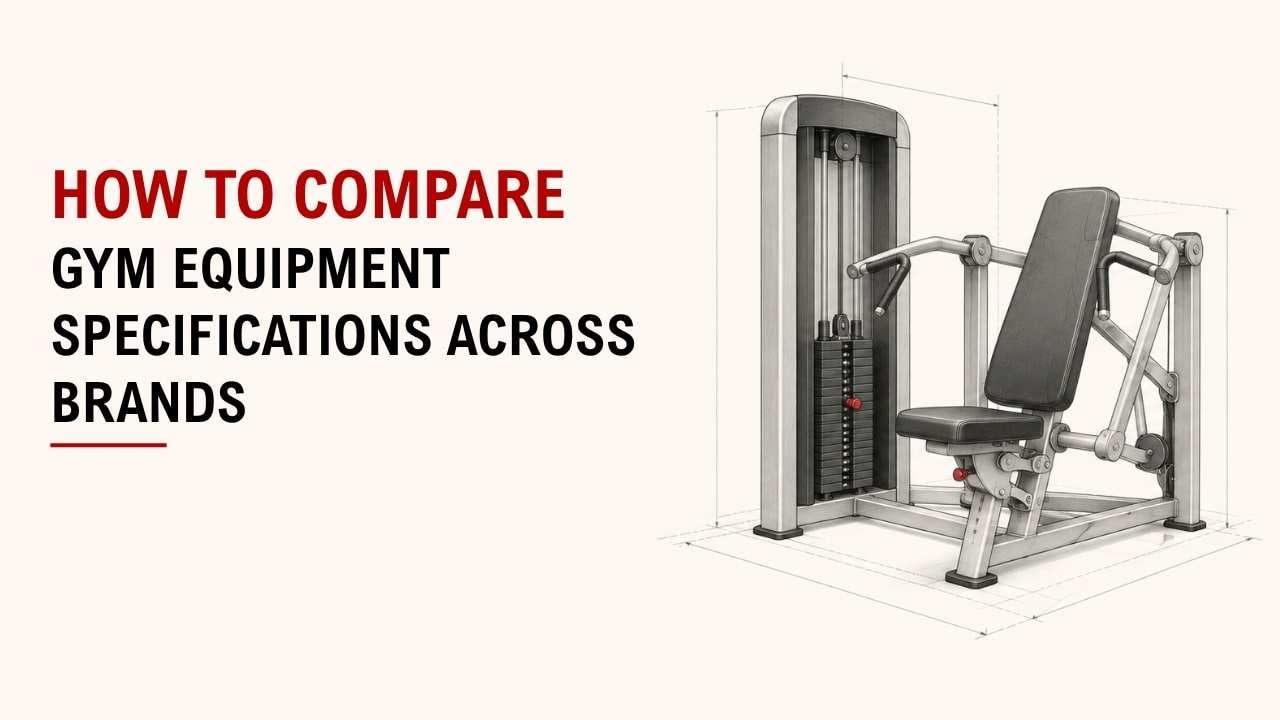

Ever compare two gym machines and feel confused by the specs? Similar machines can look alike but differ a lot in how they are built and how they perform.
The simple answer is: compare dimensions, machine weight, frame, weight capacity, resistance, weight increments, and adjustments. Put the same specs side by side, and the differences become much easier to spot.
As a Machinery & Structural Engineer at YR Fitness, I work with equipment structure, loads, frames, and moving parts. That experience helps me look past marketing terms and focus on the specifications that actually matter.
Below, I’ll show you seven simple things to compare. Use them as a quick checklist when looking at different brands.
1. Compare the Machine Dimensions
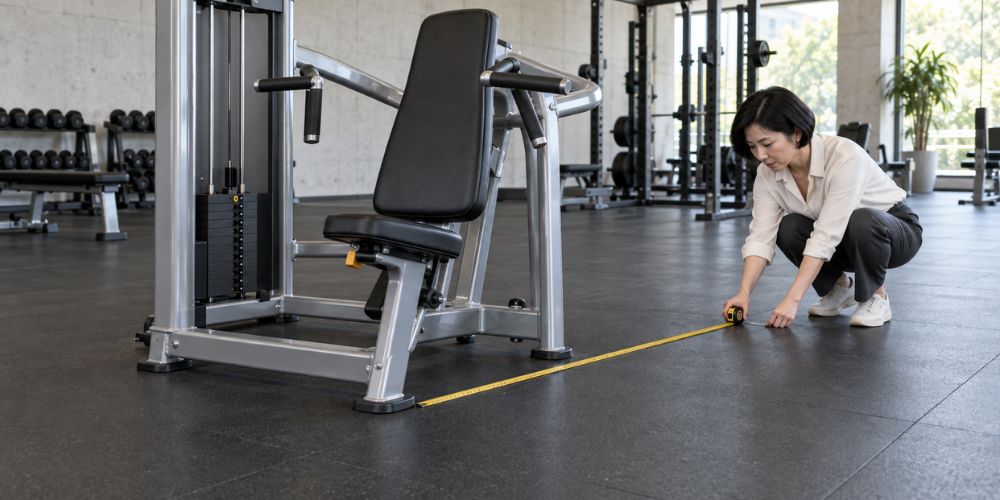
Start with length, width, and height.
Two machines for the same exercise can need very different amounts of space. One chest press may look compact, while another needs extra room around the seat or moving arms.
Check:
- Overall length
- Overall width
- Overall height
- Space needed during movement
- Space needed to get on and off
Why does this matter?
A machine can technically fit in your room but still feel cramped when you actually use it.
Measure your available space first. Then compare each machine against those measurements.
Also check whether the manufacturer provides clearance or operating-space information. The ISO 20957-1:2024 standard for stationary training equipment covers general safety requirements and test methods for indoor stationary exercise equipment.
Quick rule: Make sure every brand is using the same unit, such as millimeters or inches.
2. Check the Machine Weight
Next, compare the total machine weight.
A heavier machine may feel more stable, but heavier does not automatically mean better.
Machine weight can increase because of:
- More steel
- Larger frames
- Bigger weight stacks
- Heavy covers or guards
- Extra adjustment parts
For example, two machines might both weigh 200 kg, but one could include a 100 kg weight stack while the other has a much smaller stack.
That is why I never judge construction from machine weight alone.
Instead, compare:
Machine weight + frame construction + resistance system + overall size
Using these numbers together gives you much more context.
If you are installing equipment at home, also think about your floor. Very heavy machines may need extra care when placed upstairs or on certain flooring.
3. Compare the Frame Specifications
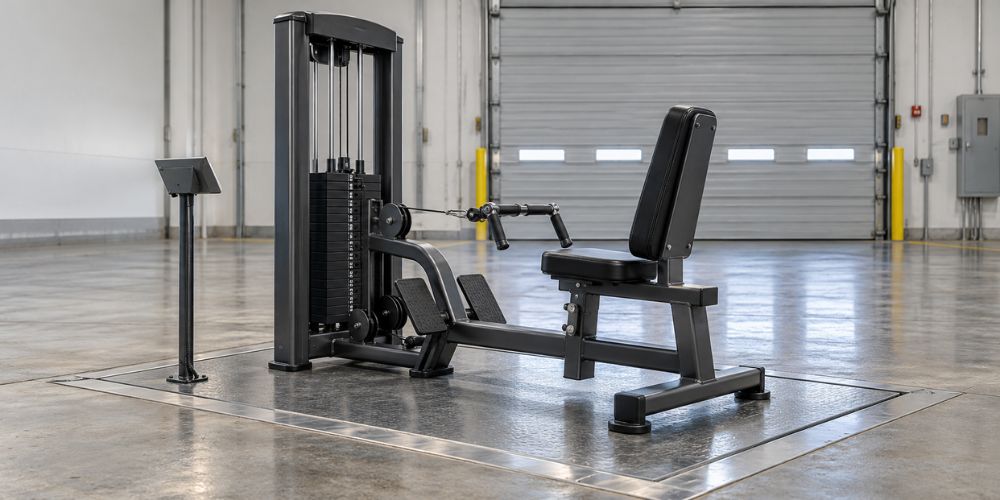
The frame supports the entire machine, so this is one area worth checking carefully.
Look for:
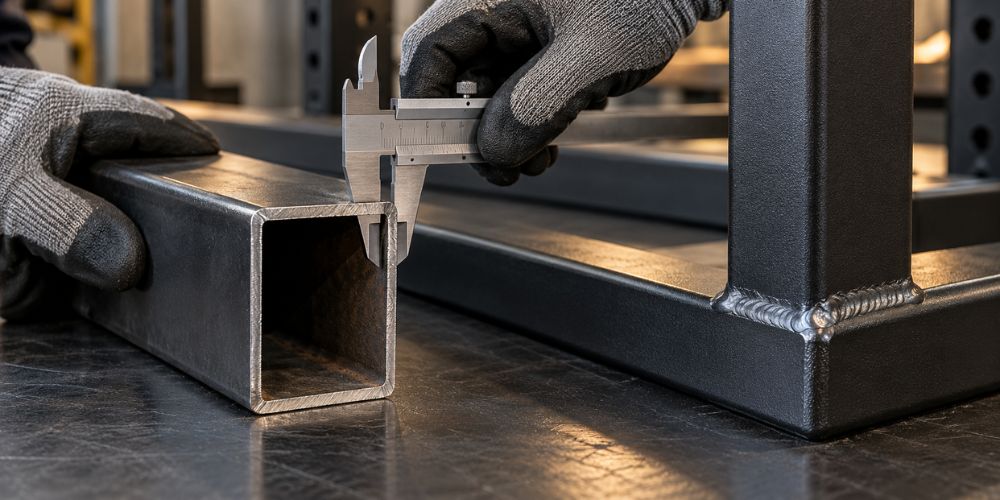
- Steel tube dimensions
- Steel thickness
- Frame shape
- Welded connections
- Surface coating
You may see a specification such as:
50 × 100 × 3 mm steel tube
The first two numbers normally describe the tube size. The final number describes the wall thickness.
But bigger numbers do not automatically mean a better machine.
Here is why this matters: frame design and load distribution also affect how the structure performs.
In my experience, a well-designed frame does not need oversized steel in every part of the machine. The important thing is how the complete structure handles the forces created during use.
What if a brand does not list its steel specifications?
Ask them.
Do not rely only on phrases such as “heavy duty” or “commercial grade.” Those descriptions are more useful when real specifications back them up.
ASTM also maintains fitness equipment standards covering design and performance requirements, including standards for strength equipment, treadmills, exercise bikes, and other fitness products.
4. Compare Weight Capacity
Weight capacity looks simple, but this is where comparisons often go wrong.
You may see:
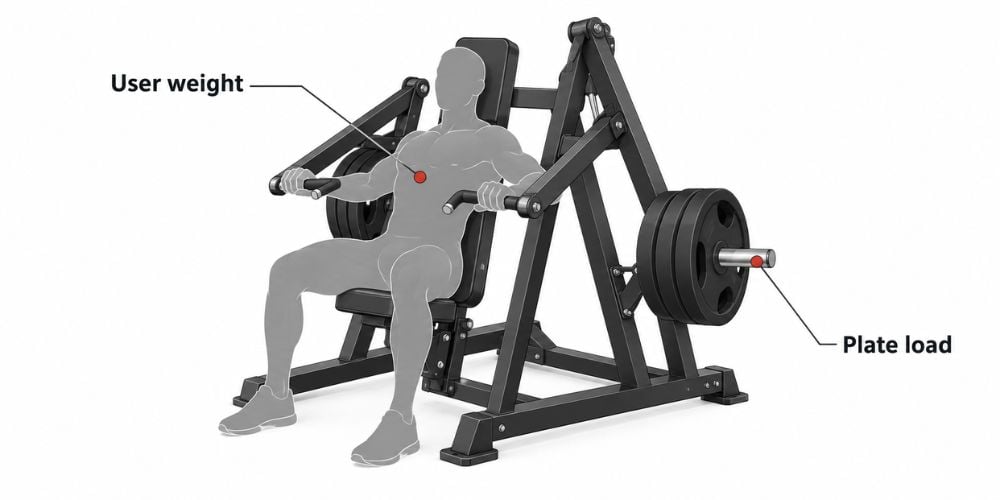
- Maximum user weight
- Maximum training load
- Maximum plate load
- Weight stack capacity
These numbers are not interchangeable.
Maximum user weight tells you how heavy the person using the machine can be.
Maximum training load tells you how much exercise resistance the machine is designed to handle.
Plate capacity tells you how much weight can be loaded onto a plate-loaded machine.
What is the common mistake?
Comparing one brand’s user weight capacity with another brand’s maximum training load.
I see this quite often when specification sheets are placed side by side. Always read the wording next to the number before deciding which machine has the higher capacity.
If you want a real machine to use as a reference, browse the strength equipment from YR Fitness and place the listed dimensions, frame information, resistance, and adjustment details beside the other brands you are considering. We recommend comparing the same specification line by line rather than choosing from a single headline number.
5. Compare the Resistance System
Next, look at how the machine creates resistance.
Common systems include:
- Selectorized weight stacks
- Plate-loaded resistance
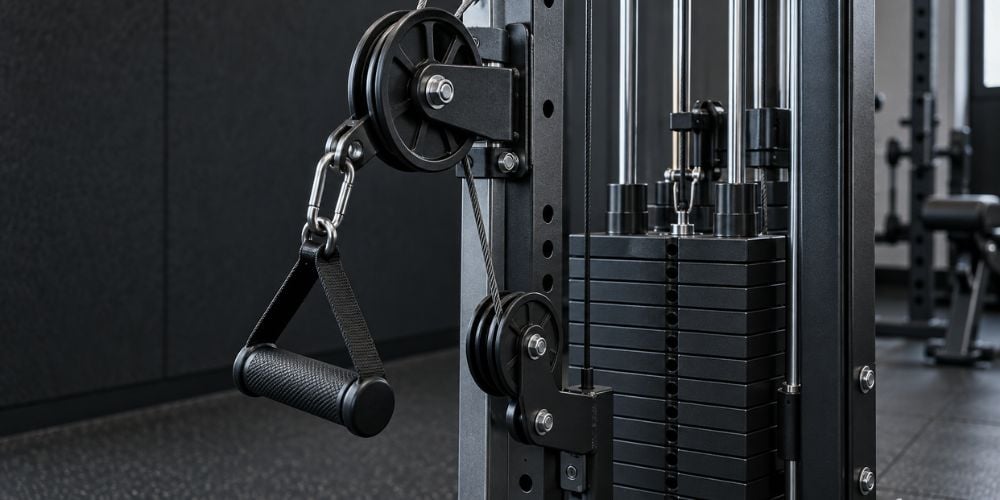
- Cables and pulleys
- Magnetic resistance
- Air resistance
- Motor-controlled resistance
Two machines can show similar resistance numbers but feel quite different during exercise.
For example, 50 kg on one cable machine may not feel exactly like 50 kg on another.
Why?
The pulley system can change the resistance you actually feel at the handle.
A machine using a 2:1 pulley ratio, for example, can produce a different handle resistance from the weight shown on the stack.
So when comparing cable machines, check:
- Weight stack size
- Pulley ratio
- Cable travel
- Number of pulleys
- Resistance increments
Do not compare the weight-stack number alone.
For selectorized equipment specifically, the ASTM specification for selectorized strength equipment addresses requirements specific to this type of strength machine.
6. Look at Weight Stack and Increment Sizes
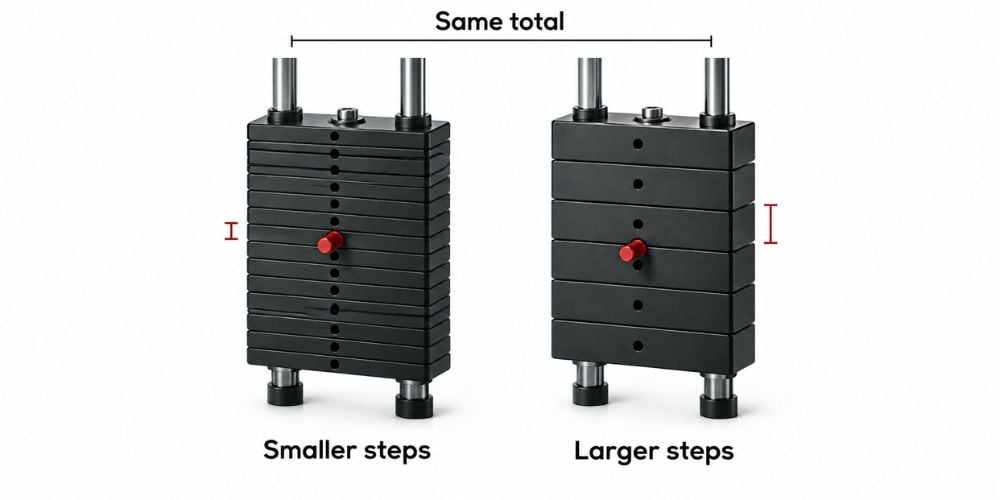
For selectorized machines, compare both the total stack weight and the size of each increment.
Here is a simple example:
Specification | Machine A | Machine B |
Total stack | 100 kg | 100 kg |
Weight per plate | 5 kg | 10 kg |
Small adjustments | Easier | Harder |
Both machines have the same 100 kg total stack, but they do not offer the same progression.
Machine A increases resistance in smaller steps.
That can be useful for beginners or exercises involving smaller muscle groups. More experienced lifters may care more about the maximum available resistance.
Some machines also include small add-on weights. These let you increase resistance without moving up one full plate.
Small detail? Yes. Useful? Definitely.
It can make gradual progression much easier.
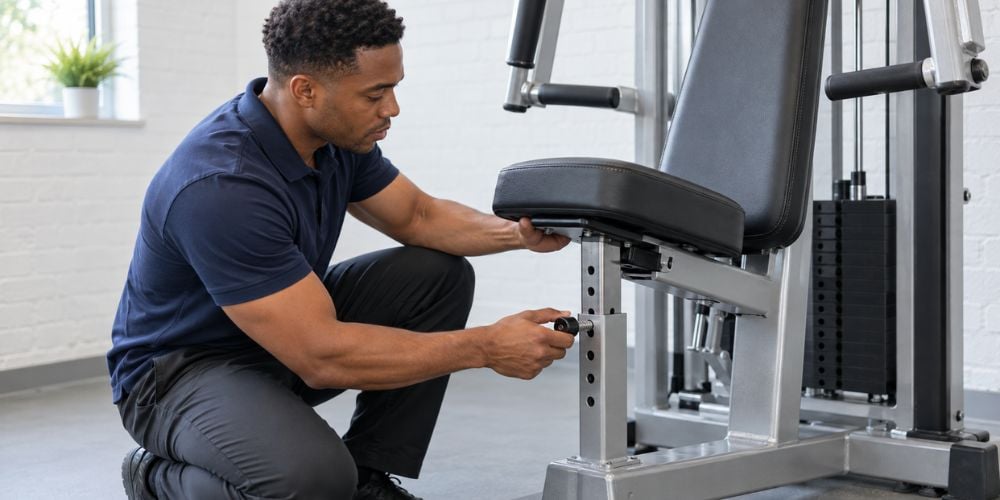
7. Compare Adjustment Options
A strong, well-built machine can still feel uncomfortable if it does not adjust properly to your body.
Check the available positions for:
- Seat height
- Backrest angle
- Handles
- Leg pads
- Starting position
- Safety stops
- Foot platforms
More settings can help a machine fit a wider range of users.
On the other hand, more adjustment positions do not automatically make a machine better.
The real question is simple:
Can you quickly find a comfortable position for the exercise?
When I test equipment, I also look at whether each adjustment position creates a useful change. Five clearly different positions can be more useful than ten positions that feel almost the same.
Check the adjustment mechanism too:
- Easy-to-reach handles
- Clearly marked positions
- Secure locking pins
- Smooth sliding parts
- Little unwanted movement after locking
If adjusting the machine feels awkward before you start exercising, that is worth considering alongside the technical specifications.
Conclusion
Comparing gym equipment does not need to be complicated. Start with size, machine weight, frame construction, load capacity, resistance, weight increments, and adjustment options.
The key is to compare like with like. One big number should never decide for you.
If you want another reference point for your comparison, browse the equipment from YR Fitness and put its specifications beside the other machines on your shortlist.
Related articles: