




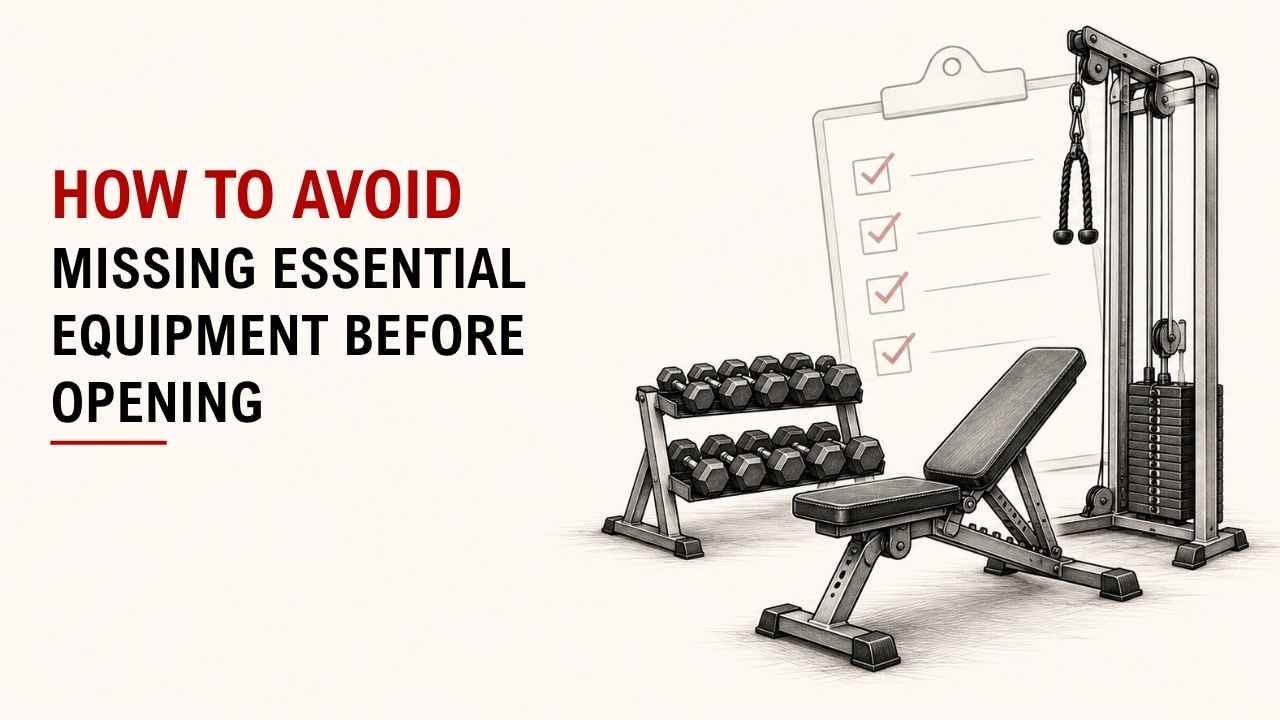

Are you worried you might forget an important piece of equipment before opening? A simple checklist can help you catch the gaps early.
The key is to check your setup by workout type, muscle group, accessories, and expected use. You do not need every machine, only the equipment needed for a complete workout.
As an Exercise Physiology & Biomechanics Expert at YR Fitness, I work closely with exercise movement and how people use strength and cardio equipment. I have seen that checking the full workout experience is one of the simplest ways to avoid missing essential items.
Below, I’ll show you seven quick checks to review before opening. Use them to make sure your setup is ready from day one.
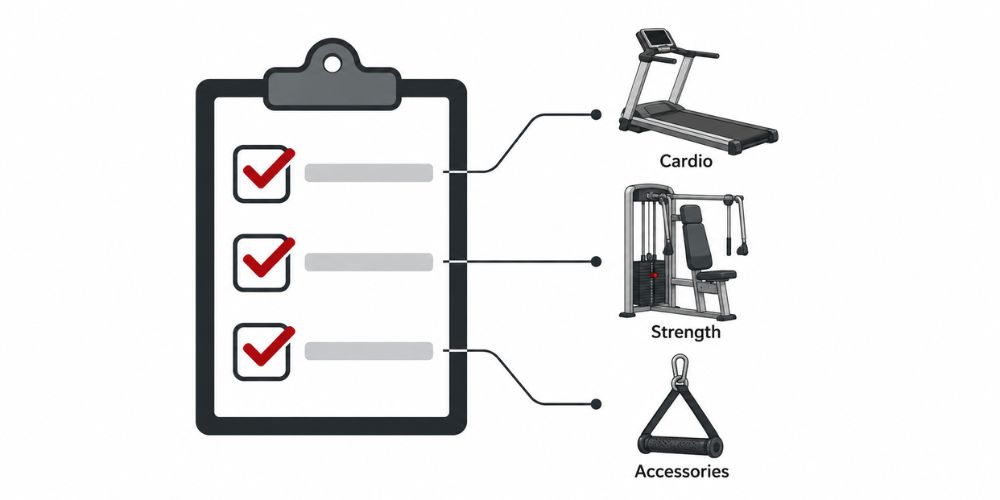
1. Start With a Complete Equipment Checklist
Do not rely on memory when buying equipment.
Split your list into these main groups:
- Cardio equipment
- Strength machines
- Free weights
- Functional training equipment
- Accessories
- Storage
Then check each category before you finish buying.
I prefer this approach because it keeps you focused on the whole training setup instead of one exciting machine at a time.
Quick check: Do you have at least one useful option in every category?
If not, add the missing category to your list.
2. Cover Every Major Muscle Group
Your equipment should let you train your whole body.
Check that you can train:
- Chest
- Back
- Shoulders
- Arms
- Quadriceps
- Hamstrings
- Glutes
- Calves
- Core
This lines up with the CDC guidance on adult physical activity, which recommends muscle-strengthening work that covers all major muscle groups.
You do not need a separate machine for every muscle.
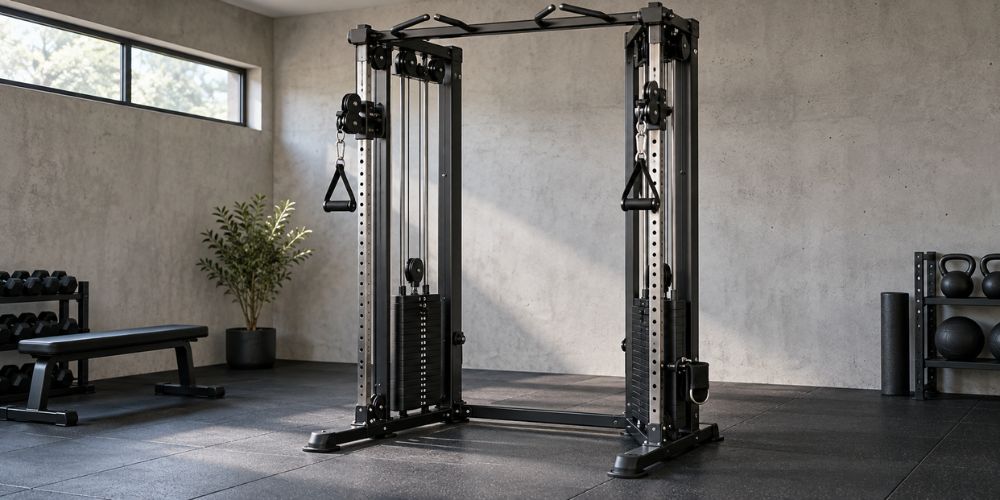
A cable machine, for example, can handle rows, pulldowns, presses, curls, triceps work, and several core exercises.
Ask yourself: Can you complete a balanced full-body workout with what you have?
If not, find the missing movement before you open.
3. Check Your Basic Cardio Equipment
Cardio can be easy to forget when most of your attention is on strength equipment.
Common options include:
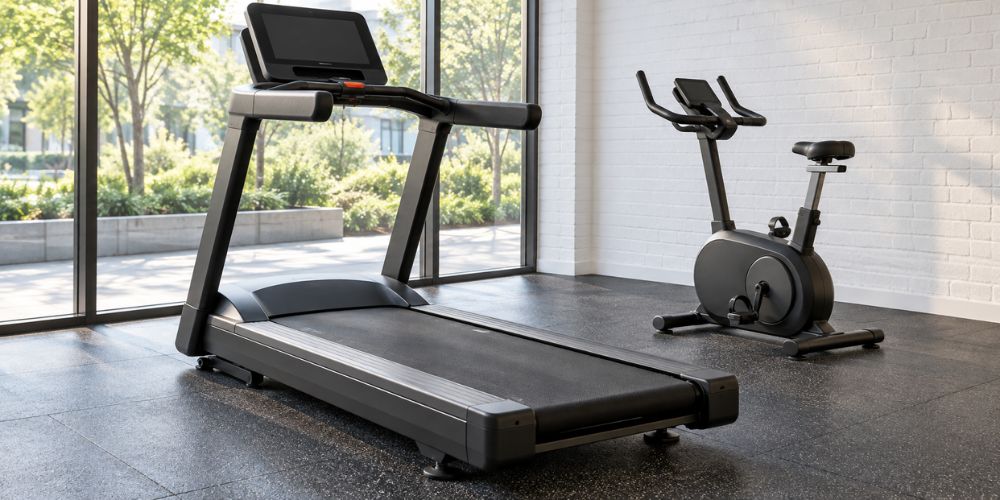
- Treadmills
- Exercise bikes
- Ellipticals
- Rowing machines
You do not need all four if your space is limited.
Choose the machines you are most likely to use for warm-ups, conditioning, or longer cardio sessions. The U.S. Department of Health and Human Services also separates aerobic and muscle-strengthening activity in its current Physical Activity Guidelines, which is a useful reminder to plan for both types of training.
I would rather see two useful cardio options than several machines that rarely get used.
4. Do Not Forget Free-Weight Basics
Large machines get most of the attention, but free-weight basics matter just as much.
Here is a quick check:
Equipment | Why You Need It |
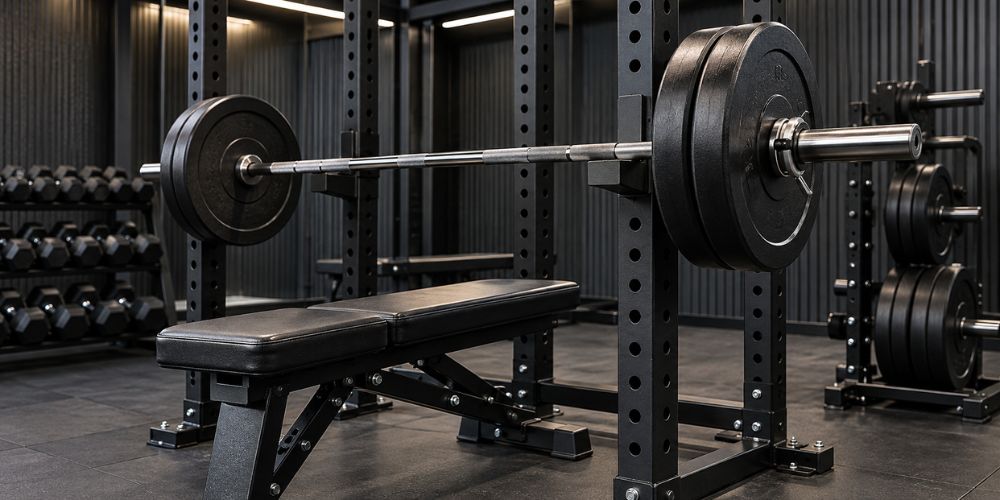
Dumbbells | Simple upper- and lower-body exercises |
Barbells | Squats, presses, rows, and deadlifts |
Weight plates | Adjustable resistance |
Benches | Presses, rows, and seated exercises |
Rack | Safer barbell training |
Collars | Keep plates secure |
Storage rack | Keeps weights organized |
One missing item can limit several exercises.
For example, a barbell is not very useful if you do not have enough plates to increase the load.
Here is why this matters: buying the main equipment is only part of the job. You also need the smaller pieces that allow you to actually use it properly.
Still checking what belongs on your equipment list? We at YR Fitness offer commercial strength equipment, cardio machines, free-weight solutions, and fitness accessories, so you can compare the main categories before finishing your setup. Explore YR Fitness equipment
5. Add Essential Strength Machines
Next, check your main strength movements.
A practical starting setup may include:
- Chest press
- Lat pulldown
- Seated row
- Shoulder press
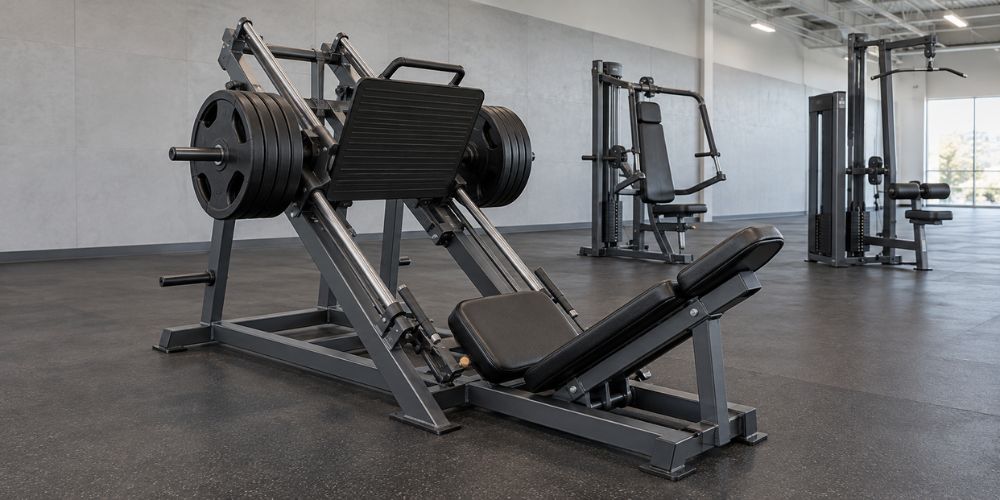
- Leg press
- Leg extension
- Leg curl
These machines cover the main pushing, pulling, and lower-body movements.
In my experience, covering the basics first works better than buying specialized machines too early.
Use this table to find gaps quickly:
Movement | Example Equipment | Main Area Covered |
Horizontal push | Chest press | Chest and triceps |
Horizontal pull | Seated row | Back and arms |
Vertical push | Shoulder press | Shoulders and triceps |
Vertical pull | Lat pulldown | Back and arms |
Knee-dominant leg exercise | Leg press | Quadriceps and glutes |
Knee extension | Leg extension | Quadriceps |
Knee flexion | Leg curl | Hamstrings |
Do you need every machine on day one?
No. The goal is to make sure your major movements are covered before adding more specialized equipment.
6. Include Small Accessories
Small accessories are some of the easiest items to miss.
Check for:
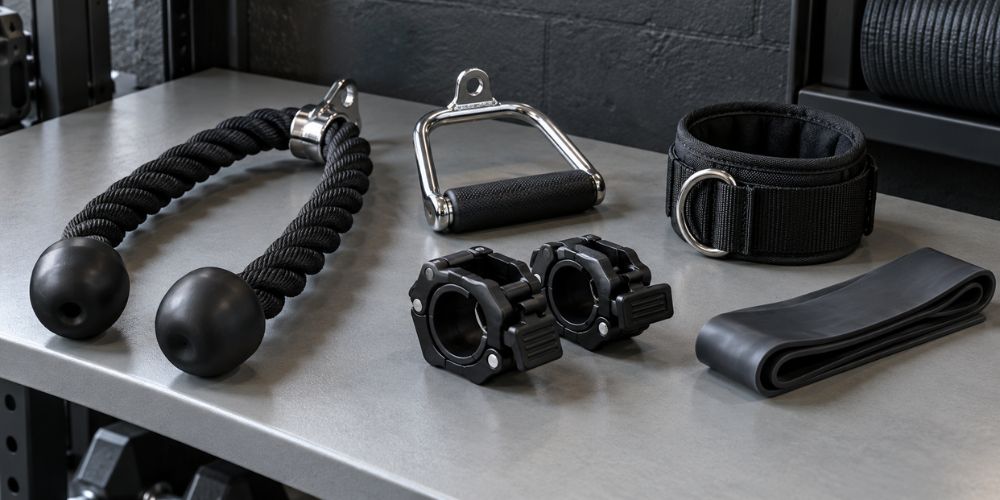
- Cable handles
- Triceps ropes
- Ankle straps
- Resistance bands
- Exercise mats
- Barbell collars
- Weight-storage pegs
- Cleaning towels or wipes
These items may cost much less than machines, but they still affect what exercises you can perform.
I recommend keeping a separate accessory checklist. Small items are much easier to overlook when they are mixed into a long machine order.
Before opening, ask: Does every machine have the attachment or accessory needed to use it properly?
That simple check can prevent a lot of last-minute shopping.
It is also worth checking your equipment against the U.S. Consumer Product Safety Commission’s exercise equipment recall information, especially if you are using older or previously owned equipment. CPSC recall notices can identify equipment with known safety problems and explain the recommended remedy.
7. Match Equipment Quantity to Expected Usage
Having the right equipment is only part of the job.
You also need enough of the items you expect to use most.
Pay extra attention to:
- Dumbbells
- Adjustable benches
- Treadmills
- Cable stations
- Popular strength machines
- Weight plates
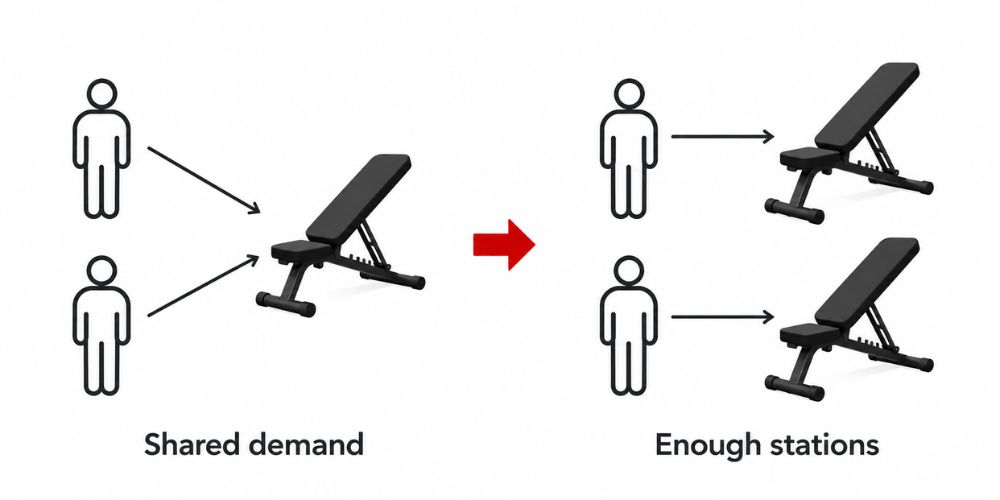
For a personal or small shared workout space, one station may be enough.
For a busier space, several people may want the same equipment at the same time.
I often suggest imagining your busiest training period. If two or three people want to work out together, will one missing bench or one set of dumbbells slow everything down?
If yes, that is where you should consider adding another unit before spending money on less-used equipment.
Conclusion
Avoiding missing equipment does not mean buying everything available.
Start with a checklist, cover every major muscle group, include basic cardio and free weights, add essential strength machines, remember the small accessories, and make sure you have enough of the most-used items.
If you are still building your list, YR Fitness can help you compare commercial strength, cardio, and fitness equipment in one place before you finalize your setup. View YR Fitness equipment options
Related articles: