









Have several gym machines started wearing out at the same time? Replacing them all at once can get expensive fast.
The best approach is to track equipment condition, repair problems early, and spread replacements over time. This helps you avoid one large replacement wave.
As a Machinery & Structural Engineer at YR Fitness, I work closely with machine wear, structural condition, and maintenance needs. I’ve seen how regular checks and timely repairs can keep good equipment useful for longer.
Below, I’ll show you six practical ways to avoid replacing too much equipment at once. Start with the machines that actually need attention first.
1. Keep a Record of Every Machine
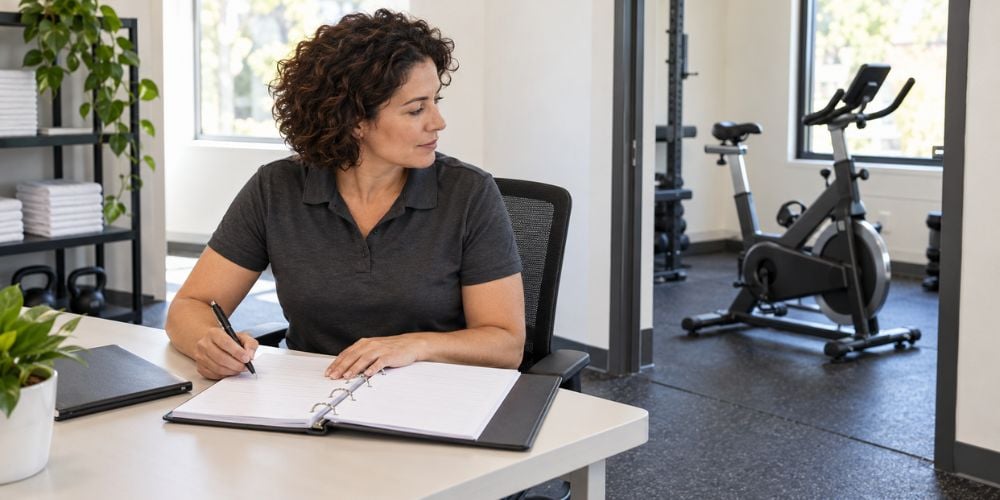
Start with a simple equipment list. You do not need complicated software.
Record:
- Purchase date
- Model
- Repair history
- Parts replaced
- Current condition
- Unusual noises or movement
Why does this matter?
It is easy to forget which machine has already needed three repairs and which one has caused almost no trouble.
I think of this record as the machine’s history book. If repair frequency starts increasing, you can see the pattern before several machines suddenly need replacing.
Your equipment manual is useful here too. ASTM’s fitness equipment specification notes that fitness equipment documentation should include maintenance instructions as well as operating and parts information.
Simple rule: keep the machine record and manufacturer maintenance information together.
2. Inspect Equipment on a Regular Schedule
Do not wait until a machine completely stops working.
Check regularly for:
- Loose bolts
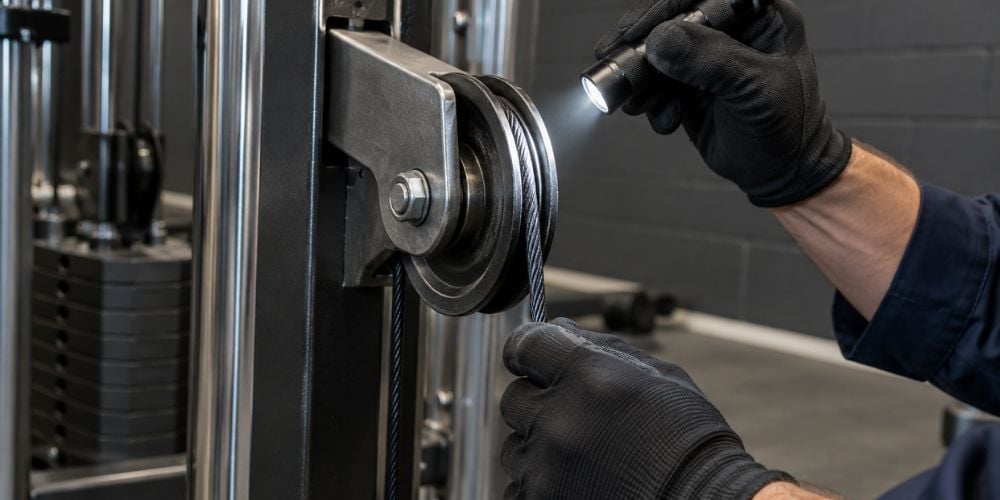
- Worn cables
- Cracked belts
- Damaged upholstery
- Unusual noises
- Rough movement
- Frame damage
- Electronic problems
Pay extra attention to machines you use frequently. More use usually means more wear on moving parts.
Here is why this matters: small wear is usually easier to deal with than a complete failure. OSHA’s guidance on preventive maintenance and hazard prevention also recommends regular inspections and routine preventive maintenance to help prevent incidents caused by equipment failure.
I often see small problems become expensive because they were ignored for too long. Finding them early gives you more choices: repair, monitor, or plan a replacement.
3. Replace Equipment Based on Condition, Not Just Age
An old machine is not automatically a bad machine.
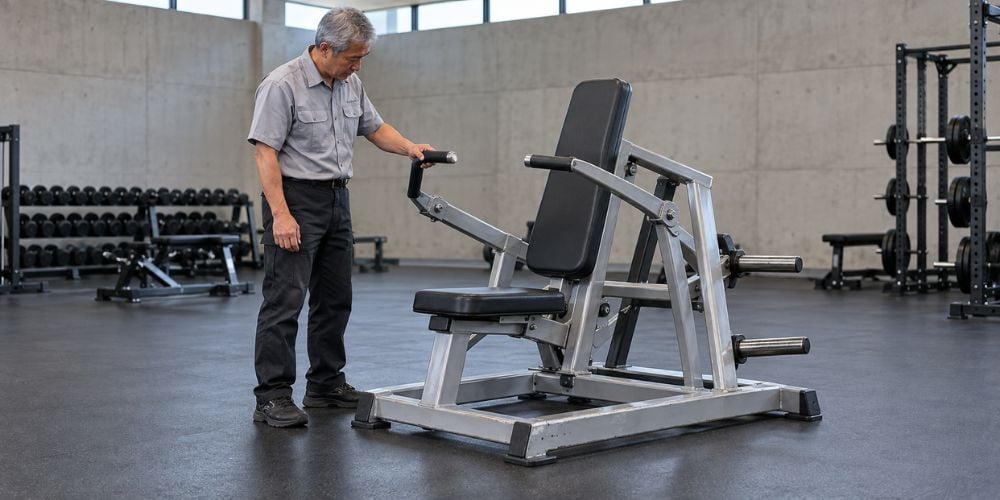
One machine may still work smoothly after years of use. Another machine of the same age may already have worn cables, bearings, upholstery, or other components.
Check:
- Structural condition
- Movement quality
- Repair frequency
- Safety
- Parts availability
- Overall reliability
Ask yourself: Is the machine simply old, or is it actually worn out?
Those are not always the same thing.
Safety and mechanical condition should carry more weight than a date on your equipment list. The current ISO 20957-1 standard for stationary training equipment covers general safety requirements and test methods for indoor stationary training equipment, including equipment used in clubs and studios.
So, do not replace equipment just because it reaches an arbitrary age. Look at how it actually performs and whether it can still be used reliably.
4. Divide Equipment Into Replacement Groups
Do not treat every machine as if it needs the same attention.
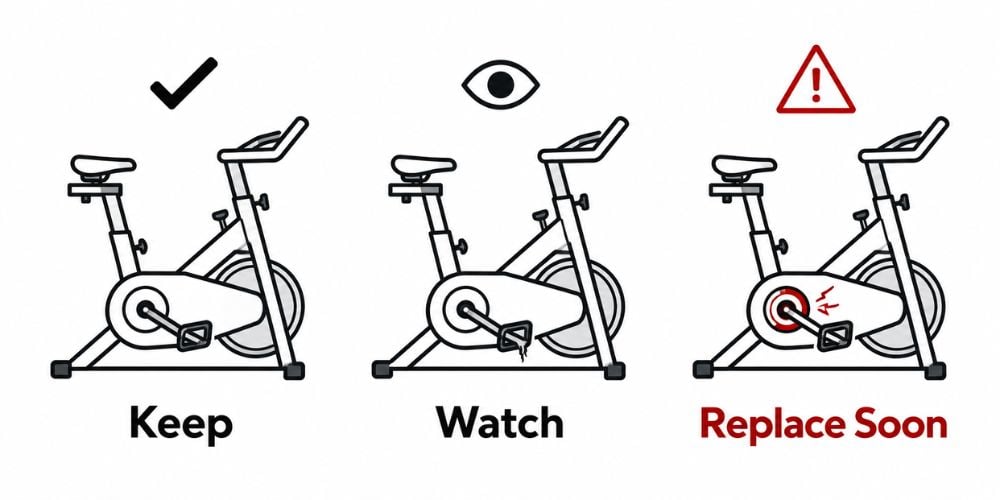
Divide your equipment into three simple groups:
Replacement Group | What You Are Seeing | What to Do |
Replace Soon | Serious wear, repeated problems, or safety concerns | Plan replacement first |
Watch | Still usable but showing increasing wear | Inspect more often |
Keep | Reliable and working normally | Continue regular maintenance |
This makes replacement decisions much easier.
Instead of worrying about twenty machines at once, you can focus on the few that actually need attention. Machines in the Watch group can then be reviewed regularly before they move into Replace Soon.
When we develop commercial equipment at YR Fitness, we focus on solid materials, practical construction, and equipment designed for heavy daily use. If some of your machines are already in the Replace Soon group, you can compare our commercial strength and cardio equipment and replace them gradually instead of changing everything together.
5. Spread Major Purchases Across Different Years
Buying many machines together can also mean they age together.
If your treadmill, strength machines, bikes, and other equipment all enter service around the same time, they may also start developing heavier maintenance needs within a similar period.
Instead of waiting for that replacement wave, spread major purchases across different years.
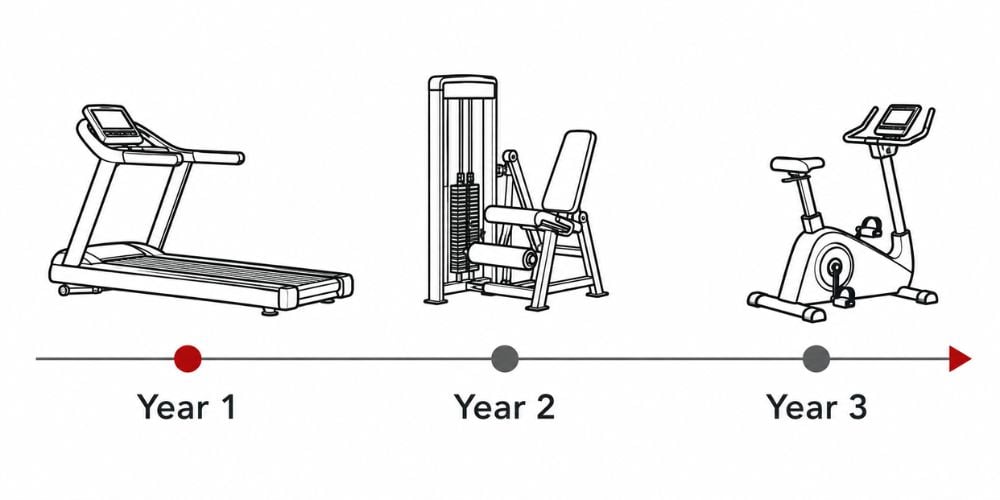
A simple plan could look like this:
Period | Replacement Focus | Main Reason |
Year 1 | Highest-wear cardio equipment | Frequent use or increasing repairs |
Year 2 | Selected strength machines | Wear on cables, bearings, pads, or moving parts |
Year 3 | Remaining older equipment | Condition and reliability |
Later | Continue replacing as needed | Actual machine condition |
The exact order does not matter as much as the idea behind it.
What are you trying to avoid? Five or ten major machines suddenly becoming replacement priorities in the same year.
Spreading purchases gives you time to watch the remaining machines, repair the ones that are still worth keeping, and replace only what actually needs replacing.
6. Repair Good Equipment Instead of Replacing It Too Early
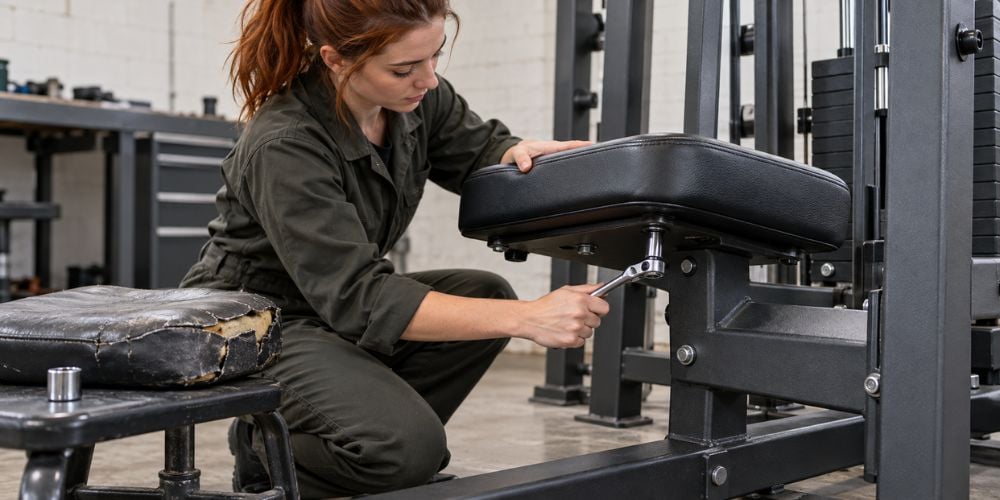
Sometimes a machine only needs a new cable, belt, bearing, pad, or another replaceable component.
That does not mean the entire machine needs to go.
Repair usually makes sense when:
- The frame is still solid
- Movement remains stable
- Replacement parts are available
- The machine has not developed repeated failures
- The repair cost is reasonable
On the other hand, do not keep repairing the same machine forever.
If failures keep returning, important components are badly worn, or the machine develops safety problems, replacement may make more sense.
I have seen well-built machines stay useful much longer after the right worn parts were replaced. The key is knowing whether a repair gives the machine useful life or simply delays an unavoidable replacement.
Conclusion
Avoiding a large replacement bill mostly comes down to paying attention early. Keep records, inspect equipment, judge machines by their actual condition, prioritize replacements, and repair good equipment when it still makes sense.
From my experience with commercial equipment at YR Fitness, gradual replacement is much easier to manage than waiting until several machines become unreliable together.
If you are already planning an upgrade, browse our commercial gym equipment and start with the machines that genuinely need replacing first.
Related articles:



