








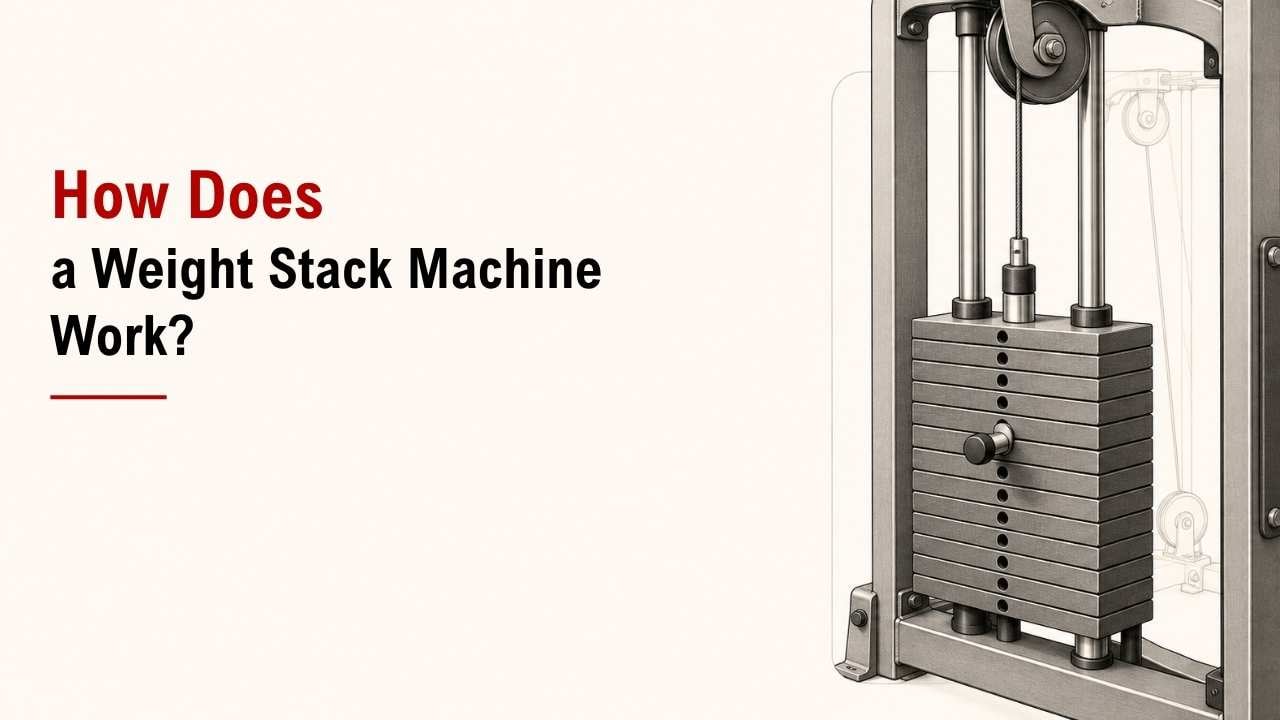

Have you ever selected 40 kg on a gym machine and wondered what is actually moving inside it? The mechanism is simpler than it looks.
The short answer: a weight stack machine uses weight plates, a selector pin, cables, and pulleys to create resistance. When you push or pull the machine, the cable system lifts the plates you selected.
As a Machinery & Structural Engineer at YR Fitness, I work closely with cables, pulleys, frames, and resistance systems used in strength equipment. In my experience, understanding these few parts makes almost any selectorized machine easier to use.
Below, I’ll show you what happens during a rep, what the selector pin does, and why pulleys matter. Keep reading, and you’ll also see why the same weight can feel different on two machines.
1. How Does a Weight Stack Machine Work?
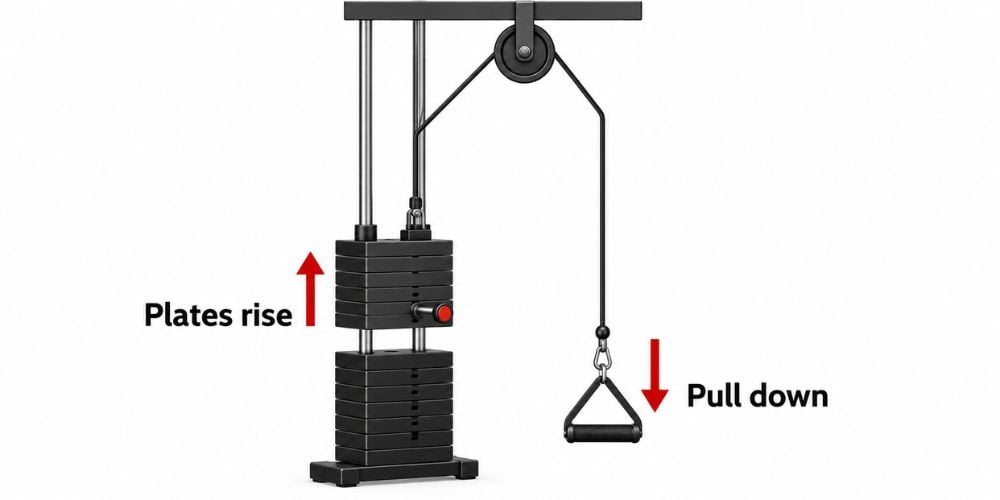
A weight stack machine transfers your movement through a cable or lever system to a stack of metal plates.
Here is what happens during a rep:
You select the weight.
- Insert the selector pin into the weight stack.
You move the machine.
- You might press a chest press handle, pull a lat pulldown bar, or extend your legs on a leg extension.
The cable moves.
- Your movement pulls the cable connected to the stack.
The pulleys guide the cable.
- They redirect the cable so your movement can lift the weights.
The selected plates rise.
- The plates connected by the selector pin move upward and create resistance.
The plates lower again.
- As you control the machine back to its starting position, gravity pulls the stack downward.
So, your arms or legs might move forward, backward, or downward while the weight stack itself moves straight up and down.
Think of the cable as the connection between your body and the stack. You move one end, and the cable transfers that force to the other.
What Parts Are Actually Working?
Part | What It Does | What You Notice |
Weight plates | Provide resistance | The stack rises during the rep |
Selector pin | Chooses how much weight moves | You change resistance quickly |
Cable | Transfers force | Connects your movement to the stack |
Pulleys | Redirect the cable | Let you push or pull in different directions |
Guide rods | Keep plates moving vertically | Help the stack travel smoothly |
Handles or machine arms | Give you a point to apply force | Where you push or pull |
You will find this basic system in chest presses, seated rows, lat pulldowns, leg extensions, and leg curls.
Cable machines can also direct resistance through many different movement angles. The American Council on Exercise explains how an adjustable cable pulley can be used for pushing, pulling, squatting, lunging, and rotational movements.
2. What Does the Selector Pin Actually Do?
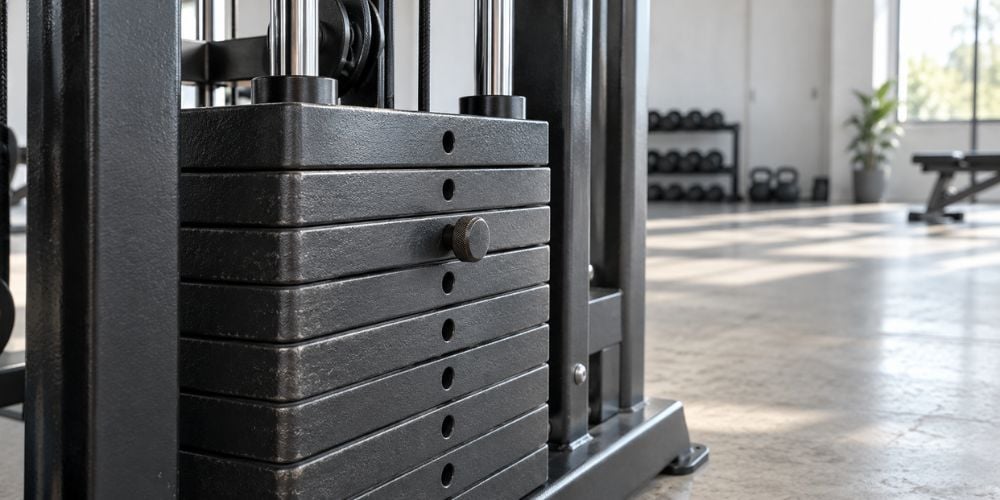
The selector pin decides which weight plates are connected to the lifting system.
Imagine the plates stacked vertically. When you insert the pin into one plate, that plate and all the plates above it become connected to the cable.
For example:
- Select 20 kg → a smaller section of the stack rises.
- Select 40 kg → more plates rise.
- Select 60 kg → an even larger section rises.
The plates below the selected point stay in place.
Why does this matter? Because it lets you change resistance in seconds instead of manually loading and unloading individual plates.
Check the Pin Before You Start
Always make sure the selector pin is pushed fully into the stack.
I often see people change their weight quickly and start the next set without checking it. A quick look takes a second and helps make sure the selected plate is properly engaged.
3. Why Do Weight Stack Machines Use Pulleys?
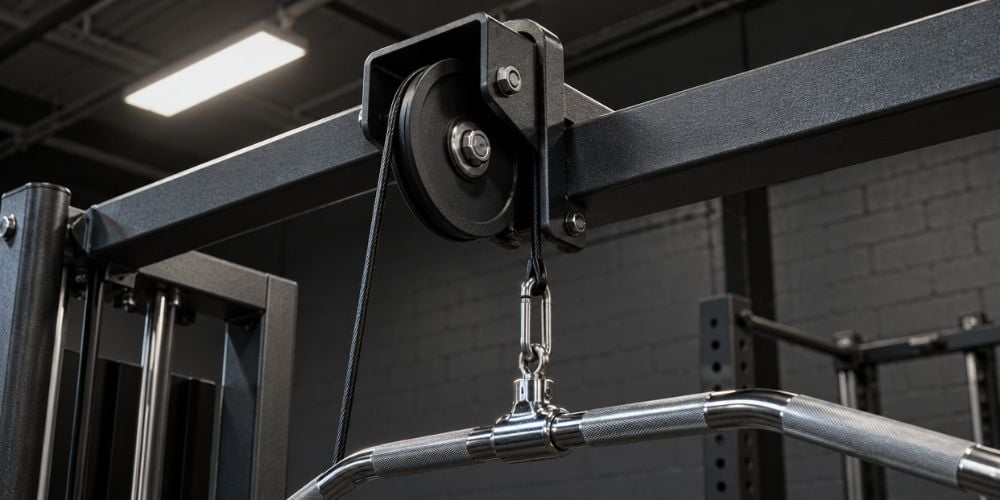
Pulleys mainly help change the direction of the cable and force.
Your body does not always move in the same direction as the weight stack.
Take a lat pulldown:
- You pull the bar downward.
- The cable travels through several pulleys.
- The weight stack moves upward.
On a chest press, you may push forward while the stack still rises vertically.
Here is why this matters: pulleys allow one vertical weight stack to work with many different exercise movements.
Can Pulleys Change How Heavy the Weight Feels?
Yes.
Depending on the cable arrangement, the resistance at the handle may not match the number printed on the weight stack.
For example, a 2:1 pulley ratio can make the resistance at the handle roughly half of the selected stack weight. In return, the handle travels farther.
This is basic mechanical advantage. OpenStax’s explanation of pulley systems shows that adding supporting cable sections can reduce the force needed while increasing the distance the cable must travel.
The exact resistance still depends on the machine’s design. That is why I would never judge a machine only by the number printed on its stack.
At YR Fitness, we look at the whole resistance system when developing commercial strength machines, including cable routing, pulley placement, movement angles, and structural design. If you want to compare how different machine layouts create different training feels, explore our strength equipment and look beyond the stack number itself.
4. Why Can Two Machines With the Same Weight Feel Different?
Ever used 50 kg on one machine and then found 50 kg much harder on another?
That is normal. The number on the stack is only one part of what you actually feel.
Factor | What It Changes | What You May Feel |
Pulley ratio | Effective resistance | Same stack weight feels lighter or heavier |
Lever length | Mechanical advantage | More or less force is needed |
Cam shape | Resistance through the rep | Certain positions feel harder |
Cable routing | Direction of force | Resistance feels different through the movement |
Machine geometry | Joint position and leverage | Exercise feels different even at the same weight |
Friction | Resistance inside the system | Stack may feel slightly heavier or less smooth |
Pulley Ratio
Different pulley arrangements transfer force differently.
Two machines can both show 50 kg while delivering different effective resistance at the handle.
Lever Length
Many strength machines use rotating arms and levers.
Where the cable connects to the lever, and where you apply force, changes the mechanical advantage. Even a small difference can make exercise noticeably heavier or lighter.
Cam Design
Some machines use specially shaped cams.
A cam changes leverage as you move through exercise. This can make one part of the rep feel harder and another part easier.
I pay more attention to how resistance feels through full movement than to the stack number alone. The machine’s mechanics tell you much more than one number.
Your Body Position
Your setup matters too.
Seat height, grip position, starting position, and joint angles can all change your leverage. Even on the same machine, a different setup can make the selected weight feel different.
Research comparing cable-based and standard selectorized machines has also found differences in joint angles, range of motion, and muscle use even when similar exercises were performed. You can read the selectorized-machine biomechanics study on PubMed for a deeper look at why machine design changes the exercise experience.
So if 40 kg suddenly feels unusually heavy on a different machine, do not assume something is wrong. Its pulley ratio, lever system, movement path, friction, or your setup may simply be different.
Conclusion
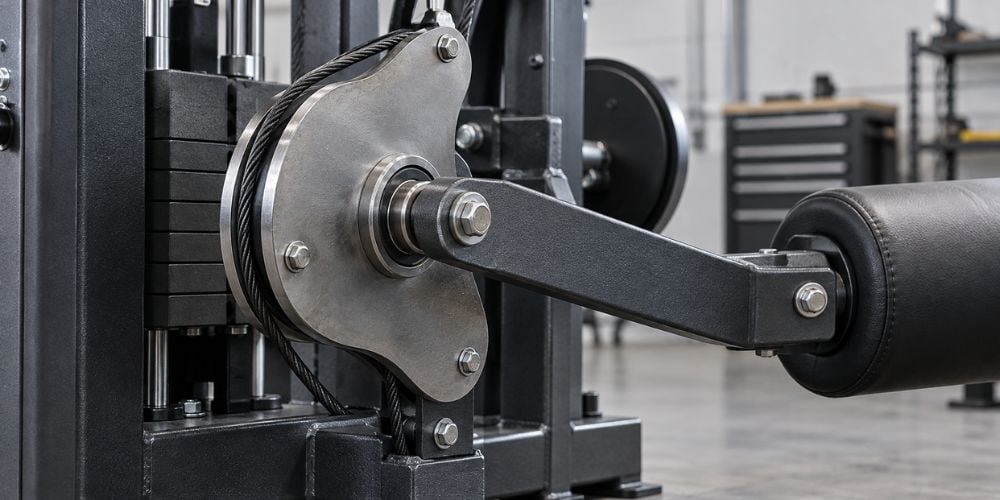
A weight stack machine works by connecting your movement to metal plates through cables, pulleys, and sometimes levers. The selector pin chooses the plates, while the mechanical system determines how that resistance reaches you.
The main thing to remember is simple: the number on the stack does not tell the whole story.
If you want to see how these principles are applied to commercial strength equipment, explore YR Fitness and compare the different machine structures and movement systems.
Related articles:



