










Do your weight stack plates tilt, stick, or rise unevenly when you exercise? That usually means something in the stack, guide rods, cable, or pulley system is not moving correctly.
The short answer is: uneven lifting usually comes from misaligned plates, dirty or bent guide rods, a poorly inserted selector pin, worn bushings, incorrect cable tension, or bad pulley routing. Most of these problems are easy to narrow down once you know where to look.
As a Machinery & Structural Engineer at YR Fitness, I work with the mechanical parts that control how strength machines move under load. I often see one small alignment or maintenance issue make an entire weight stack feel rough.
In this guide, I’ll show you seven common causes and the signs to look for. Start with simple checks, then work your way toward the cable and pulley system.
1. Weight Plates Are Misaligned
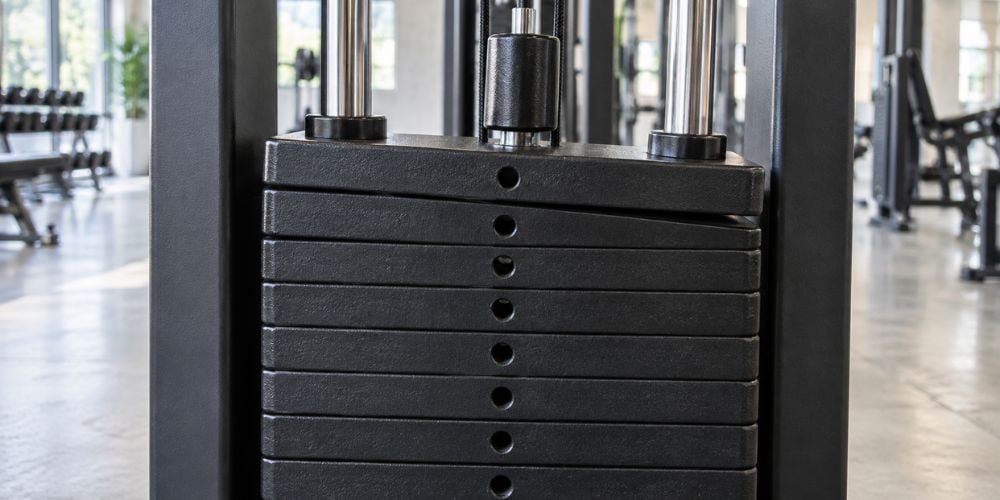
Weight plates should sit flat and travel straight along the guide rods.
If one plate is twisted or sitting unevenly, it can drag against a rod. You may then see one side rise before the other.
Check for:
- Plates sitting at an angle
- Uneven gaps between plates
- Plates rubbing against a guide rod
- A tilted top plate
I usually start here because you can spot many alignment problems without taking anything apart.
Quick question: Does the stack look crooked even when resting?
If yes, plate alignment is a good place to start.
2. Guide Rods Are Dirty or Dry
Guide rods keep the plates moving vertically.
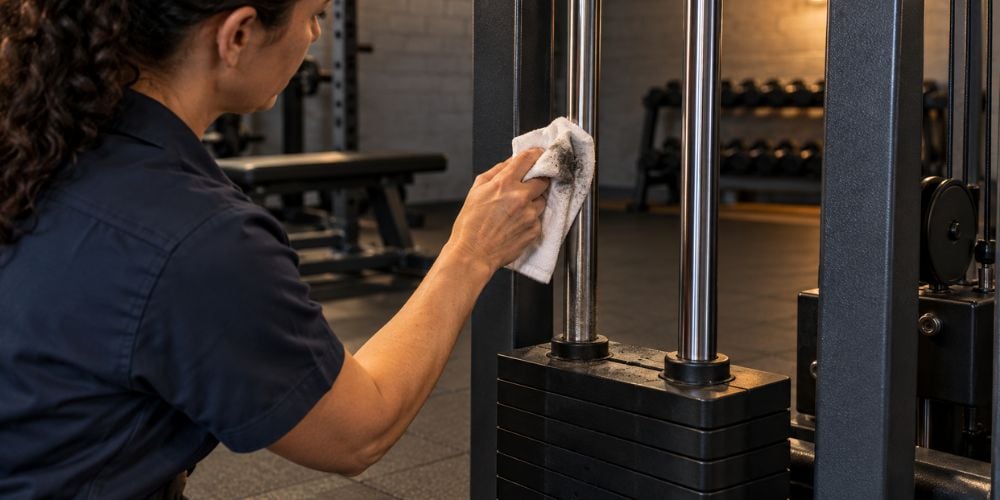
Dust, sweat, dirt, and old lubricant can increase friction. The result may be sticking, jumping, or uneven movement.
Life Fitness recommends cleaning guide rods with a cotton cloth and lubricating them as needed using the lubricant specified for its equipment. Its strength maintenance guidelines also include regular guide-rod cleaning and cable inspection.
What does a dirty rod feel like?
The stack may hesitate instead of rising smoothly. One side may also seem slower than the other.
Clean the rods and follow your machine manufacturer’s lubrication instructions. Avoid using random oils because the correct lubricant can vary by equipment.
3. Guide Rods Are Bent
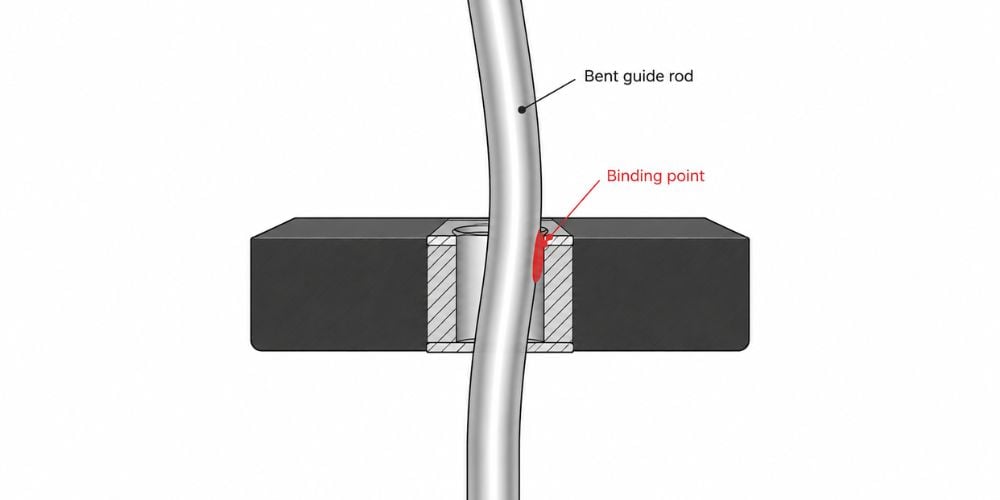
A bent guide rod can make the plates bind as they move.
Even a small bend may push the plate bushings harder against one side of the rod. The problem often appears at the same point in every repetition.
Watch for:
- Plates sticking at the same height
- Sideways movement
- Scraping sounds
- Resistance suddenly becoming harder
Do the plates jam in exactly the same place each time?
A bent or poorly aligned guide rod becomes more likely.
Do not force the stack through the sticking point.
4. The Selector Pin Is Not Fully Inserted
Sometimes the cause is much simpler.
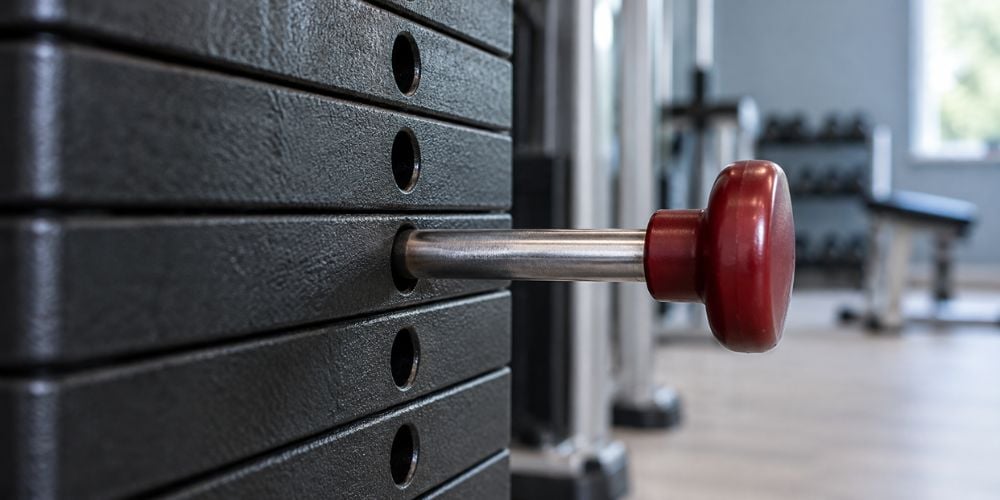
A partly inserted selector pin may not fully engage the chosen plate. This can make the stack feel unstable or behave unexpectedly.
Before your next set:
Check | What to Do |
Pin depth | Push it fully into the plate |
Plate selection | Make sure it enters the intended plate |
Pin position | Check that it sits straight |
Test movement | Perform one slow repetition |
Pin condition | Do not use it if bent, loose, or damaged |
I always check the selector pin early. It takes only a few seconds and can rule out a very simple problem.
Modern selectorized designs may also use features that help secure the pin. For example, Life Fitness lists a magnetically locking selector pin on its Signature Series Cable Column specifications.
5. Weight Plates or Bushings Are Worn
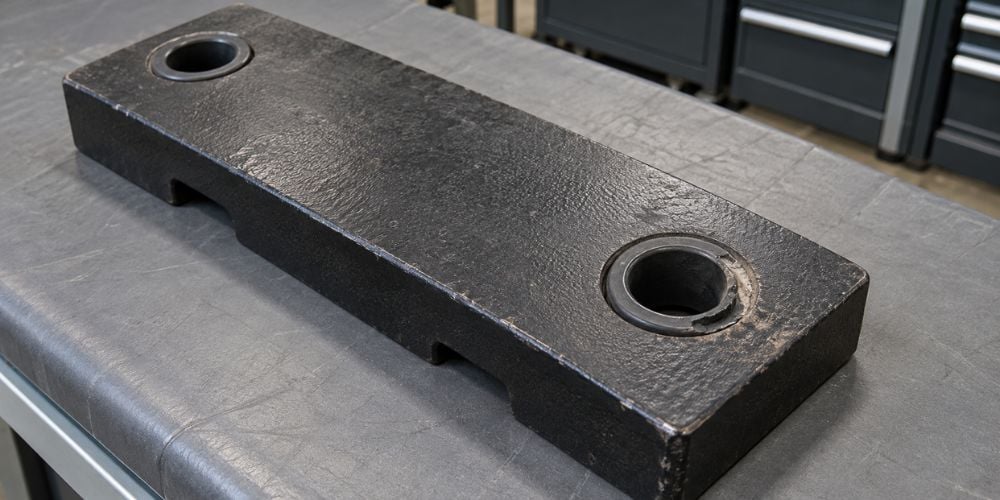
Weight plates usually slide along the guide rods through bushings.
These bushings help keep the plates centered and reduce direct contact with the rods. When they wear, plates may wobble, tilt, or scrape.
What You Notice | Possible Problem |
Plate wobbles while rising | Worn bushing |
Plate tilts to one side | Uneven bushing wear |
Scraping against guide rod | Damaged bushing or plate |
Excessive sideways movement | Loose or worn internal fit |
Can you keep training?
If the movement looks unusual, stop and inspect it first. Extra sideways movement can increase wear on nearby parts.
Precor’s strength-equipment maintenance guidance includes checking machine movement for smooth travel and inspecting cables, cable ends, tension, and weight pins regularly. You can see its preventive maintenance recommendations for more detail.
When we design selectorized strength equipment, we look at the weight stack as a complete system rather than separate parts. Guide-rod alignment, bushings, cable routing, and pulley position all need to work together for smooth movement. If you want to compare how these systems are built, explore our commercial gym equipment.
6. Cable Tension Is Incorrect
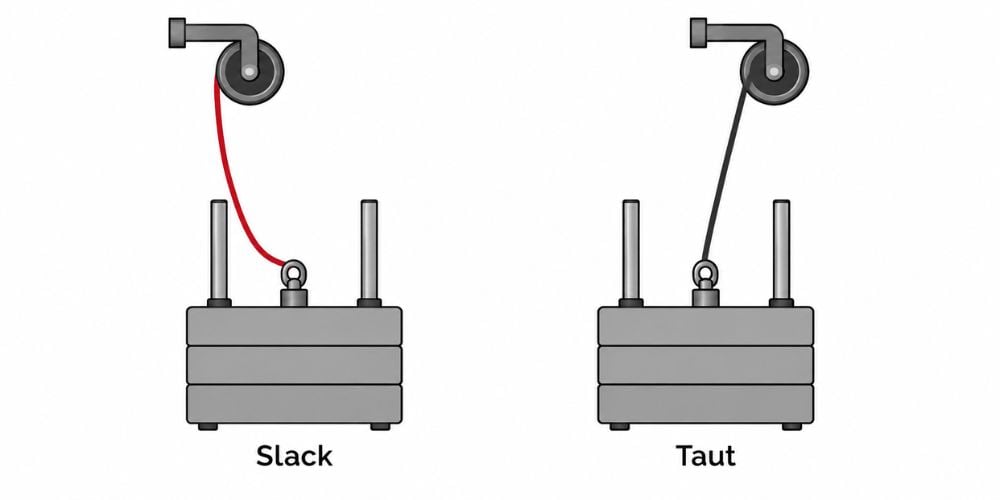
The cable transfers your force to the weight stack.
If it becomes loose, stretched, or incorrectly adjusted, the top plate may not start moving smoothly. You may feel slack first and then a sudden jerk.
Typical signs include:
- Too much cable slack
- A jerk at the start of the rep
- Uneven top-plate movement
- Inconsistent resistance
Here is why this matters: cable tension affects how smoothly force reaches the stack.
Life Fitness specifically recommends checking cables for wear, damage, and proper tension, including checking for cable stretch and adjusting it when necessary.
Unless you understand the machine’s adjustment system, leave major cable adjustments to a qualified technician.
7. The Cable Is Not Running Correctly Through the Pulleys
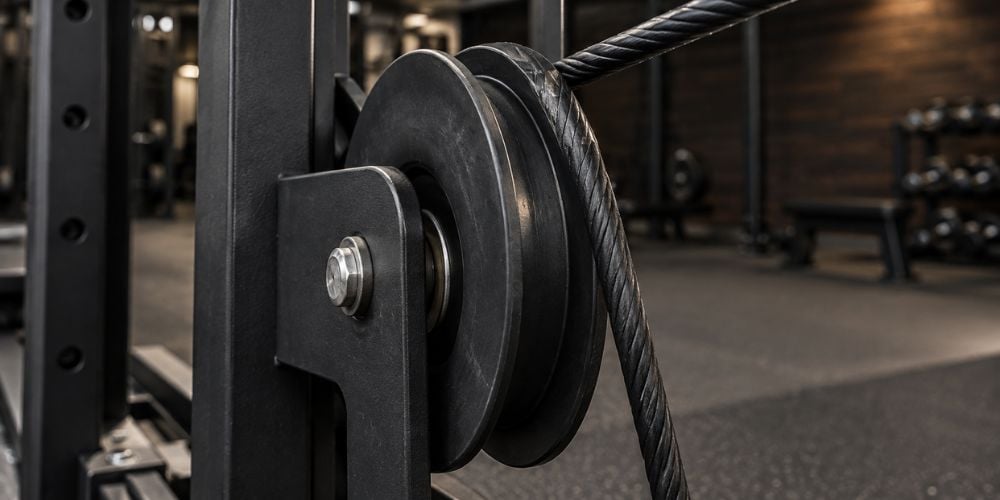
The cable should stay correctly seated inside each pulley groove.
If it slips out, twists, or rubs against a damaged pulley, it may pull the stack at an angle.
Check for:
- Cable sitting outside the pulley groove
- Damaged pulley edges
- A pulley that does not rotate smoothly
- Cable rubbing against the frame
- Frayed or flattened cable sections
This is one issue I would not ignore.
A damaged or badly routed cable can affect both movement and safety. If you see obvious cable damage, stop using the machine until it has been checked.
Conclusion
Weight stack plates usually lift unevenly because something is misaligned, dirty, worn, bent, loose, or incorrectly tensioned.
If the stack keeps jamming, tilts badly, or has a damaged cable, stop using the machine rather than forcing another repetition.
Want to see how these parts come together in a commercial selectorized machine? Browse the YR Fitness equipment range and compare the guide rods, cable routing, pulleys, and weight-stack construction for yourself.
Related articles:



