








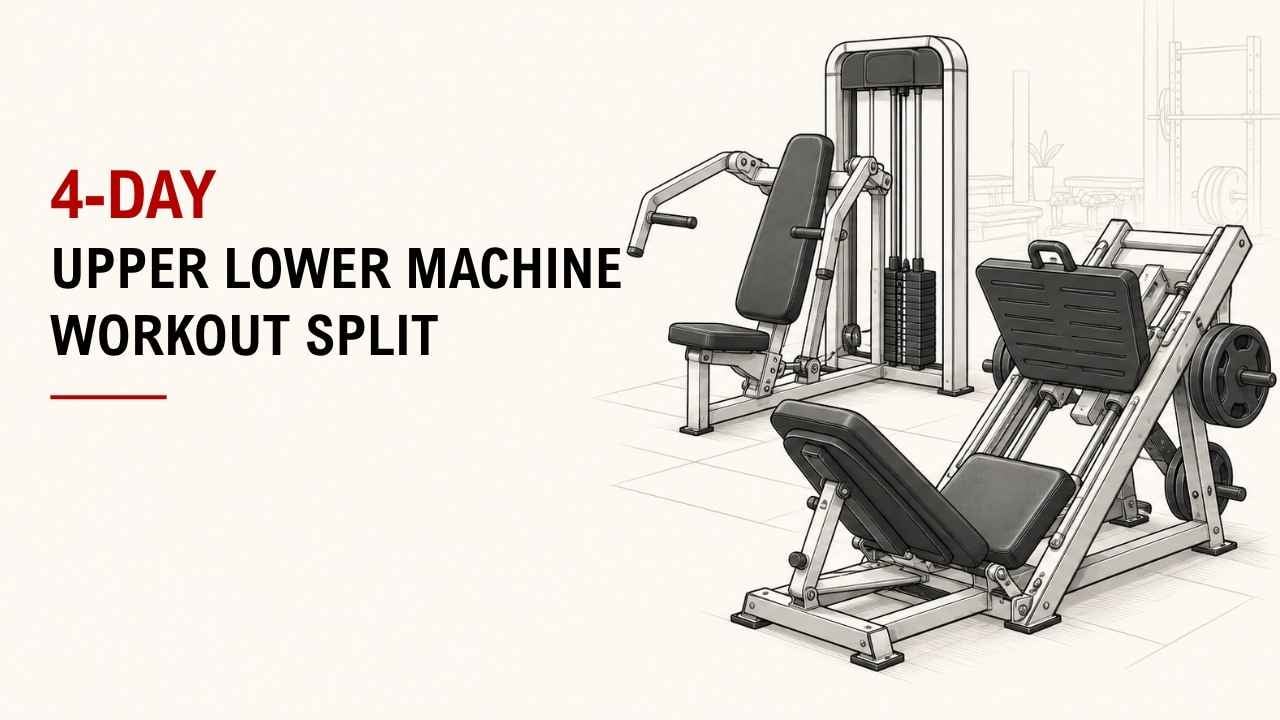

Want a simple workout plan that trains your whole body without keeping you in the gym every day? A 4-day upper lower split gives you enough training while still leaving time to recover.
The simple answer is: train upper body twice, lower body twice, and rest between the two training blocks. Most exercises can stay around 3 sets of 8–12 reps, which keeps the routine easy to follow.
As an Exercise Physiology & Biomechanics Expert at YR Fitness, I work closely with strength equipment, exercise movement, and resistance training. I often see people make better progress when they repeat a simple plan instead of changing exercises every week.
Below, I’ll show you exactly what to train each day and how to progress from week to week. Follow the schedule, track your reps, and adjust the weights as you get stronger.
1. Day 1 — Upper Body A
Start with your main pushing and pulling movements.
Workout
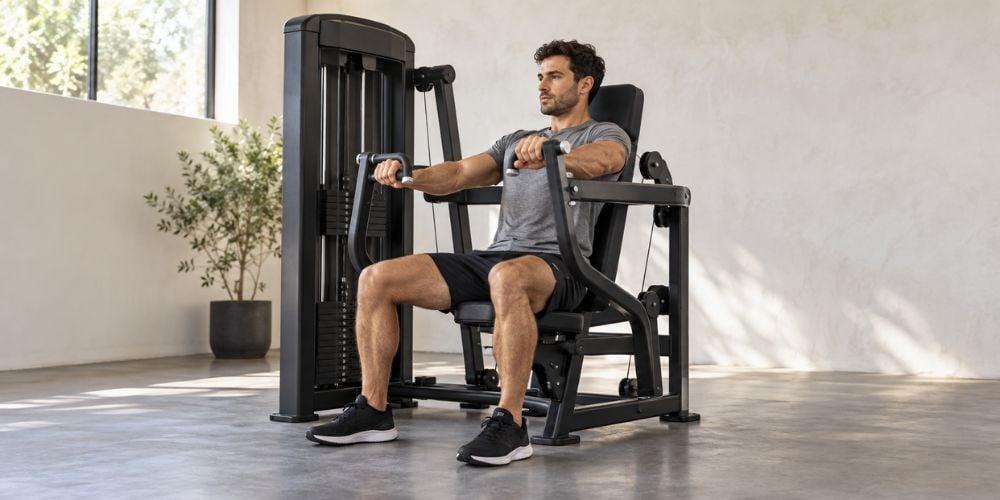
- Machine Chest Press — 3 × 8–12
- Lat Pulldown — 3 × 8–12
- Seated Row Machine — 3 × 8–12
- Machine Shoulder Press — 3 × 8–12
- Lateral Raise Machine — 3 × 10–15
- Cable Triceps Pushdown — 3 × 10–15
- Cable Biceps Curl — 3 × 10–15
Do the chest press, pulldown, and row first while you have the most energy. Save the smaller shoulder and arm exercises for later.
How heavy should you go?
Use a weight that makes the final few reps challenging but still lets you control the movement. If your range of motion suddenly gets shorter, the weight may be too heavy.
This is one reason I like using a clear rep range. You have a simple target without needing to test maximum strength every session.
2. Day 2 — Lower Body A
Now focus on your quads, hamstrings, glutes, and calves.
Workout
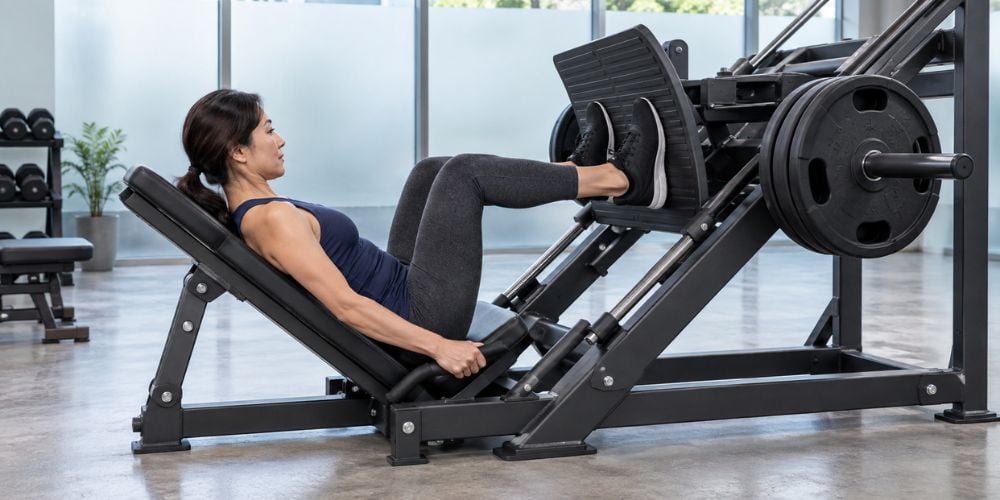
- Leg Press — 3 × 8–12
- Leg Extension — 3 × 10–15
- Seated or Lying Leg Curl — 3 × 10–15
- Hip Thrust or Glute Machine — 3 × 8–12
- Calf Raise Machine — 3 × 12–15
- Abdominal Machine — 3 × 10–15
Start with the leg press because it uses several large muscle groups and usually requires the most effort. Then move into smaller isolation exercises.
Do you need to press as deep as possible?
No. Use a range you can control while keeping your hips and lower back stable against the pad.
Controlled reps matter too. The American College of Sports Medicine’s resistance training guidance emphasizes consistency and progressive resistance rather than making a program unnecessarily complicated.
3. Day 3 — Rest
Wednesday is your recovery day.
You can:
- Rest completely
- Take an easy walk
- Do light stretching
- Perform simple mobility work
You do not need another hard session here. Let your upper and lower body recover before starting the second half of the week.
Still sore?
Keep the day easy. I often see people treat rest as wasted time, but recovery is part of the program too.
Mayo Clinic also recommends avoiding training the same muscle groups on consecutive days, which is one reason this upper/lower layout works well.
4. Day 4 — Upper Body B
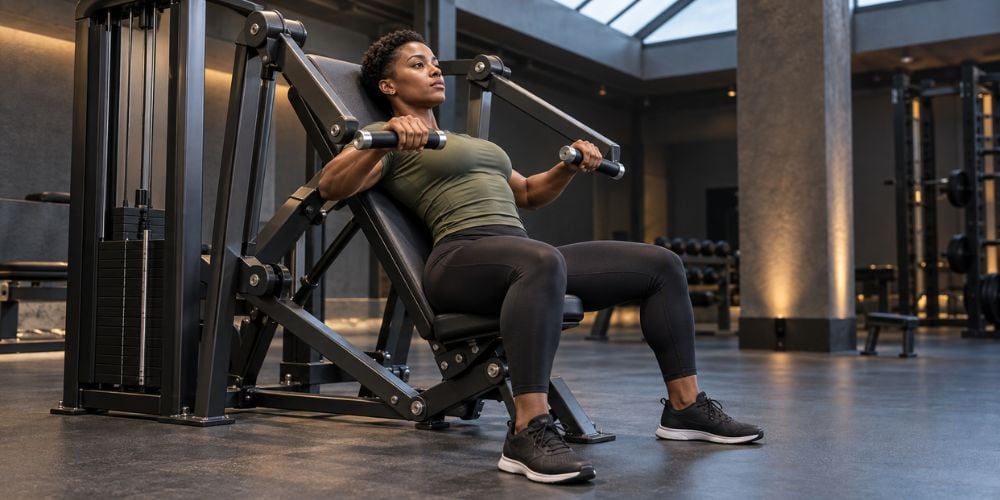
Upper Body B trains many of the same muscles as Day 1 but changes a few exercises and angles.
Workout
- Incline Chest Press Machine — 3 × 8–12
- High Row Machine — 3 × 8–12
- Assisted Pull-Up or Lat Pulldown — 3 × 8–12
- Pec Deck or Cable Fly — 3 × 10–15
- Reverse Fly Machine — 3 × 10–15
- Machine or Cable Biceps Curl — 3 × 10–15
- Triceps Extension Machine — 3 × 10–15
Why change the exercises?
You do not need a completely different workout. Small changes in pressing and pulling angles give you variety without making the routine harder to track.
For example, Day 1 uses a regular chest press, while Day 4 uses an incline press. Both train your chest and triceps, but the movement angle changes.
Machine-based routines are much easier to follow when the equipment gives you stable movement, useful adjustments, and clear resistance changes. At YR Fitness, we design our commercial strength equipment around practical movements such as presses, rows, pulldowns, and lower-body exercises, so you can explore our strength equipment here if you want to compare different machine designs.
5. Day 5 — Lower Body B
Your final training day puts a little more attention on the glutes and hamstrings while still training the quads.
Workout
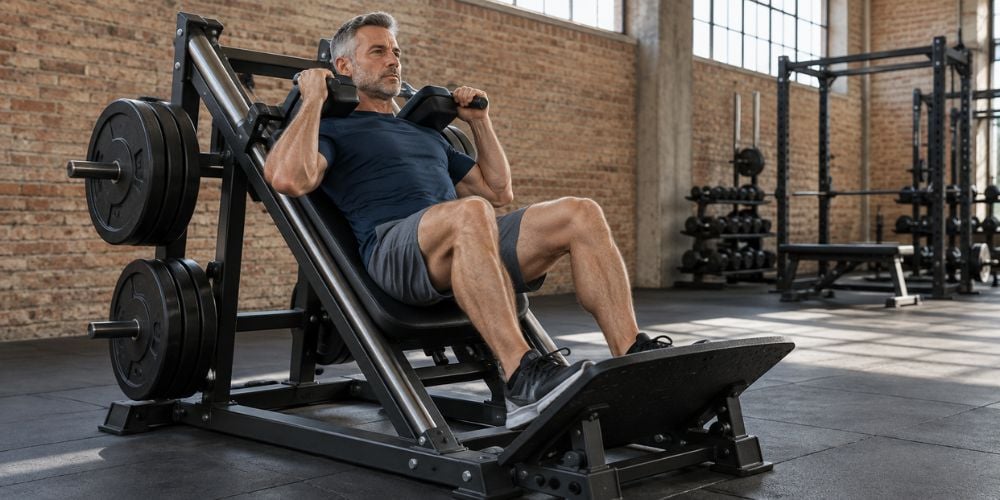
- Hack Squat Machine — 3 × 8–12
- Leg Press — 3 × 10–12
- Leg Curl — 3 × 10–15
- Glute Kickback Machine — 3 × 10–15
- Hip Abductor Machine — 3 × 12–15
- Calf Raise Machine — 3 × 12–15
- Cable Crunch — 3 × 10–15
Start with the hack squat while your legs are fresh. Then work through the remaining exercises without rushing.
I often see people make training harder than necessary by changing exercises too often. Stick with the same movements long enough to see whether you are actually getting stronger.
Lower A vs. Lower B
The two lower-body days overlap, but the exercise emphasis changes slightly.
Lower A | Lower B |
Leg Press | Hack Squat |
Leg Extension | Leg Press |
Leg Curl | Leg Curl |
Hip Thrust/Glute Machine | Glute Kickback |
Calf Raise | Hip Abductor |
Abdominal Machine | Calf Raise + Cable Crunch |
That overlap makes progression easier to track while still giving you some variety.
6. How to Progress Each Week
Progress does not need to be complicated.
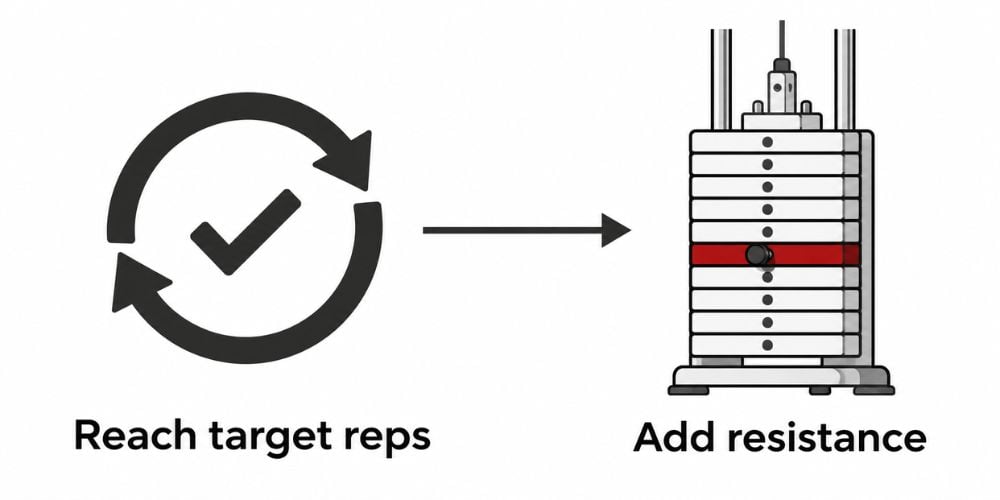
Start with resistance, you can control for 8–12 reps. Once you can reach the top of your target range with good form on every set, increase the weight slightly.
Week | Progression Goal | What to Do |
Week 1 | Learn the exercises | Choose comfortable starting weights |
Week 2 | Add reps | Add 1–2 reps where possible |
Week 3 | Add resistance | Increase the weight slightly |
Week 4 | Keep progressing | Repeat while maintaining good form |
Do not try to increase every exercise at the same time.
Your chest press might improve this week while your lat pulldown stays the same. That is normal because progress can differ from one exercise to another.
What should you track?
Write down your weight, sets, and reps. If those numbers slowly improve while your movement stays controlled, you are moving in the right direction.
Conclusion
A 4-day upper lower machine workout split is simple: train your upper body twice, your lower body twice, and use the days between sessions to recover. You do not need dozens of exercises or a complicated weekly plan.
Focus on 3 controlled sets, around 8–12 reps for your main exercises, and gradual increases in reps or resistance. Stay consistent long enough to see what is actually working.
If you want to see the machine types used for presses, rows, pulldowns, squats, leg presses, curls, and similar exercises, YR Fitness offers a full range of commercial strength equipment. Browse the YR Fitness equipment range and compare the movement options that fit this type of training.
Related articles:



