








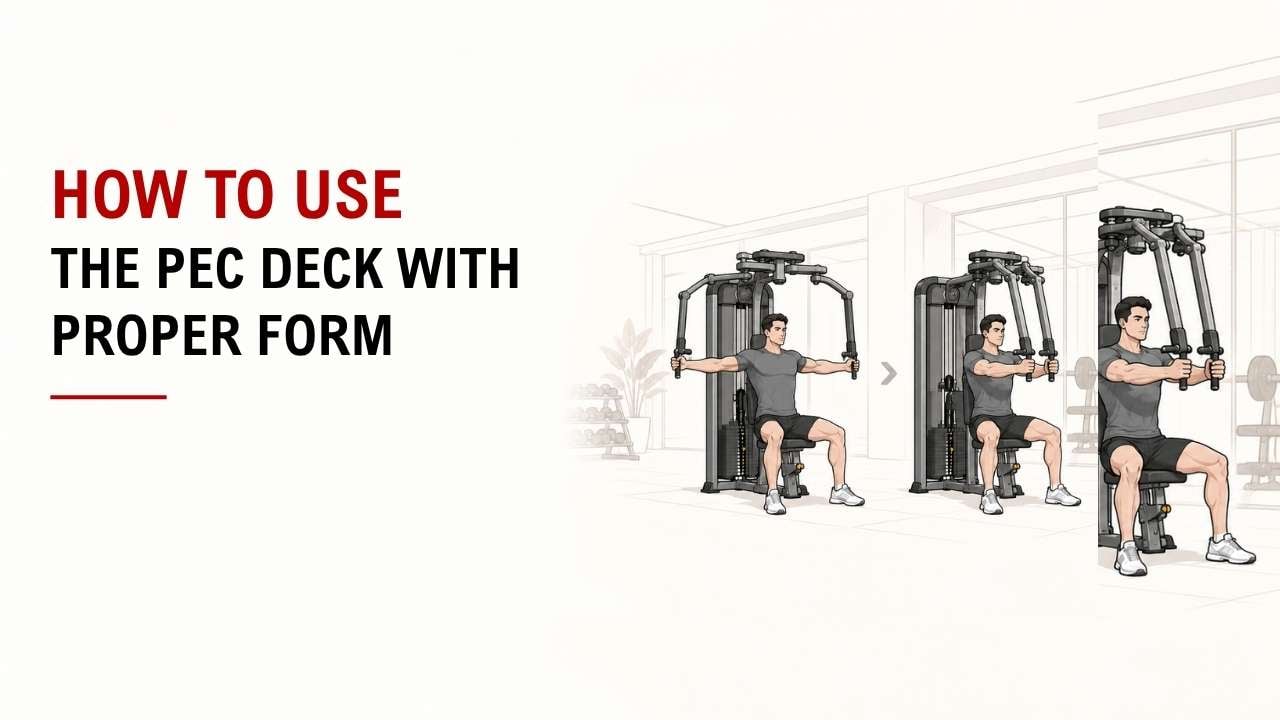

Not sure how to use the pec deck correctly? A proper setup can help you train your chest more comfortably.
The key is simple: set the seat around chest height, keep your back supported, bring your arms together, and return slowly.
As an Exercise Physiology & Biomechanics Expert at YR Fitness, I work closely with exercise movement, joint position, and strength-machine biomechanics. I often see better pec deck form once the seat height and arm position are corrected.
Below, I’ll show you the setup, movement, weight, sets, and reps you need for proper form.
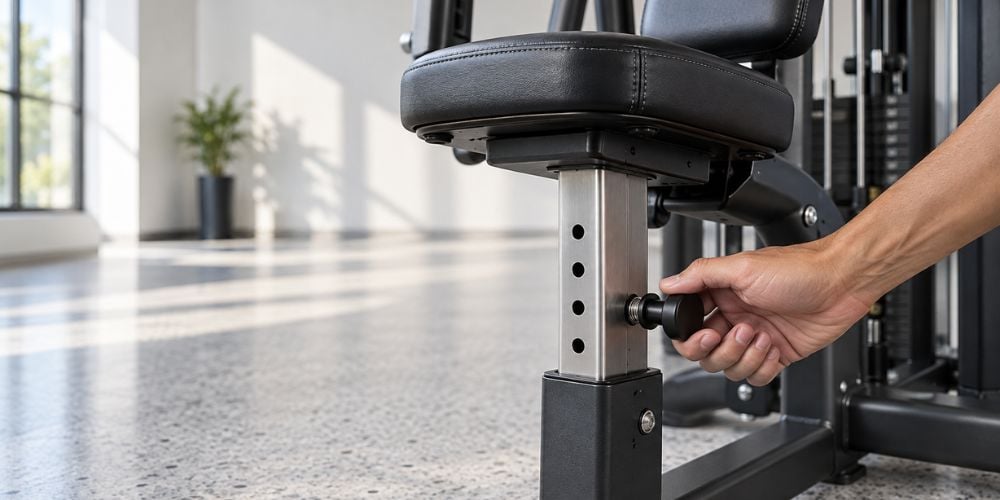
1. Adjust the Seat Height
Start with the seat.
Sit with your back against the backrest and adjust the seat until the handles or arm pads are around mid-chest level. Keep both feet flat on the floor.
Why does this matter?
If the seat is too low, your arms may sit too high and your shoulders can take over. If it is too high, the movement can feel awkward.
I usually tell beginners to fix the seat before touching the weight stack. It takes only a few seconds, but it can completely change how the exercise feels.
Quick Check: Your elbows should sit around chest or shoulder level without forcing your shoulders upward.
2. Choose a Light Starting Weight
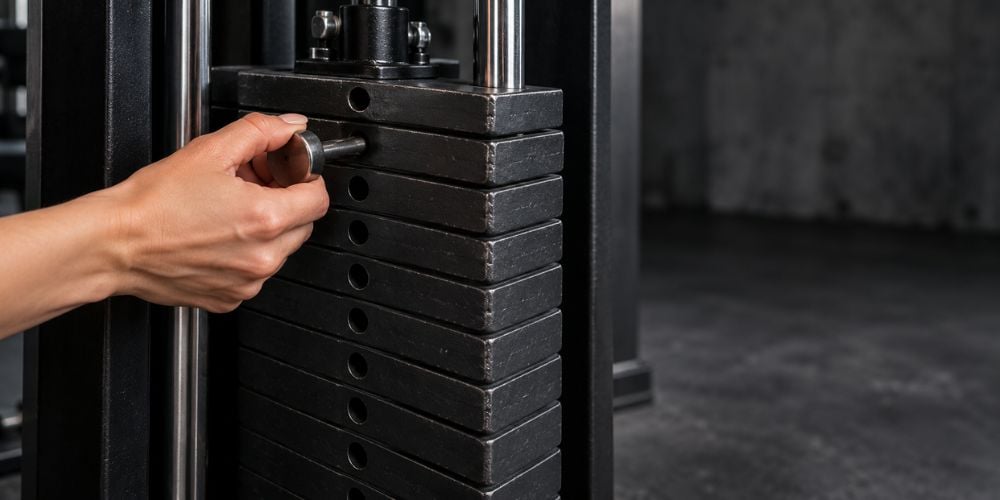
Start lighter than you think you need.
Choose a weight that lets you bring your arms together without leaning forward, bouncing, or changing your shoulder position. Treat your first set as a practice set.
Ask yourself:
Can I control the weight in both directions?
If not, lower it.
A lighter weight with good control is more useful than a heavier weight that makes your form fall apart.
This follows the same basic principle in Mayo Clinic’s weight-training technique guide: use a manageable resistance, maintain proper form, and move the weight in a controlled way.
There is no prize for moving the heaviest stack in the gym. Your chest does not know the number printed on the weight plate.
3. Position Your Back and Chest
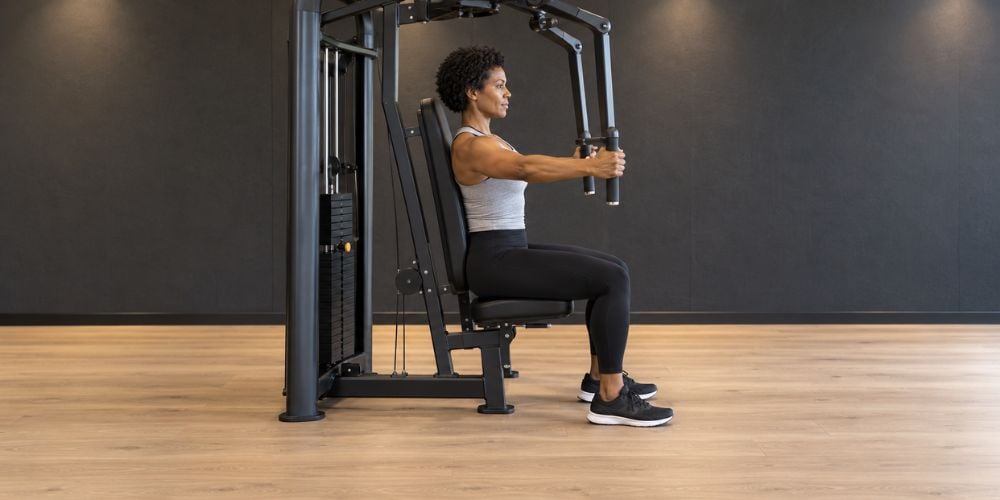
Sit fully against the backrest.
Keep your:
- Feet flat on the floor
- Back supported
- Chest slightly lifted
- Head neutral
- Shoulders down
Avoid pushing your chest too far forward or excessively arching your lower back.
You also do not need to squeeze your shoulder blades together as hard as possible. Keep your upper body stable and let your arms move.
Your torso should stay in almost the same position throughout the set.
Rocking forward on every rep? The weight is probably too heavy.
Reduce it and see whether you can keep your back against the pad.
4. Place Your Arms Correctly
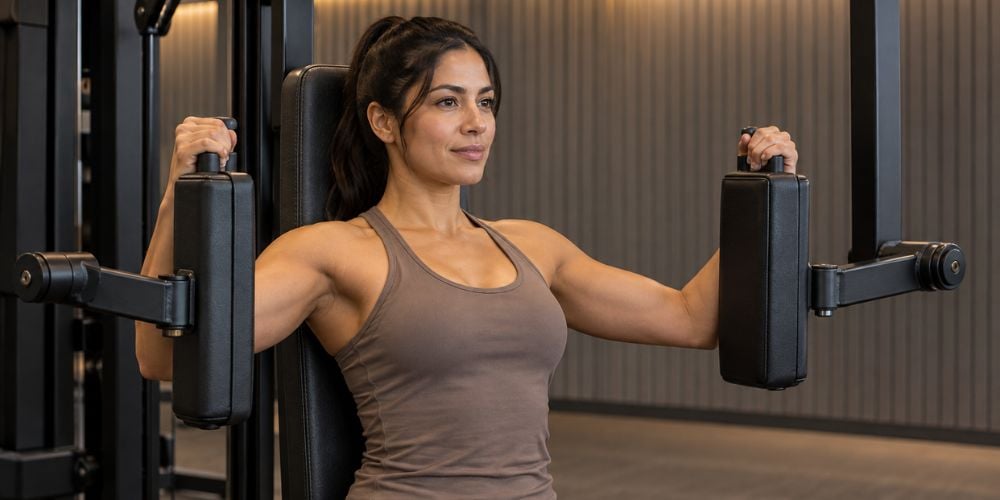
Pec deck machines generally use either handles or padded arm supports.
If your machine has handles, grip them comfortably and keep a slight bend in your elbows. If it has forearm pads, place your forearms against them while keeping your upper arms in a comfortable position.
Do not force your elbows far behind your torso.
Your starting position should create a mild stretch across your chest without discomfort in the front of your shoulders.
I often see people assume that opening farther must train the chest better. In practice, pushing the arms too far backward can simply place more stress on the shoulder.
Simple Rule: Open only as far as you can while keeping your shoulders comfortable and controlled.
This is also why setup matters from one machine to another. Handle positions, starting angles, and movement paths can all change how the exercise feels.
At YR Fitness, we pay close attention to movement paths and adjustment positions when developing commercial strength machines. If you want to compare different chest-machine designs and see how their setups differ, our equipment range gives you a practical place to start.
5. Bring Your Arms Together
Now start the repetition.
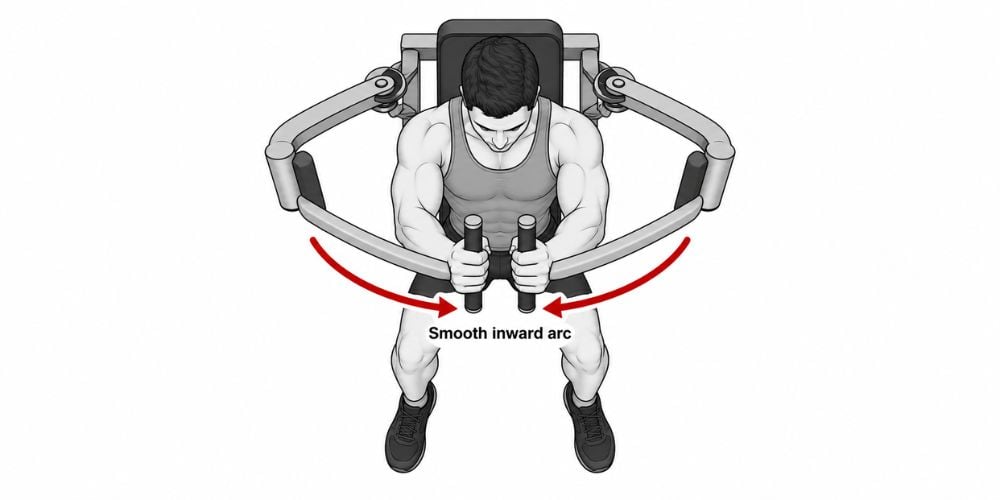
Move both arms inward in a smooth arc.
Instead of thinking only about pushing the handles, try this cue:
Bring your elbows toward each other.
It can help you focus more on the chest and less on simply moving the machine.
Keep your:
- Back against the pad
- Chest steady
- Shoulders down
- Elbows slightly bent
Bring the handles or pads together until you reach the end of the comfortable movement path.
Then pause briefly and squeeze your chest.
You do not need to hold the squeeze for several seconds. A short, controlled pause is enough.
Avoid smashing the handles together or letting the weight stack bounce.
Want some extra context on the exercise itself? ACE’s evidence-based chest-training guide discusses pec deck training alongside other common chest exercises, and ACE-sponsored research identified the pec deck among three particularly effective chest exercises.
6. Return Slowly
Do not forget the second half of the rep.
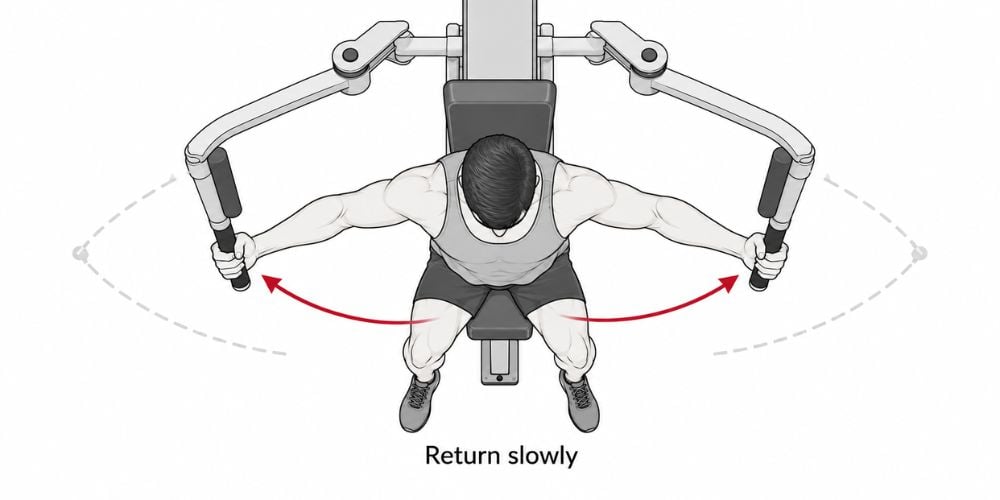
Let your arms move outward slowly while resisting the weight. Do not allow the machine to suddenly pull your arms backward.
A simple rhythm works well:
Close under control → pause briefly → open slowly.
Stop when you feel a comfortable stretch across your chest.
You should not feel a sharp pull in your shoulders.
In my experience, rushing this return is one of the most common pec deck mistakes. Slow it down, and the exercise often feels harder without adding any extra weight.
Keep tension on your chest instead of letting the weight stack completely rest between reps.
Too easy when you slow down? Then you can think about adding a little resistance.
7. Use the Right Sets and Reps
You do not need a complicated pec deck program.
For most fitness lovers, these ranges are easy to work with:
Loading Sheets. Please try again after it’s finished.
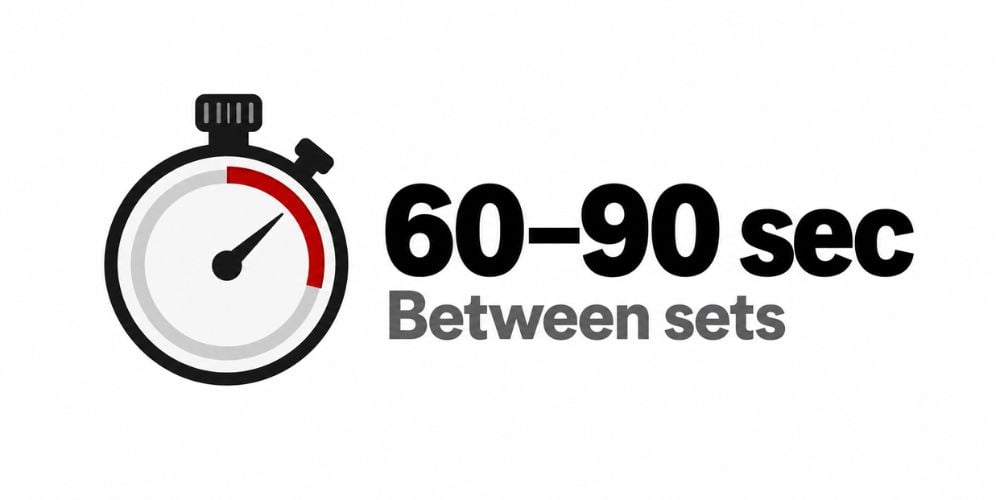
Rest around 60–90 seconds between sets.
The 8–12 rep range used for general training also fits well with classic ACSM resistance-training guidance on PubMed, which recommends an 8–12 RM range for novice resistance training and emphasizes the 6–12 RM zone for hypertrophy-focused work.
Still, do not get stuck on the exact number.
Choose a weight that makes the final few repetitions challenging while still allowing you to keep good form.
If your shoulders start shrugging, your body moves forward, or you cannot control the return, reduce the weight.
Conclusion
Using the pec deck correctly is straightforward: set the seat around chest height, keep your back supported, bring your arms together smoothly, and control the return.
Good form should feel controlled from the beginning of the rep to the end. Once you can maintain that control, gradually increase the resistance.
If you also want to compare different chest-training machine designs, YR Fitness develops commercial strength equipment with practical adjustment systems. Explore our equipment range and see which setup best matches the way you like to train.
Related articles:



