








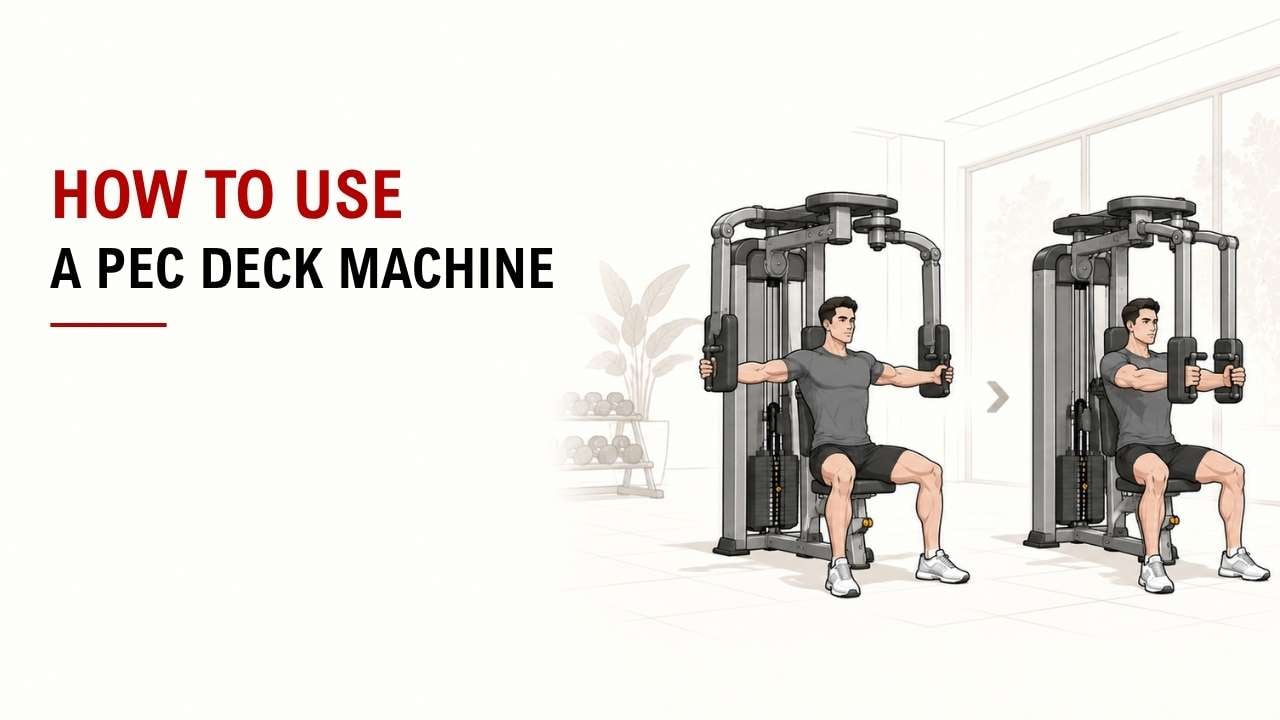

Not sure how to use a pec deck machine correctly? A few small setup changes can make the exercise feel much smoother.
The short answer is simple: adjust the seat, choose a manageable weight, bring your arms together under control, and return slowly. Your goal is to work your chest without forcing your shoulders into an uncomfortable position.
As an Exercise Physiology & Biomechanics Expert at YR Fitness, I work closely with exercise movement, joint position, and strength-machine biomechanics. I often see pec deck form improve as soon as the seat height and starting position are corrected.
Below, I’ll show you exactly how to set up the machine, move correctly, and choose your sets and reps. Follow the seven steps, and you’ll be ready for your next set.
1. Adjust the Seat Height
Start with the seat.
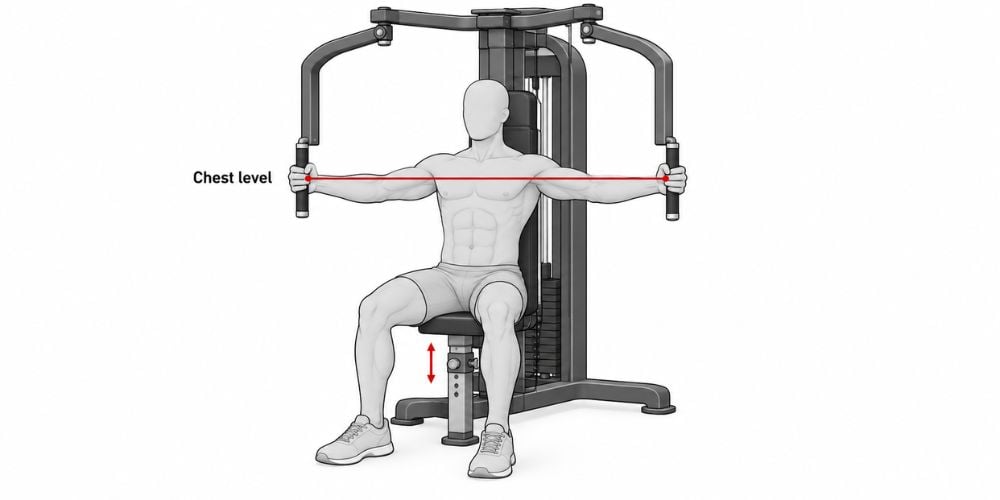
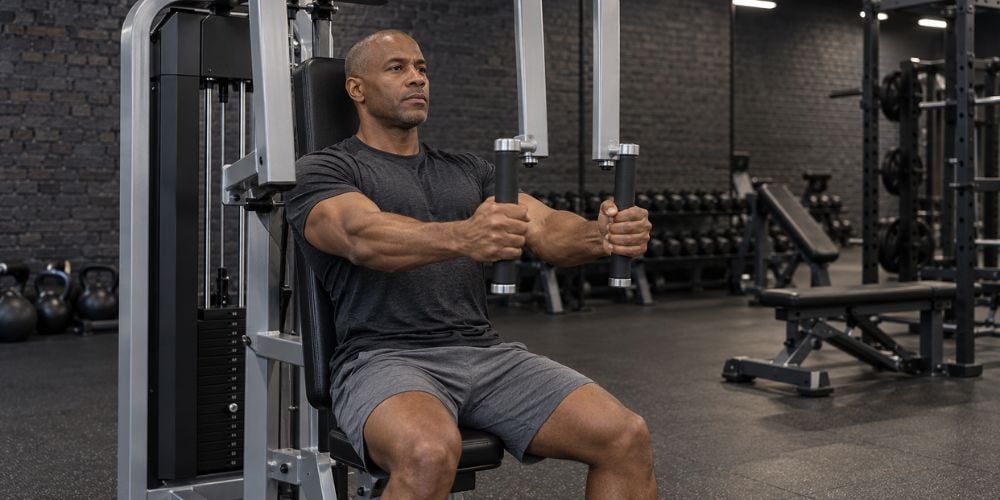
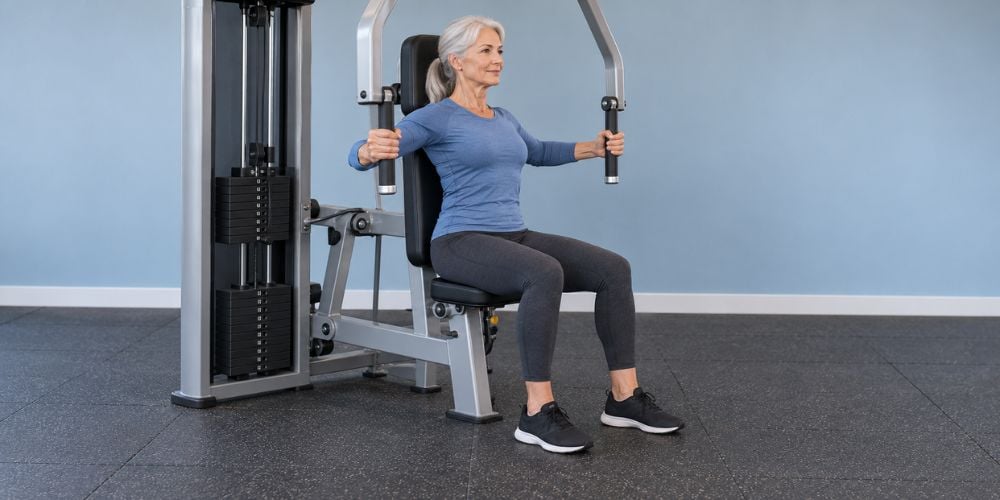
Sit down with your back flat against the pad. Adjust the seat until the handles or arm pads are roughly level in the middle of your chest.
Keep both feet flat on the floor.
The ACE pec deck exercise guide also recommends keeping your feet flat and your back firmly against the pad while performing the movement.
Why does seat height matter?
If the seat is too low, your arms may sit too high. If it is too high, you may end up pressing downward instead of bringing your arms naturally across your chest.
I always recommend fixing the seat before adding weight. Even a small adjustment can make the movement feel much more natural.
2. Choose a Comfortable Starting Weight
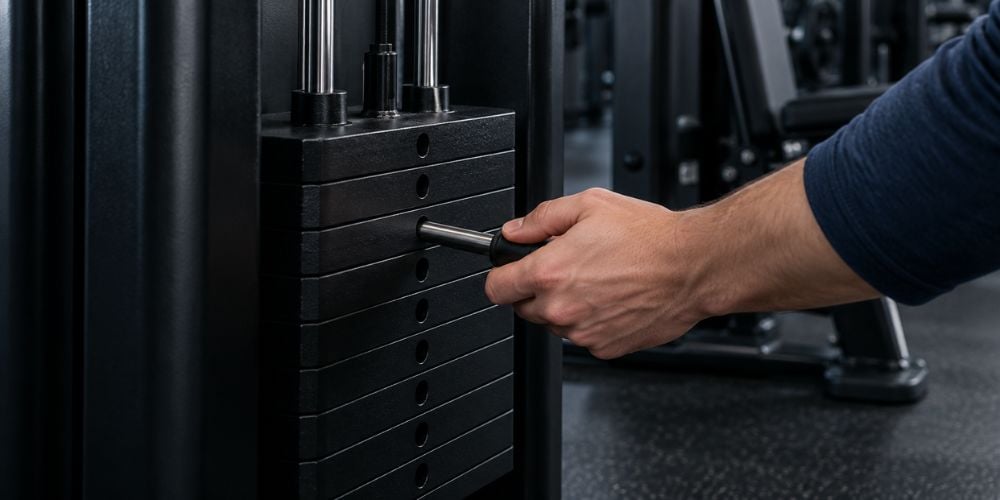
Do not start too heavy.
Choose a weight you can move without swinging, jerking, or lifting your back away from the pad.
Ask yourself:
Can I bring the handles together and return them slowly?
If not, lower the weight.
A lighter starting weight makes it easier to learn movement and feel your chest working. You can gradually increase resistance once your form stays controlled.
This does not need to be complicated. The ACSM 2026 resistance-training guidelines emphasize matching resistance training to your goals and note that consistency matters more than using unnecessarily complicated methods.
3. Set Your Starting Position
Now set your upper body.
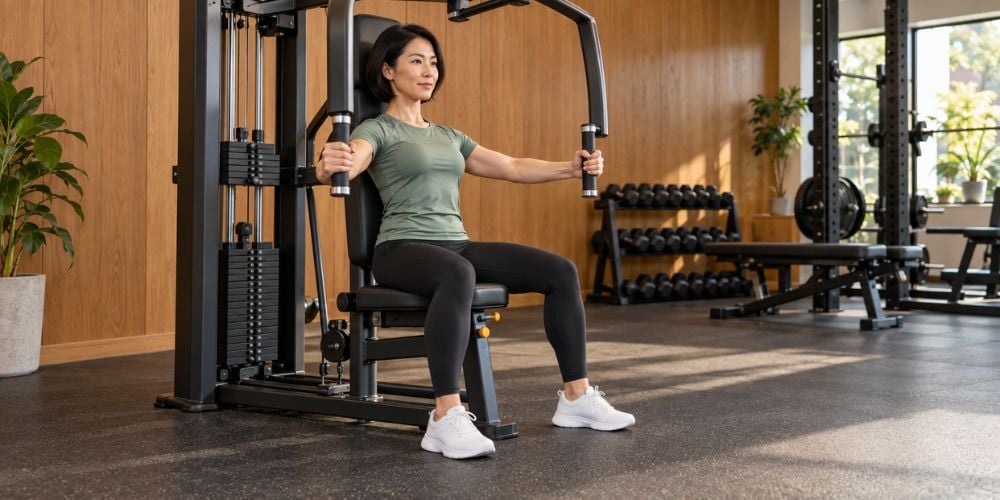
Keep your:
- Back against the pad
- Chest slightly lifted
- Shoulders relaxed
- Feet flat
- Elbows slightly bent
Grip the handles firmly. If your machine uses forearm pads, place your arms comfortably against them.
Do not pull your shoulders too far backward just to get a bigger stretch.
You should feel a comfortable opening across your chest. You should not feel sharp pressure in the front of your shoulders.
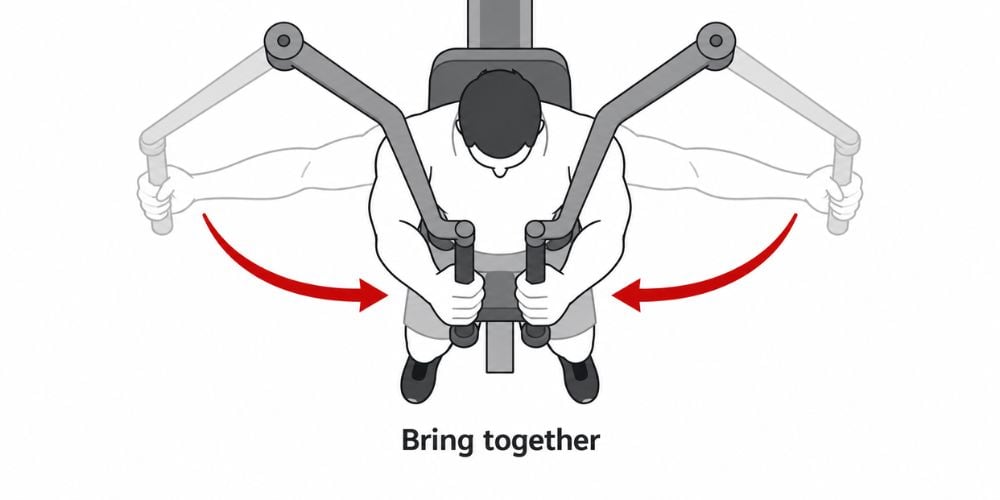
4. Bring Your Arms Together
Move both arms toward the center of your chest.
Think about bringing your elbows or upper arms toward each other instead of simply pushing with your hands.
Keep the movement smooth.
Your back should stay against the pad throughout the rep. Avoid leaning forward when the weight starts to feel difficult.
I like to think of this as a controlled chest squeeze, not a fast press. That simple cue often helps people keep the movement where they want it.
Does one pec deck feel smoother than another? Machine design, seat adjustment, handle position, and movement path can all change how exercise feels.
At YR Fitness, we design our commercial strength equipment with careful attention to movement angles, stability, and comfortable adjustment. You can explore our strength equipment if you want to compare different chest-training machine designs.
5. Pause Briefly at the Front
When your arms come together, pause for about one second.
Gently squeeze your chest.
You do not need to force the handles together. Stop naturally when you reach the end of the movement.
Why pause?
It helps you stay in control instead of rushing through the rep. Then you can start the return smoothly.
6. Return Slowly
Let your arms open gradually.
Do not allow the weight stack to pull your arms backward.
Keep resisting the weight as you return to the starting position. Stop when you feel a comfortable stretch across your chest.
Going farther is not always better, especially if your shoulders begin to feel uncomfortable.
I often see people control the squeeze well but rush this part. Slowing the return can make the whole rep feel much more stable.
Quick Pec Deck Form Check
Check | What to Do |
Seat | Handles around chest level |
Back | Keep it against the pad |
Feet | Flat on the floor |
Elbows | Keep a slight bend |
Forward movement | Bring arms together smoothly |
Front position | Pause for about 1 second |
Return | Open slowly under control |
If these points look good, you are ready to train.
7. Use the Right Sets and Reps
You do not need a complicated plan.
For most fitness lovers, this is a practical starting point:
Training Goal | Sets | Reps | Rest |
Beginner | 2–3 | 10–12 | 60–90 sec |
General muscle building | 3–4 | 8–12 | 60–90 sec |
Lighter controlled training | 2–3 | 12–15 | 60–90 sec |
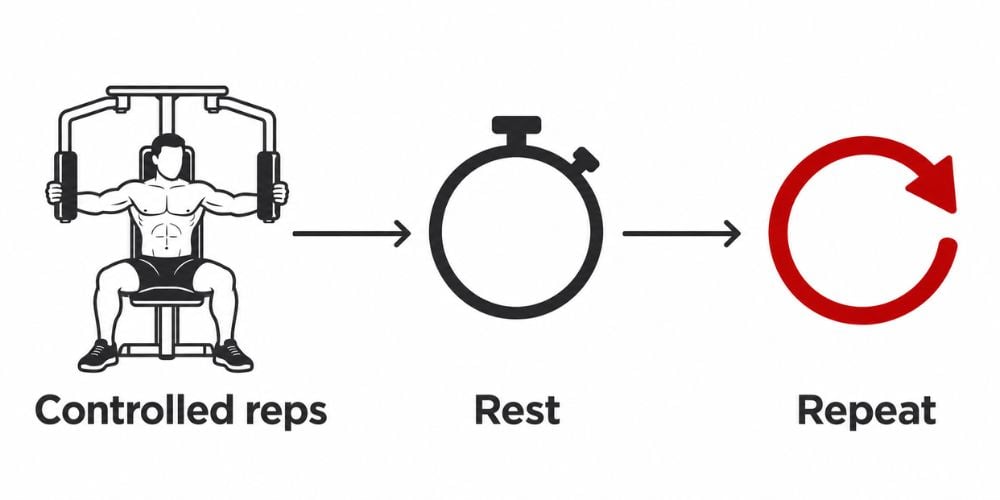
Start with a weight that lets you complete every rep with the same basic form.
If your shoulders roll forward, your back comes away from the pad, or you have to swing the handles together, the weight is probably too heavy.
Increase the resistance gradually once your reps stay smooth and controlled.
How often should you train your chest?
The pec deck can be one part of a wider strength routine. For general health, the CDC adult physical activity guidelines recommend muscle-strengthening activity on at least 2 days per week, covering all major muscle groups, including the chest.
You do not need to use the pec deck every time. Fit it into your routine based on your training goals and recovery.
Conclusion
Using a pec deck machine is simple once your setup is right. Adjust the seat, choose a manageable weight, keep your back supported, squeeze under control, and return slowly.
Good form should make the exercise feel smooth and focused mainly on your chest.
If you want to compare more chest and strength-training machines, browse the equipment range from YR Fitness and see which designs fit the way you like to train.
Related articles:



