








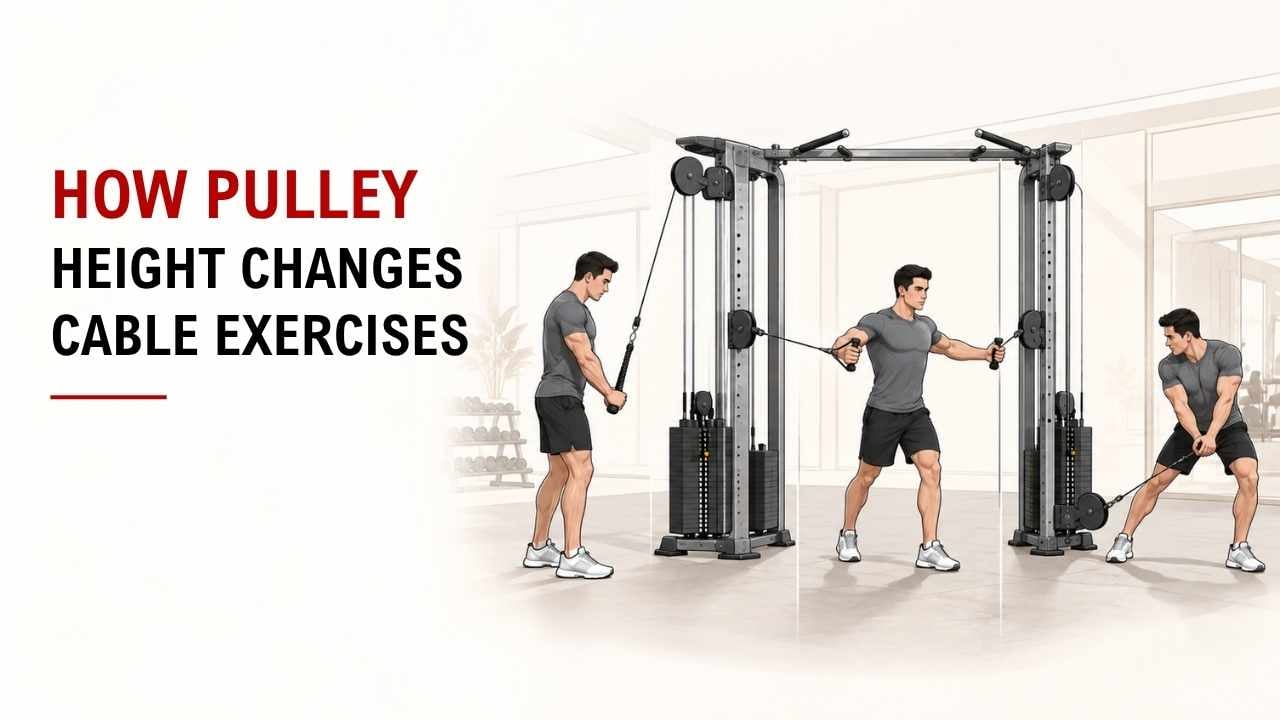

Have you noticed cable exercise feels different when you move the pulley up or down? Pulley height changes the direction the resistance comes from.
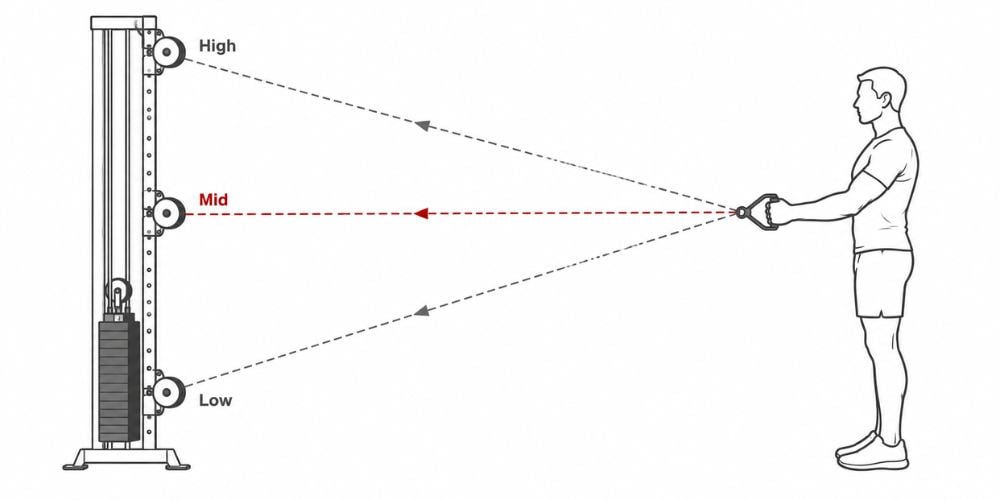
The simple rule is: high pulleys suit downward movements, mid pulleys suit horizontal movements, and low pulleys suit upward movements. Changing the angle can also change where you feel the exercise most.
As an Exercise Physiology & Biomechanics Expert at YR Fitness, I work with resistance angles, joint movement, and exercise mechanics. From experience, I often find that a small pulley adjustment can improve an exercise before you ever need to add more weight.
Below, I’ll show you what changes at each pulley height. You’ll also see how it affects cable flyes and lateral raises.
1. What Happens When the Pulley Is Set High?
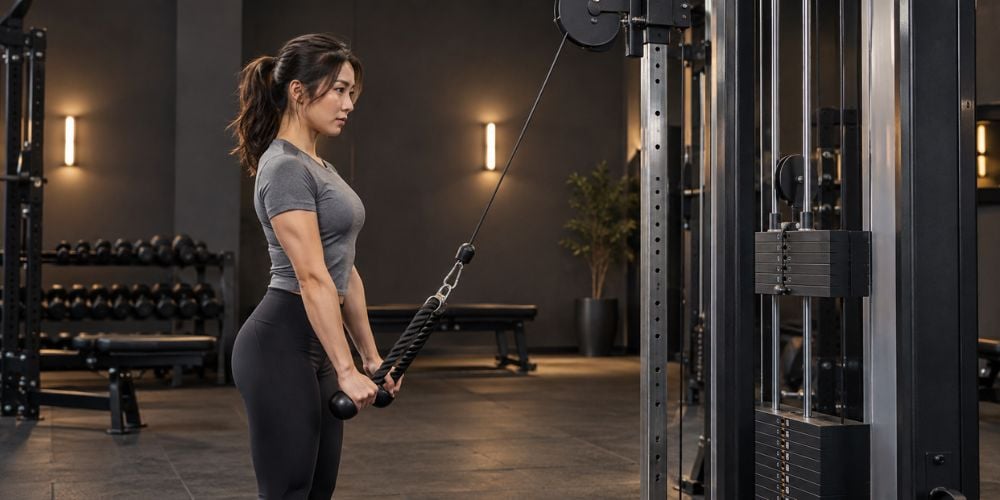
A high pulley pulls the attachment upward toward the pulley. You normally work against that pull by moving downward or diagonally.
Common high-pulley exercises include:
- Triceps pushdowns
- Straight-arm pulldowns
- High-to-low cable flyes
- Face pulls
- Cable crunches
Take a triceps pushdown. The cable pulls your hands upward while your triceps work to push the attachment down.
You can see the same principle in the NSCA’s face-pull technique guide, which starts the exercise facing a high-pulley cable machine.
Easy rule: If the main movement goes downward, a high pulley is usually a good starting point.
I normally check whether the cable follows the movement naturally. If the angle feels awkward, changing the pulley height can often fix it without changing the weight.
2. What Happens When the Pulley Is at Mid Height?
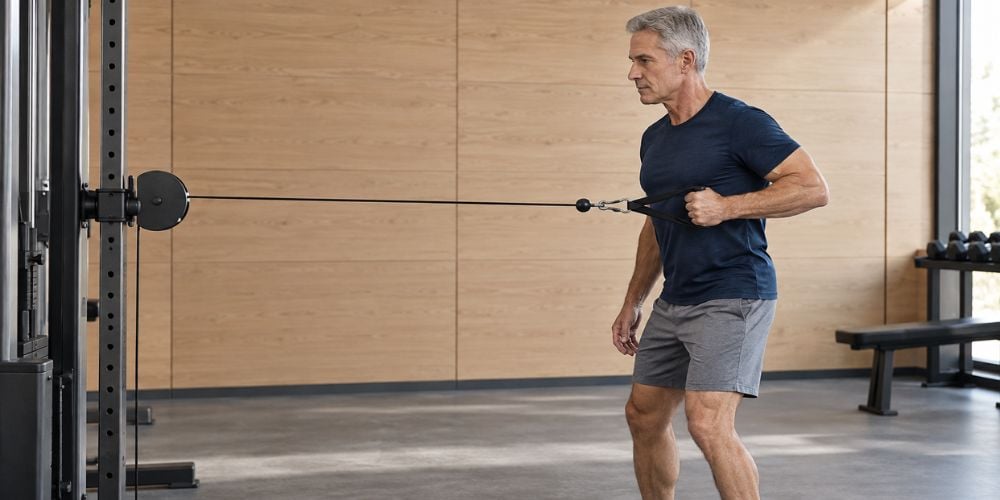
A mid-height pulley creates a more horizontal line of resistance.
This works well when your arms move forward, backward, or across your body.
Common examples include:
- Standing cable chest press
- Cable row
- Cable fly
- Reverse fly
- Cable rotations
For a standing cable chest press, setting the pulley around chest height lets the cable pull backward while you press forward.
The same idea works for flyes. For example, the NASM cable crossover guide recommends placing the pulleys around shoulder height for a standard cable crossover.
Where should you set it? Start around the height of the body part doing most of the movement, then make small adjustments until it feels smooth.
3. What Happens When the Pulley Is Set Low?
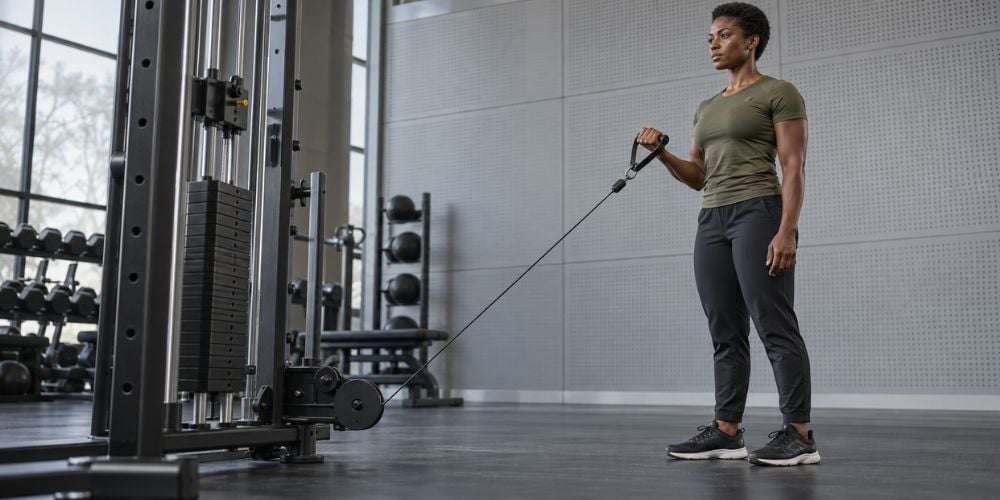
A low pulley pulls the attachment down toward the floor. You usually work against it by moving upward, outward, or diagonally.
Common low-pulley exercises include:
- Cable curls
- Cable lateral raises
- Low-to-high cable flyes
- Cable front raises
- Some lower-body cable exercises
During a cable curl, for example, the pulley pulls your hand downward. Your biceps work to bend the elbow and bring the handle upward.
The same principle applies to lateral raises. The cable pulls toward the low pulley while your shoulder muscles raise your arm outward.
Easy rule: If you are mainly lifting the attachment upward, start with a low pulley.
4. Pulley Height Can Change Which Muscles Feel the Exercise Most
Pulley height does not completely turn one exercise into another. It changes the line of pull, which can shift where the resistance feels strongest.
Pulley Height | Cable Pulls From | Typical Movement | Common Exercise Use |
High | Above you | Downward or diagonal | Pulldowns, pushdowns, high-to-low movements |
Middle | Around torso height | Horizontal | Presses, rows, flyes |
Low | Below you | Upward or diagonal | Curls, raises, low-to-high movements |
Here is why this matters: your muscles have to work against the direction the cable is pulling.
Your body position matters too. Changing pulley height on a chest fly, for example, changes the direction your arms work against and can shift where you notice the most tension.
Does that mean one angle is always better? No. A comfortable joint position, controlled resistance, and clean movement matter more than chasing one particular muscle “burn.”
I often remind people of this when they keep increasing their weight. Sometimes the better adjustment is simply moving the pulley.
At YR Fitness, we design our commercial cable equipment with adjustable training positions so users can move between high, middle, and low exercises more easily. If you enjoy cable training and want more exercise options from one station, explore our cable and functional training equipment to compare the available setups.
5. How Pulley Height Changes Cable Flyes
Cable flyes make the effect of pulley height very easy to see.
High-to-Low Cable Fly
Set the pulleys above shoulder height. Bring the handles forward and slightly downward.
The resistance comes from above, so your arms follow a downward diagonal path.
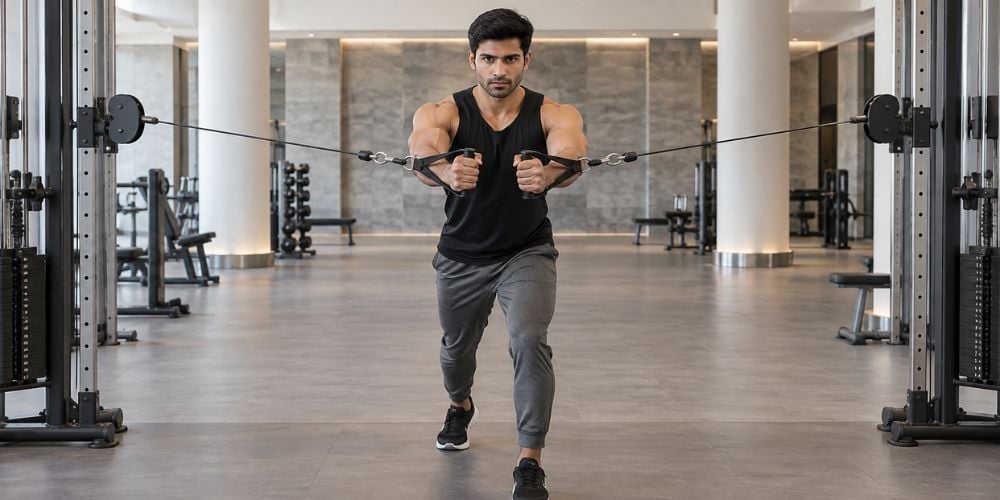
Mid-Height Cable Fly
Set the pulleys around chest or shoulder height. Bring your arms forward in a more horizontal path.
This is the most straightforward cable fly setup for many people.
Low-to-High Cable Fly
Set the pulleys near the bottom of the machine. Bring the handles forward and upward.
Now the resistance comes from below, creating an upward diagonal movement.
Which one should you use? Choose the angle that feels comfortable and matches the movement you want to train.
There is no need to use every variation in one workout. One or two angles performed with good control are enough for most sessions.
6. How Pulley Height Changes Cable Lateral Raises
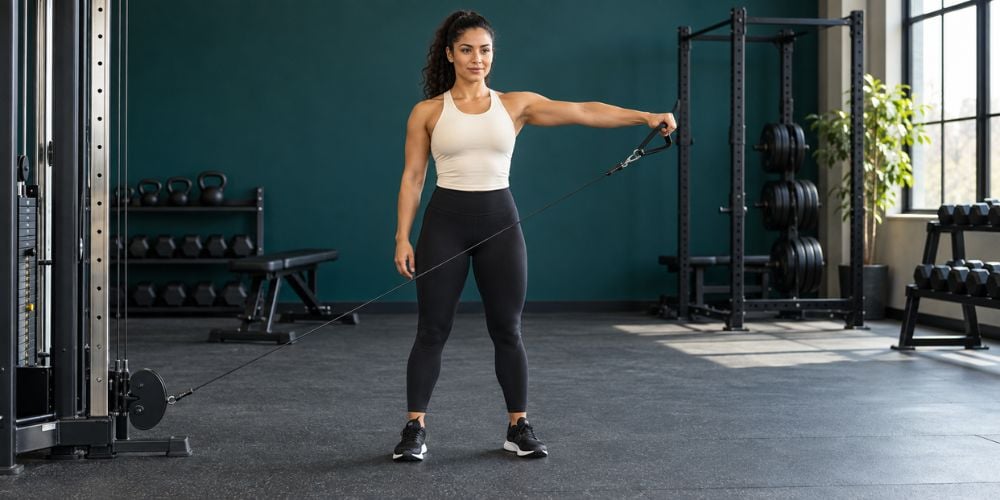
Most cable lateral raises use a pulley near the bottom.
Why? The low cable pulls your arm toward the machine while you raise it outward, keeping resistance on the shoulder through much of the movement.
Pulley height can vary slightly, though. The ACE single-arm cable lateral raise guide, for example, demonstrates the movement with the pulley around waist height rather than directly on the floor.
That is a useful reminder: the pulley does not always need to sit at the absolute lowest setting.
Raising it slightly changes the cable angle. That can change where the exercise feels hardest and how comfortable the starting position feels.
I usually start low and adjust from there. If the cable pulls your arm into an uncomfortable position, move the pulley slightly higher and test another controlled repetition.
A good setup should let you:
- Keep your shoulder relaxed
- Raise your arm without shrugging
- Avoid twisting your body
- Lower the weight slowly
- Maintain cable tension
Small adjustments matter. You do not need to move the pulley several positions every time.
Conclusion
Pulley height changes one key thing: the direction the cable pulls from. That affects the resistance angle, where the movement feels hardest, and sometimes which muscles you notice most.
Keep the basic rule simple: high for downward movements, middle for horizontal movements, and low for upward movements. Then make small adjustments based on your body and the exercise.
If you want more freedom to change cable angles, YR Fitness offers commercial cable and functional training equipment with adjustable training positions.
Related articles:



