








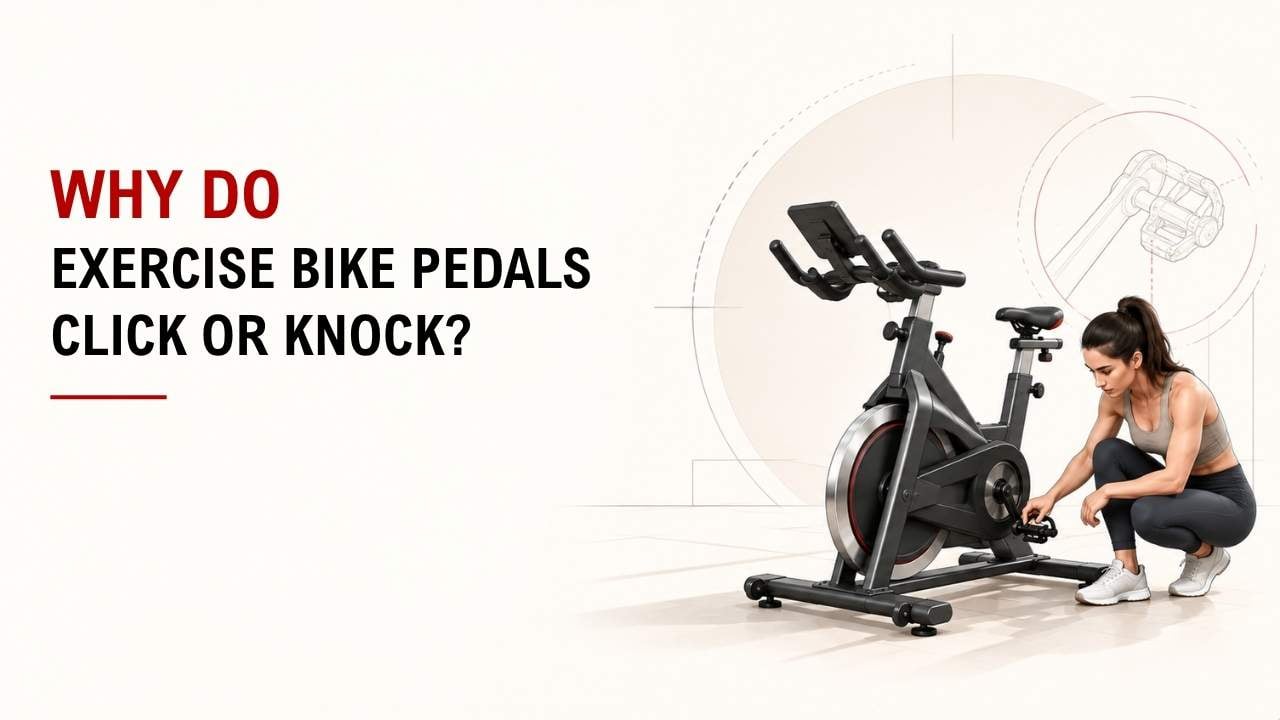
Does your exercise bike click or knock every time you pedal? That repeated sound can be annoying when you cannot tell where it is coming from.
The short answer is: loose pedals, loose crank arms, worn bearings, moving pedal straps, or rubbing covers are the most common causes. Start with the easy external checks before looking deeper inside the bike.
As a Machinery & Structural Engineer at YR Fitness, I work with pedals, crank systems, bearings, frames, and other moving parts used in fitness equipment. In my experience, where and when the noise happens usually gives you the fastest clue.
Below, I’ll walk you through the six most common causes and the signs to look for. Start at the top and work your way down until the noise makes sense.
1. The Pedals Are Loose
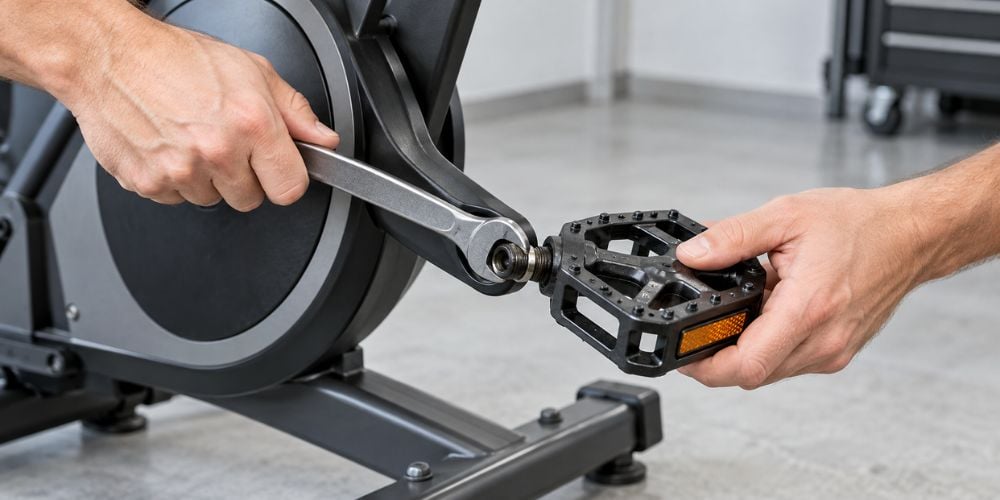
Loose pedals are one of the first things I would check.
Each pedal screws into the crank arm. If that connection loosens, you may hear a click whenever you push down.
Look for:
- Clicking once per pedal rotation
- Noise gets louder when you pedal harder
- A pedal that feels slightly loose
- Movement where the pedal connects to the crank
Stop the bike and check both pedals. Tighten them according to your bike manufacturer’s instructions rather than simply forcing them tighter.
This matters because loose pedal connections are a known maintenance point. Keiser’s equipment care and maintenance guidance recommends regularly checking and re-torquing crank arms and pedals on its indoor cycles.
Does the click happen at the same point on every rotation? If yes, start at the pedal connection.
2. The Crank Arms Are Loose
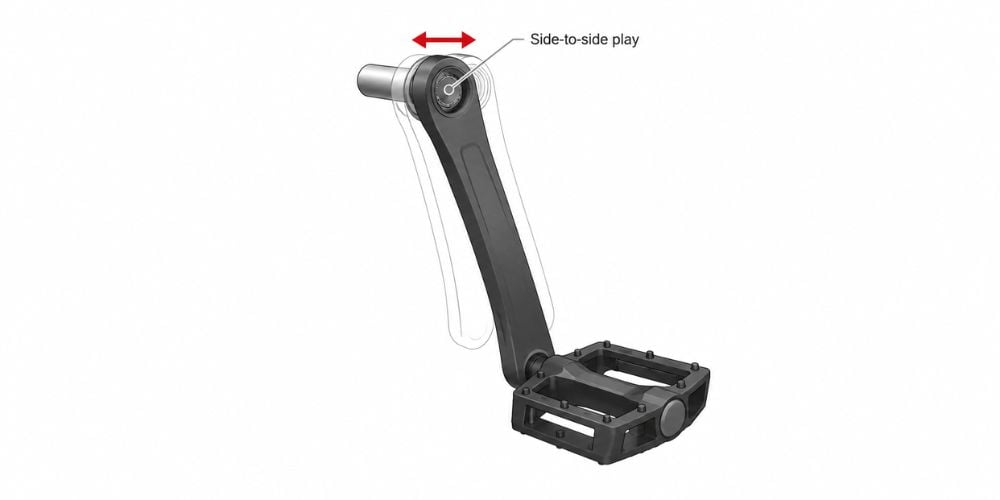
The crank arms connect your pedals to the bike’s central axle. If one loosens, the sound may change from a small click to a stronger knock.
You may notice:
- Side-to-side crank movement
- A knocking feeling under your foot
- Noise that gets worse at higher resistance
- Unstable pedaling
I would stop a hard workout if the crank was visibly moving. Continuing to pedal can put more wear on the connection.
Stages also lists crank-bolt tightness and pedal tightness as routine checks in its indoor bike preventative-maintenance guide.
Quick Check: What Does the Noise Suggest?
What You Notice | First Area to Check | Simple Test |
Click once per rotation | Pedal | Check for looseness |
Knock under harder resistance | Crank arm | Check for side-to-side play |
Rough rotation | Pedal bearing | Spin pedal by hand |
Noise from bike center | Crank bearing | Rotate crank slowly |
Light tapping | Strap or cage | Watch strap while pedaling |
Plastic scraping | Crank cover | Check clearance |
3. The Pedal Bearings Are Worn
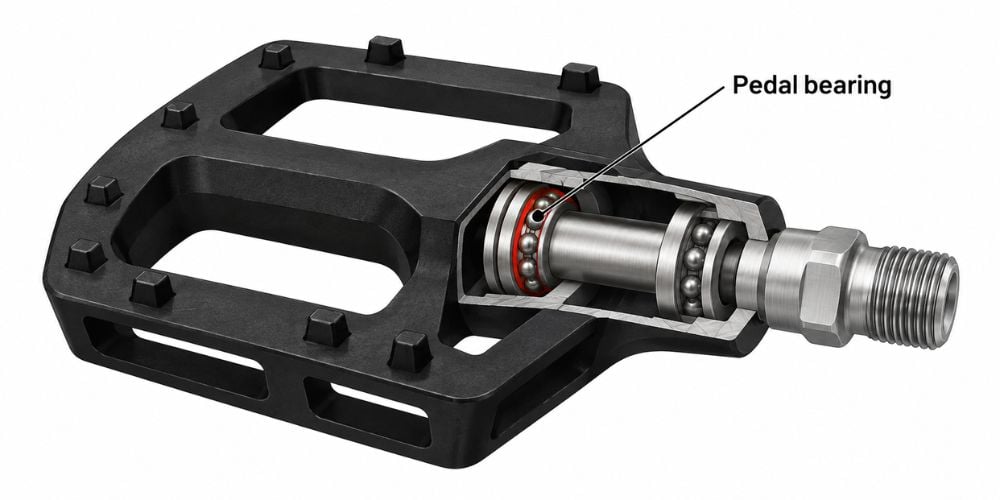
Bearings inside the pedal allow it to rotate smoothly around its axle.
As they wear, the pedal may start to click, grind, or feel rough.
Here is a simple test: stop the bike and rotate each pedal by hand.
Watch for:
- Rough rotation
- Side-to-side pedal play
- Grinding
- Clicking directly from the pedal
If you notice these signs, the pedal bearing may be worn. In many cases, replacing a badly worn pedal is easier than rebuilding its bearing assembly.
At YR Fitness, we design commercial fitness equipment for repeated daily use, so we pay close attention to components such as crank systems, frames, and moving connections. If you are comparing exercise bikes, look beyond the screen and resistance levels and also consider how solid these mechanical areas feel.
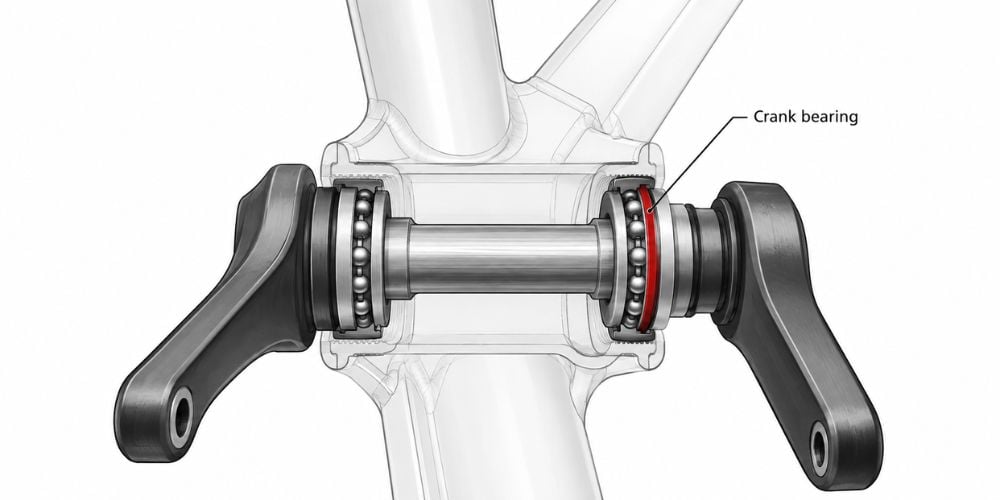
4. The Bottom Bracket or Crank Bearings Are Worn
What if the pedals feel fine, but the sound seems to come from the middle of the bike?
The problem may be deeper in the crank system. Bearings around the crank axle help it rotate smoothly, and worn or loose bearings can create:
- Repeated knocking
- Grinding
- Clicking from the center
- Noise under heavier resistance
- Side-to-side crank movement
I often see people blame the pedal first because the sound appears while their foot is moving. But noise can travel through the frame, so checking the pedal and crank separately makes diagnosis much easier.
If the crank has obvious play or feels rough, this is usually a better point to follow the manufacturer’s service procedure rather than keep riding.
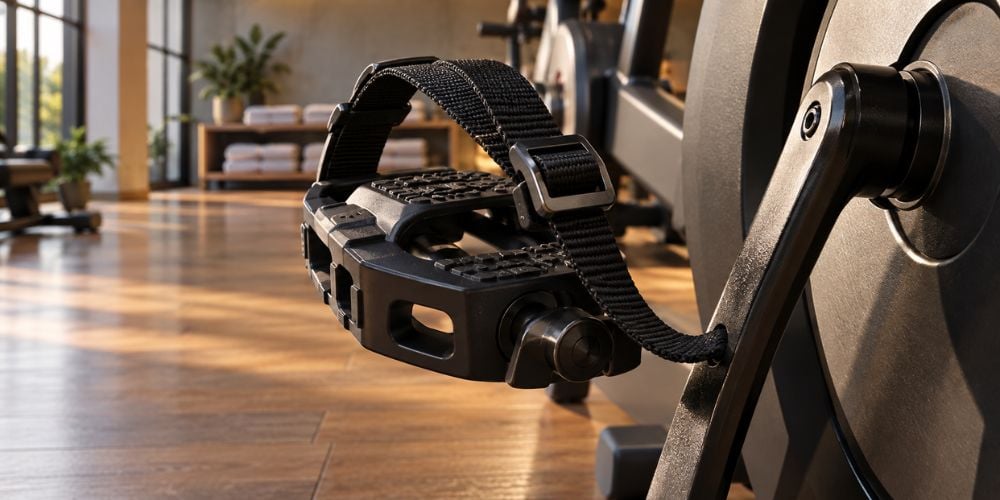
5. The Pedal Strap or Cage Is Hitting Something
Sometimes nothing inside the bike is damaged.
A loose pedal strap can simply hit:
- The crank arm
- The pedal body
- A nearby cover
- Your shoe
This usually sounds more like a light tap than a heavy knock.
Pedal slowly and watch the strap. If the sound appears whenever the strap swings, tighten or reposition it.
It is worth checking before taking anything apart. Stages specifically includes pedal cages and pedal straps among the wear items that should be inspected regularly.
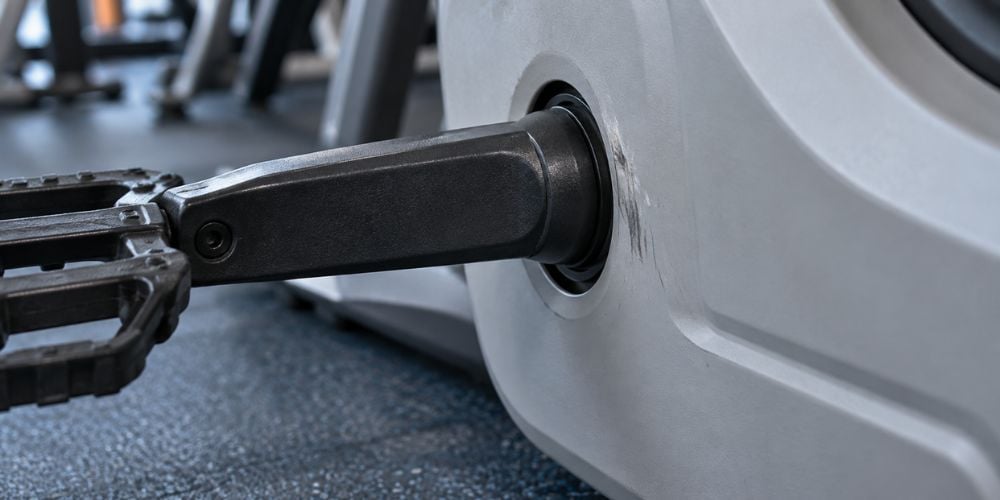
6. The Crank Is Rubbing Against the Cover
Most exercise bikes have plastic covers around the crank and drive system.
If one shifts or becomes loose, the crank can touch it during each rotation.
Look for:
- Scratches near the crank opening
- Plastic rubbing marks
- Clicking or scraping
- Noise at the same point during every revolution
Rotate the pedals slowly and watch the gap between the crank and the cover.
Can a tiny clearance problem really make that much noise? Yes. From an engineering point of view, a small contact point can repeat on every revolution and make the problem sound more serious than it is.
Stages’ official indoor bike troubleshooting guide specifically lists a crank arm rubbing against the plastic shroud as a cause of plastic rubbing noise, while misaligned shrouds can also create clicking.
When Should You Stop Riding?
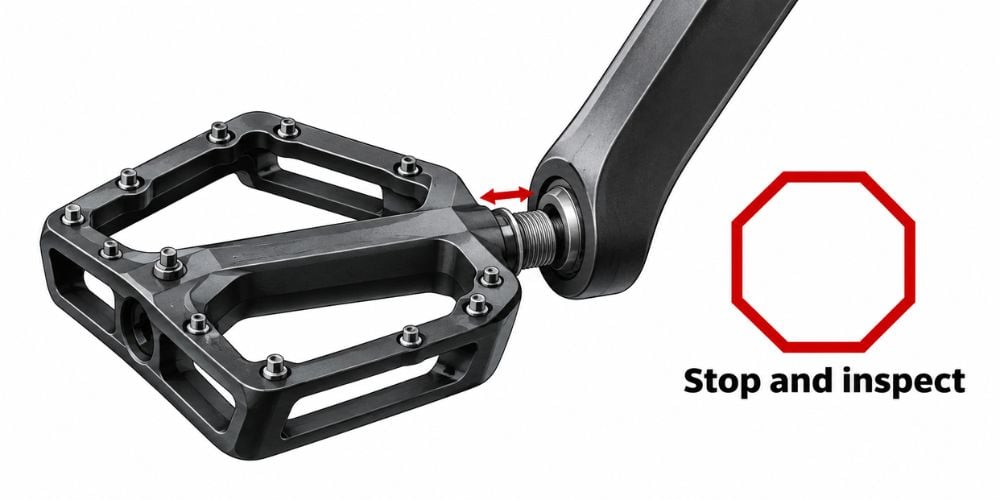
Not every click means you need to stop immediately. Visible looseness or unstable movement is different.
Warning Sign | Why It Matters | What to Do |
Pedal feels loose | Connection may keep wearing | Stop and check it |
Crank moves side to side | Crank or bearing may be loose | Stop riding |
Knock suddenly becomes louder | Problem may be getting worse | Inspect before continuing |
Pedaling feels unstable | Moving parts may not be secure | Do not continue hard riding |
Threads or crank parts look damaged | Connection may no longer hold correctly | Have the part inspected |
A small click may come from a strap or cover. Looseness in the pedal or crank should not be ignored.
Conclusion
Exercise bike pedals usually click or knock because of loose pedals, loose crank arms, worn pedal bearings, worn crank bearings, moving straps, or rubbing covers.
Start with the simple external checks before looking deeper into the crank system.
If you are also comparing bikes built for frequent training, browse YR Fitness to explore commercial cardio equipment designed for stable construction and repeated daily use.
Related articles:



