








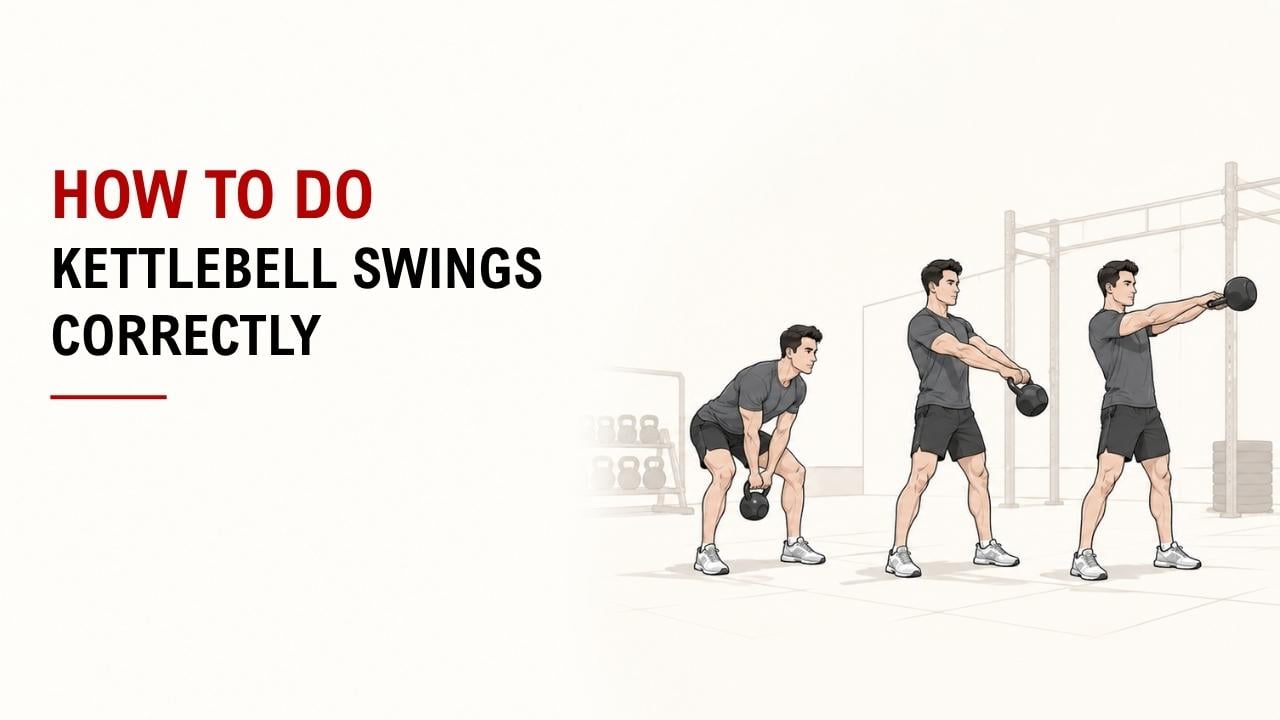

Want to do kettlebell swings correctly without turning them into a squat or arm exercise? The movement is simpler than it looks.
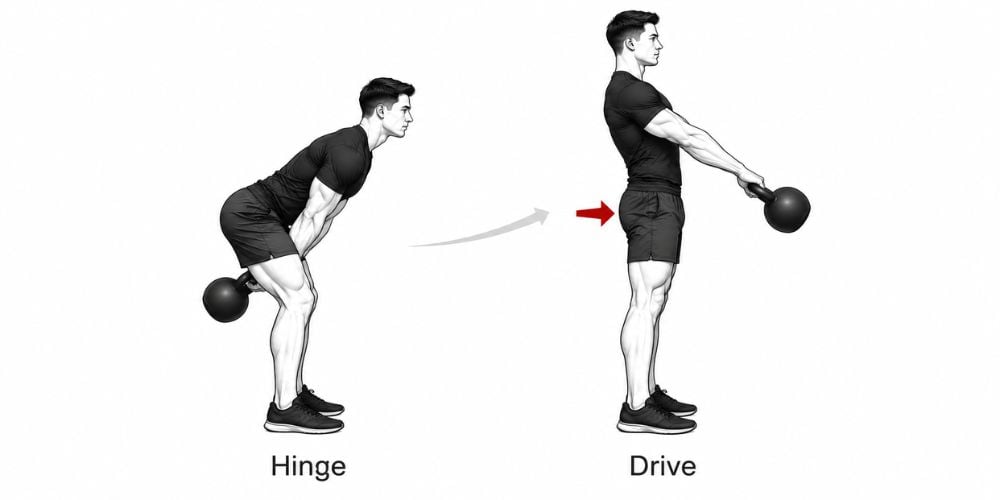
The key is to hinge at your hips, swing the kettlebell back, then drive your hips forward. Your hips create power while your arms mainly guide the weight.
As an Exercise Physiology & Biomechanics Expert at YR Fitness, I study how body position and joint movement affect exercise technique. From what I often see in training, fixing the hip hinge first makes the swing safer, smoother, and easier to control.
Below, I’ll show you each step from setup to breathing. Follow them in order and focus on clean reps before adding more weight.
1. Choose the Right Kettlebell Weight
Start with a kettlebell you can control comfortably.
If it is too heavy, you may round your back, bend your arms, or lose control at the bottom of the swing. When you are still learning, use a lighter kettlebell and get comfortable with the hip hinge first.
ACE also recommends learning a controlled loaded hip hinge before progressing to faster ballistic swings. ACE kettlebell swing technique guide
Quick check: Can you keep your back neutral without pulling the kettlebell upward with your arms? If not, reduce the weight.
What You Notice | What It Usually Means |
Every rep feels controlled | Weight is manageable |
Arms are doing most of the work | Weight or technique needs adjusting |
Back starts rounding | Reduce weight and reset |
Swing gets messy after a few reps | Stop the set and rest |
Hip hinge stays consistent | You are ready to keep practicing |
The right weight is not the heaviest one you can move. It is the one you can swing with the same clean technique from the first rep to the last.
2. Set Up Your Starting Position
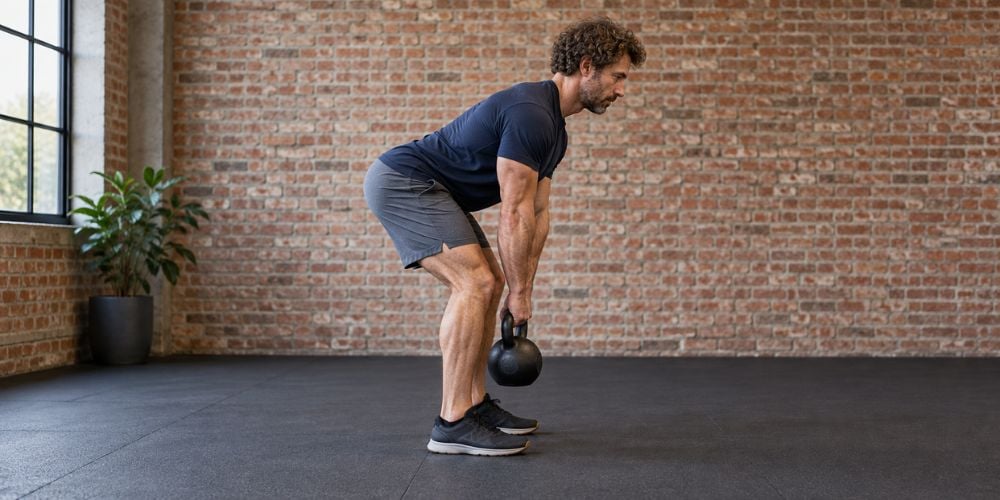
Place the kettlebell slightly in front of you.
Stand with your feet about shoulder-width apart. Your toes can point slightly outward if that feels more comfortable.
Then:
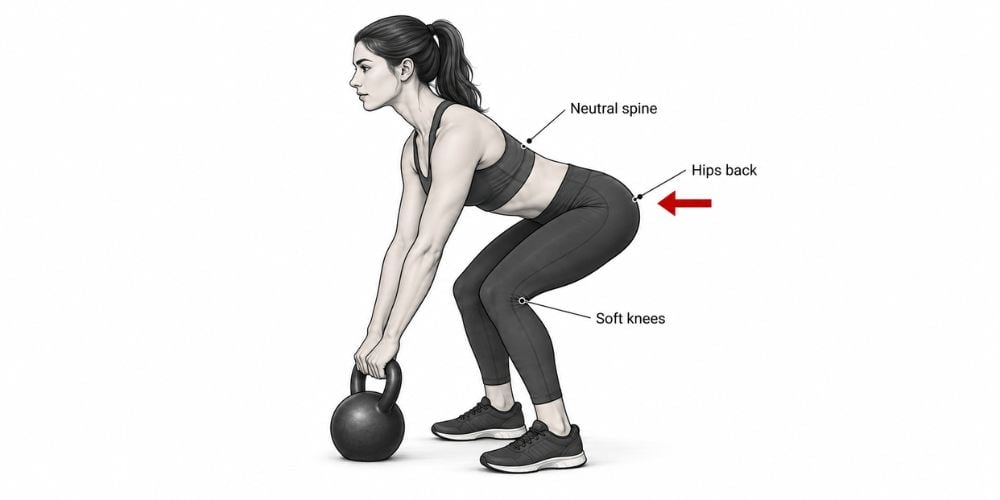
- Push your hips backward.
- Bend your knees slightly.
- Keep your chest open.
- Keep your spine neutral.
- Grip the kettlebell with both hands.
Think hip hinge, not deep squat.
I often tell beginners to imagine closing a car door with their hips. It is a simple cue, but it helps many people understand that the hips should travel backward rather than straight down.
The ACE exercise library demonstration also emphasizes sinking back into the hips while keeping the back straight.
3. Hike the Kettlebell Back
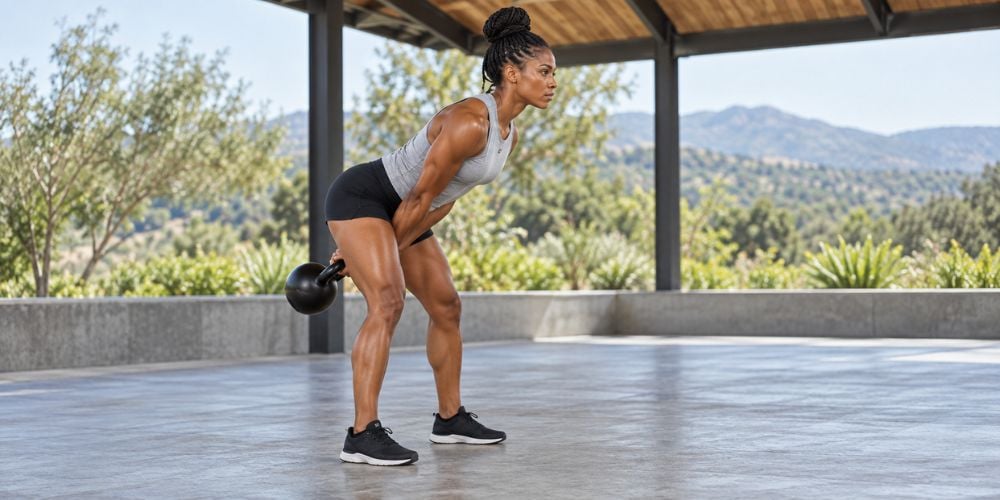
Now pull the kettlebell back between your legs.
Keep it high between your thighs instead of letting it drop straight toward the floor. Your arms should stay relaxed while your shoulders remain controlled.
Do not turn this part into a squat.
What should you feel?
You should feel tension building through your hamstrings and glutes.
That tension matters because it prepares your hips to drive the kettlebell forward on the next part of the swing.
Think of it like hiking a football backward between your legs. Keep the kettlebell close rather than letting it travel far away from your body.
4. Drive Your Hips Forward
This is where most of the power comes from.
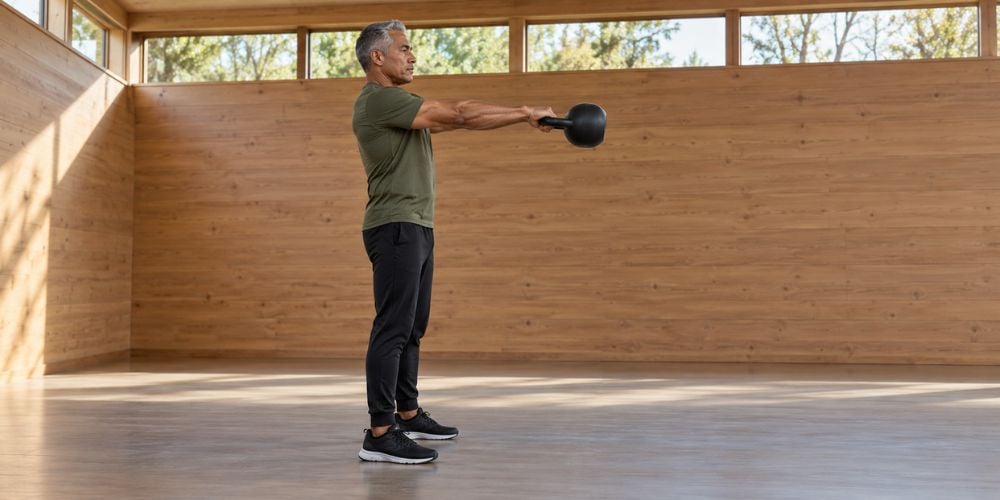
Push your feet into the floor and drive your hips forward quickly. Squeeze your glutes as you reach a tall standing position.
The kettlebell should move because of your hip drive.
Do not pull it upward with your shoulders.
The NSCA two-arm kettlebell swing guidance similarly describes extending the hips and knees to move the kettlebell forward and allowing momentum to carry it upward.
I see arm lifting quite often with beginners. Once they focus on snapping the hips forward instead, the movement usually becomes smoother.
Good technique is easier to repeat when you have enough training space and equipment that feels stable in daily use. At YR Fitness, we build commercial strength equipment and fitness accessories around reliable, repeatable training, so you can explore our fitness equipment if you want to see more training solutions.
5. Let the Kettlebell Rise Naturally
After the hip drive, let the kettlebell float upward.
For a standard kettlebell swing, bringing it to around chest height is usually enough. You do not need to force it higher.
At the top:
- Stand tall.
- Keep your core tight.
- Squeeze your glutes.
- Keep your arms relaxed.
- Do not lean backward.
Should you actively raise the kettlebell?
No.
Your hip drive should create momentum. If your shoulders are doing most of the work, reset and focus on the hips again.
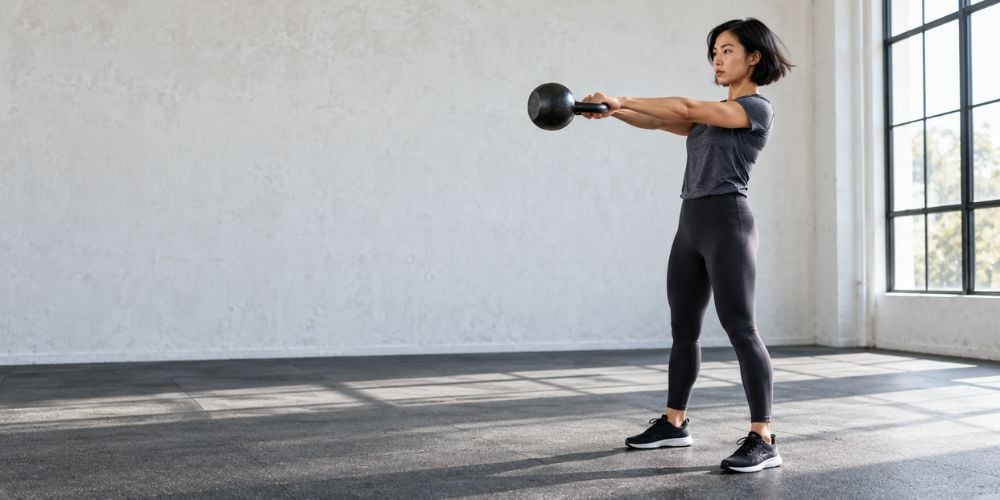
Here is a quick form check:
Part of the Swing | Good Position | Common Mistake |
Bottom | Hips pushed back | Deep squat |
Back swing | Kettlebell stays close | Weight drops toward floor |
Hip drive | Fast hip extension | Pulling with arms |
Top | Tall, straight body | Leaning backward |
Arms | Relaxed and guiding | Actively lifting weight |
Spine | Neutral | Rounding the back |
6. Control the Kettlebell Back Down
Do not hinge forward too early.
Let the kettlebell start falling naturally. When your arms come close to your body, push your hips backward and guide the weight between your legs.
Keep the kettlebell close to your body rather than letting it swing far out in front of you.
Then drive your hips forward again.
Think of the rhythm like this:
Hinge → swing back → drive forward → stand tall → swing back.
Here is why this matters: if you hinge too early, the kettlebell may pull you forward. Waiting until it comes closer to your body helps you stay balanced and ready for the next rep.
A good swing should feel like one continuous movement, not several separate steps.
7. Breathe With Each Swing
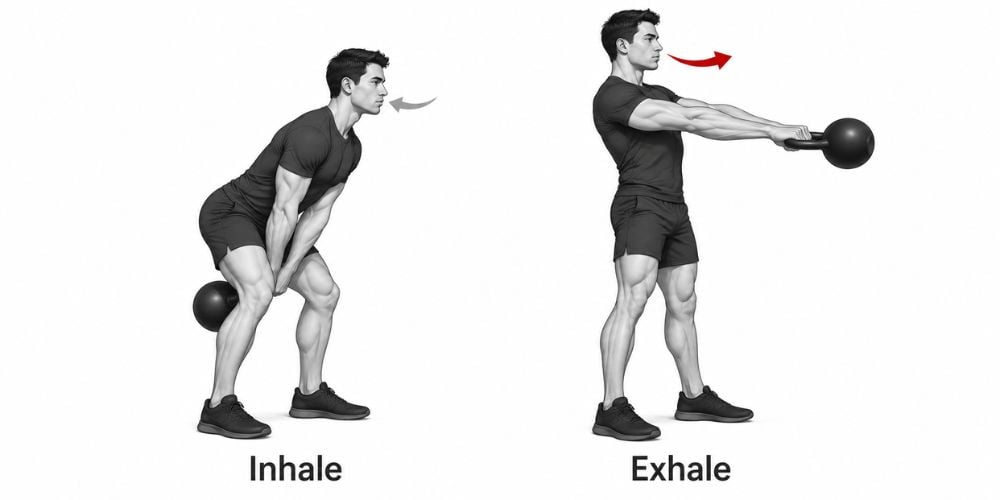
Match your breathing to the movement.
A simple pattern is:
- Inhale as the kettlebell moves backward.
- Exhale sharply as you drive your hips forward.
Keep your core braced during the set.
You do not need to hold your breath throughout the whole exercise. If your breathing becomes uncontrolled or your form starts breaking down, stop and rest.
More reps or better reps?
Choose better reps.
Clean technique is more useful than chasing a high number while your swing starts turning into a squat, shoulder raise, or uncontrolled movement.
Conclusion
A good kettlebell swing starts with a hip hinge. Push your hips back, drive them forward, keep your spine neutral, and let the power from your hips move the kettlebell.
Start light and add weight only when your technique stays consistent.
At YR Fitness, we focus on reliable equipment that supports controlled daily training, and you can explore our commercial fitness equipment when you are ready to see more training solutions.
Related articles:



