








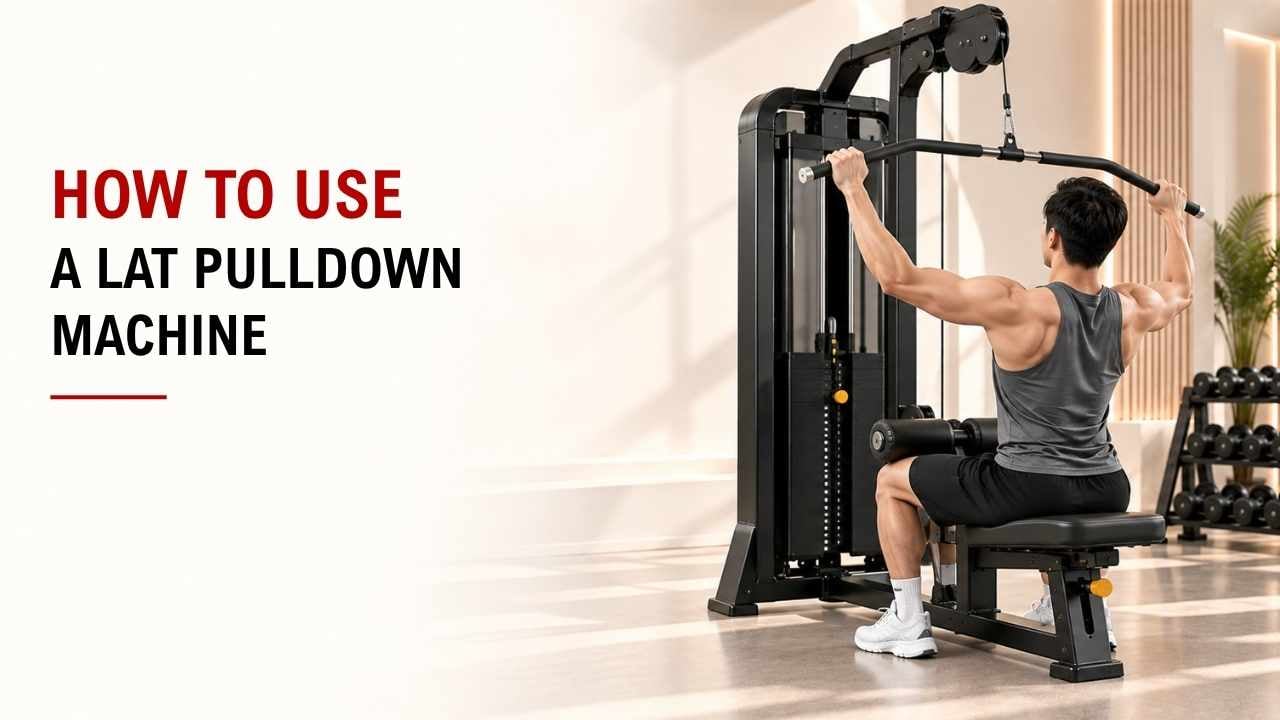

Not sure how to use a lat pulldown machine correctly? Good form starts with a few simple setup changes.
The quick answer is: secure your thighs, use a manageable weight, pull the bar toward your upper chest, and return slowly. Keep your body stable throughout movement.
As an Exercise Physiology & Biomechanics Expert at YR Fitness, I work closely with exercise movement, resistance, and machine design. I often see better lat pulldown form when people use less weight and focus on controlled elbow movement.
Below, I’ll show you six simple steps to get it right. Follow them in order for a smoother, more controlled pulldown.
1. Adjust the Seat and Thigh Pad
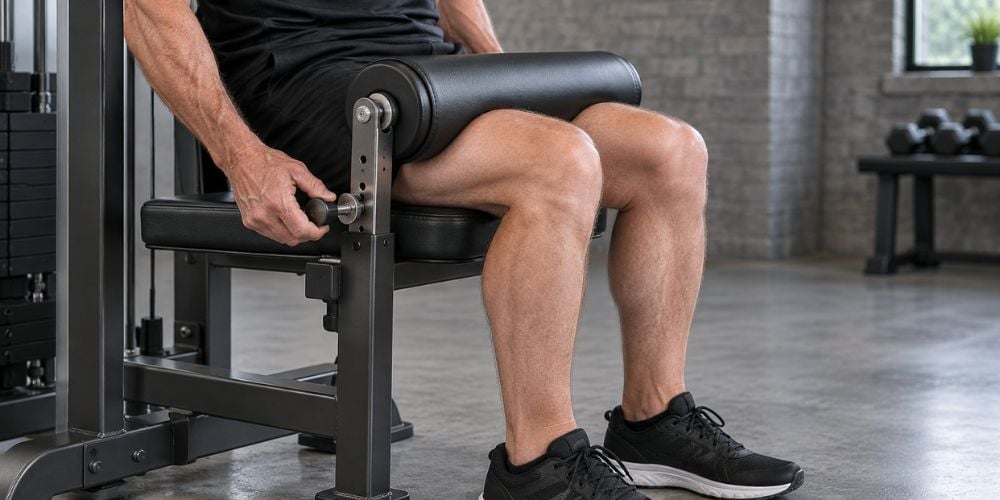
Sit facing the machine with your feet flat on the floor.
Adjust the thigh pad so it rests firmly over your thighs. It should keep you stable without pressing down uncomfortably.
Why does this matter?
If your thighs lift off the seat every time you pull, your setup is working against you. The pad may be too high, or you may be using too much weight.
The ACE seated lat pulldown guide also recommends securing the thighs, bracing the core, and keeping the lower body stable during the movement.
I usually check the thigh pad before touching the weight stack. A solid setup makes everything else easier.
2. Choose a Manageable Weight
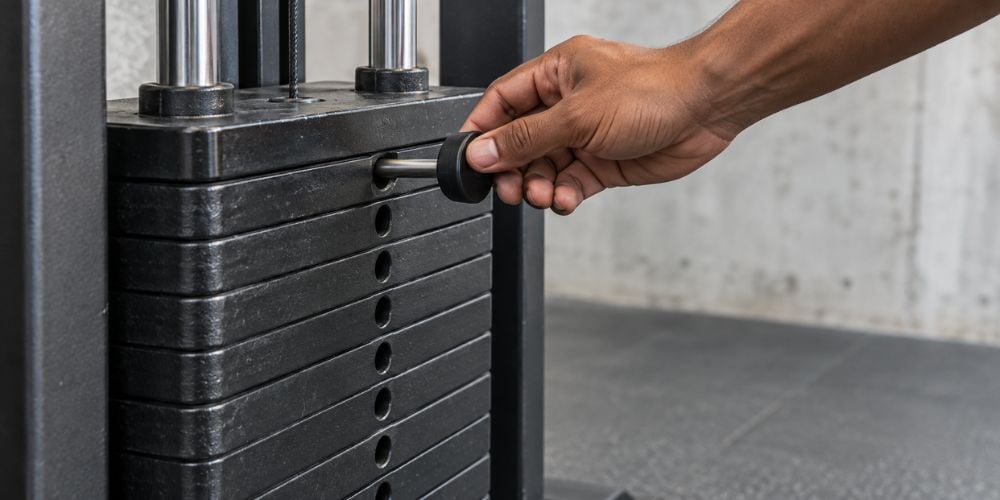
Start with a weight, you can move smoothly.
If you are new to the lat pulldown, go lighter while you learn the movement. You should not need to jerk the bar, swing your body, or lean far backward to finish a rep.
Ask yourself:
Can I control the weight on the way down and on the way back up?
If not, reduce it.
Your final reps can feel challenging, but your technique should still look close to your first rep. Mayo Clinic also recommends choosing a weight you can handle with proper form and lowering the load if your technique starts to break down.
3. Grip the Lat Pulldown Bar
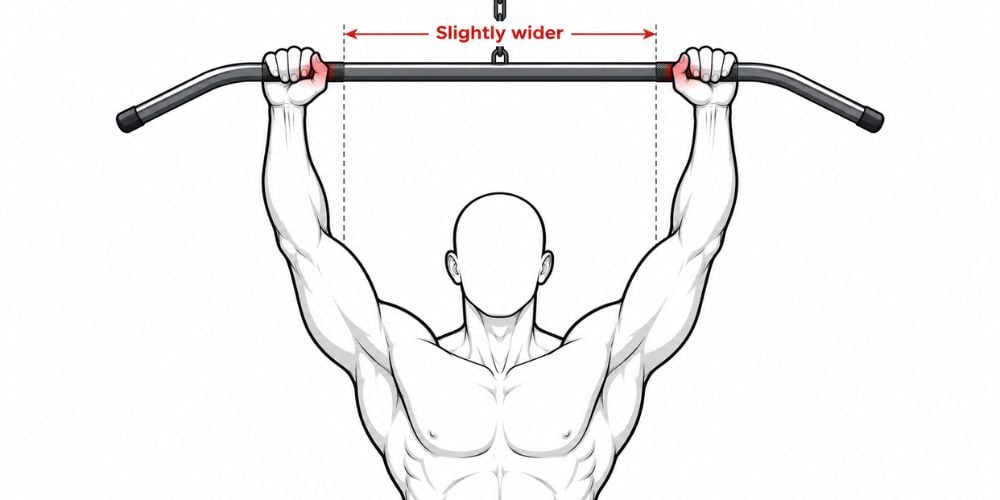
Use an overhand grip and place your hands slightly wider than shoulder width.
Keep your wrists comfortable. You do not need to squeeze the bar as hard as possible.
Does a super-wide grip train your lats more?
Not necessarily. Research comparing different grip widths found broadly similar lat activation, with a medium grip showing some small practical advantages over very narrow or very wide positions.
So keep it simple. Choose a grip that feels natural on your shoulders and lets you pull smoothly.
I like to think of the hands as hooks. Your hands hold the bar, but your back should do most of the work.
Smooth cable travel and a stable movement path can make controlled reps much easier to practice. At YR Fitness, we design commercial strength machines around practical adjustability, stable movement, and daily training use—so if you want to see how different pulldown and strength-machine designs work, explore YR Fitness strength equipment.
4. Set Your Starting Position
Now get your body ready before you pull.
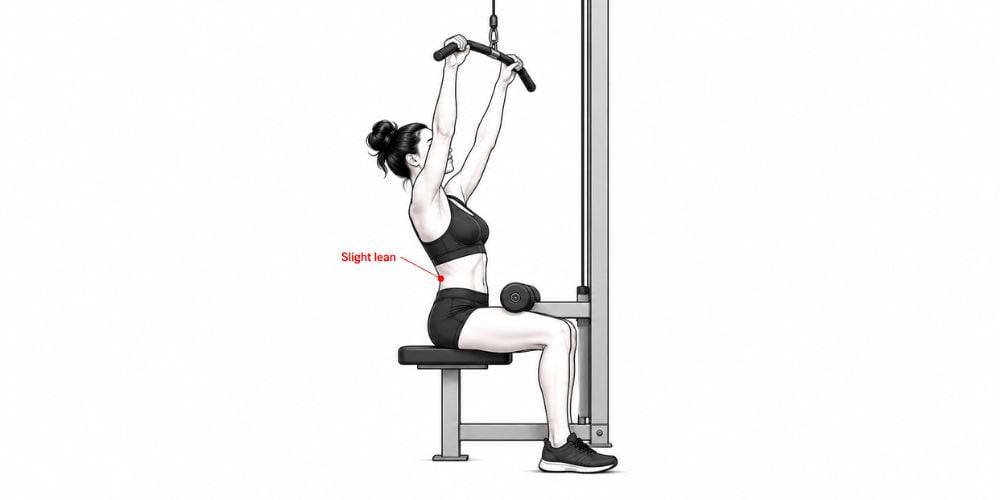
Sit tall, keep your chest up, and brace your core lightly. Lean backward only a little rather than turning the exercise into a large body swing.
Your arms should begin extended overhead, but do not force your shoulders into an uncomfortable stretch.
Here is a quick setup check:
Check | What to Do |
Feet | Keep them flat on the floor |
Thighs | Secure them under the pad |
Chest | Keep it lifted |
Core | Brace lightly |
Arms | Extend overhead |
Shoulders | Keep them comfortable |
Torso | Lean back only slightly |
Once this position feels stable, you are ready to pull.
5. Pull the Bar Toward Your Upper Chest
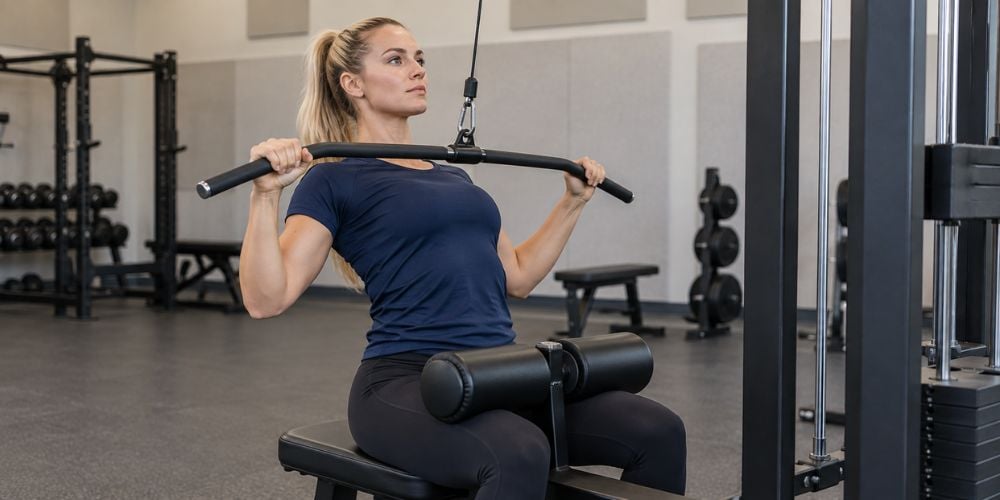
Start the movement by driving your elbows downward.
Bring the bar toward your upper chest while keeping your torso mostly still. Avoid yanking the bar down or leaning farther backward to create momentum.
Where should you feel it?
You should mainly feel your lats and upper back, while your biceps help with the movement.
One cue I often use is:
“Elbows down, chest up.”
It is simple, but it helps shift your attention away from pulling only with your hands.
Avoid pulling the bar behind your neck. Keep the movement in front of your body and pull toward the upper chest.
If your body starts rocking backward on every rep, stop and check the weight again. More movement does not mean more useful resistance.
6. Return to the Bar Slowly
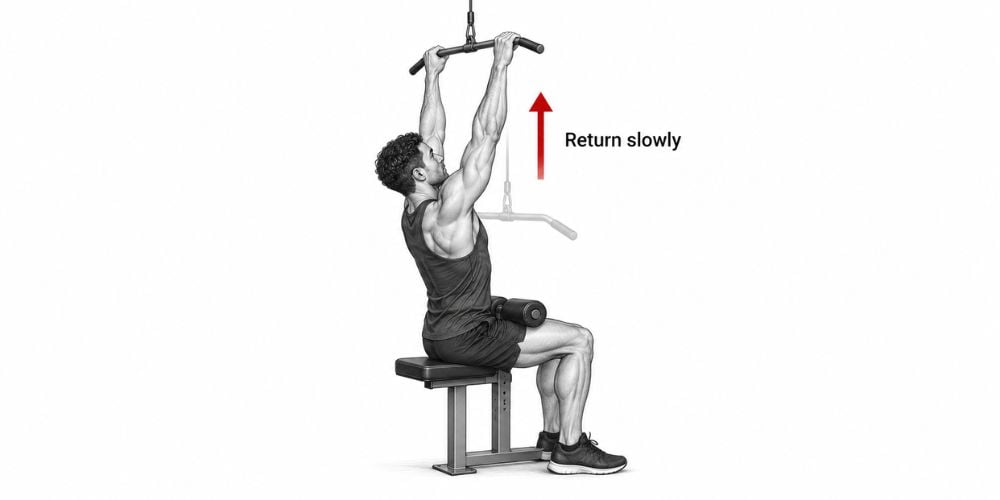
Do not treat the upward movement as the easy part.
Let the bar travel upward slowly while your arms extend. Keep control of the cable instead of allowing the weight stack to pull your arms up suddenly.
Return until your arms are comfortably extended overhead. Then start the next rep.
I often see people control the pull but rush this part. Slowing the return makes the whole repetition cleaner and helps you avoid relying on momentum.
Also, avoid letting the weight plates slam together between reps.
Quick Lat Pulldown Form Check
Before your next set, use this table:
Common Problem | Simple Fix |
Thighs lifting off the seat | Lower the thigh pad or reduce the weight |
Body swinging backward | Use less weight and keep your torso stable |
Grip feels uncomfortable | Move your hands to a more natural width |
Mostly feeling your arms | Think “elbows down” |
Pulling behind the neck | Bring the bar toward your upper chest |
Bar shoots upward | Slow down the return |
Weight stack slams | Keep tension and control between reps |
Conclusion
Using a lat pulldown machine does not need to be complicated. Secure your thighs, choose a controllable weight, keep your chest up, pull toward your upper chest, and return slowly.
Good form matters more than moving a large weight. Start light enough to learn the movement, then gradually add resistance as your control improves.
If you also want to understand what makes one strength machine feel smoother or more comfortable than another, YR Fitness designs commercial gym equipment around movement paths and heavy daily use. Explore YR Fitness equipment and machine designs to learn more.
Related articles:



