





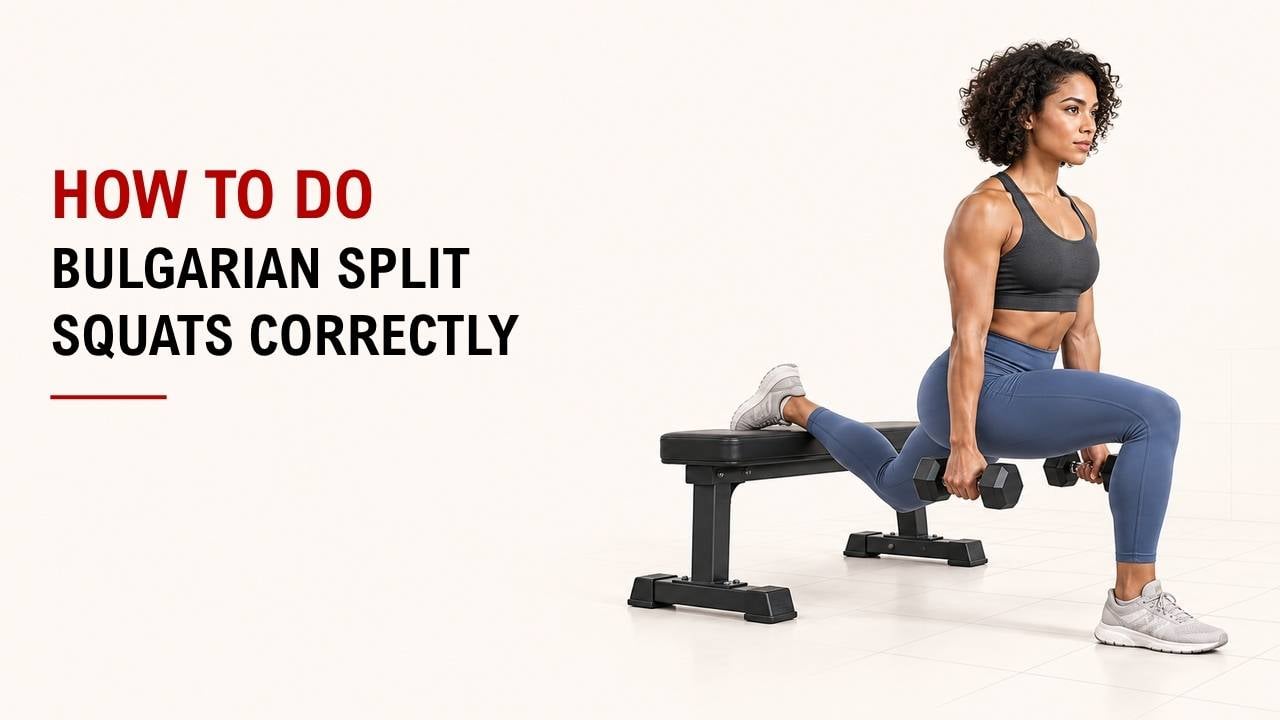

Do Bulgarian split squats feel awkward or unstable every time you try them? Most problems come from foot position, balance, or lowering too quickly.
The short answer is simple: set your feet correctly, keep your front foot planted, lower under control, and push through your front leg. Once the setup feels right, the movement becomes much easier to control.
As an Exercise Physiology & Biomechanics Expert at YR Fitness, I pay close attention to how small changes in body position affect movement and muscle loading. I often see people struggle with Bulgarian split squats simply because their stance is slightly off.
In this guide, I’ll walk you through the exercise step by step. Follow the setup first, then focus on control before you think about adding weight.
Bulgarian Split Squat Form at a Glance
Want the quick version first? Use this table as your form checklist.
Part | What to Do | What to Avoid |
Front foot | Keep the whole foot flat | Heel lifting |
Back foot | Rest it on the bench | Pushing hard through it |
Front knee | Follow the direction of your toes | Knee collapsing inward |
Torso | Stay stable with a slight forward lean | Folding forward |
Descent | Lower slowly | Dropping quickly |
Standing up | Push through the front foot | Using the rear leg to drive up |
The American Council on Exercise Bulgarian split squat guide also uses a bench-supported rear-foot position and emphasizes lowering under control before pressing through the front foot.
1. Stand in Front of a Bench
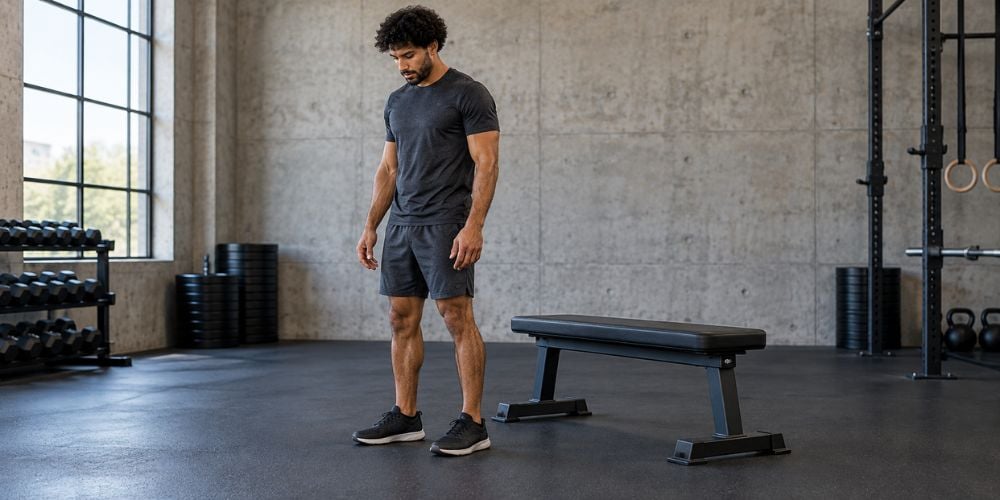
Stand with your back facing a stable bench.
Move about one stride away from it. Keep your feet around hip-width apart so you have a steady base.
I often see people place their feet on one narrow line. Giving yourself a little more width usually makes balancing much easier.
Quick question: Do you already feel unstable before starting? Widen your stance slightly before changing anything else.
2. Place Your Back Foot on the Bench
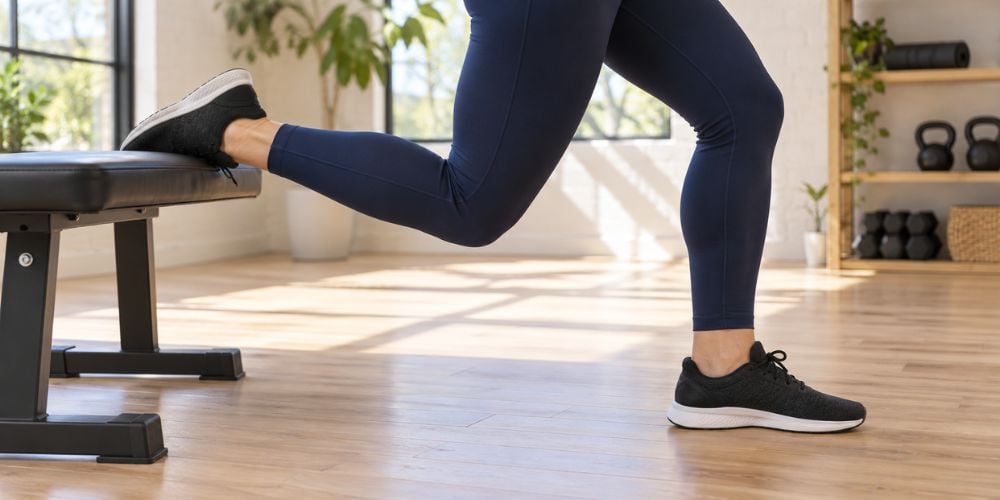
Lift one foot behind you and place it on the bench.
You can rest the top of your foot on the bench or stay on your toes if that feels more comfortable. Your rear leg should mainly help with balance.
Do not push hard through the back foot. Most of the work should come from the front leg.
3. Set Your Front Foot
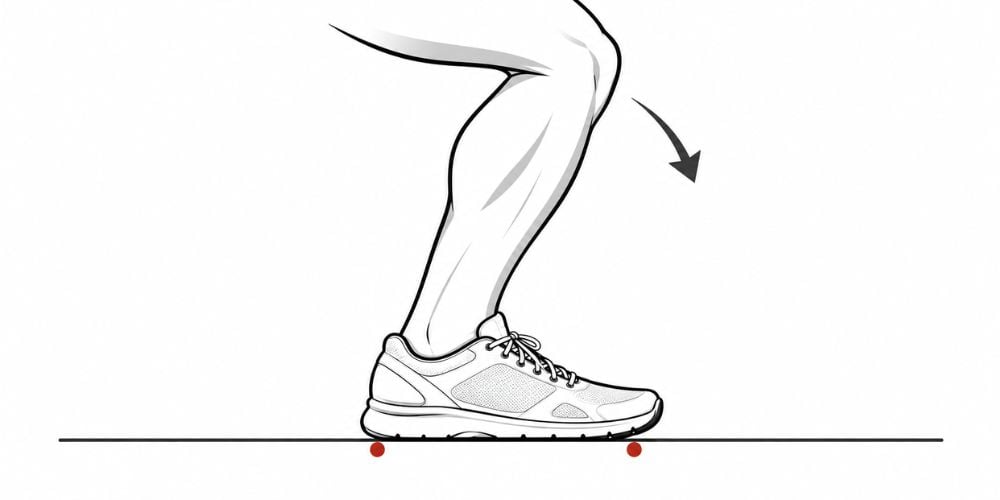
Keep your whole front foot flat on the floor.
Your toes can point forward or slightly outward. Adjust your position until you can bend your front knee without your heel lifting.
Too close? Move your foot forward slightly.
Too far away? Bring it back until the movement feels natural.
There is no single perfect distance for everyone. Leg length, mobility, and bench height all change the setup.
4. Brace Your Core
Lightly tighten your core before lowering.
Keep your torso stable and your ribs controlled. A slight forward lean is fine, so you do not need to force yourself perfectly upright.
Here is why this matters: the goal is to keep your body controlled while the front leg produces most of the force.
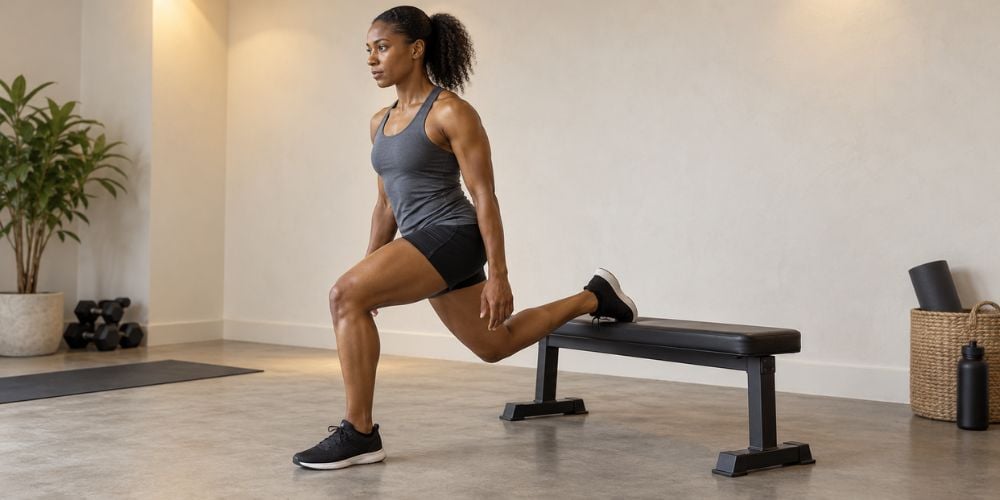
5. Lower Your Body
Bend your front knee and lower your body toward the floor.
Let your rear knee move downward while your front foot stays planted. Keep your front knee moving in roughly the same direction as your toes.
Do not let the knee collapse inward.
I often tell people to slow down before changing anything else. The Mayo Clinic’s weight-training guidance also recommends controlled movement rather than rushing through repetitions.
What Should You Feel?
Area | What Is Normal |
Front quadriceps | Working strongly |
Glutes | Working as you lower and stand |
Rear leg | Mild stretch/support |
Core | Working to keep you stable |
Front foot | Firm pressure into the floor |
Knee or hip | No sharp pain |
If you feel sharp pain rather than normal muscular effort, stop the exercise and reassess your setup. Mayo Clinic similarly advises stopping a strength exercise if it causes pain rather than simply pushing through it.
A solid setup makes exercises like Bulgarian split squats easier to control. At YR Fitness, we design our commercial strength equipment and benches around stability, natural movement, and repeated daily training, so you can explore equipment that supports a more dependable strength-training setup.
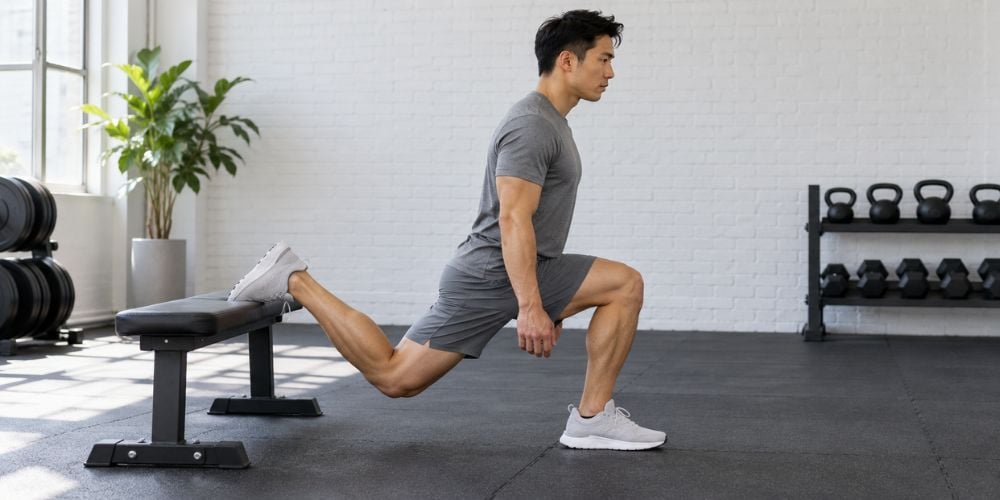
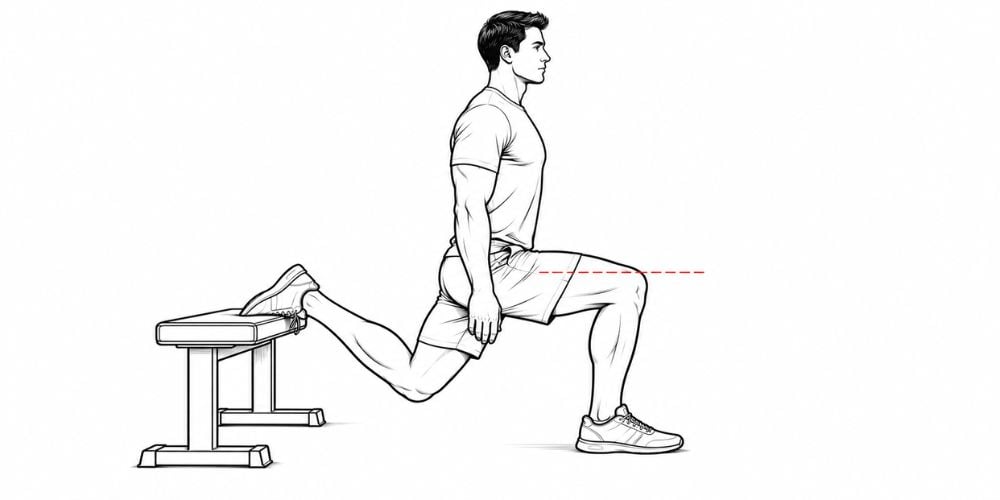
6. Stop at a Comfortable Depth
Lower until your front thigh is around parallel with the floor, or stop sooner if that is where you can still maintain good control.
You do not have to force your rear knee all the way to the floor.
Your depth can change based on:
- Mobility
- Leg length
- Bench height
- Balance
How deep should you go? As deep as you can while keeping your front foot flat and your hips controlled.
If the position starts feeling awkward, shorten the range slightly.

7. Push Back Up
Push through your front foot to stand back up.
Think about pressing the floor away from you. Keep pressure through the whole foot instead of rising onto your toes.
Your front leg should do most of the work.
Avoid pushing hard through the rear leg just to finish the rep. Stand up smoothly and stay controlled.
8. Repeat and Switch Legs
Complete your reps on one side, then switch legs.
A simple starting point is:
- Beginners: 2–3 sets of 6–10 reps per leg
- Muscle building: 3–4 sets of 8–12 reps per leg
- More experienced lifters: Add dumbbells once bodyweight reps feel stable
Try to keep roughly the same stance and depth on both sides.
If one leg feels less stable, start with that side while you are fresh. I prefer keeping the load lighter until both sides feel controlled.
The American College of Sports Medicine’s resistance-training guidance also emphasizes that training should fit the individual’s goals and abilities rather than follow one rigid approach. Its 2026 position stand draws on 137 systematic reviews involving more than 30,000 participants.
Conclusion
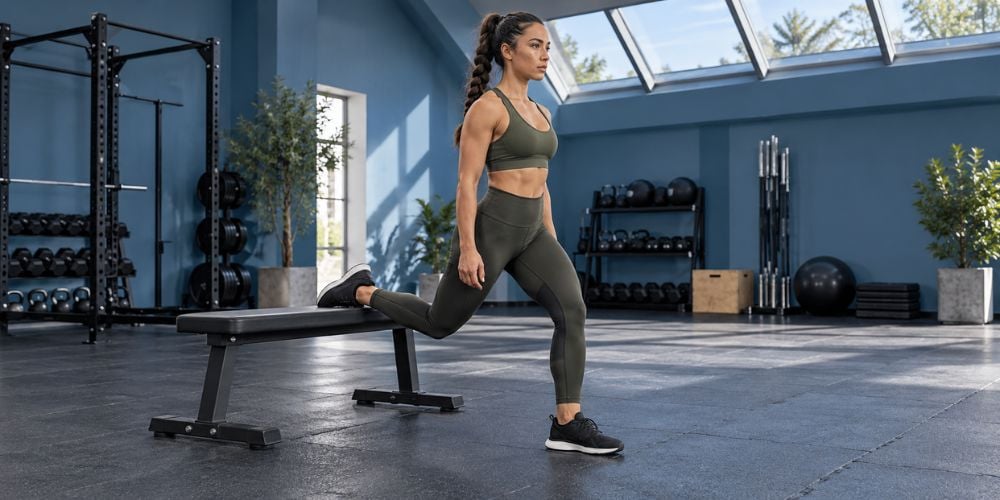
Bulgarian split squats work best when you focus on setup and control. Set your feet, keep the front foot planted, lower slowly, and push back up through the front leg.
Build confidence with movement first, then gradually add resistance.
If you want a stronger setup for exercises like this, explore the commercial benches and strength equipment from YR Fitness.
Related articles: