




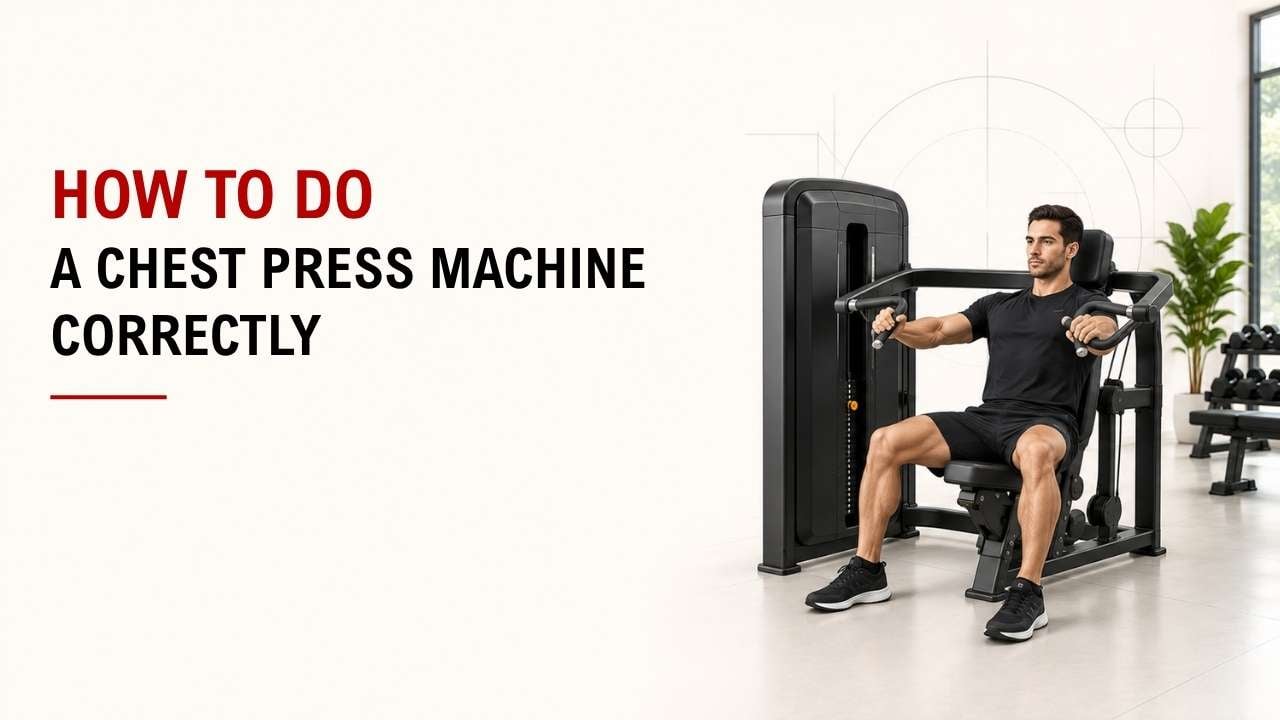

Have you ever wondered if your chest press setup is correct? A few small adjustments can make the exercise feel much better.
Set the handles around mid-chest height, keep your back supported, plant your feet, and press with control.
At YR Fitness, we have spent decades designing commercial strength equipment. That hands-on experience gives us a clear understanding of what makes a chest press feel natural, stable, and easy to control.
This guide shows you how to set up the machine, choose the right weight, press correctly, and breathe through each rep.
1. Adjust the Chest Press Machine
Start with the setup.
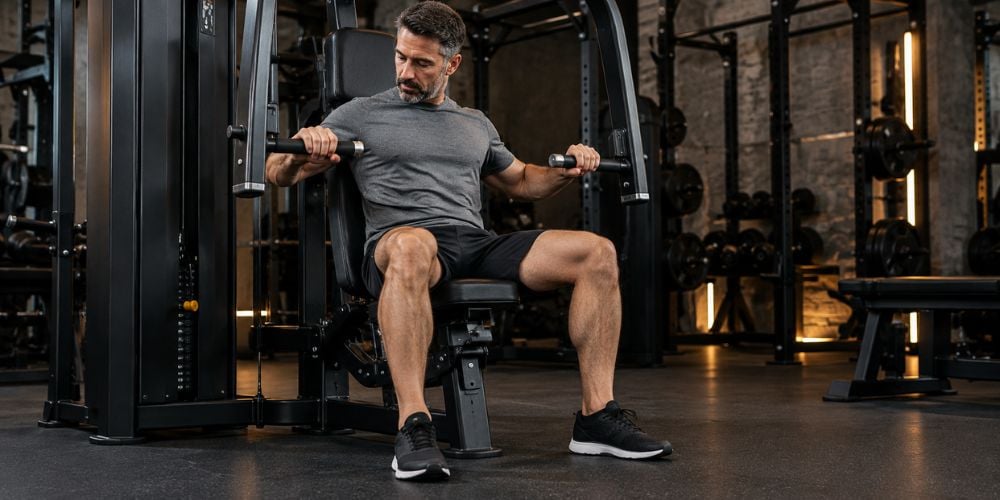
Before touching the weight stack, adjust the machine to your body. The American Council on Exercise’s seated chest press guide recommends placing the handles around mid-chest level, keeping the back supported, using a neutral wrist position, and planting the feet firmly.
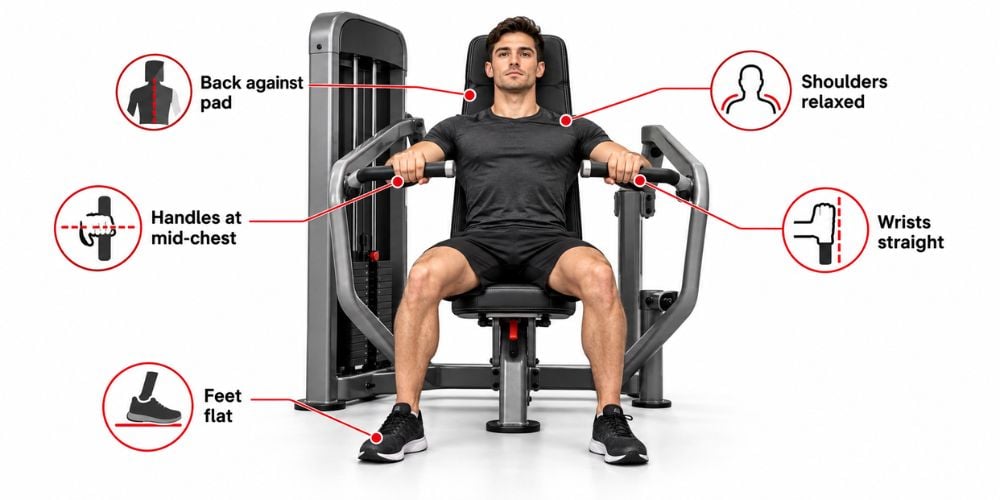
Use this starting position:
- Sit with your back against the pad.
- Keep both feet flat on the floor or footrests.
- Adjust the seat until the handles are around the middle of your chest.
- Hold the handles with your wrists straight.
- Keep your shoulders back and relaxed.
- Keep your elbows slightly below shoulder height.
Quick check: Are the handles sitting near your shoulders or stomach?
If yes, adjust the seat before you start pressing.
“I often see people skip the seat adjustment because they want to start their set immediately. A few seconds spent here can make the whole movement feel much more natural.”
ACE also classifies the selectorized seated chest press as a beginner-level exercise, which is one reason it is commonly used by people learning basic resistance training.
2. Choose the Right Weight
How heavy should you go?
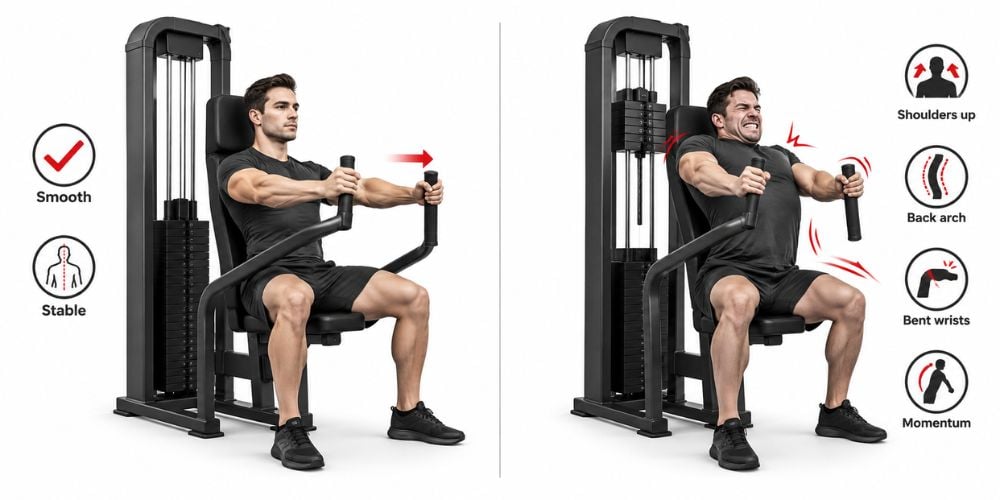
Start with resistance. You can move smoothly from beginning to end. The weight can feel challenging, but your body position should stay stable.
The weight is probably too heavy if you start:
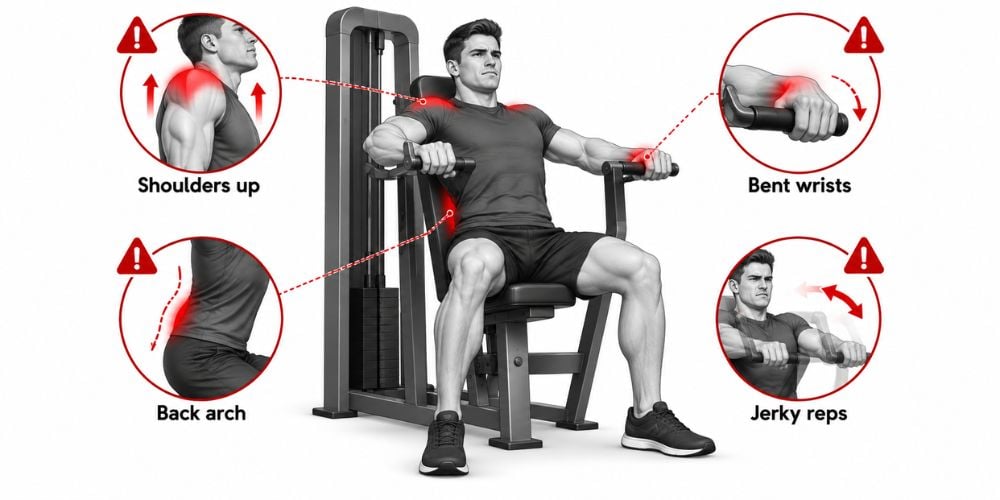
- Lifting your shoulders
- Arching your back
- Pushing your torso forward
- Bending your wrists
- Shortening the movement
- Using momentum to move the handles
A simple rule: If you have to change your form to move the weight, lower it.
A heavier stack is not useful if you cannot control the press and return. Good repetitions come first.
3. Press the Handles Forward
Now you are ready to press.
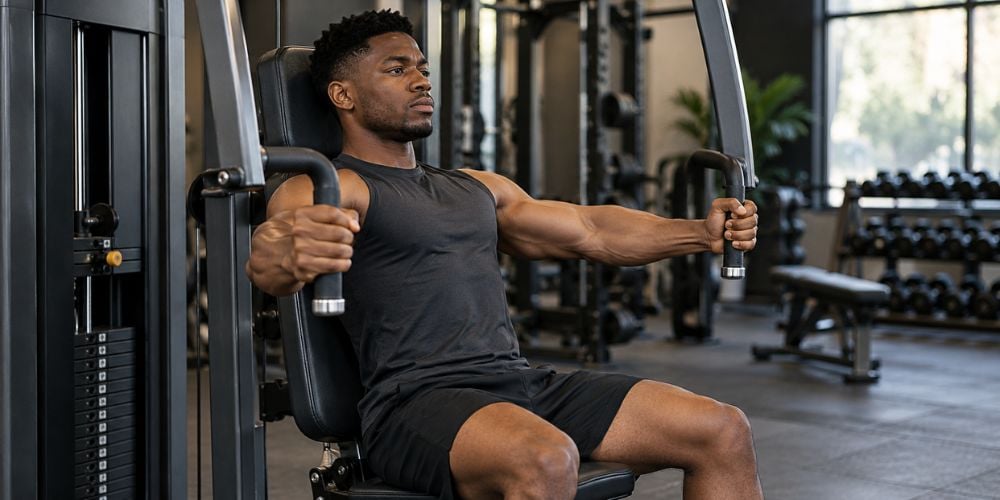
Keep your back against the pad, plant your feet, and hold the handles firmly. Your shoulders should stay relaxed and slightly backward.
Then:
- Press the handles forward smoothly.
- Keep your wrists straight.
- Keep your back against the pad.
- Extend your arms without forcefully locking your elbows.
- Pause briefly before starting the return.
ACE recommends a slow pressing motion while keeping the wrists neutral and the shoulder blades against the backrest. It also advises extending the elbows without locking them.
What should you feel working?
The chest is the main target, with the triceps and front shoulder muscles also helping with the press. In one published chest press study, researchers measured activity in the pectoralis major, triceps brachii, and deltoid muscles while 10 competitive bodybuilders performed chest press and bench press variations at 80% of their one-repetition maximum.
You do not need to think about every muscle during the set.
Focus on a smooth press and a stable body position.
“In my design experience, I would rather see someone use a lighter weight with clean repetitions than struggle with a heavy stack. Control tells you much more than the number on the weight plate.”
Choosing the right chest press matters just as much as teaching members how to use it. At YR Fitness, we design our commercial chest press machines with practical adjustments and controlled movement in mind. Explore our chest press machines to compare options for your gym.
4. Bring the Handles Back Slowly
Finished pressing forward?
Now control the handles on the way back.
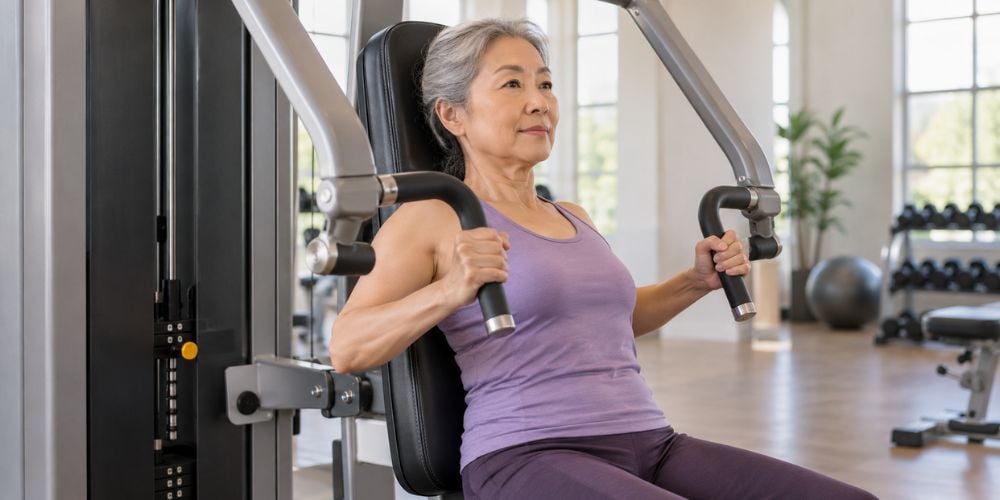
Slowly bend your elbows and return the handles toward the starting position. Do not let the weight pull your arms backward.
Avoid:
- Letting the weight stack drop
- Allowing your shoulders to roll forward
- Pulling your back away from the pad
- Bringing the handles farther back than feels comfortable
- Rushing into the next repetition
ACE specifically recommends returning the resistance with a slow, controlled movement while keeping the shoulder blades against the backrest.
Think of it this way: You should control the machine in both directions.
If the handles come back faster than you can control them, reduce the resistance.
5. Breathe With Each Rep
Do not overthink your breathing.
Use this simple pattern:
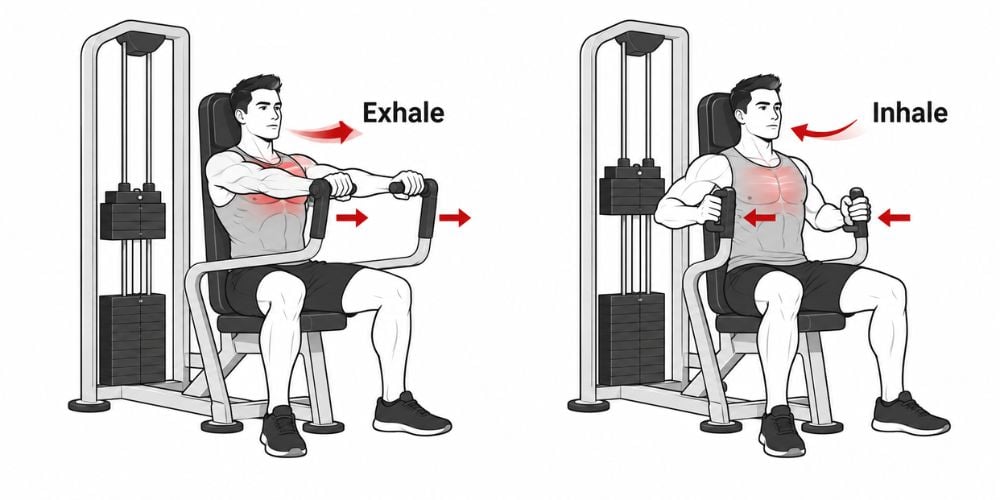
- Breathe out as you press forward.
- Breathe in as the handles come back.
- Keep breathing naturally between repetitions.
ACE also recommends exhaling during the pressing phase of the seated chest press.
A steady breathing rhythm can help keep the movement smooth.
6. Watch for These Common Mistakes
Something does not feel right?
Check the basics first. Most problems can be traced back to the seat position, resistance, or loss of control.
Mistake | What to Do Instead |
Seat too high or low | Place the handles around mid-chest |
Weight too heavy | Reduce the resistance |
Shoulders lifting | Keep them relaxed and slightly back |
Back leaving the pad | Stay supported throughout the rep |
Wrists bending backward | Keep wrists in line with your forearms |
Pressing too fast | Slow down and control the movement |
Weight stack slamming | Control the return |
These points closely match ACE’s recommendations to maintain a neutral wrist position, keep the back supported, avoid excessive arching, and keep the shoulder blades against the backrest.
Not sure if your weight is right?
Watch your form near the end of the set. If your shoulders rise, your back leaves the pad, or the repetitions suddenly become much shorter, lower the resistance.
Then try again.
Simple Chest Press Checklist
Before every set, run through this quick check:
- Seat: Handles at mid-chest height
- Feet: Flat and stable
- Back: Against the pad
- Wrists: Straight
- Shoulders: Relaxed and slightly back
- Press: Smooth and controlled
- Return: Slow and steady
- Breathing: Exhale forward, inhale back
That is really all you need to remember.
Conclusion
A good chest press is simple. Set the machine correctly, choose a manageable weight, press smoothly, and stay in control on the way back.
At YR Fitness, we design our commercial strength equipment for practical daily gym use. If you are choosing equipment for your facility, explore our chest press machines and compare the options that fit your gym.
Related articles: