









Is your treadmill slipping, making strange noises, or stopping during a workout? You may be wondering whether to repair it or replace it.
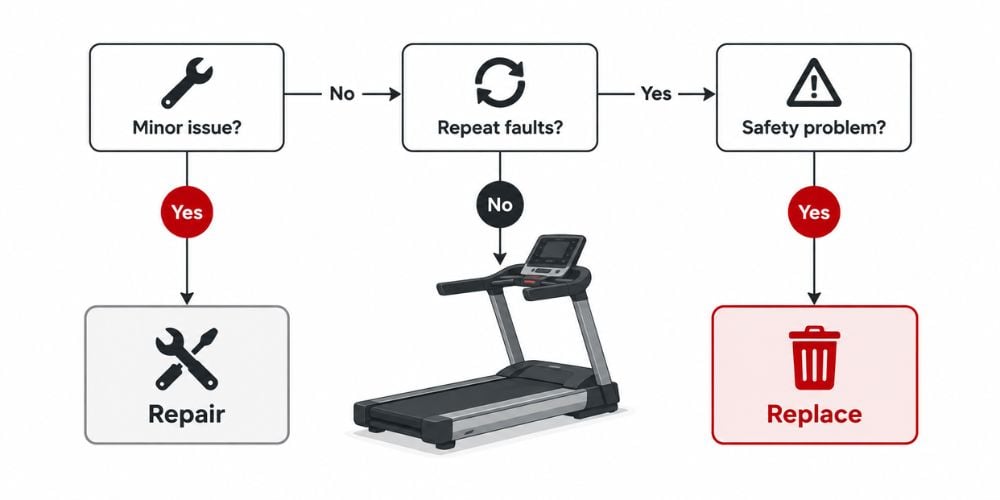
The quick answer is simple: repair minor problems if the treadmill is still reliable. Replace it if problems keep returning, major parts are worn, or the machine feels unsafe.
As the founder and chief designer of YR Fitness, I have spent decades working with commercial fitness equipment. In my experience, one small repair is normal, but repeated failures usually mean it is time to look closer.
Below are six quick checks to help you decide. Keep scrolling and match them with your treadmill.
1. Repair It If the Problem Is Minor
Not every treadmill problem means you need a new machine.
Repair usually makes sense for:
- A loose or misaligned walking belt
- Poor belt lubrication
- A worn drive belt
- A faulty speed sensor
- Damaged buttons
- A small display problem
- Minor wiring issues
Why start here? Many treadmill components are designed to be inspected, adjusted, or replaced during normal maintenance. For example, the Precor preventive maintenance schedule specifically includes checking belt tension, tracking, alignment, the deck, drive belt, power cord, and other components.
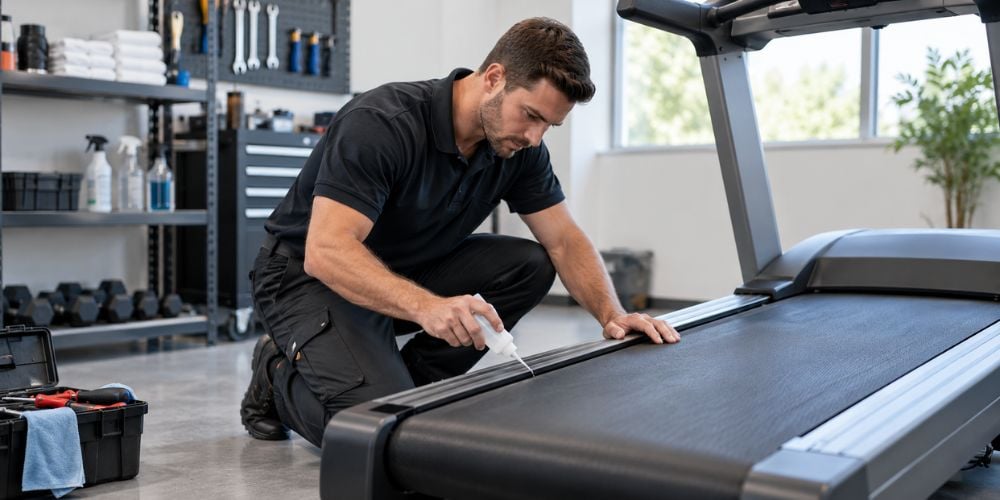
If the treadmill worked well before one small problem appeared, fixing that issue is usually the practical choice.
Quick rule: If one reasonable repair can return the treadmill to normal use, repair it.
2. Replace It If Repairs Keep Coming Back
One repair is normal. Constant repairs are different.
Maybe you fixed the belt last month, and now the console is failing. A few weeks later, the treadmill starts slowing down again.
I often see repeated problems as a stronger warning sign than one isolated fault.
Consider replacement if:
- It breaks down regularly
- Different parts keep failing
- You cannot trust it during a workout
- Repair visits are becoming normal
- The same problem keeps returning
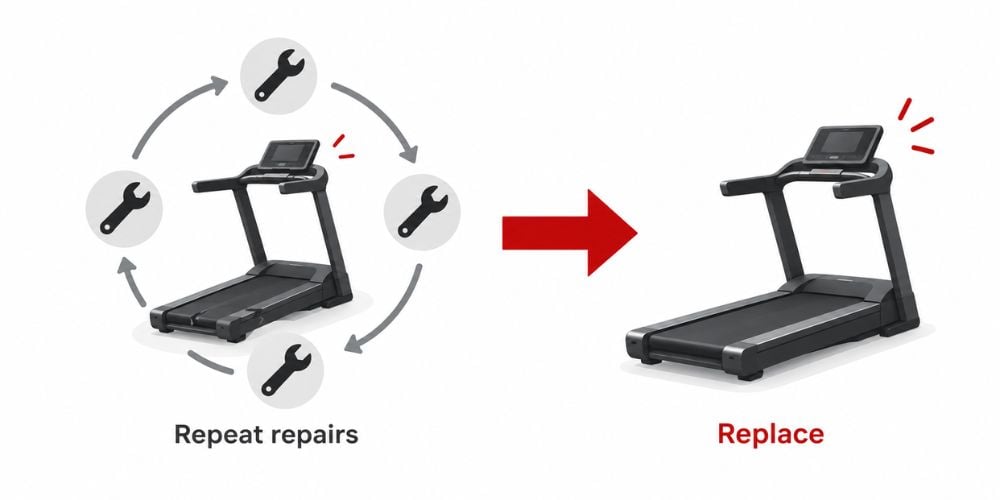
Still unsure? Ask yourself one question: Would I trust this treadmill for my next run?
If the answer keeps being no, replacement deserves serious consideration.
What Is Happening? | Better First Choice |
One small fault | Repair |
Same fault returns repeatedly | Replace |
Different parts keep failing | Replace |
Machine remains reliable after repair | Keep using it |
You avoid using it because you do not trust it | Consider replacement |
3. Compare Repair Cost With Replacement Cost
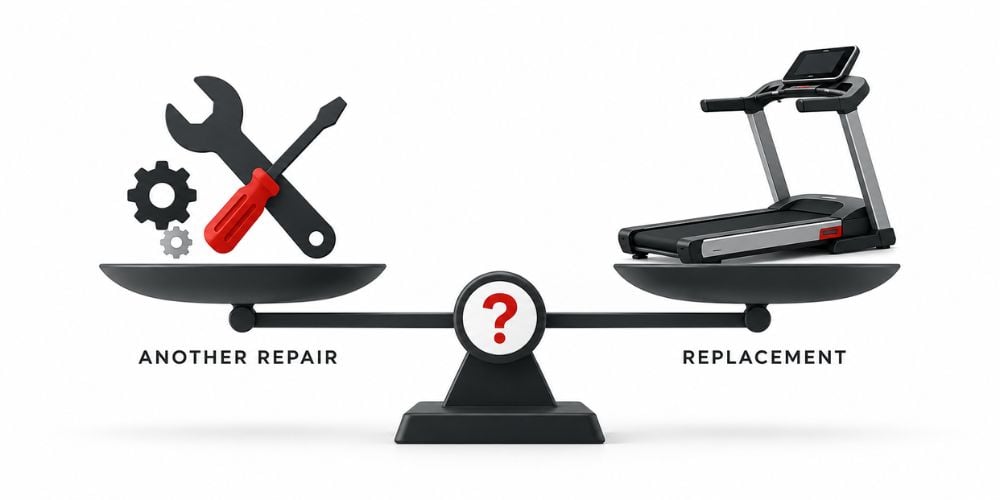
Before paying for a large repair, look at the bigger picture.
Ask:
- How much does this repair cost?
- Are other parts already worn?
- How old is the treadmill?
- Will the repair give it several more useful years?
- Could that money go toward a more reliable machine?
Replacing one sensor may make sense. Replacing the motor, belt, deck, and electronics on an aging treadmill is a very different decision.
Here is why this matters: today’s repair bill is only part of the cost. You also need to think about what may fail next.

A Simple Cost Decision
Situation | What Usually Makes More Sense |
Small repair + machine in good condition | Repair |
Expensive repair + everything else works well | Compare both options |
Expensive repair + several worn parts | Replace |
Repairs happening repeatedly | Replace |
Parts are becoming difficult to find | Replace |
If your repair list is starting to include several major components, compare the cost with a newer machine before spending more. At YR Fitness, we build our commercial cardio equipment for regular daily use, so you can use our treadmill options as a practical reference when deciding whether another repair still makes sense.
4. Look at the Motor, Belt, and Deck
The motor, walking belt, and deck can tell you a lot about the treadmill’s overall condition.
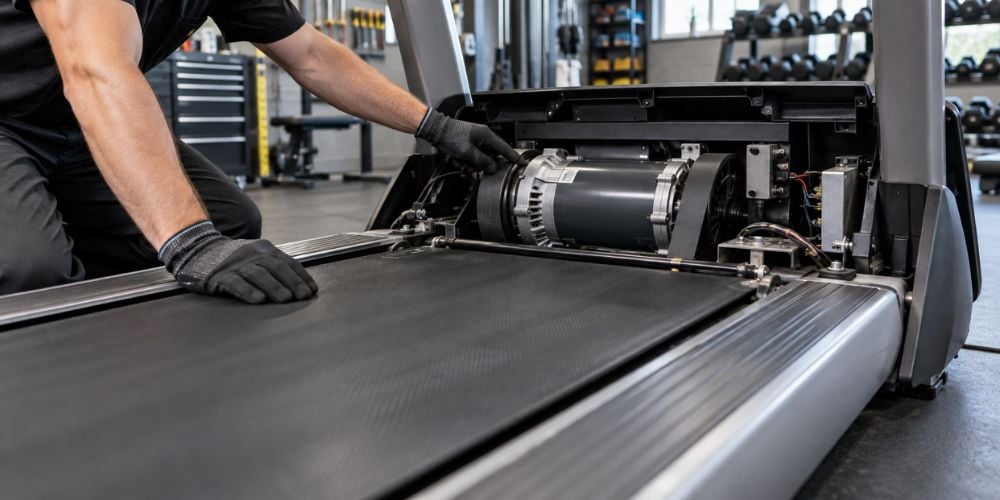
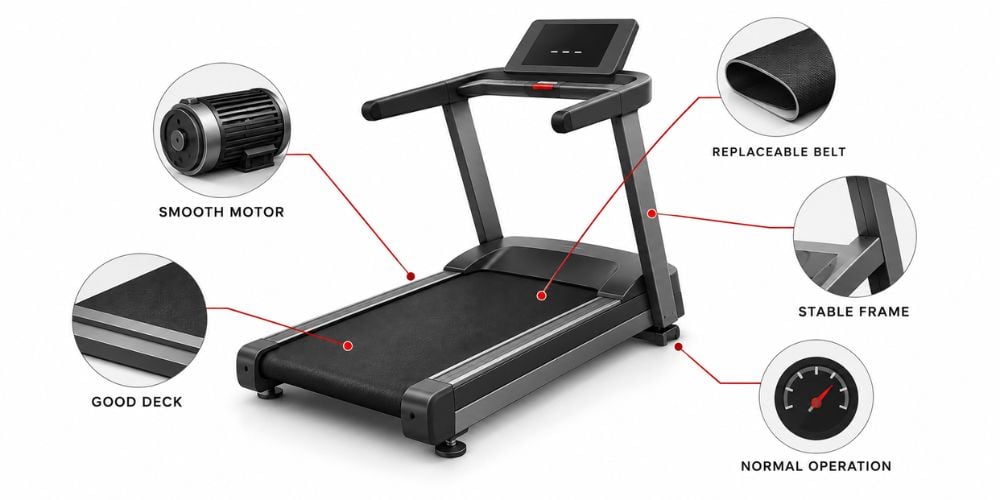
Repair may make sense when:
- The motor still runs smoothly
- The deck is in good condition
- The walking belt only needs adjustment or replacement
- The frame remains stable
- Most other components still work normally
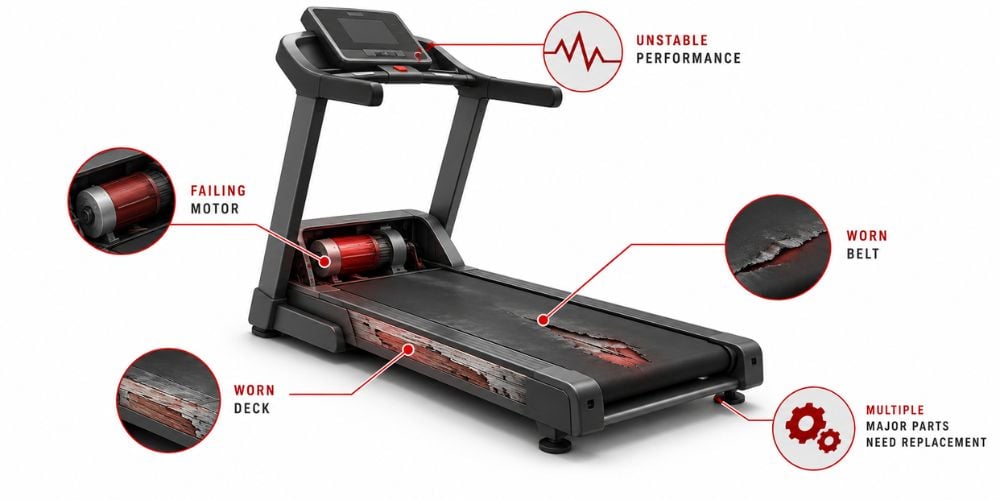
Replacement may make sense when:
- The motor is failing
- The belt and deck are both badly worn
- The treadmill struggles under normal use
- Several major components need replacement
- Parts are difficult to find
A single worn belt is usually manageable. A worn belt, worn deck, and weak motor together can quickly become a bigger repair.
This is not just theory. The Life Fitness preventive maintenance checklist includes inspecting the striding belt, drive belts, rollers, lift motor, speed controller, wiring, and power lead as part of treadmill maintenance.
What if you only notice belts slipping? Start with an inspection rather than assuming the motor has failed.
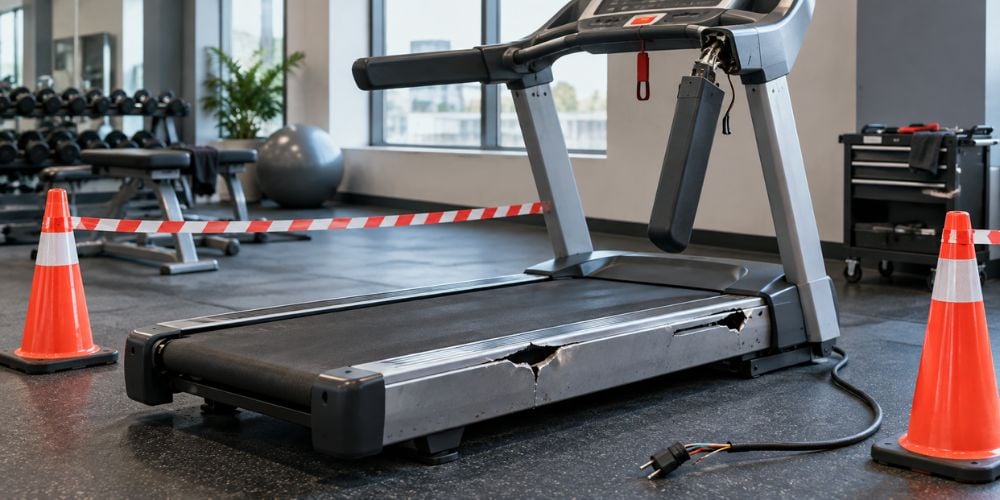
5. Replace It If There Is a Serious Safety Problem
Safety changes the decision.
Stop using the treadmill if you notice:
- Sudden stopping while running
- Uncontrolled speed changes
- Severe belt slipping
- Burning smells
- Major electrical faults
- A damaged or unstable frame
- Loose handrails
- Safety controls that do not work properly
Do not keep testing a treadmill that behaves unpredictably.
Manufacturer guidance takes this seriously too. A Precor treadmill maintenance manual tells users to stop using equipment that shows signs such as slipping belts, unusual noises, damaged power cords, or other service problems, and to prevent further use until it is serviced.
There is another useful check: Has the treadmill been recalled?
If you are in the United States, search the U.S. Consumer Product Safety Commission recall database using the brand and model number. Commercial treadmills have been recalled before for hazards including loose power connections that could create a fire risk.
For electrical, motor, or structural faults, leave the repair to a qualified technician rather than opening the machine yourself.
6. Use This Quick Repair-or-Replace Check
Want the fastest answer? Use this table.
Treadmill Condition | Repair or Replace? |
Loose or misaligned belt | Repair |
Minor sensor or button problem | Repair |
One inexpensive part failed | Repair |
Machine is otherwise reliable | Repair |
Same problems keep returning | Replace |
Several major parts are worn | Replace |
Motor, belt, and deck all need work | Replace |
Repair cost is becoming very high | Replace |
Serious safety problems remain | Replace |
The rule is simple: repair a good treadmill with one small problem; replace a worn treadmill with several problems.
Conclusion
A commercial treadmill does not need replacing every time something goes wrong. Minor belt, sensor, lubrication, or control problems can often be repaired and used normally again.
But if breakdowns keep returning, several major parts are worn, or the treadmill no longer feels safe, replacement may be the better choice.
If you want a treadmill you can rely on for regular daily training, at YR Fitness we can help you compare commercial cardio options that fit your space, usage needs, and budget.
Related articles:



