









Have you noticed a corner of your gym that barely gets used? Maybe it has an old machine, a few benches, or just stays empty.
The fix is simple: find out why people avoid it, measure space, and give it one clear purpose. You may not need a full renovation.
As the founder and chief designer of YR Fitness, I have spent decades working with commercial gym equipment and floor layouts. I have seen how small changes in equipment and placement can make an underused area much more useful.
Below are seven practical ways to improve that space. Keep reading to see what to move, remove, or add.
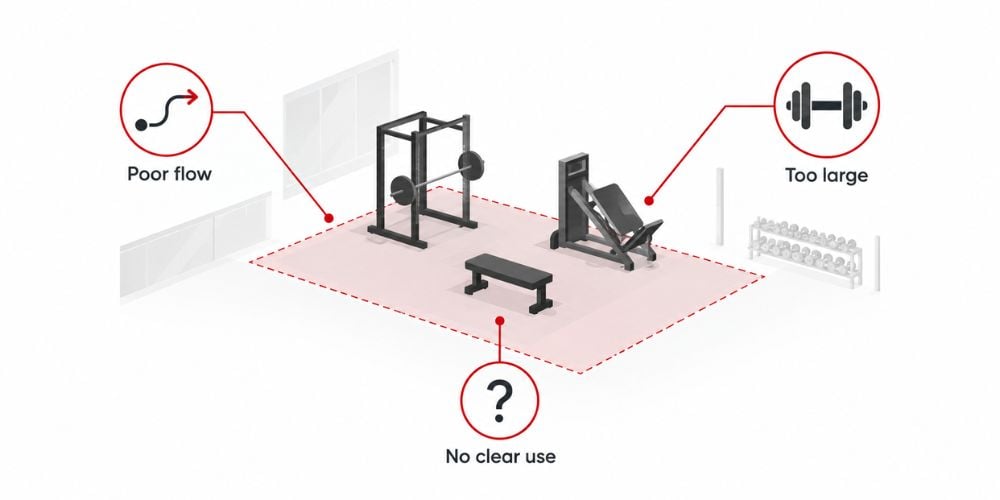
1. Identify Why the Area Is Underused
Before moving anything, find out why people avoid the area.
Watch what happens during both busy and quiet periods. Look for:
- Equipment that few people use
- Poor lighting
- Not enough room around machines
- An awkward location
- Equipment that does not match nearby training
- A walkway cutting through the area
Ask yourself: What is stopping someone from training here comfortably?
Do not assume an empty area needs more equipment. Sometimes removing one badly positioned machine is enough to make the whole space easier to use.
Here is a simple way to diagnose the problem:
What You Notice | Possible Problem | Simple First Move |
People walk past the area | No clear purpose | Give it one training function |
One machine fills most of it | Equipment is too large | Move or replace the machine |
Users avoid it at busy times | Poor traffic flow | Open the walkway |
Accessories are everywhere | Poor storage | Add organized storage |
Space feels dark or isolated | Environment issue | Improve lighting or visibility |
Several machines do the same job | Too much duplication | Keep the most useful stations |
Start with the problem, not the equipment catalog.
2. Measure the Available Space
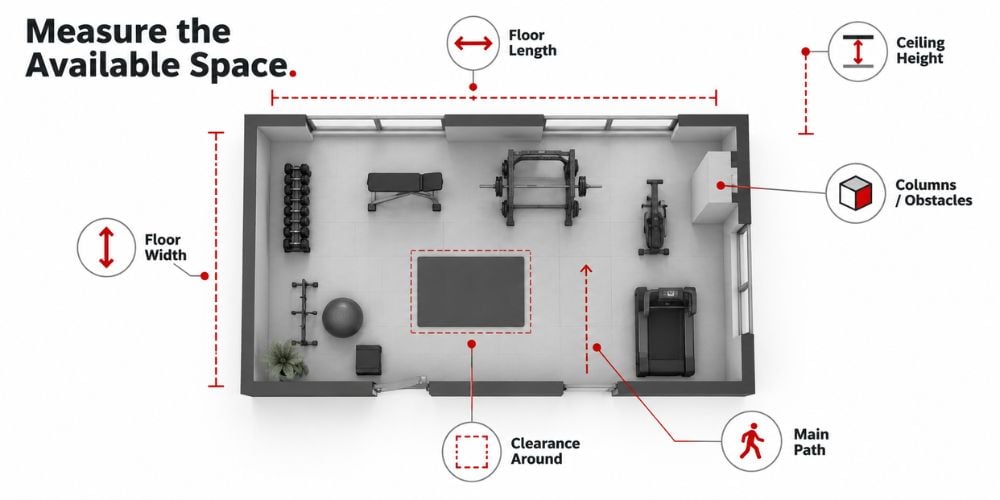
Now measure what you actually have.
Check:
- Floor length and width
- Ceiling height
- Nearby columns
- Mirrors
- Electrical outlets
- Doors and emergency exits
- Main walking paths
- Space needed around equipment
Do not measure only the footprint of a machine. Someone still needs room to get on, get off, adjust the seat, load weights, and move around it comfortably.
Will the machine fit? That is only the first question.
You also need to ask whether people can use it without blocking other members.
If you operate in the U.S., accessibility should also be part of your layout planning. The U.S. Department of Justice’s 2010 ADA Standards for Accessible Design cover accessible routes, while its guidance specifically discusses accessible routes and clear floor space around exercise equipment.
Local building, fire, and accessibility rules may add other requirements, so check the rules that apply to your facility before making permanent changes.
3. Match the Equipment to Space
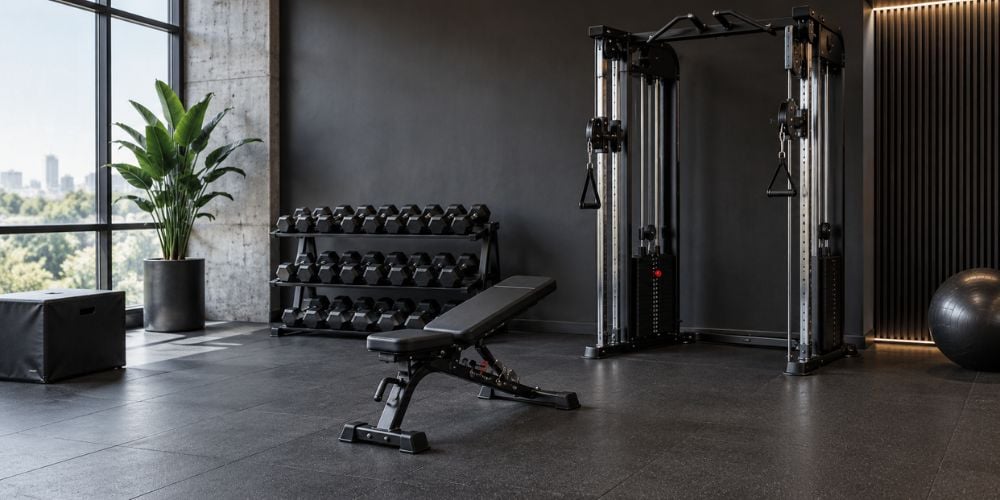
Once you know the dimensions, choose equipment that gives you useful training options without making the area feel crowded.
For smaller spaces, consider:
- Adjustable benches
- Dumbbells and kettlebells
- Cable machines
- Dual-function strength machines
- Compact racks
A compact area usually works better with versatile equipment than several large single-purpose machines.
For example, one cable station may support several exercises in the same footprint. On the other hand, a large machine that serves only one movement may be harder to justify in a small corner.
Quick Repurposing Guide
Available Area | Possible Use | Equipment to Consider |
Small corner | Mobility or warm-up | Mats, bands, light accessories |
Narrow training area | Functional work | Kettlebells, dumbbells, storage |
Medium open area | Personal training | Bench, dumbbells, cable station |
Existing machine zone | Strength training | Compact or dual-function machines |
Open multipurpose area | Small-group training | Mats, accessories, movable equipment |
The goal is not to fit the maximum number of machines. It is to make space useful.
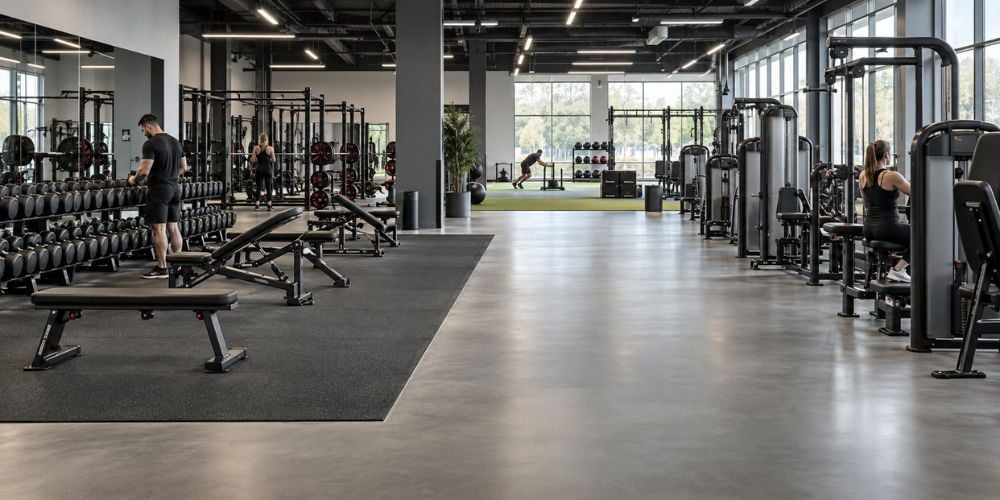
4. Improve the Layout and Member Flow
A good training area should be easy to enter, use, and leave.
Keep the main walkways clear. Avoid making people walk between someone exercising and the equipment they are using.
Where possible, group related activities:
- Free weights: dumbbells, benches, and storage
- Functional training: mats, kettlebells, and resistance bands
- Strength training: machines with related movement purposes
- Warm-up area: mats, mobility tools, and light accessories
Also, think about where people stand between sets.
I have seen gym layouts where every machine technically fits, yet the area still feels cramped. The problem is often that nobody left room for people to actually move.
Sometimes one less machine creates a better training area.
If you are replacing oversized equipment or trying to get more training options from limited floor space, we can help you compare compact, dual-function, and commercial strength equipment based on the area you have. Browse our commercial strength equipment options before deciding what deserves that floor space.
5. Make Small Changes Before a Full Renovation
You do not need to rebuild the entire gym straight away.
Start with simple changes:
- Move an existing machine
- Remove unused equipment
- Add a bench
- Improve storage
- Improve lighting
- Place a few mats
Then watch what happens.
Are more people using the area now?
If yes, the new setup is probably moving in the right direction. If not, adjust it again before investing in several new machines.
This simple test-first approach can help you avoid spending money on a layout that only looked good on paper.
6. Use the Area to Support Revenue
If you run a commercial gym, that empty area can also support services that bring in additional revenue.
Possible uses include:
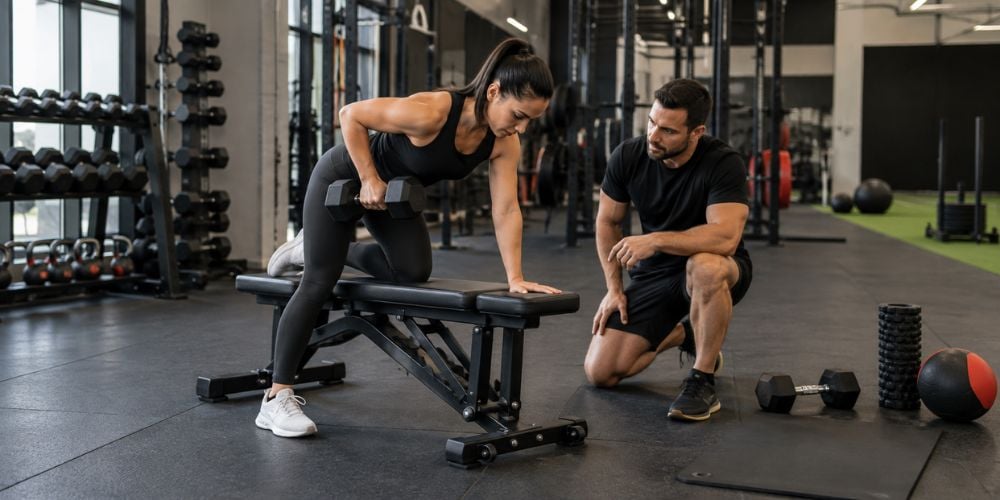
- Personal training
- Semi-private sessions
- Small-group workouts
- Beginner orientations
- Mobility sessions
- Specialized strength training
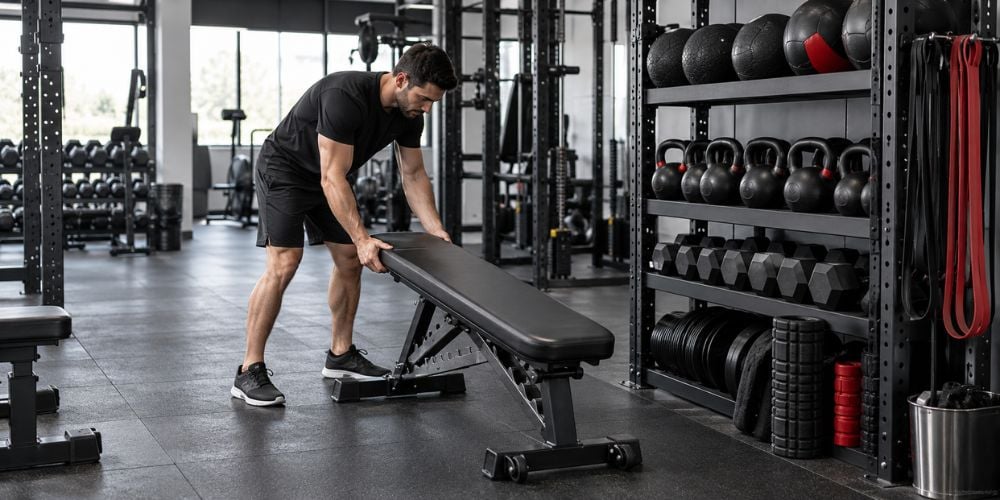
For example, a small area with an adjustable bench, dumbbells, a cable station, and a few accessories can support many different sessions.
You do not need to fill the space with expensive equipment first.
Can one area serve several types of training? If the answer is yes, you may have found a much better use for it.
Give the area a clear purpose first. Revenue opportunities become easier once people actually want to train there.
7. Review Equipment That No Longer Fits Your Floor
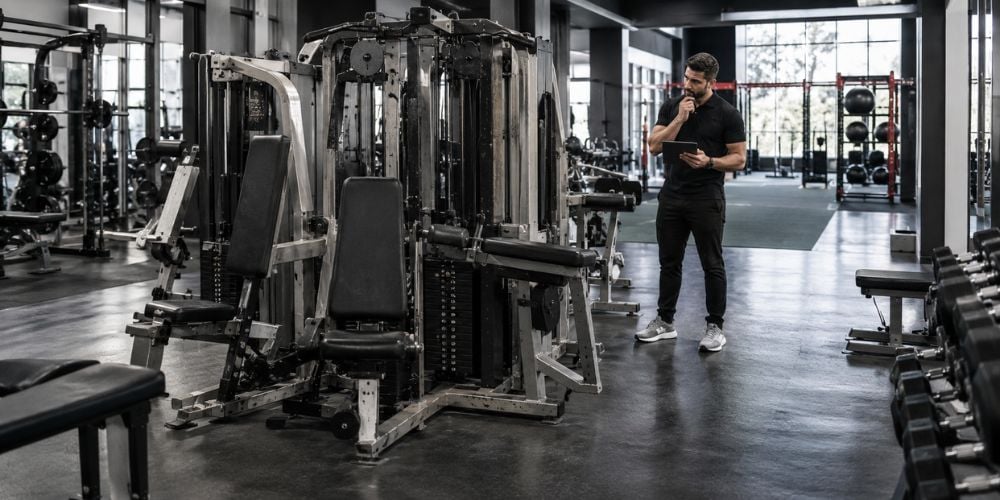
Sometimes the problem is not the empty area itself. It is the equipment around it.
Look for machines that:
- Rarely get used
- Take up too much floor space
- Duplicate another exercise
- Create congestion
- Are difficult to adjust
- No longer match how people train
Please don’t keep a machine simply because it’s been there.
In my own design work, I would rather see fewer useful stations than a crowded floor full of equipment nobody wants to use. Every machine should earn the space it takes up.
Before removing anything, watch how often it gets used and whether another station already provides a similar exercise. That gives you a better reason to keep, move, or replace it.
Conclusion
An underused gym area does not always need a full renovation. Sometimes a better layout, more suitable equipment, or one clear training purpose is enough to make the space useful again.
Start by looking at how people move through the area, what equipment they actually use, and where the floor feels crowded or wasted.
Small changes can turn an ignored corner into a practical strength, functional, warm-up, or personal training zone.
If you want to make better use of an underused area, at YR Fitness we can help you choose commercial gym equipment that fits your available space and training needs.
Related articles:



