






Have you ever felt your treadmill belt slip or jerk while walking or running? It usually means something in the belt or drive system needs attention.
In most cases, the cause is simple: the belt may be loose, dry, worn, misaligned, or affected by a drive issue. Checking these areas first can save you from unnecessary repairs.
I’m George Yang, Founder and Chief Designer of YR Fitness, and I have spent decades designing fitness equipment. From that experience, I know that most treadmill belt problems can be narrowed down by checking a few key parts in the right order.
This guide shows you what to check, why the problem happens, and what you can do next.
- 1. Is the Treadmill Belt Too Loose?
- 2. Does the Treadmill Belt Need Lubrication?
- 3. Is the Belt Worn or Stretched?
- 4. Is the Treadmill Belt Misaligned?
- 5. Could the Drive Belt be Slipping?
- 6. Are the Rollers Worn or Loose?
- 7. Am I Adjusting the Belt Too Tight?
- 8. How Can I Prevent My Treadmill Belt From Slipping Again?
- Final Thoughts
1. Is the Treadmill Belt Too Loose?
A loose walking belt is one of the most common reasons for slipping.
If the treadmill runs normally without you on it but slips when your foot lands, check the belt tension first.
Other signs include:
- Belt hesitation
- Unstable movement
- Slipping during faster running
- Motor running while the belt briefly stops
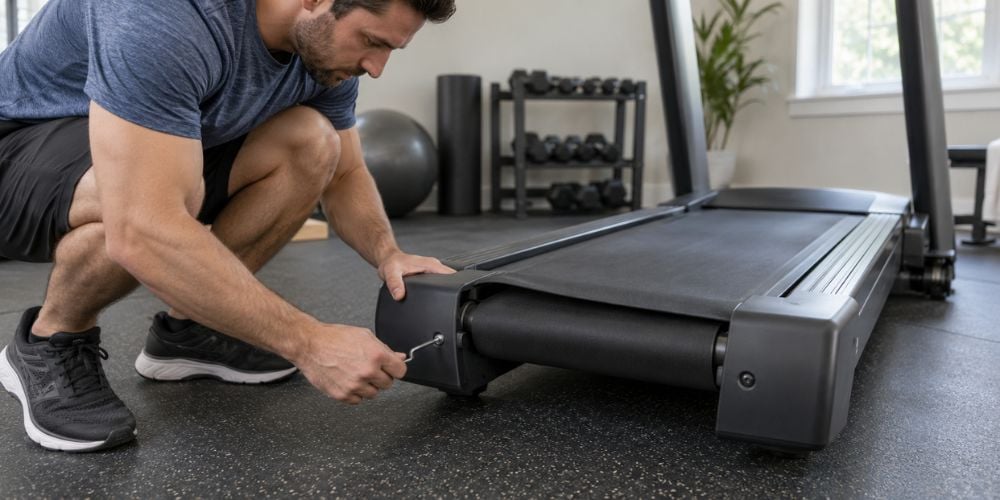
Many treadmills use rear roller bolts to adjust belt tension. Make small adjustments rather than tightening aggressively.
For example, Horizon Fitness recommends making quarter-turn belt adjustments and testing again.
2. Does the Treadmill Belt Need Lubrication?
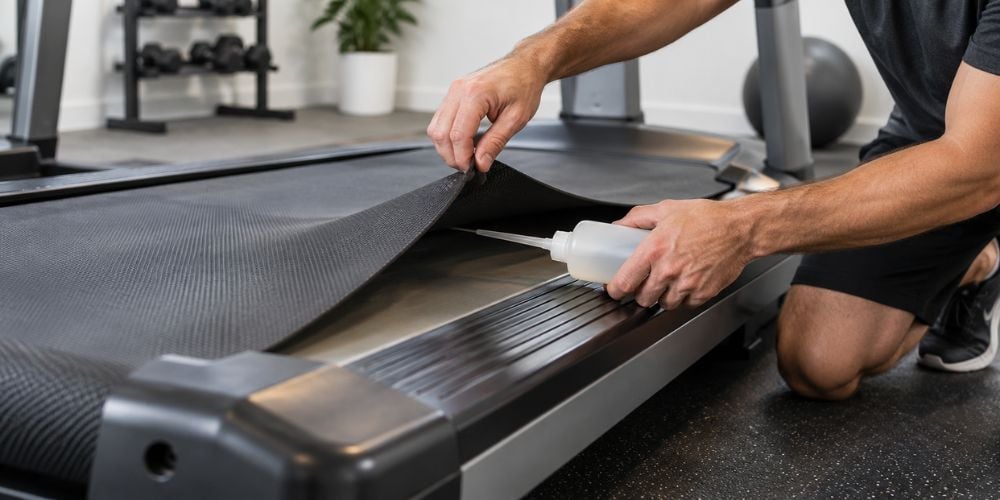
A dry belt can create too much friction between the walking belt and deck.
You may notice:
- Jerky movement
- Extra resistance
- More noise
- Uneven belt movement
Check your manual before adding lubricant. Some treadmill decks require silicone lubrication, while others use different systems.
Horizon, for example, recommends lubrication around every 150 miles or three months for applicable silicone surfaces. You can read its treadmill lubrication guidance for example.
More lubricant is not always better. Use only the type and amount recommended for your treadmill.
3. Is the Belt Worn or Stretched?
What if you tighten the belt and it still slips?
The belt itself may be worn or stretched.
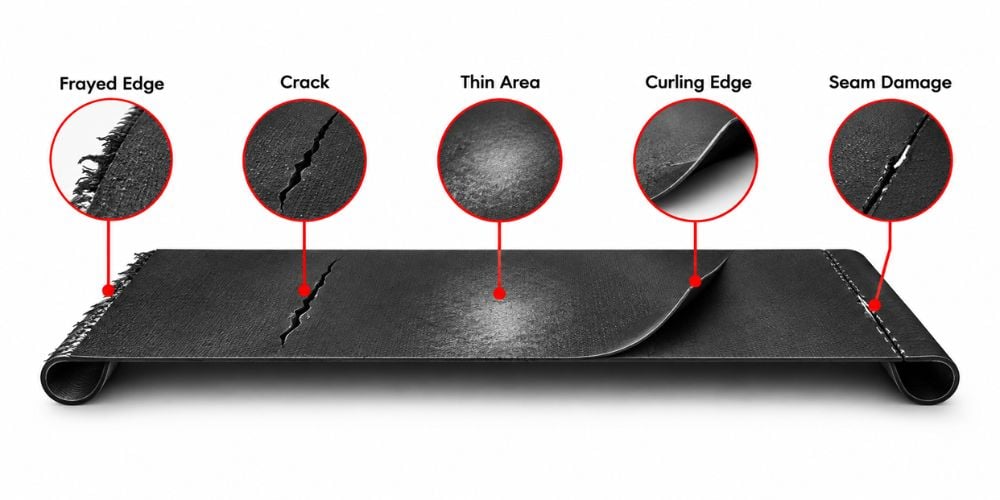
Check for:
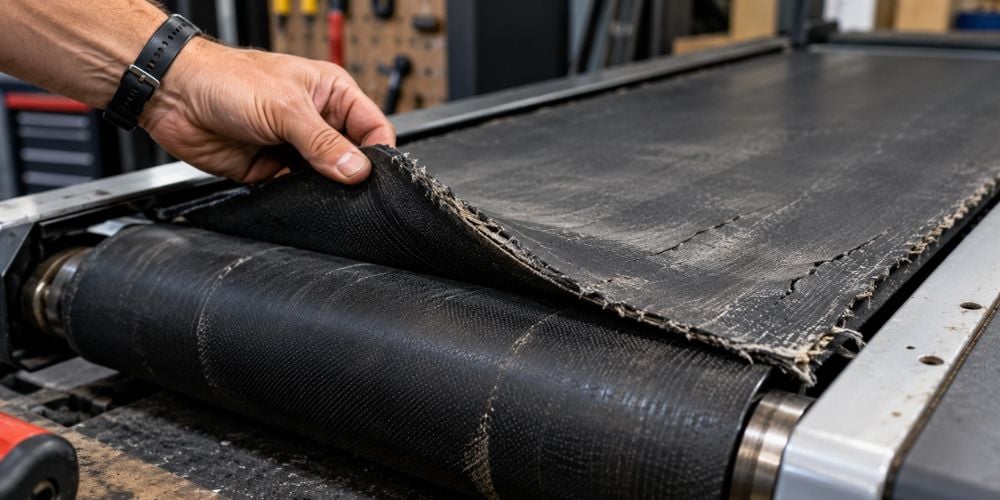
- Frayed edges
- Cracks
- Thin areas
- Curling
- Rips
- Seam damage
- A belt that quickly becomes loose again
Horizon’s treadmill belt replacement guidance recommends checking belt condition, tension, fraying, rips, and seam stability.
I often see people keep tightening a belt that is already worn out. At that point, more tension usually does not solve the real problem.
If the belt has visible damage or keeps loosening after adjustment, replacement may make more sense.
4. Is the Treadmill Belt Misaligned?
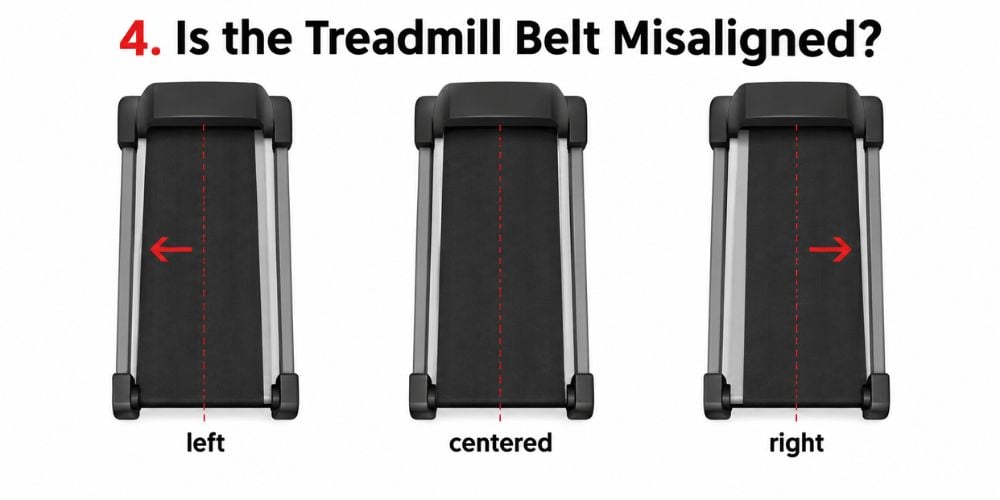
Does your belt keep drifting to the left or right?
If so, alignment may be the problem.
A treadmill belt should stay reasonably centered while moving. If it keeps traveling toward one edge, the tension may be uneven.
Watch the treadmill at a slow speed and see whether the belt:
- Stays centered
- Moves left
- Moves right
- Rubs against an edge
You can use this belt alignment guide as an example of how treadmill belts are adjusted.
Make very small changes. A slight roller adjustment can move the belt more than you might expect.
5. Could the Drive Belt be Slipping?
Sometimes the walking belt is not the real problem.
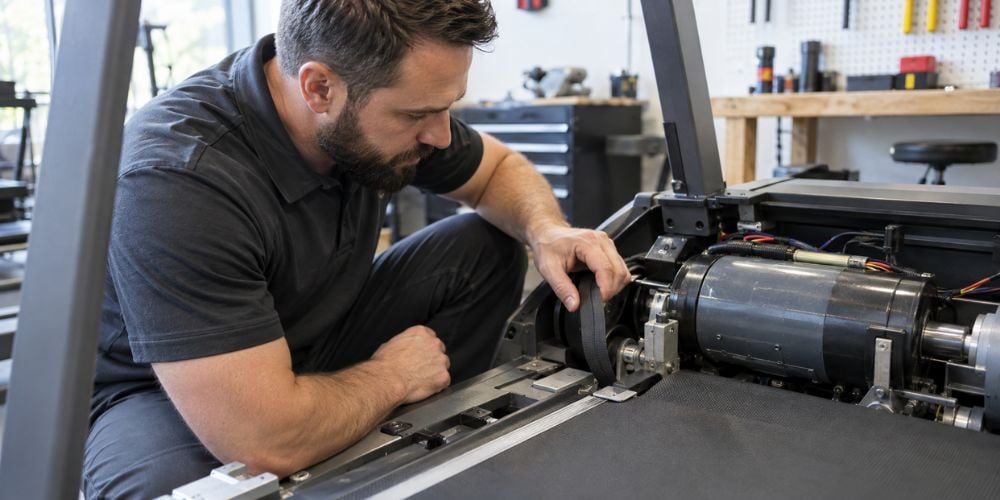
The drive belt transfers power from the motor to the front roller. If it becomes loose or worn, the walking belt may hesitate even when its tension looks correct.
You may notice:
- Slipping during acceleration
- Hesitation when you step heavily
- Motor running while the belt loses speed
- Slipping that seems to come from the front
Should you tighten the walking belt again? Not if the drive system is the real cause.
If you are not comfortable opening the motor area, have a technician inspect it. Always disconnect treadmill power before working around internal components.
If your treadmill keeps having belt or drive problems and replacement is starting to make more sense, compare the mechanical parts before buying another machine. At YR Fitness, we offer treadmills with different motor, deck, running-area, and belt configurations, so you can compare the features that matter for regular workouts.
6. Are the Rollers Worn or Loose?
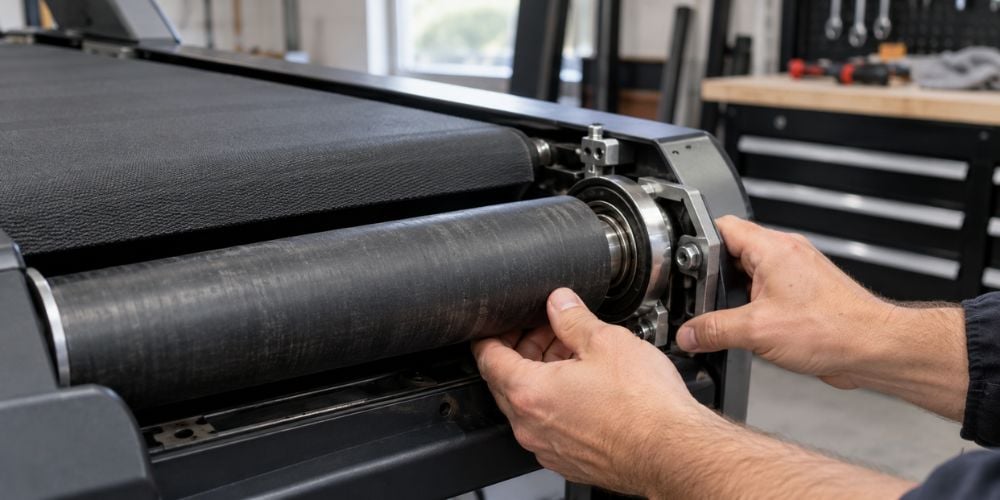
The front and rear rollers guide the treadmill belt as it moves.
If a roller or bearing becomes worn or loose, the belt may move unevenly.
Watch for:
- Extra vibration
- Grinding or rough sounds
- Uneven belt movement
- Poor belt tracking
Does the belt still slip after you checked tension and alignment? If yes, the rollers are worth a closer look.
Not every treadmill sound means something is broken. Horizon has a useful treadmill noise troubleshooting guide that explains some common noises.
The key is change. If your treadmill was smooth before and now slips, vibrates, or sounds different, pay attention to it.
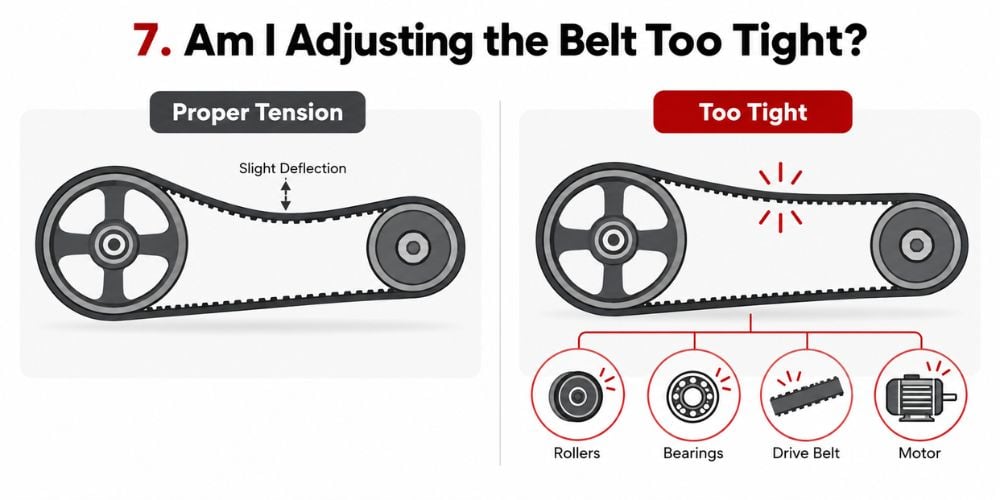
7. Am I Adjusting the Belt Too Tight?
Yes, a treadmill belt can also be too tight.
This often happens when someone keeps tightening the belt every time it slips.
Too much tension can put extra stress on:
- Rollers
- Bearings
- Drive belt
- Motor
After a small adjustment:
- Run the treadmill slowly.
- Check whether the belt stays centered.
- Walk on it carefully.
- See if the slipping stops.
Still slipping? Stop tightening.
The problem may be lubrication, belt wear, alignment, the drive belt, or the rollers instead.
In my decades of design experience, this is one of the simplest mistakes to avoid. Small changes followed by testing are much safer than repeatedly tightening the belt.
8. How Can I Prevent My Treadmill Belt From Slipping Again?
You do not need a complicated maintenance routine.
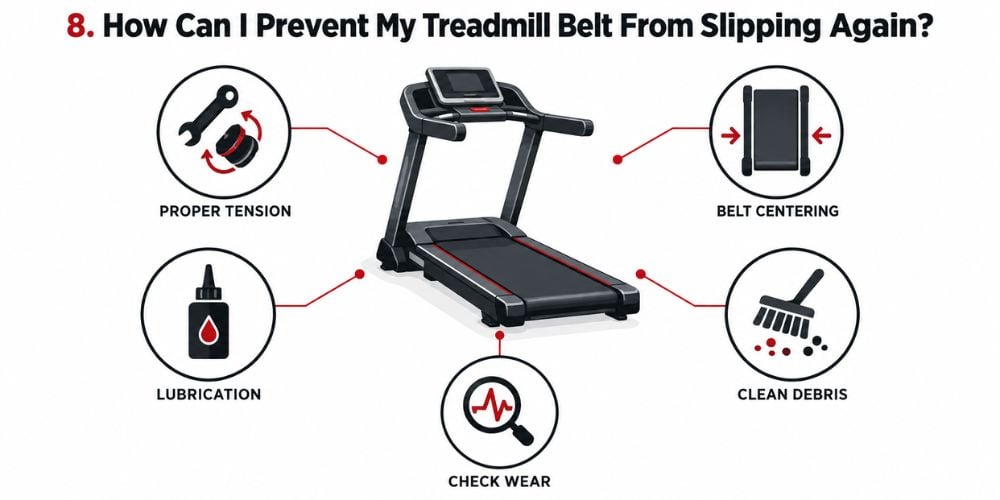
A few basic checks can prevent many belt problems:
- Keep the belt properly tensioned
- Keep it centered
- Lubricate it according to the manual
- Remove dust and debris
- Check for cracks, fraying, and stretching
- Pay attention to new vibration or noise
What should you notice during normal workouts? Pay attention to changes in how the treadmill feels under your feet.
If the belt starts slipping, drifting, jerking, or making new sounds, check it before the problem gets worse.
A simple maintenance routine can look like this:
Maintenance check | Practical frequency example |
Look for belt slipping or drifting | During normal use |
Wipe belt and exposed surfaces | After use or regularly |
Clean underneath treadmill | Weekly |
Inspect assembly hardware | Monthly |
Check belt tension and alignment | Regularly / monthly |
Lubricate applicable silicone surfaces | Follow your manual; some models specify 150 miles or 3 months |
Inspect belt for physical wear | During lubrication or regular maintenance |
Final Thoughts
If your treadmill belt is slipping, start with tension, lubrication, wear, and alignment. If those look normal, the drive belt or rollers may need attention.
Do not keep tightening the belt if the problem continues. Follow the symptoms and check each possible cause one at a time.
If repairs are becoming frequent and you are thinking about replacing the machine, you can explore YR Fitness treadmills and compare motor systems, running areas, deck designs, and belt features before deciding what makes the most sense for you.
Related articles: