




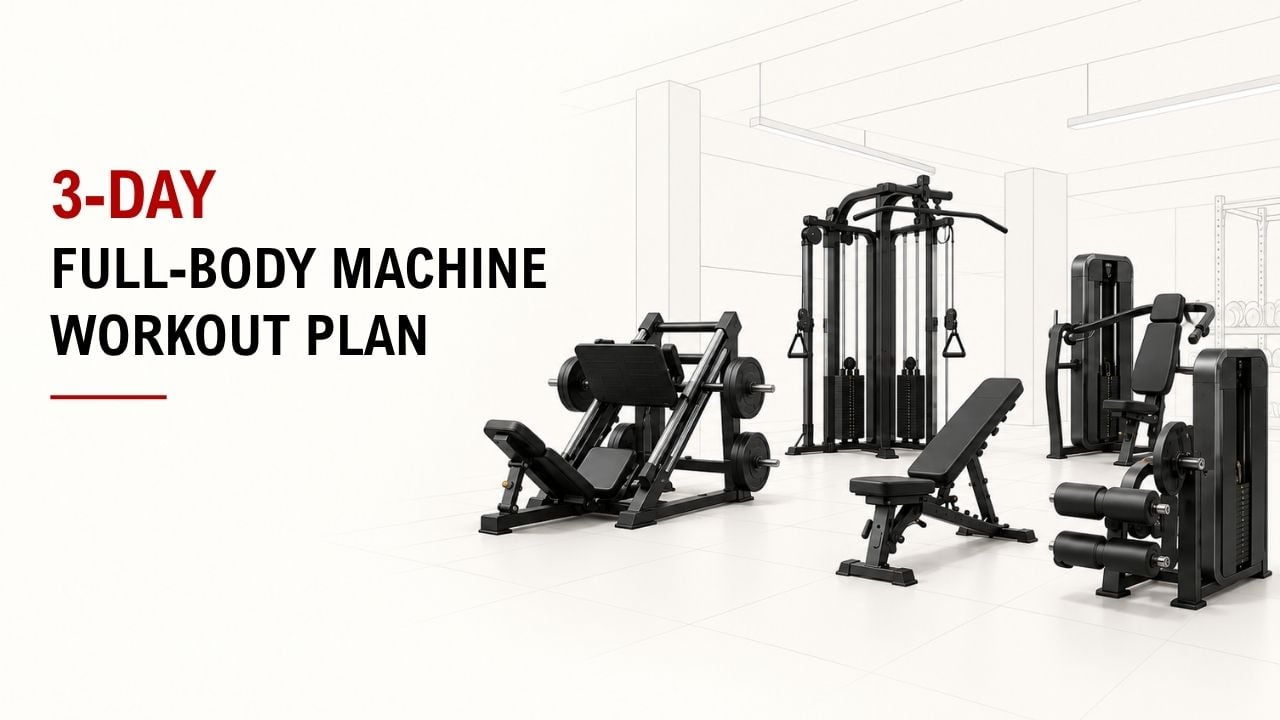

Want a simple three-day workout you can take straight to the gym? A full-body machine plan keeps things easy to follow.
The plan is simple: train three non-consecutive days, use about six machines per workout, and focus on controlled reps. Monday, Wednesday, and Friday work well for most people.
As the founder of YR Fitness and its chief designer, I have spent decades working with strength machines and movement design. In my experience, simple routines are easier to follow and improve over time.
Below, you will find all three workouts, plus simple guidance on weight, rest, and beginner adjustments. Keep scrolling and follow the plan day by day.
1. Day 1 – Full Body A
Start the week with basic movements for your legs, chest, back, shoulders, and core.
Exercise | Sets | Reps |
Leg Press | 3 | 8–12 |
Chest Press | 3 | 8–12 |
Lat Pulldown | 3 | 8–12 |
Seated Leg Curl | 3 | 10–15 |
Shoulder Press | 2–3 | 8–12 |
Ab Crunch Machine | 2–3 | 12–15 |
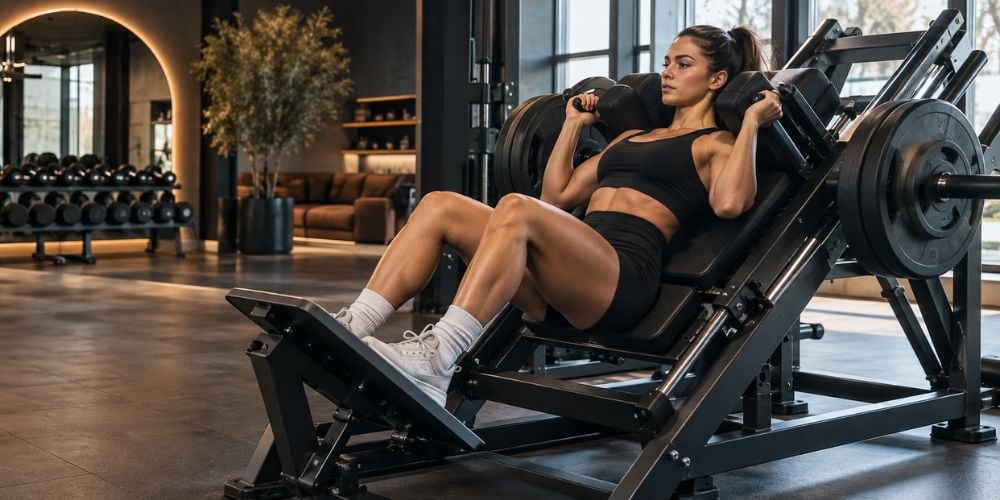
Leg Press
Place your feet around shoulder-width apart and keep your back against the pad. Lower the platform under control, then push through your feet without locking your knees hard at the top.
Not sure about your setup? The American Council on Exercise has a useful seated leg press technique guide covering foot position, back support, and knee movement.
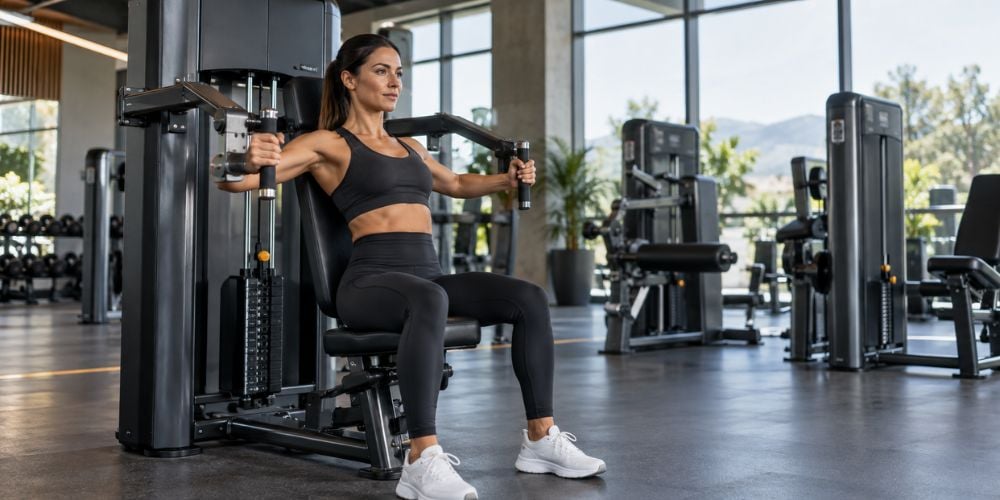
Chest Press
Adjust the seat so the handles are around mid-chest level. Press forward smoothly, then bring the handles back slowly.
ACE also recommends keeping your back supported and avoiding a hard elbow lockout during the seated chest press.
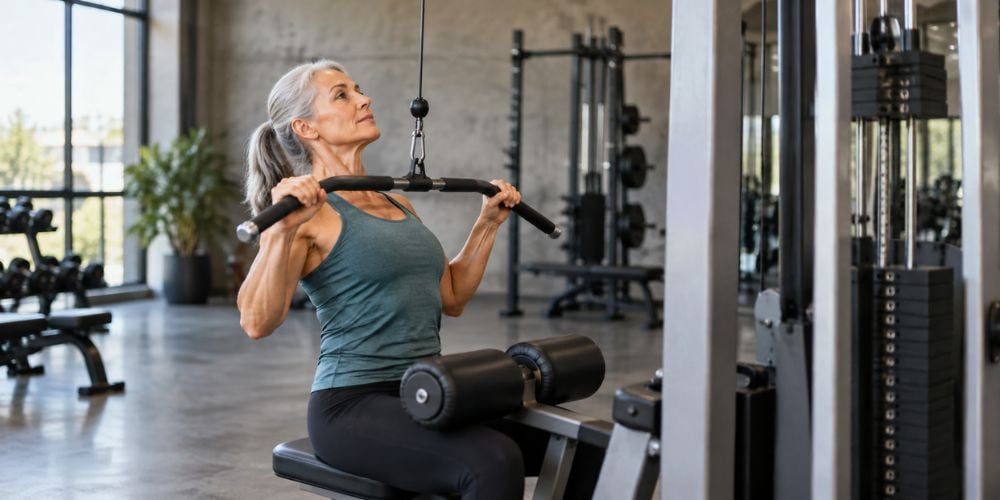
Lat Pulldown
Keep your chest up and pull the bar toward your upper chest. Avoid leaning far backward just to move more weight.
For a closer look at setup and pulling position, see ACE’s seated lat pulldown guide.
Seated Leg Curl
Position the pad comfortably above your heels and keep your hips against the seat. Curl the pad down, squeeze briefly, and return slowly.
Shoulder Press
Start with the handles around shoulder height. Press upward without forcing your lower back away from the pad.
Ab Crunch Machine
Use your abdominal muscles to bring your ribs toward your hips. Avoid pulling the machine with your arms.
First workout? Keep it slightly lighter while you learn each machine setup. Good control matters more than making the weight stack look impressive.
2. Day 2 – Full Body B
Take at least one rest day after Day 1. This workout changes the exercises while still training your whole body.
Exercise | Sets | Reps |
Hack Squat | 3 | 8–12 |
Seated Row | 3 | 8–12 |
Pec Fly | 3 | 10–15 |
Leg Extension | 3 | 10–15 |
Lateral Raise Machine | 2–3 | 10–15 |
Back Extension Machine | 2–3 | 10–15 |
Hack Squat
Keep your shoulders and back against the pads. Lower yourself under control, then push through your feet to return to the starting position.
How deep should you go? You do not need to force maximum depth. Use a comfortable range where you can stay balanced and controlled.
Seated Row
Keep your chest tall and pull the handles toward your lower ribs. Think about moving your elbows backward instead of simply pulling with your hands.
Pec Fly
Keep a slight bend in your elbows. Bring the handles together smoothly, then return until you feel a comfortable stretch across your chest.
Leg Extension
Line your knees up with the machine’s pivot point. Extend your legs smoothly and lower the weight instead of letting the stack drop.
Lateral Raise Machine
Raise your arms until they are around shoulder height. If you need to swing your body, reduce your weight.
Back Extension Machine
Move through a comfortable range and keep the motion controlled. You do not need to lean excessively backward at the top.
3. Day 3 – Full Body C
Day 3 gives you another variation while still covering the major muscle groups.
Exercise | Sets | Reps |
Pendulum Squat or Leg Press | 3 | 8–12 |
Incline Chest Press | 3 | 8–12 |
Chest-Supported Row | 3 | 8–12 |
Lying Leg Curl | 3 | 10–15 |
Biceps Curl Machine | 2–3 | 10–15 |
Triceps Extension Machine | 2–3 | 10–15 |
Pendulum Squat or Leg Press
Choose whichever machine your gym has available. Keep your feet planted, lower under control, and push back up without bouncing out of the bottom.
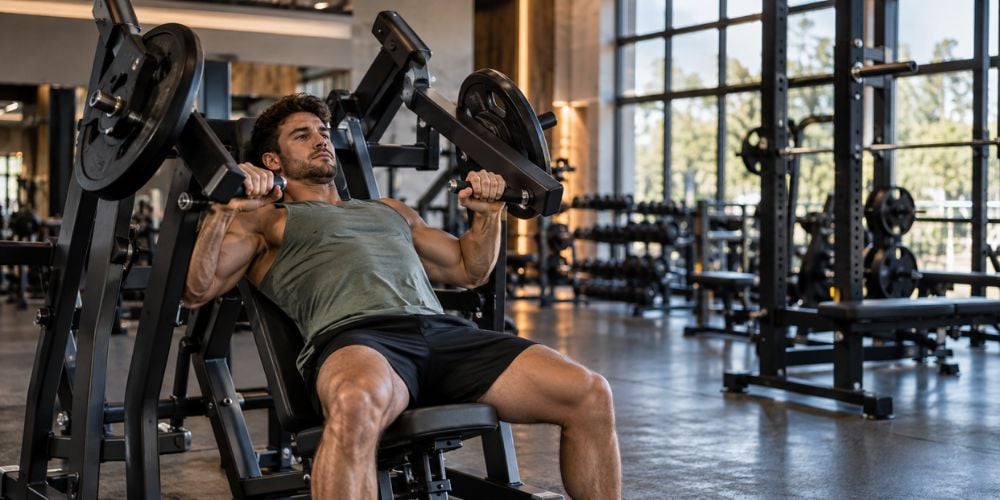
Incline Chest Press
Adjust the seat until the handles sit comfortably around your upper chest. Press smoothly and keep your shoulders against the pad.
Chest-Supported Row
Keep your chest against support throughout the exercise. Pull your elbows backward, squeeze your upper back, then slowly extend your arms again.
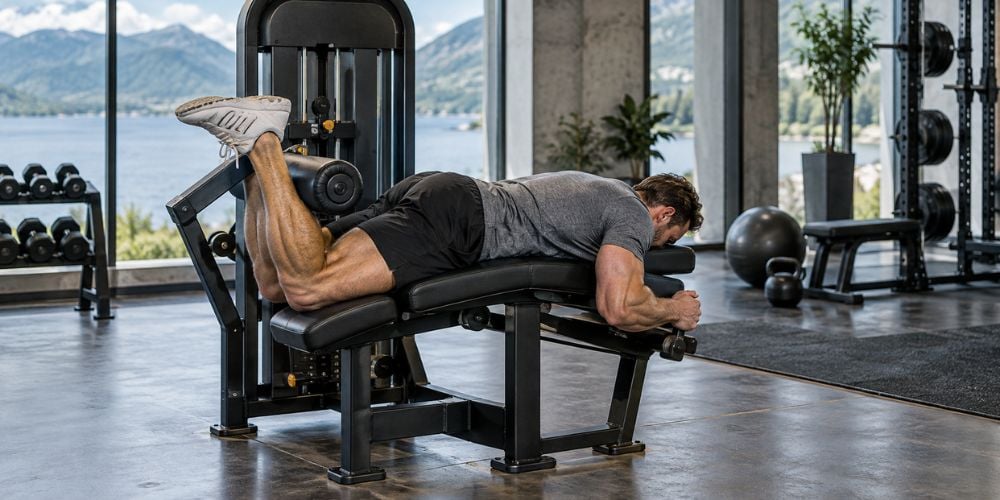
Lying Leg Curl
Position the roller low on your lower legs. Keep your hips down while curling your heels toward your body.
Biceps Curl Machine
Keep your upper arms against the pad if the machine has one. Curl the handles without lifting your shoulders or swinging.
Triceps Extension Machine
Keep your elbows stable. Extend your arms until your triceps contract, then return under control.
If you like training this way and want to see how different commercial machines cover pressing, pulling, leg, and isolation movements, browse our strength equipment at YR Fitness. We design our machines around stable movement paths and practical everyday training.
4. How Heavy Should You Train?
You do not need to test your maximum strength.
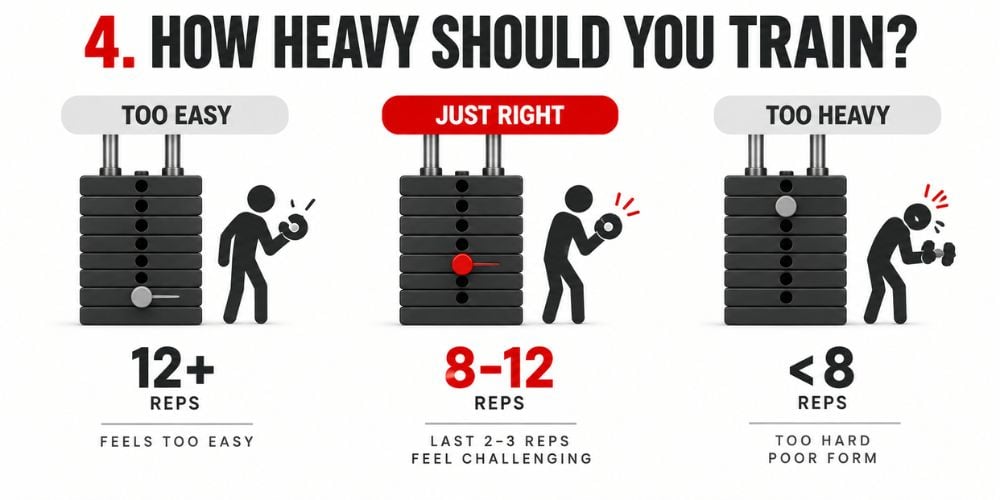
Choose a weight that lets you complete the target reps with good form while making the final 2–3 reps feel challenging.
The CDC suggests 8–12 repetitions per strength exercise as a useful target and notes that two or three sets can provide additional benefit.
So if your target is 8–12 reps:
- Only getting 6 good reps? The weight is probably too heavy.
- Reaching 12 easily? Increase the weight slightly next time.
- Getting 10–12 controlled reps with a challenging finish? Stay there for now.
I prefer thinking about control first and weight second, especially when you are learning a new machine.
Do not increase the load just because someone else is using more weight. Machine designs differ, so the same number on two machines may not feel the same.
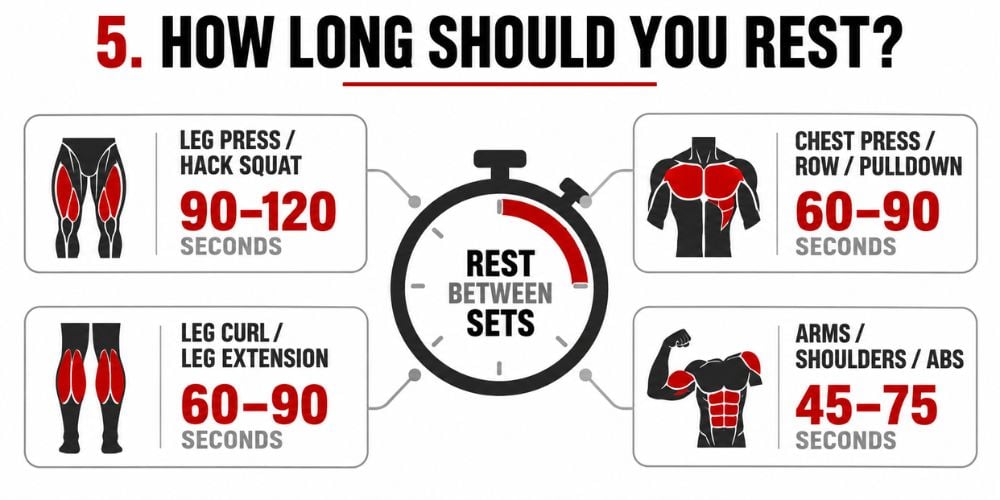
5. How Long Should You Rest?
Keep your rest periods simple.
Exercise Type | Rest Time |
Leg Press, Hack Squat | 90–120 seconds |
Chest Press, Row, Pulldown | 60–90 seconds |
Leg Curl, Leg Extension | 60–90 seconds |
Arms, Shoulders, Abs | 45–75 seconds |
These are practical starting points, not strict rules.
Still breathing hard when the timer ends? Rest a little longer. The goal is to recover enough to perform the next set with good control.
For heavier strength-focused training, longer rest can also make sense. Earlier ACSM resistance-training guidance recommends longer rest periods as loading becomes heavier, while moderate hypertrophy-focused training commonly uses shorter intervals.
6. Can Beginners Follow This Plan?
Yes. Machines can be a convenient way to learn basic pushing, pulling, and leg movements because they give you a stable setup.
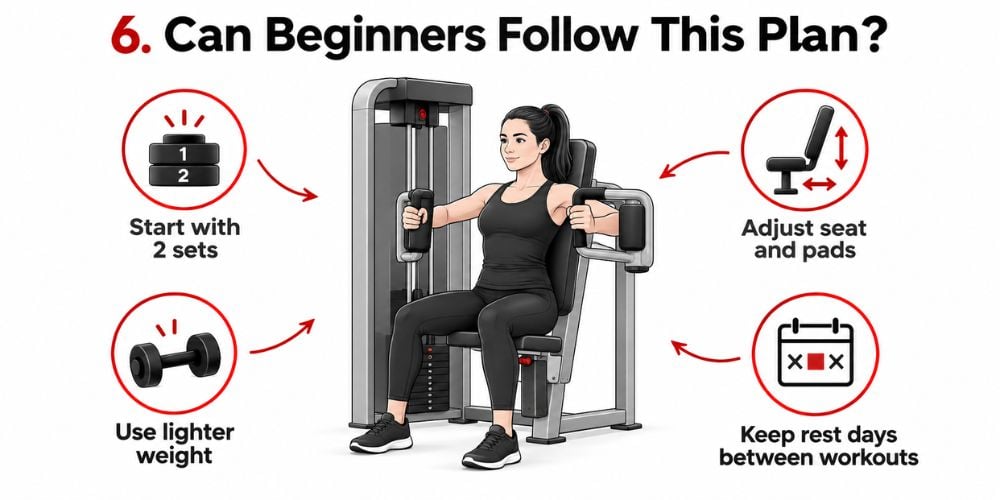
If you are new to training, make the plan easier:
- Start with 2 sets per exercise instead of 3.
- Use lighter weights during your first few workouts.
- Learn how to adjust the seat, pads, and handles.
- Move slowly instead of rushing your reps.
- Keep at least one rest day between workouts.
- Stop exercising if you feel sharp or unusual pain.
Do machines still count as proper strength training? Yes.
I often see beginners try to do too much too soon. I would rather see you perform five exercises comfortably than rush through ten machines with poor positioning.
If you have a chronic health condition or are unsure what level of exercise is appropriate for you, the CDC recommends discussing suitable activity with a health professional.
Conclusion
A three-day full-body machine plan does not need to be complicated. Train three non-consecutive days, cover your major muscle groups, control every rep, and increase the weight gradually as you get stronger.
Consistency matters more than constantly changing exercises. Follow the plan for several weeks and focus on small improvements.
If you want to explore reliable commercial machines for leg training, pressing, pulling, and isolation work, at YR Fitness we can help you see how a complete machine-based strength setup comes together.
Related articles: