




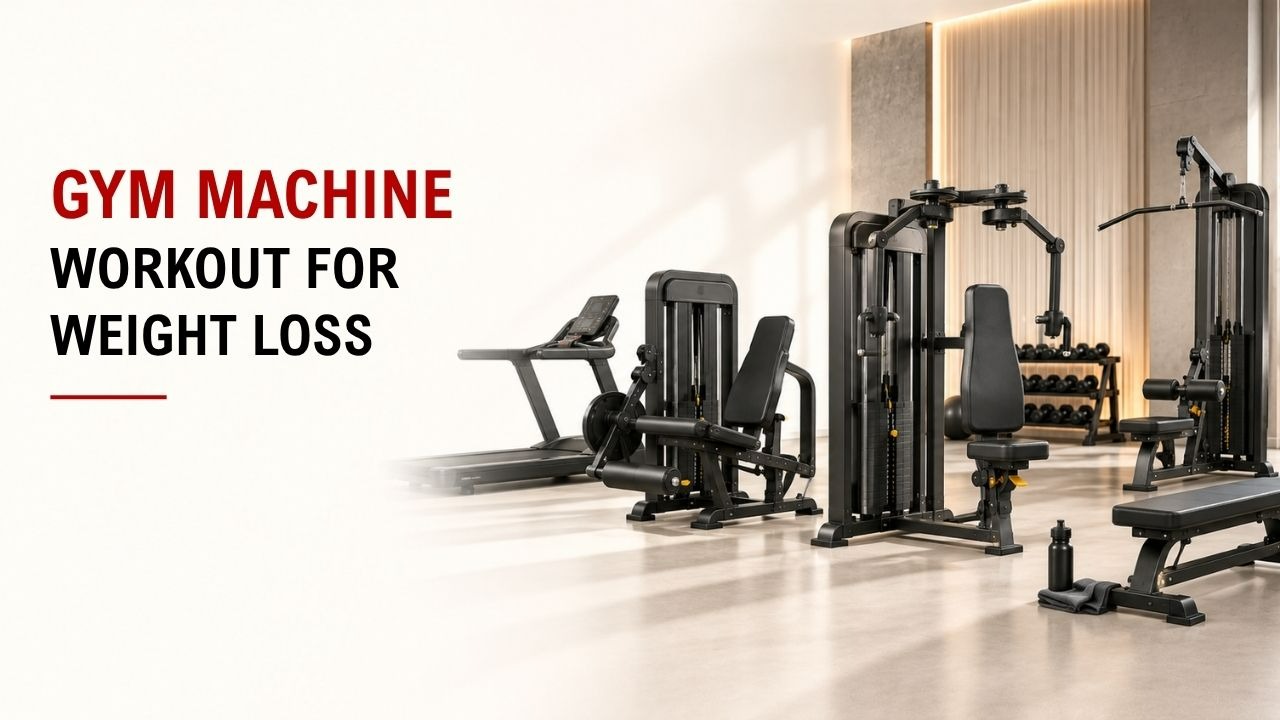

Want a simple gym machine workout for weight loss? You do not need a complicated routine to get started.
The plan is simple: warm up, do six strength-machine exercises, then finish with 15–30 minutes of cardio. Use a manageable weight and focus on controlled reps.
As the founder and chief designer of YR Fitness, I have spent decades working with strength and cardio equipment. In my experience, simple workouts are often easier to follow consistently.
Below is the full workout from warm-up to final cardio. Keep scrolling and take it straight to the gym.
- 1. Start With a 5–10 Minute Cardio Warm-Up
- 2. Leg Press — 3 Sets of 10–15 Reps
- 3. Chest Press — 3 Sets of 10–15 Reps
- 4. Seated Row — 3 Sets of 10–15 Reps
- 5. Leg Curl — 2–3 Sets of 10–15 Reps
- 6. Lat Pulldown — 3 Sets of 10–15 Reps
- 7. Shoulder Press — 2–3 Sets of 10–15 Reps
- 8. Finish With 15–30 Minutes of Cardio
- Conclusion
1. Start With a 5–10 Minute Cardio Warm-Up
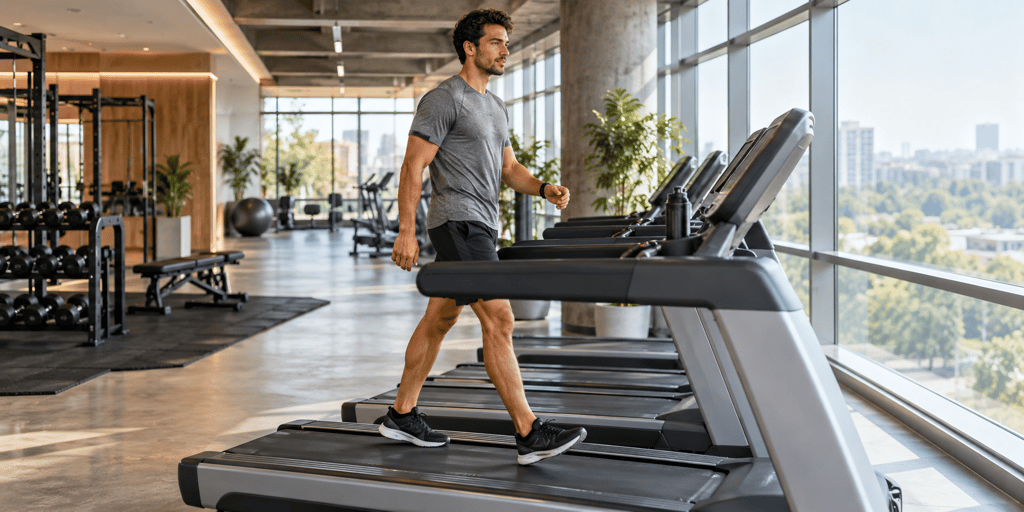
Start with 5–10 minutes of easy cardio. The American Heart Association recommends warming up for 5–10 minutes before exercise, using a slower version of the activity you plan to do.
Choose one:
- Treadmill
- Exercise bike
- Elliptical
- Rowing machine
- Stair climber
Keep the intensity light to moderate. You should feel warmer and slightly out of breath, but still have plenty of energy.
A brisk treadmill walk is an easy option. Gradually increase the speed or incline during the final few minutes.
Warm-up target: 5–10 minutes.
Do not turn the warm-up into your main cardio session. Save the harder work for the end.
2. Leg Press — 3 Sets of 10–15 Reps
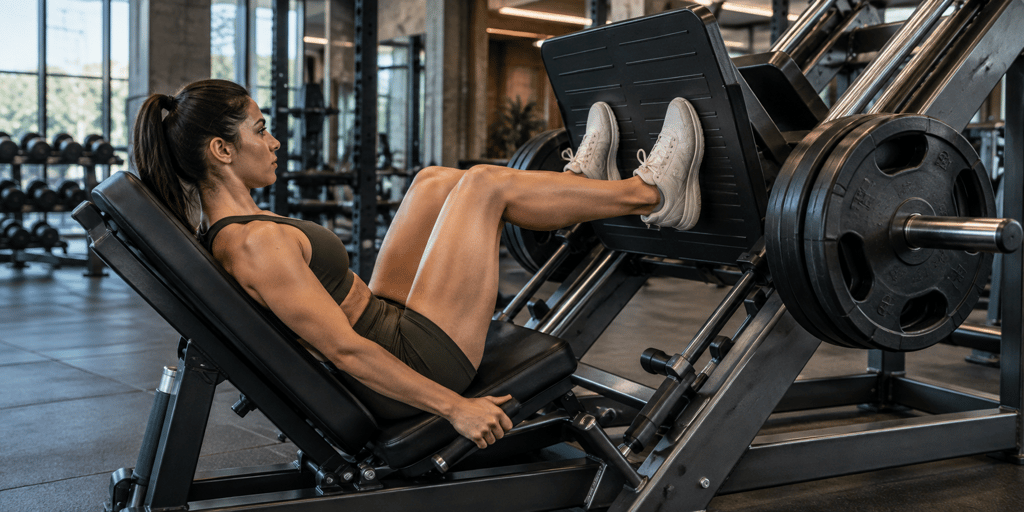
Start your strength workout with the leg press.
It trains several large lower-body muscles:
- Quadriceps
- Glutes
- Hamstrings
Sit with your back firmly against the pad and place both feet flat on the platform. Lower the weight slowly, then press it away without completely locking your knees.
Target | Recommendation |
Sets | 3 |
Reps | 10–15 |
Rest | 60–90 seconds |
Main muscles | Quadriceps, glutes, hamstrings |
Choose a weight that makes the final few reps challenging without shortening your movement or losing control.
3. Chest Press — 3 Sets of 10–15 Reps
Next, move to the chest press.
It mainly works yours:
- Chest
- Shoulders
- Triceps
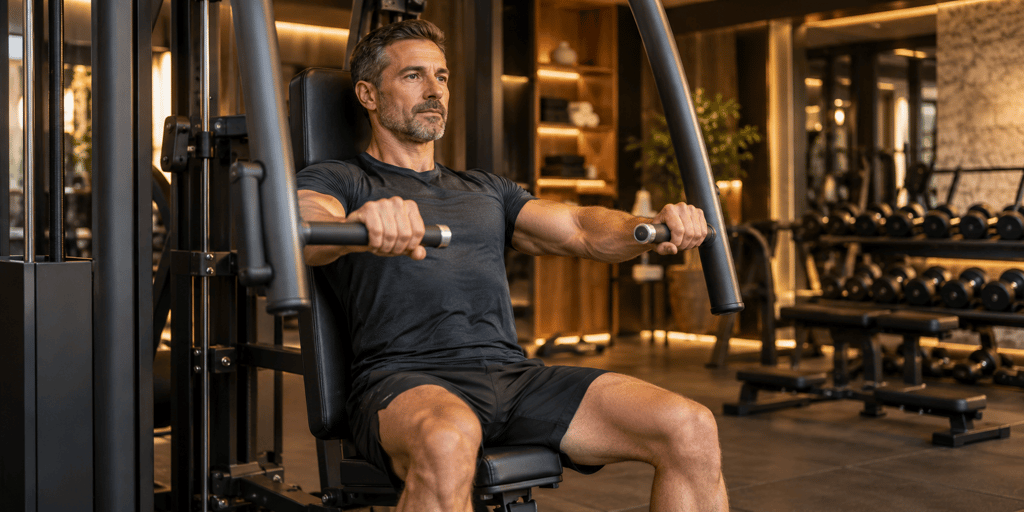
Adjust the seat so the handles sit around chest level. Keep your back against the pad and your feet firmly on the floor.
Press forward, then return slowly. Do not let the weight stack slam down between reps.
Workout: 3 sets of 10–15 reps
Rest: 60–90 seconds
New to strength training? The chest press can be easier to learn than a free-weight press because the machine guides the movement. You can focus on pressing instead of balancing a barbell or dumbbells.
4. Seated Row — 3 Sets of 10–15 Reps
After pressing, balance the workout with a pulling exercise.
The seated row trains your back while also involving your arms.
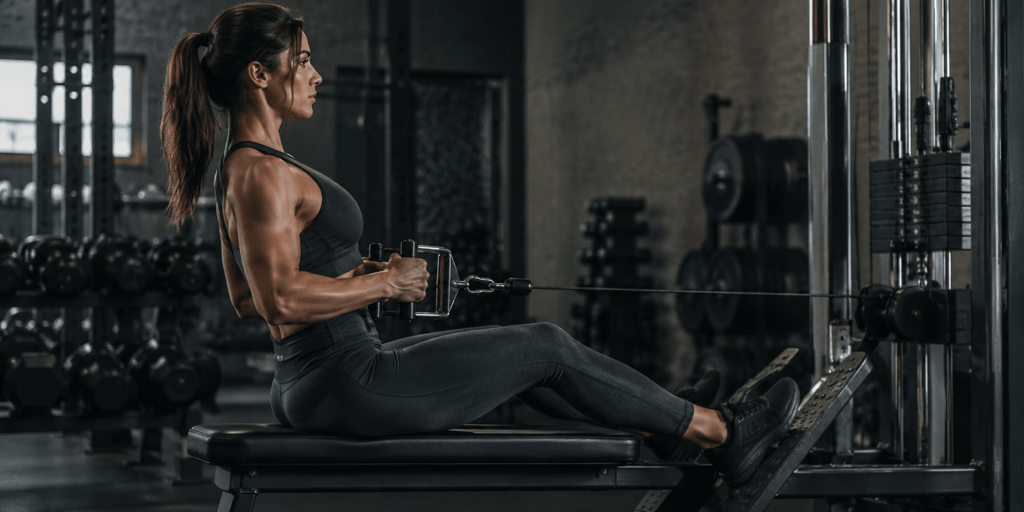
Sit tall and keep your chest up. Pull the handles toward your body until your elbows move slightly behind you, then return slowly.
Workout: 3 sets of 10–15 reps
Rest: 60–90 seconds
Avoid leaning far backward just to gain more weight. If you need to swing through every rep, reduce the load.
I often tell gym users to think about pulling with their elbows rather than only their hands. That simple cue can make it easier to feel the back muscles working.
Want to see how commercial strength machines are designed around movements like presses, rows, and leg exercises? At YR Fitness, we build complete strength and cardio ranges with practical adjustments and movement paths designed for regular training. Browse our equipment to compare the machine types used throughout this workout.
5. Leg Curl — 2–3 Sets of 10–15 Reps
Now return to your lower body with the leg curl.
This exercise mainly works the hamstrings at the back of your thighs.
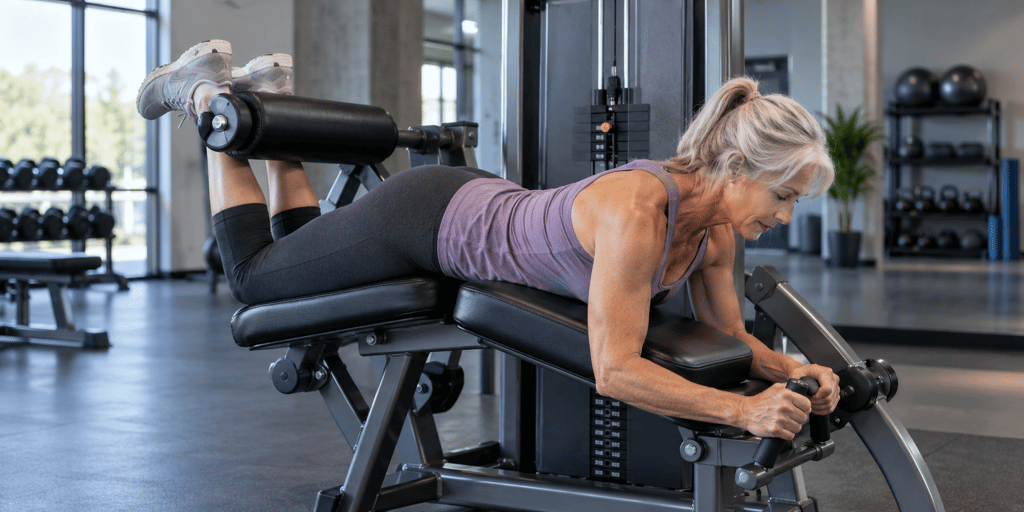
Adjust the machine so your knee lines up comfortably with the machine’s pivot point. Curl the pad toward you, pause briefly, and return under control.
Workout: 2–3 sets of 10–15 reps
Rest: 60 seconds
Keep your hips and upper body stable. You do not need a very heavy load if you can control each rep properly.
6. Lat Pulldown — 3 Sets of 10–15 Reps
The lat pulldown gives you another upper-body pulling movement.
It mainly trains your back, while your biceps also help.
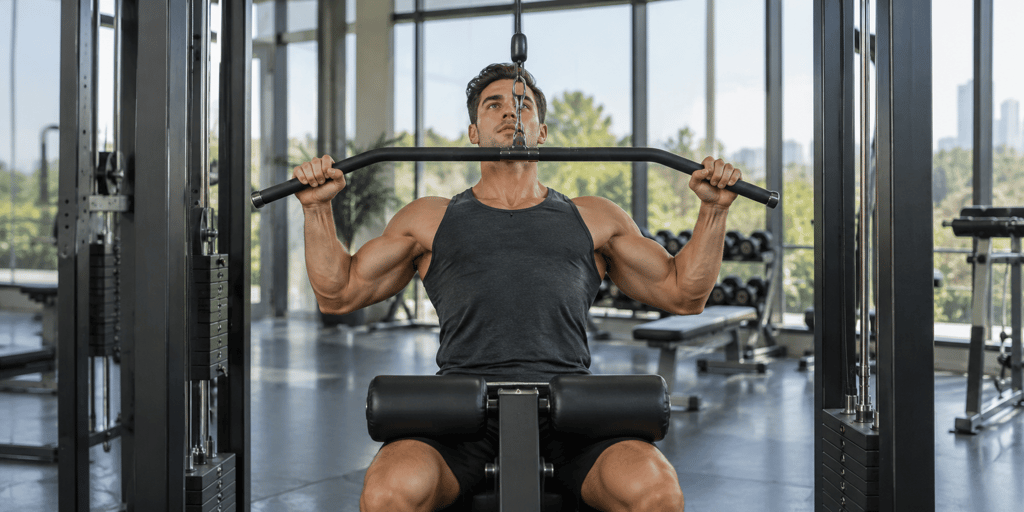
Sit down and secure your thighs beneath the pads. Pull the bar toward your upper chest, then let it rise slowly until your arms are extended again.
Workout: 3 sets of 10–15 reps
Rest: 60–90 seconds
Keep your torso fairly stable. Avoid turning every rep into a large backward swing.
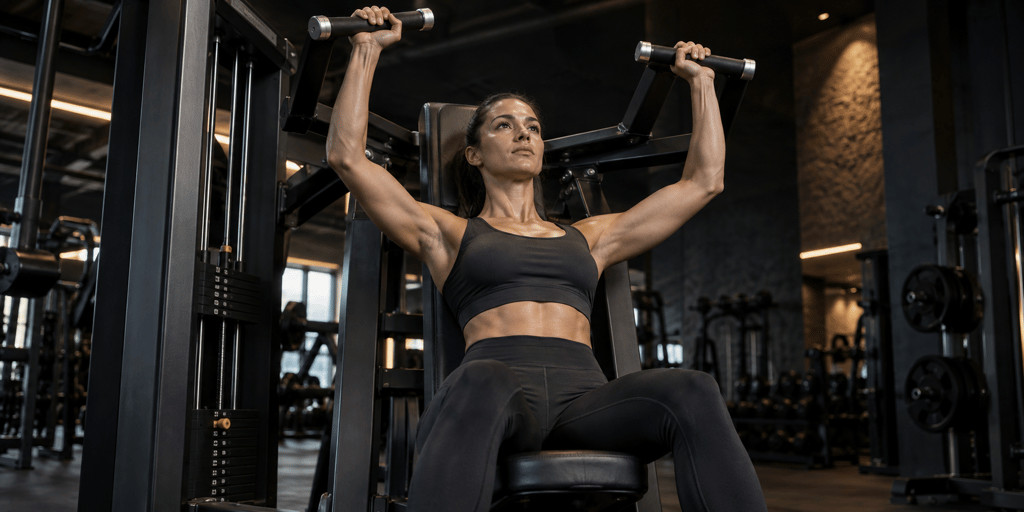
7. Shoulder Press — 2–3 Sets of 10–15 Reps
Finish the strength portion with the shoulder press.
Adjust the seat so the handles begin around shoulder height. Keep your back supported and press upward under control.
Lower the handles slowly until you return to the starting position.
Workout: 2–3 sets of 10–15 reps
Rest: 60–90 seconds
Should you use the same weight as your chest press? Not necessarily.
You may need less weight on the shoulder press. Choose resistance based on how well you can control the movement, not how heavy the number looks.
8. Finish With 15–30 Minutes of Cardio
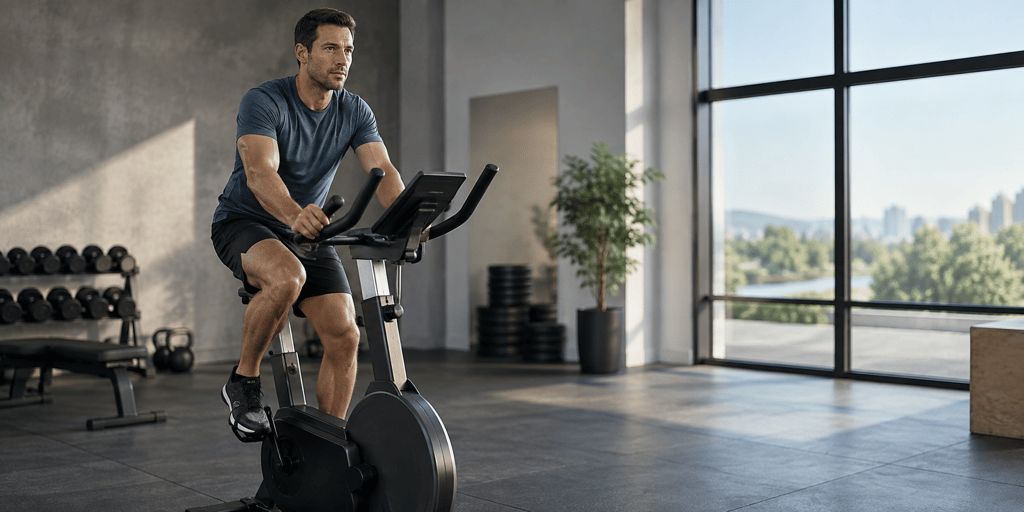
Finish your session with cardio.
Choose a machine you are comfortable using consistently:
- Treadmill
- Exercise bike
- Elliptical
- Stair climber
- Rowing machine
For a simple workout, maintain a moderate pace for 15–30 minutes.
Prefer intervals? Walk quickly for two minutes, slow down for one minute, and repeat.
You do not need to make every workout extremely intense. The CDC recommends at least 150 minutes of moderate-intensity aerobic activity each week, along with muscle-strengthening exercise on at least two days. You can spread that activity across the week rather than trying to do everything in one session.
Conclusion
A gym machine workout for weight loss does not need to be complicated. Train your major muscle groups, keep your reps controlled, finish with cardio, and repeat the routine consistently.
If you want strength and cardio machines that support straightforward workouts like this, at YR Fitness, we can provide equipment for everything. Explore the range and find the machines that fit the kind of training experience you want to create.
Related articles: