








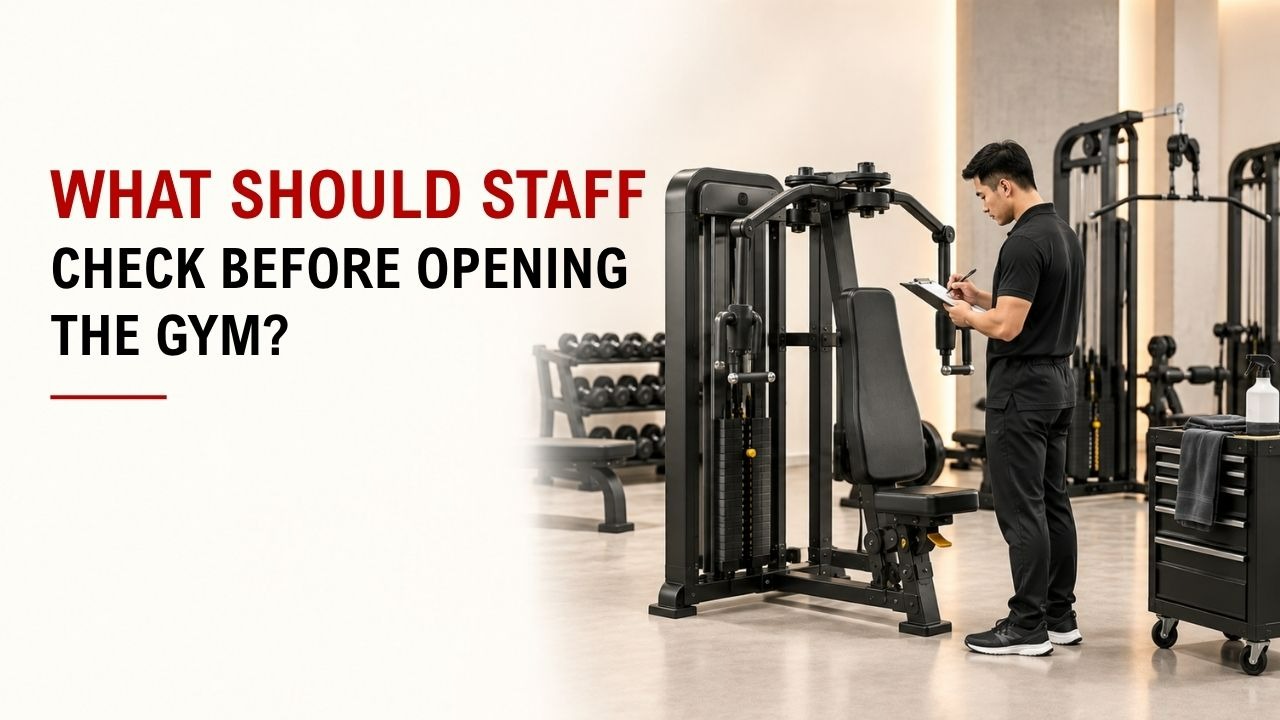

Have you ever noticed a wet floor, misplaced weight, or faulty machine before a workout? These small issues are easier to fix before the gym gets busy.
Staff should quickly check the entrance, training areas, equipment, cleanliness, and emergency items before opening. A short walkthrough can help catch problems early.
As the founder of YR Fitness, I have spent decades working with commercial gym equipment and fitness facilities. I have seen how simple daily checks can help keep training areas safer and better organized.
1. Check the Entrance and Reception Area
Start where everyone enters.
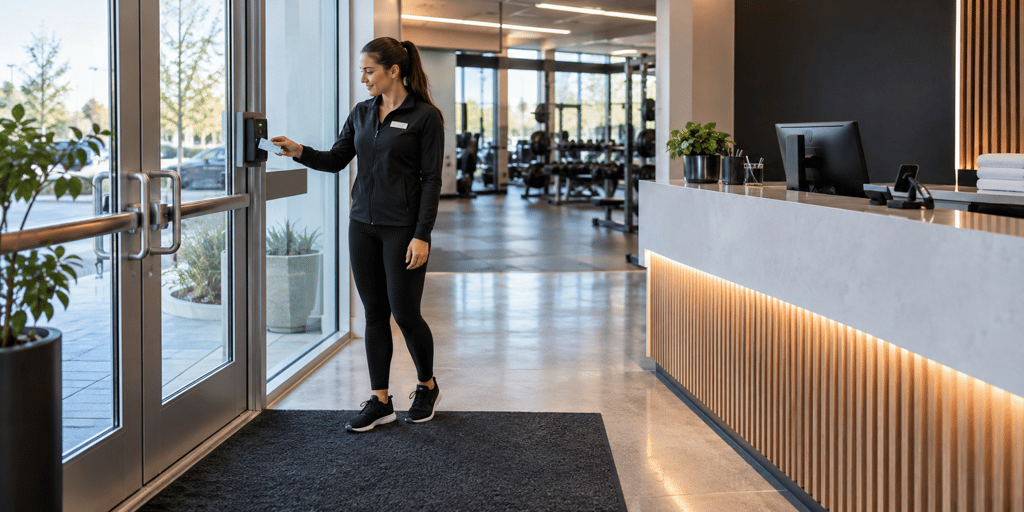
Staff should confirm that entrance doors open and close properly. If the gym uses key cards, QR codes, turnstiles, or another access system, test it before opening.
At reception, check:
- Membership scanners
- Computers and payment systems
- Phones
- Front desk lighting
- Doors and locks
- Entrance mats
- Signs and notices
Also look at the floor around the entrance. Bags, boxes, deliveries, and cleaning equipment should stay out of the main walkway.
Why start here? Because a blocked entrance or failed access system becomes a problem as soon as the first person arrives.
2. Walk Through the Gym for Safety Hazards
Next, walk through the entire training area before anyone starts exercising.
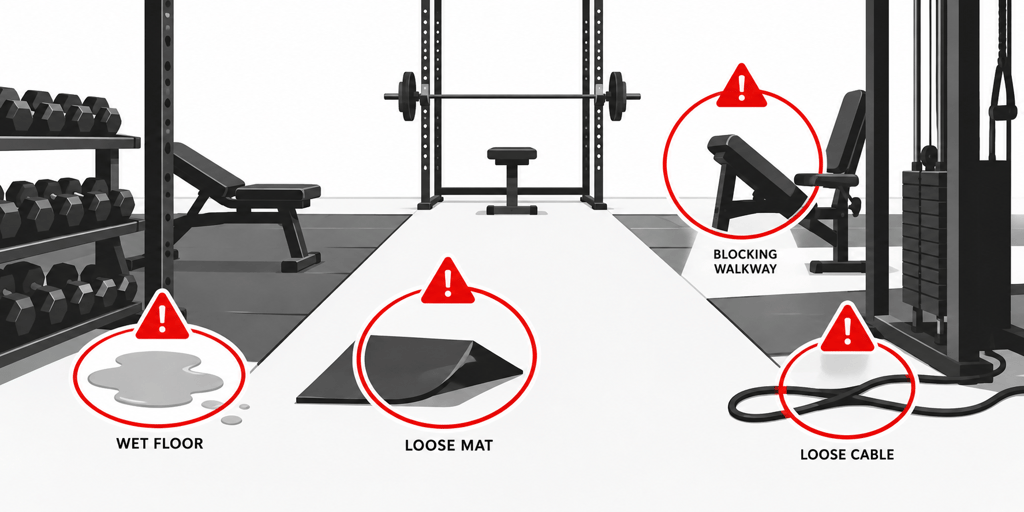
I recommend looking at the space like a member would. A curled mat, loose cable, wet patch, or bench sticking into a walkway can be easy to miss once the room fills up.
Look for:
- Wet or slippery floors
- Loose floor mats
- Damaged flooring
- Equipment blocking walkways
- Loose cables
- Broken mirrors
For U.S. workplaces, OSHA’s walking-working surface requirements call for walking surfaces to be kept clean, orderly, and as dry as feasible, with hazards corrected or guarded before use.
Here is a simple way to handle what you find:
What You Find | What to Check | What Staff Should Do |
Wet floor | Source of water and size of affected area | Clean and dry it before opening |
Loose mat | Corners, grip, and movement | Flatten, secure, or remove it |
Damaged flooring | Cracks, raised edges, loose sections | Block the area until repaired |
Blocked walkway | Benches, weights, boxes, accessories | Move the obstruction |
Unstable bench | Feet, frame, pads, connections | Remove it from use |
Poor lighting | Training areas, stairs, exits | Report or replace faulty lighting |
Can it wait until later? If it could cause someone to slip, trip, fall, or lose balance, it should be handled before opening.
3. Check All Gym Equipment
Now move to the equipment.
This does not need to be a full maintenance inspection every morning. The purpose is to spot obvious wear, damage, or operating problems before somebody uses the machine.
The ACSM Health/Fitness Facility Standards and Guidelines include facility equipment, emergency planning, operating procedures, and preventive maintenance among their main areas of guidance.
Cardio Equipment
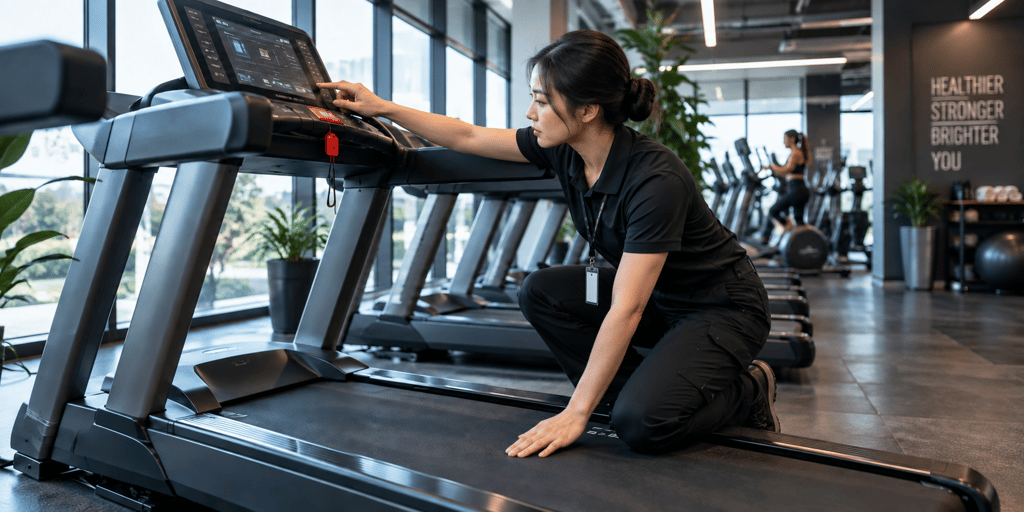
Turn on treadmills, exercise bikes, ellipticals, rowing machines, and other powered cardio equipment.
Check:
- Displays
- Buttons
- Emergency stop functions
- Belts
- Pedals
- Handles
Listen to unusual sounds and watch for unusual movement.
A treadmill belt that slips or a bike pedal that feels loose should not stay available just because the machine still turns on. Take it out of service until it can be checked properly.
Strength Machines
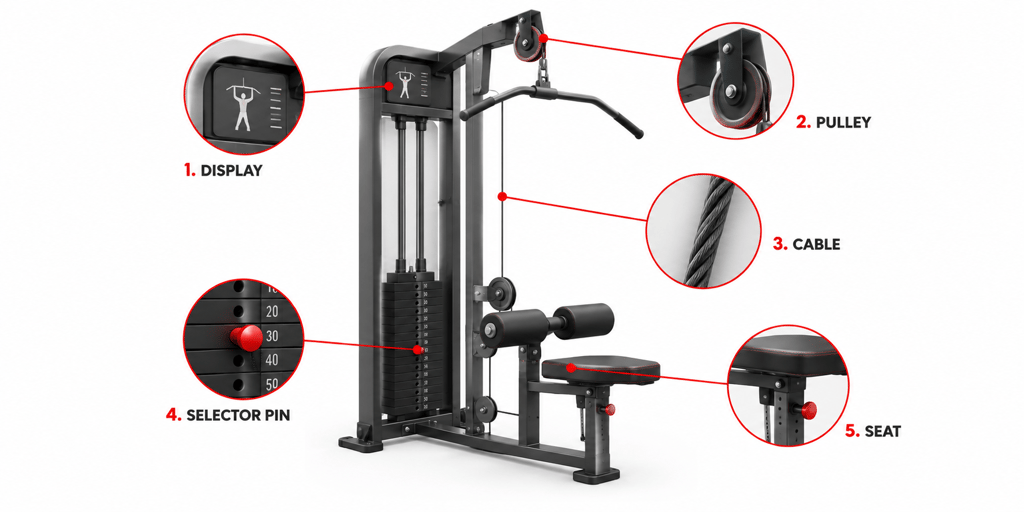
Check selectorized and plate-loaded machines.
Pay attention to:
- Cables
- Pulleys
- Weight stacks
- Selector pins
- Seats
- Back pads
Moving parts should operate smoothly. Adjustment points should also lock properly.
In a busy gym, equipment can go through thousands of repetitions over time. Small signs of wear are easier to deal with before they become bigger service problems.
Free Weights
Free-weight areas deserve the same attention.
Inspect:
- Dumbbells
- Barbells
- Weight plates
- Benches
- Storage racks
- Collars
Look for loose dumbbell heads, damaged grips, bent bars, unstable benches, or cracked equipment. Return weights to their correct racks before opening.
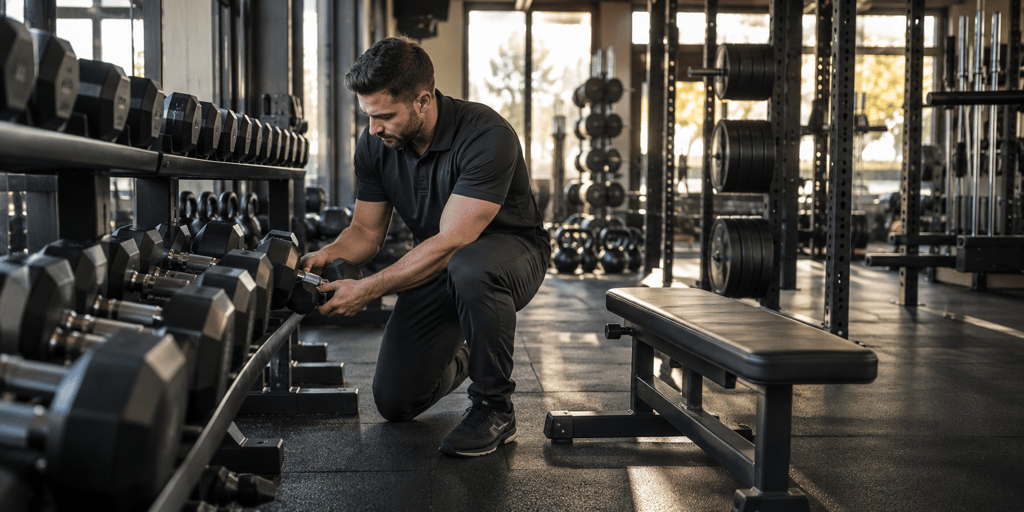
Quick Equipment Check Table
Equipment Type | Quick Morning Check | Take It Out of Service If |
Treadmill | Belt, display, buttons, emergency stop | Belt slips, controls fail, or movement feels abnormal |
Exercise bike | Pedals, seat, handles, display | Pedal or seat feels loose |
Cable machine | Cable, pulley, pin, weight stack | Cable is damaged or movement is irregular |
Plate-loaded machine | Frame, handles, pads, adjustment points | A connection is loose or unstable |
Bench | Frame, feet, pad, adjustment lock | Bench rocks or fails to lock |
Dumbbells/barbells | Heads, grips, bars, collars | Parts are loose, cracked, or bent |
What if the machine looks fine but sounds wrong? Treat unusual noise as something worth checking rather than hoping it disappears.
At YR Fitness, we design commercial equipment for repeated daily training, but we still believe routine inspection should be part of every gym’s operating process. If worn equipment is becoming a regular issue, you can review our commercial strength equipment options and compare replacements that fit your training areas and expected usage.
4. Check Equipment Placement and Training Areas
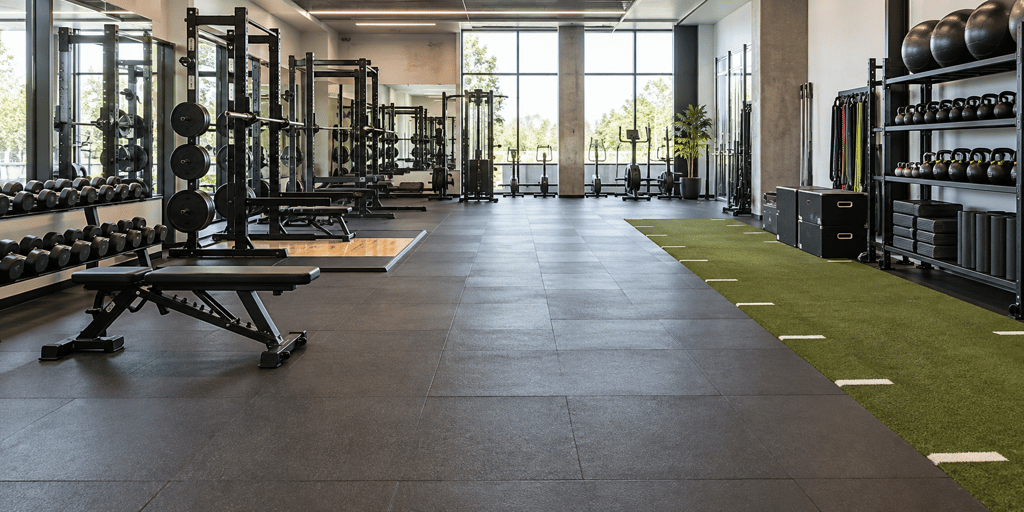
A machine can work perfectly and still create a problem if it is in the wrong place.
Make sure equipment has enough space around it for normal movement. Portable benches, plyometric boxes, mats, resistance bands, kettlebells, and other accessories should be returned to their proper locations.
Pay extra attention to:
- Functional training areas
- Free-weight areas
- Stretching zones
- Group exercise rooms
- Cable machine areas
- Walkways between machines
People need room to enter, exit, load weights, and perform exercises without getting in someone else’s way.
The Health & Fitness Association’s facility layout guidance recommends securing fitness equipment, following manufacturer spacing recommendations, and providing defined storage areas for loose equipment.
I often see a training floor become crowded simply because portable items were never returned after the previous session. Five minutes of reorganizing can make the whole space easier to use.
5. Inspect Cleaning and Hygiene Conditions
Nobody wants to start a workout on a dirty bench or machine.
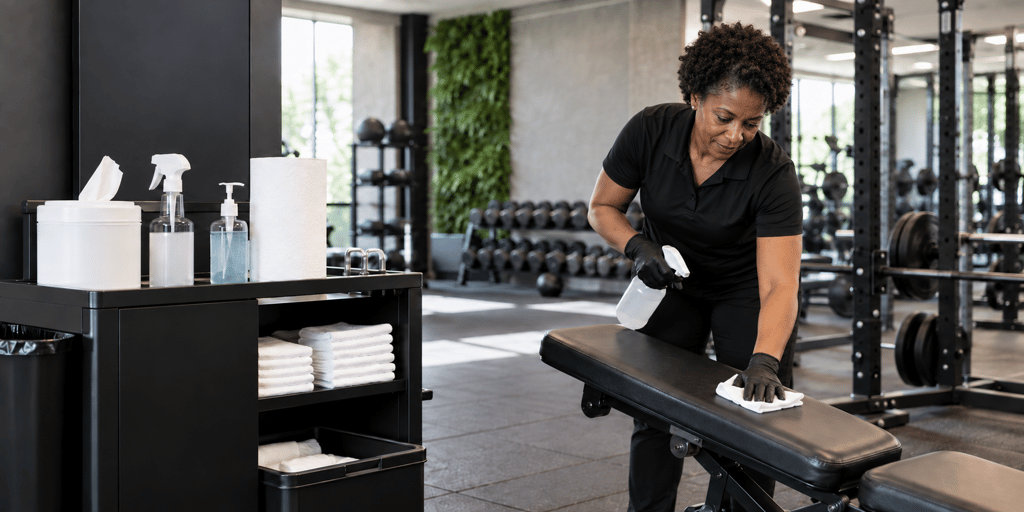
Before opening, inspect high-touch surfaces throughout the facility.
Focus on:
- Machine handles
- Benches
- Cardio equipment
- Mats
- Dumbbells
- Cable attachments
- Door handles
- Water stations
Empty trash bins and refill cleaning stations where needed. Check that disinfectant bottles, wipes, paper towels, soap, and hand sanitizer are available.
The CDC’s facility cleaning guidance specifically includes gyms among community settings and recommends regular cleaning of high-touch surfaces.
For shared athletic equipment, the CDC also recommends cleaning equipment according to manufacturer instructions so the cleaning product does not damage the surface.
Locker rooms and toilets need a quick check too. Look at:
- Sinks
- Toilets
- Showers
- Floors
- Drains
- Changing areas
Does everything need deep cleaning before opening? No. The goal of the opening check is to catch visible dirt, missing supplies, spills, and anything left unfinished from the previous day.
I often find that cleanliness problems are easiest to notice early in the morning. If an area already looks poor before opening, it will be much more noticeable after a busy period.
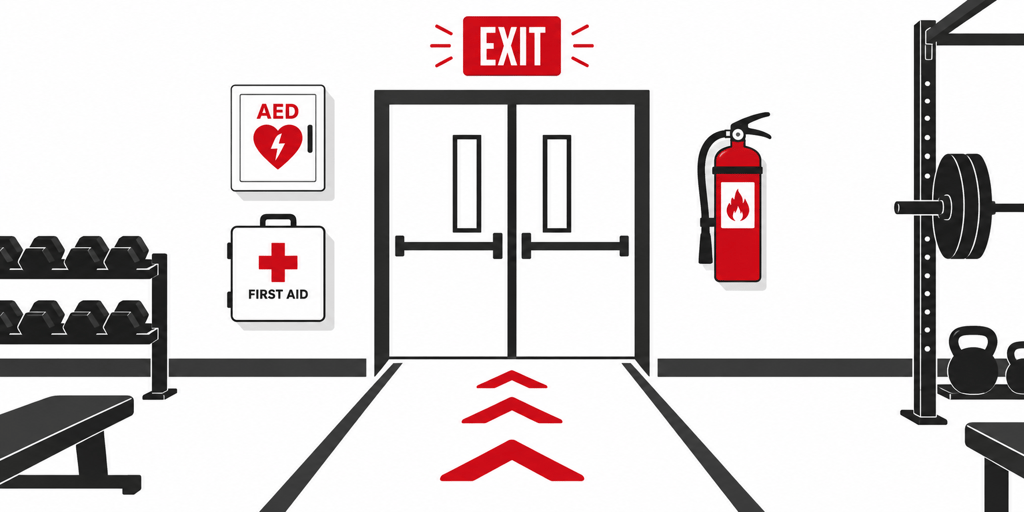
6. Check Safety and Emergency Equipment
Finish with emergency equipment and exit routes.
Staff should confirm that:
- Emergency exits are clear
- Exit signs are visible
- Fire extinguishers are accessible
- First-aid supplies are available
- The AED is accessible
- Emergency stop functions are working where applicable
- Emergency contact information is easy for staff to find
Do not put machines, boxes, cleaning carts, or storage items in front of emergency equipment.
For U.S. facilities, OSHA’s exit-route rules state that exit routes must remain free and unobstructed. OSHA also provides requirements for workplace emergency action plans, including emergency reporting and evacuation procedures where the standard applies.
The American Heart Association also supports placing AEDs in locations such as gyms and sports facilities and recommends that people responsible for using them receive CPR and AED training.
Local requirements can differ, so staff should also follow the rules and emergency procedures that apply to their facility.
Conclusion
A good opening check helps staff catch safety, cleanliness, and equipment issues before members start training. Keeping this routine simple and consistent can make the gym safer and easier to manage each day.
If you want to replace worn machines or improve your equipment setup, YR Fitness can help. We provide commercial strength equipment, cardio machines, and fitness accessories built for regular gym use and different facility needs.
You can explore YR Fitness commercial gym equipment to find options that fit your training space and long-term plans.
Related articles:



