








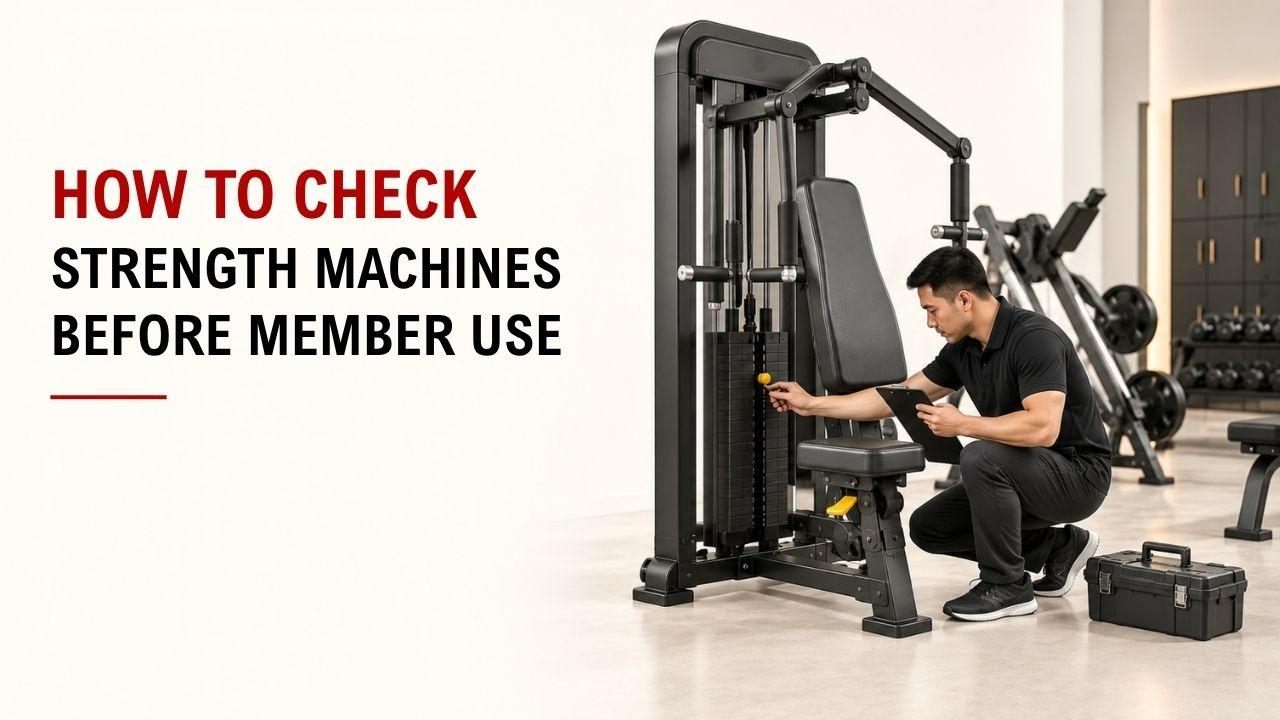

Have you ever sat down at a strength machine and noticed a loose handle, worn cable, or strange sound? Those small signs are worth checking before you start your set.
The quick answer is simple: look over the machine, check the moving parts and adjustments, then test it with light resistance. If anything feels loose, damaged, or unusual, stop using it and tell gym staff.
As the Founder and Chief Designer of YR Fitness, I have spent decades designing and working with commercial strength equipment. In my experience, equipment problems often show small warning signs before they become more serious.
Below are eight quick checks you can make before using a strength machine. Run through them before your next workout and you will know what deserves a closer look.
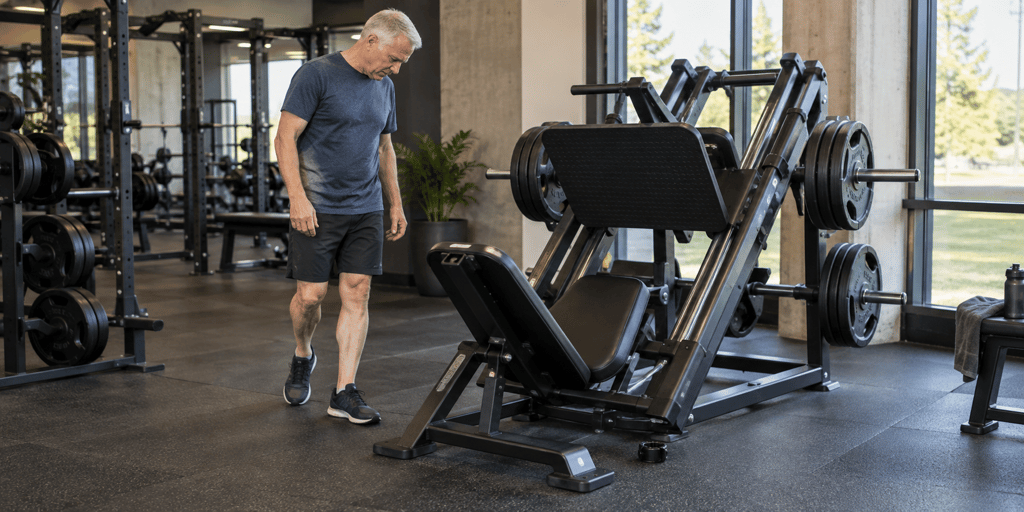
1. Walk Around the Machine First
Start with a quick visual check. You can often spot a problem before touching the machine.
Look for:
- Loose parts around the machine
- Broken or missing covers
- Bent components
- Damage around the base
- Objects blocking the movement path
- Signs the machine has shifted out of position
The machine should sit firmly on the floor. Precor’s equipment safety guidance also recommends checking equipment before use and making sure it is stable on a solid, level surface.
Does it rock when you touch it? If so, choose another machine and report it.
2. Check the Frame and Fasteners
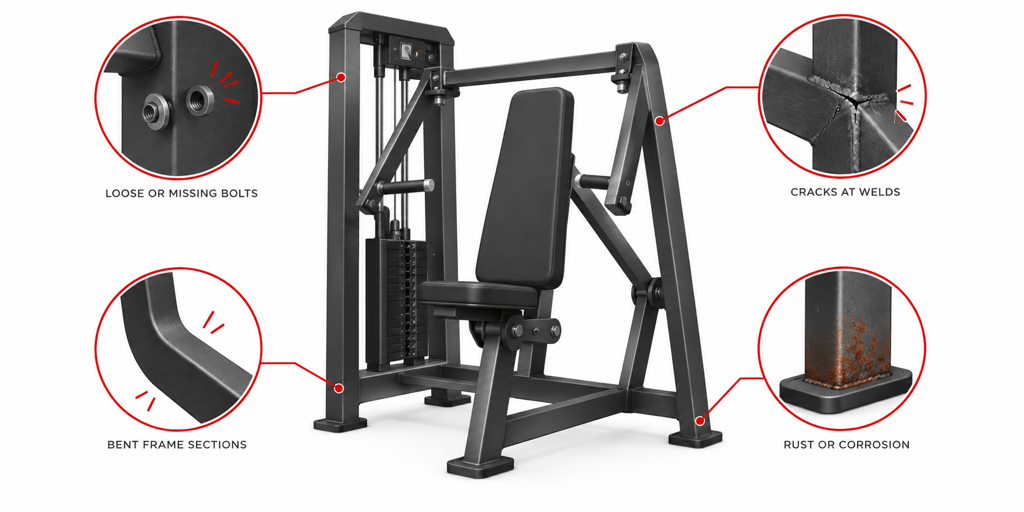
Look at the main frame and its connection points.
Check for:
- Loose or missing bolts
- Cracks around welded joints
- Bent frame sections
- Rust or heavy corrosion
- Unusual gaps between connected parts
I often pay extra attention to places where moving parts connect to the frame. These areas handle repeated loads every time someone trains.
You do not need tools or technical knowledge here. If a bolt is visibly loose or the frame moves where it should not, stop using the machine.
3. Inspect Cables, Belts, and Pulleys
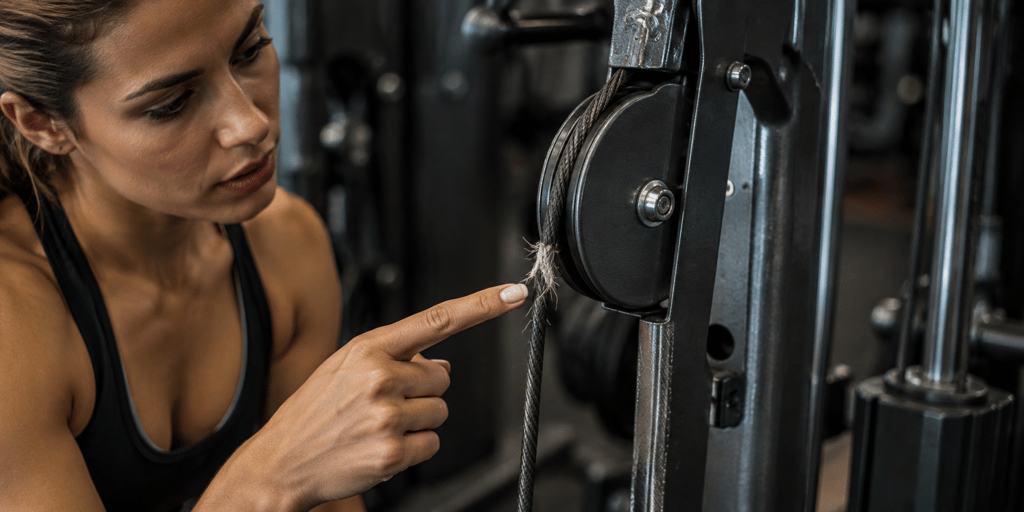
Cable machines deserve a quick look before you select your weight.
Watch for:
- Frayed cable strands
- Cracked cable coatings
- Flattened or pinched sections
- Loose or damaged belts
- Damaged pulleys
- Cables that have slipped out of position
Life Fitness recommends inspecting strength-machine cables daily, especially around bends and attachment points, and replacing them at the first sign of wear.
For you as a gym user, the rule is easier: see fraying or exposed wire? Do not use the machine.
The cable should also sit correctly in the pulley. If it rubs against the frame or looks out of line, report it.
4. Check the Weight Stack and Selector Pin
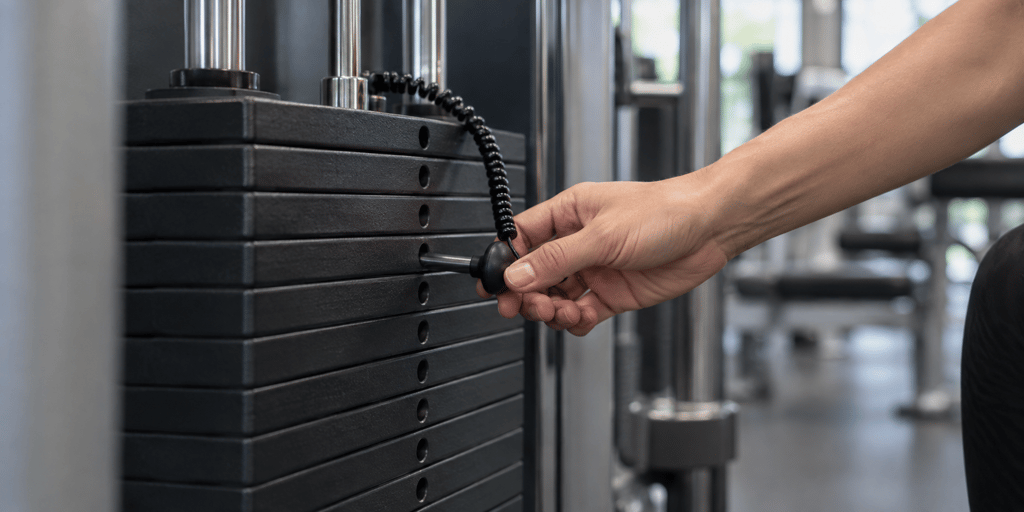
Take a few seconds to look at the weight stack.
Check that:
- The selector pin slides in fully
- The pin stays securely in place
- The plates sit evenly
- No plates are cracked or damaged
- The guide rods look straight
When you begin moving the machine, only the selected plates should rise. The movement should be smooth rather than catching or pulling extra plates.
What if the pin only goes halfway in? Do not start the exercise until it is fully seated.
A strength machine should feel simple to adjust before you even begin your first rep. At YR Fitness, we design commercial strength equipment around practical adjustments, stable construction, and reliable daily operation so users can spend less time fighting the setup and more time training.
5. Test Seats, Pads, and Adjustment Points
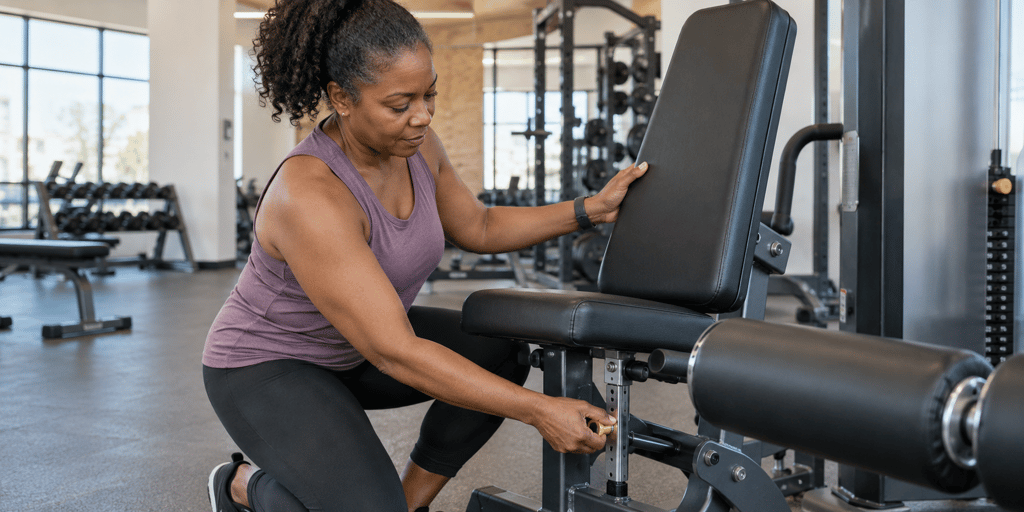
Adjust the seat, backrest, and pads to fit your body before adding heavy resistance.
Check whether:
- The seat moves smoothly
- Adjustment pins lock completely
- The backrest stays firmly in place
- Pads are securely attached
- Handles feel tight
- Upholstery is badly torn or loose
After adjusting the seat, give it a small push. It should stay firmly in place.
I have seen how easy it is to overlook a partly engaged adjustment pin. Take one extra second and make sure it is fully locked before you train.
6. Move the Machine Through Its Range of Motion
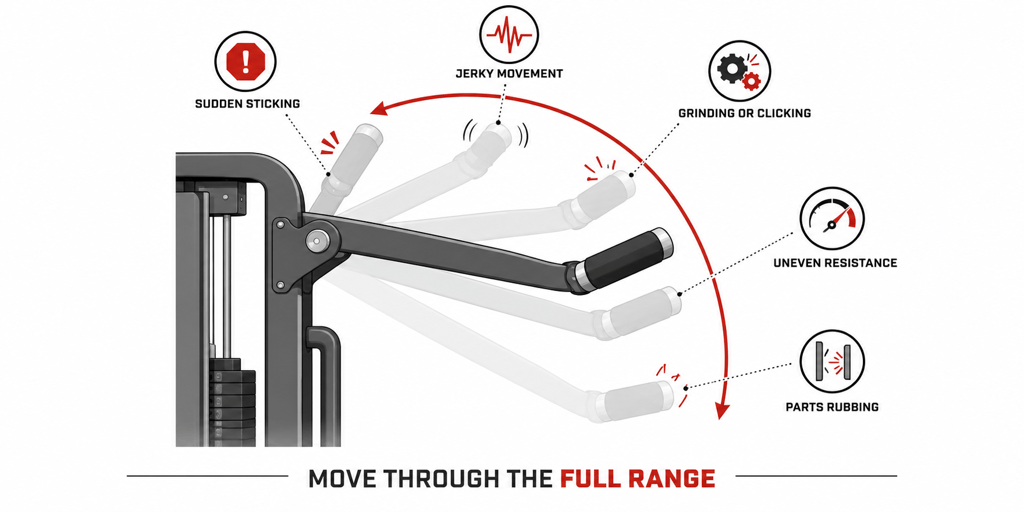
Do one light test repetition before your working set.
Move slowly and notice:
- Sudden sticking
- Jerky movement
- Grinding sounds
- Loud clicking
- Uneven resistance
- Parts rubbing together
The machine should feel controlled from start to finish.
What if it makes a strange sound but still moves? A new or unusually loud sound is enough reason to stop and ask gym staff to check it.
Some machines naturally make light mechanical sounds. The concern is a sound that appears suddenly or comes with rough, uneven movement.
7. Check Safety Stops and Guards
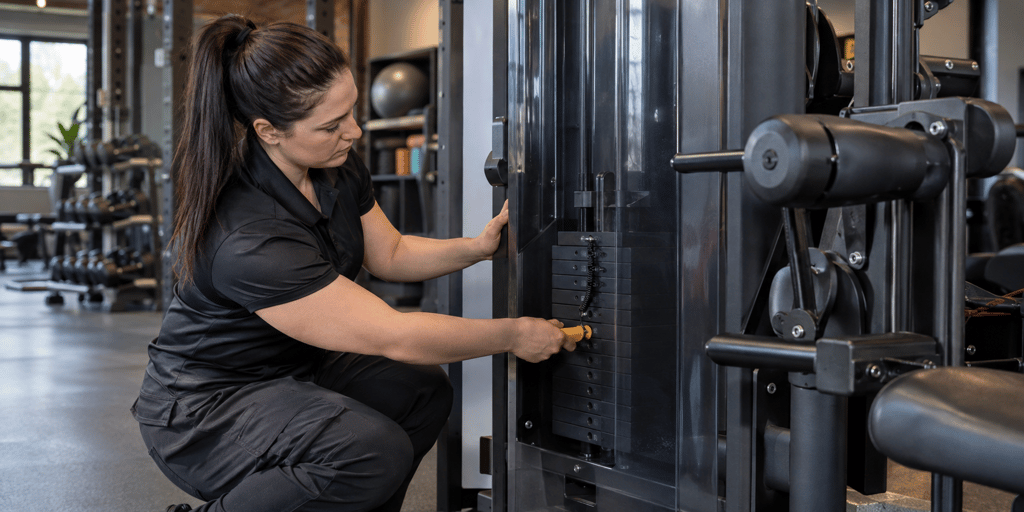
Look at any safety stops, protective covers, catches, or locking handles.
Check:
- Safety stops
- Weight-stack covers
- Cable guards
- Locking handles
- Protective shields
- Exercise instruction labels
Do not remove covers or try to repair a broken or jammed machine yourself. Precor similarly advises users to report potential problems rather than attempting repairs themselves.
The basic idea behind OSHA’s machine-guarding guidance is also useful here: guards should stay secure and help keep people away from hazardous moving parts.
If a guard is missing or hanging loose, leave the machine alone and tell staff.
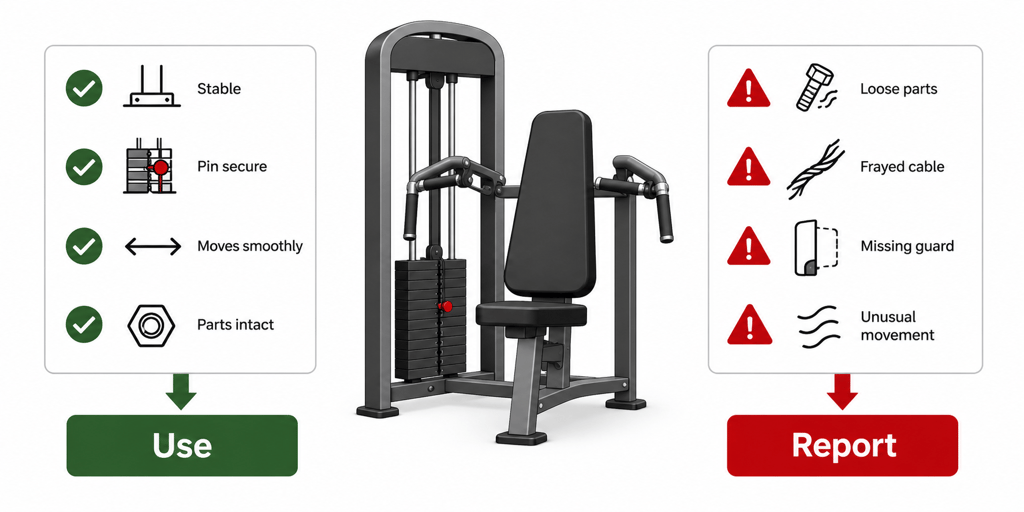
8. Decide Whether the Machine Is Ready for Members
Now ask one simple question: Does everything look and feel normal?
Use this quick decision table:
What You Notice | What You Should Do |
Everything looks secure and moves smoothly | Use the machine normally |
Seat or adjustment feels unusual | Recheck the setup |
Strange noise or rough movement | Stop and tell gym staff |
Loose bolt, damaged cable, or unstable frame | Do not use the machine |
Broken or missing safety feature | Keep away and report it |
If you are unsure, use another machine.
It is better to skip one exercise than take a chance with equipment that does not feel right.
Conclusion
Checking a strength machine only takes a short moment. Look at the frame, cables, weight stack, adjustments, movement, and safety parts before you begin.
A few simple checks can help you catch obvious problems early and train with more confidence. Make them part of your normal setup before every workout.
If you want to train with commercial equipment designed for dependable daily use, explore YR Fitness strength equipment. We focus on durable construction, smooth movement, and practical operation that works in busy training environments.
Related articles:



