




When I first started supplying equipment to new gym owners, many thought buying the “cheapest” machines was smart business. 6 months later, they were calling me back, asking how to replace the broken ones. Sound familiar?
That’s when I knew our job wasn’t just to sell machines. It was to help gym owners make smarter, longer-lasting investments.
At YR Fitness, we have been building commercial gym equipment since 1997, with a focus on real-world gym performance. We provide strength machines, cardio units, and accessories as a one-stop source for gym projects. Our designs are made for long hours, frequent use, and demanding members. We export to over 100 countries and regions and support gyms, distributors, and project teams worldwide.
In this article, you’ll get a clear, experience-based list of the top 10 gym equipment for bodybuilding gyms, the exact pieces we recommend to our clients when setting up professional training centers. You’ll walk away confident that every piece on this list earns its place on your floor.
You’re not just buying equipment, you’re investing in your business’s reputation.
Let’s get started!
- Quick Comparison Chart
- 1. Power Rack / Squat Rack
- 2. Olympic Bench Press
- 3. Smith Machine
- 4. Cable Crossover Machine
- 5. Leg Press Machine
- 6. Dumbbell Set (Full Range)
- 7. Adjustable Benches
- 8. Lat Pulldown / Seated Row Combo
- 9. Plate-Loaded Machines
- 10. Barbells & Plates (Olympic Standard)
- Factors to Consider When Buying Bodybuilding Equipment
- Conclusion
Quick Comparison Chart
When you’re building a serious bodybuilding gym, not every piece of equipment plays the same role. Some are power essentials, while others help polish form and balance. Here’s a quick chart to help you see where each one fits in your setup:
Equipment | Primary Use | Key Benefits | Best For |
Power Rack / Squat Rack | Compound lifts | Safe heavy training, multiple attachments | Core strength and versatility |
Olympic Bench Press | Chest & upper body | Builds power and mass, stable design | Serious strength programs |
Smith Machine | Controlled lifts | Guided motion, safer for solo users | Beginner to intermediate lifters |
Cable Crossover Machine | Isolation & tension work | Constant resistance, full-body use | Muscle shaping and definition |
Leg Press Machine | Lower body strength | Targets quads, glutes, hamstrings | Leg power and hypertrophy |
Dumbbell Set (Full Range) | All-body training | High versatility, free movement | Isolation and accessory work |
Adjustable Benches | Support for lifts | Multiple angles, easy positioning | Dumbbell and press exercises |
Lat Pulldown / Seated Row Combo | Back development | Adds width and density, dual function | Back strength and posture |
Plate-Loaded Machines | Targeted muscle work | Heavy resistance, natural motion | Advanced isolation training |
Barbells & Plates (Olympic Standard) | Compound and power lifts | Durable, precise, full-body use | Core lifts and power training |
Read more below to explore how each one contributes to your gym’s performance, member satisfaction, and long-term ROI.
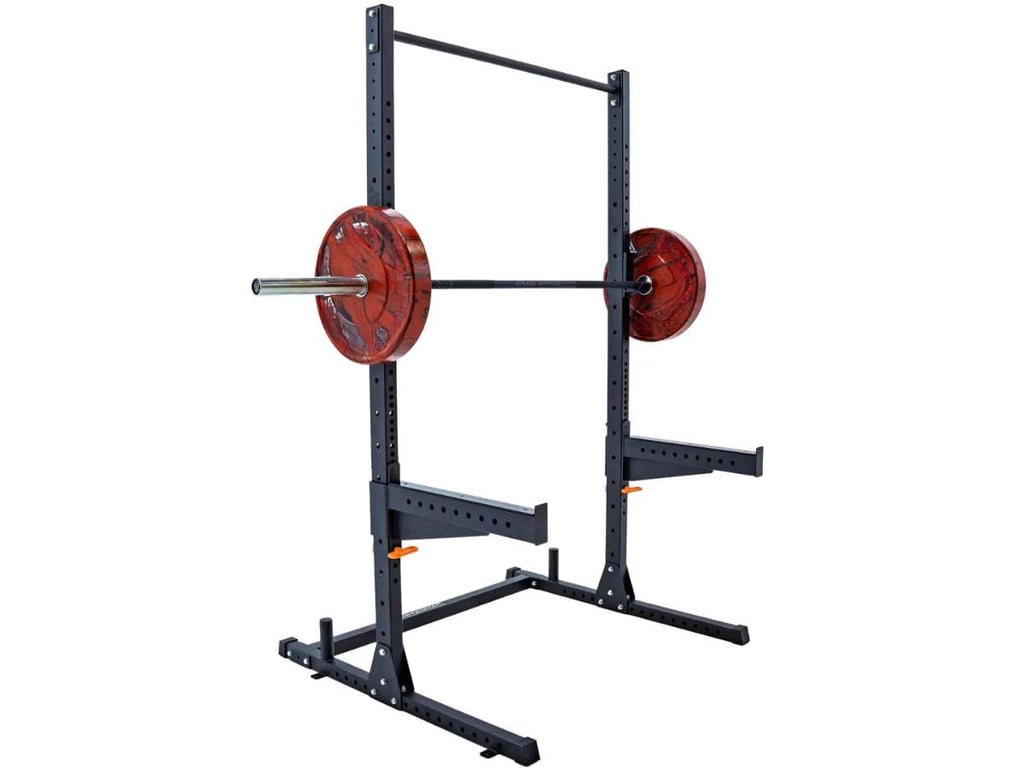
1. Power Rack / Squat Rack
A good power rack is the backbone of every bodybuilding gym. It’s where your members will load up, push limits, and build serious strength.
We’ve seen firsthand how a solid, well-designed rack can change how athletes train and how owners manage safety and space. Here’s what you need to look for when choosing one for your facility.
Key Features to Look For
- Heavy-Duty Frame Construction: Your rack needs to handle real weight, we’re talking 1,000 lbs or more. Look for solid steel frames, welded joints, and stable footing. A strong build not only protects your members but also reduces long-term maintenance costs.
- Adjustable J-Hooks and Safety Bars: These let lifters find their perfect height for squats, presses, or pulls. The ability to adjust quickly keeps workouts flowing and minimizes wait times, especially during peak hours.
- Versatility Through Attachments: A rack isn’t just for squats. With pull-up bars, dip handles, or landmine attachments, it becomes a complete training station. This helps you maximize space and value without adding multiple machines.
Space and Setup Considerations
- Floor and Ceiling Clearance: Make sure there’s at least a few feet of clearance above the pull-up bar and around the base. It’s common for new owners to underestimate ceiling height, we’ve seen it happen often.
- Stable Flooring Surface: Heavy racks need a level, reinforced surface. A rubber or lifting platform base works best, reducing noise and preventing damage to the floor underneath.
- Placement in Gym Layout: Place your rack near mirrors or in a free weight zone. It helps lifters check their form and keeps your gym layout flowing smoothly. A small detail, but one that adds up to a more professional environment.
Final Thoughts
A power rack is more than just a frame, it’s the foundation of serious training. If you invest in the right one, you’ll get years of safe, versatile use that appeals to both beginners and experienced bodybuilders.
Choose durability, flexibility, and safety, your lifters will thank you, and your gym will stand out as a place built for real results.
2. Olympic Bench Press
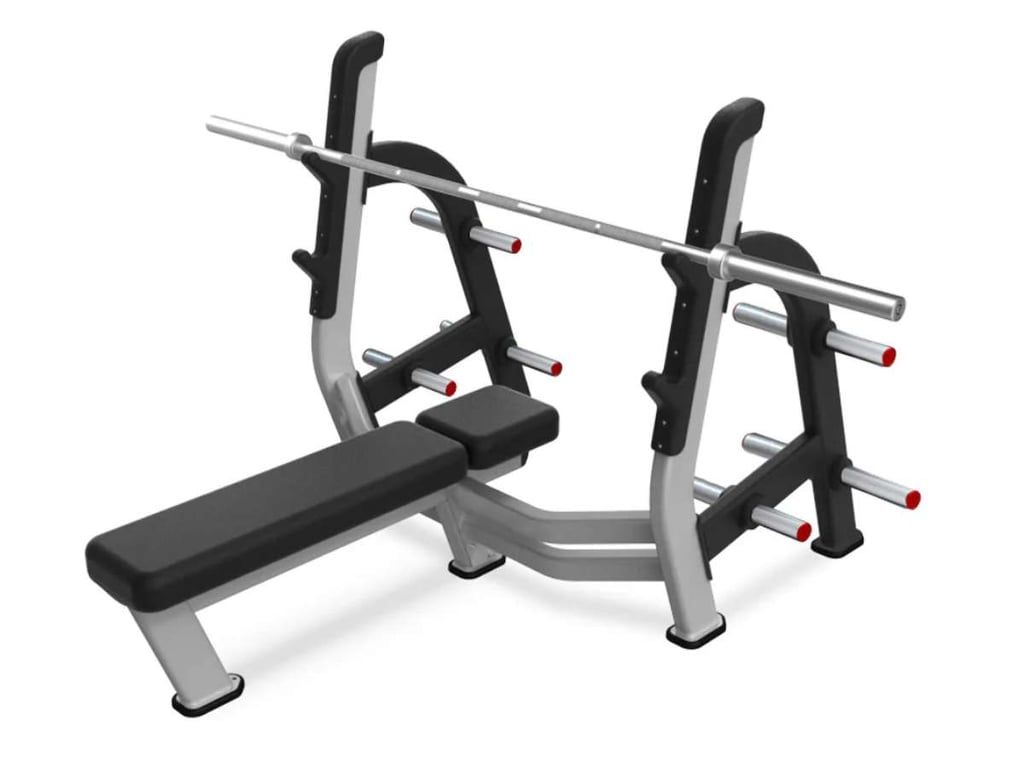
Every bodybuilding gym needs a solid Olympic bench press, it’s one of those staples your members will line up for daily. The bench press builds strength, confidence, and community in your gym. If your benches are reliable, safe, and comfortable, your members will keep coming back for more.
Key Features to Look For
- Sturdy Frame Construction: A commercial bench press should be built like a tank. Look for thick-gauge steel and a wide base that doesn’t wobble. Stability is everything when lifters are pressing serious weight.
- Adjustable Rack Positions: Not every lifter is built the same, and adjustable rack hooks make a big difference. They help accommodate different arm lengths and pressing styles, which improves comfort and safety for everyone.
- Supportive, Non-Slip Padding: The pad should be firm enough to support heavy loads without sinking but comfortable enough for long sets. Non-slip material keeps lifters stable during big lifts and reduces risk of shoulder movement mid-rep.
Space and Setup Considerations
- Bench Placement: Place benches in your free weight or strength zone where lifters have room to spot each other safely. Avoid corners or walkways, benches need open space for both lifters and spotters to move comfortably.
- Spacing Between Benches: Maintain at least 3 feet between each bench setup. It keeps traffic flowing and prevents accidents when multiple members are lifting at once.
- Floor Type and Stability: Make sure the flooring under your benches is level and sturdy. Rubber flooring works best for absorbing dropped weights and protecting both the floor and the equipment base.
Final Thoughts
The Olympic bench press is one of the few pieces of equipment that truly defines a bodybuilding gym’s identity. It’s where lifters test their limits and track real progress over time.
When you invest in a durable, comfortable bench press setup, you’re investing in your members’ trust. Every good gym has at least one bench that feels “just right” make sure yours is that one.
Keep it simple: prioritize quality, stability, and comfort. Your members will notice the difference, and your gym’s reputation will grow because of it.
3. Smith Machine
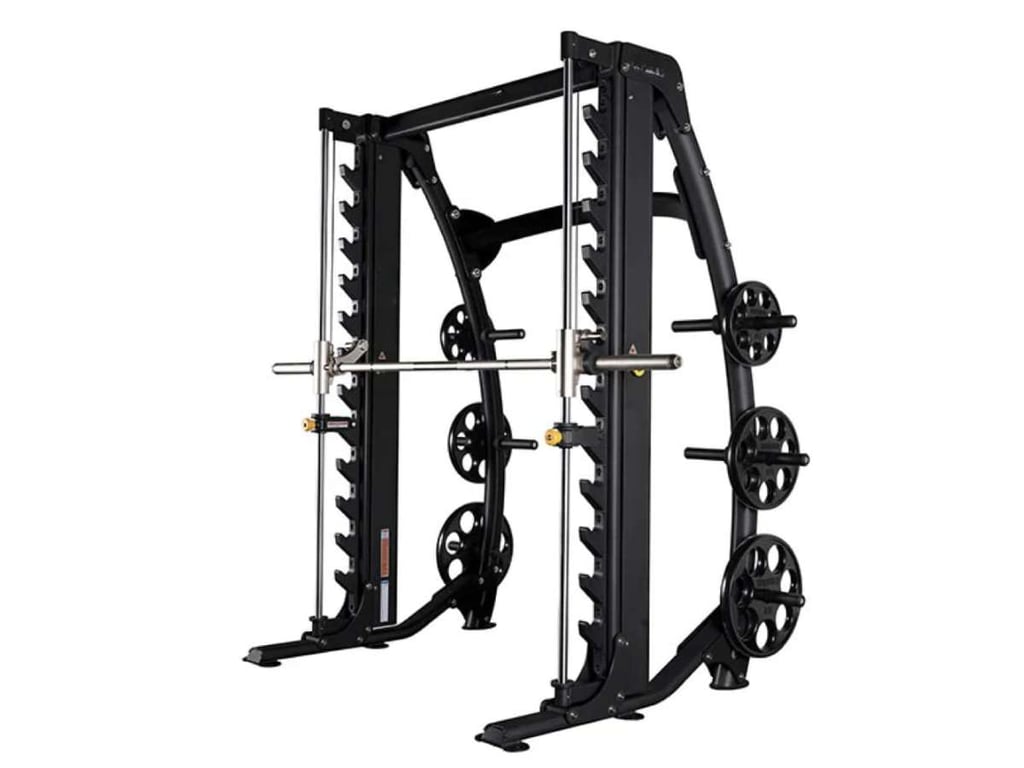
If you run a bodybuilding gym, you already know the Smith Machine is a crowd favorite. It’s perfect for lifters who want the safety of a guided path while still pushing heavy loads. We’ve seen it time and time again, when your Smith Machine is smooth, solid, and easy to use, it becomes one of the most-used stations in your gym.
Key Features to Look For
- Smooth Linear Bearings: The feel of the lift matters. A Smith Machine should move smoothly without catching or sticking. Linear bearings or guide rods ensure fluid motion, which keeps your members confident and focused on form, not fighting the bar path.
- Adjustable Safety Stops: These are essential for solo lifters. They allow members to train safely at different ranges of motion, which reduces injury risk.
- Heavy-Duty Counterbalanced Bar: A counterbalanced bar helps accommodate users of all levels by reducing the starting weight. It’s a simple feature that makes your gym more inclusive while maintaining the heavy-duty performance advanced lifters need.
Space and Setup Considerations
- Ideal Placement: Position your Smith Machine near your free weight or leg training zone. It’s often used for squats, presses, and lunges, so having it close to mirrors and open space helps lifters check their form and move freely.
- Clear Safety Zones: Make sure there’s at least 3 feet of clearance around the machine. Members need room for loading and unloading plates safely without bumping into other machines or users.
- Stable, Even Surface: Smith Machines are heavy. Ensure it sits on a level, reinforced surface, ideally with rubber flooring. This prevents movement during heavy lifts and protects both your floor and your investment.
Final Thoughts
A Smith Machine gives members a safer way to train heavy, especially when they are lifting alone. It supports strength progression with more control, which helps reduce hesitation and improves training consistency. Many facilities use it for squats, and accessory work, which makes it valuable throughout the day.
At YR Fitness, we engineer Smith Machines using commercial-grade steel, precision bearings, and a guided path designed to match natural lifting motion. Gym owners often notice smoother movement, fewer maintenance concerns, and better member confidence once it is installed. Our focus is to deliver stability, comfort, and long-term durability in high-traffic settings.
If you are setting up a new gym or upgrading an older strength area, this is equipment that can deliver strong long-term value. Talk with YR Fitness today to explore the right commercial Smith Machine option for your space and business goals.
4. Cable Crossover Machine
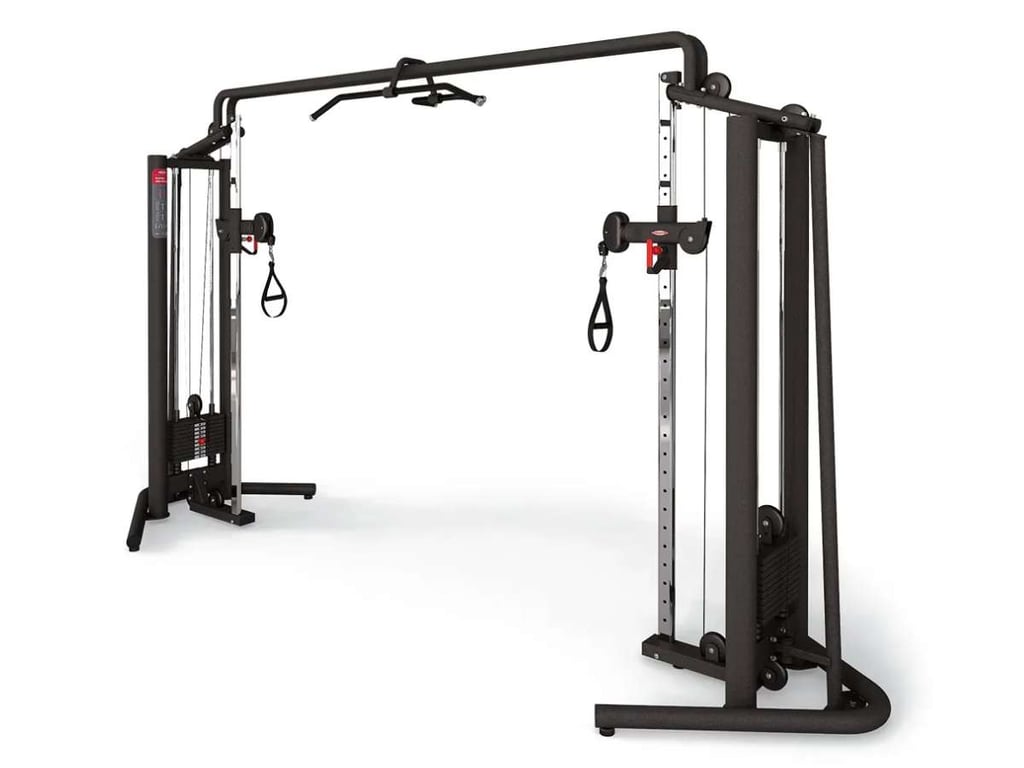
A cable crossover machine adds serious value to any bodybuilding gym. It’s one of those versatile stations your members will use for everything from chest flyes to triceps pushdowns. We’ve noticed that when you have a smooth, well-built crossover machine, it doesn’t sit idle—because everyone from beginners to pros wants time on it.
Key Features to Look For
- Smooth Pulley System: A good cable machine should feel effortless in motion. High-quality bearings and pulleys ensure even resistance throughout the range of motion. This smoothness keeps lifters focused on their form and reduces wear and tear on the cables.
- Adjustable Pulley Heights: Multiple pulley positions make the crossover machine one of the most flexible tools in your gym. Members can train upper, middle, and lower angles with ease.
- Strong Weight Stack and Cable Quality: Commercial gyms need equipment that can take daily abuse. Go for thick, steel cables coated with durable nylon and a heavy stack that meets your members’ strength levels.
Space and Setup Considerations
- Adequate Training Space: The cable crossover machine is wide, so make sure it doesn’t crowd your layout. Leave enough space for full arm extension on both sides—around 2 to 3 feet clearance per side usually works well.
- Ceiling Height Requirements: Some models stand tall, especially if they include pull-up attachments. Always double-check your ceiling height before ordering to ensure smooth installation and safe operation.
- Placement for Flow and Function: Position your crossover machine in a central or open area where it’s visible and accessible. It naturally draws attention, and having it in a visible spot can make your gym look more professional and fully equipped.
Final Thoughts
A cable crossover machine adds both function and appeal to your gym. It gives your members a full-body training tool that encourages creativity and control in their workouts.
It’s also one of the most cost-effective machines you can own, given how many exercises it supports. When chosen carefully, this single piece can replace several smaller isolation machines.
Invest in one that’s smooth, sturdy, and reliable. It’ll quickly become one of the busiest—and most appreciated—stations in your entire facility.
5. Leg Press Machine
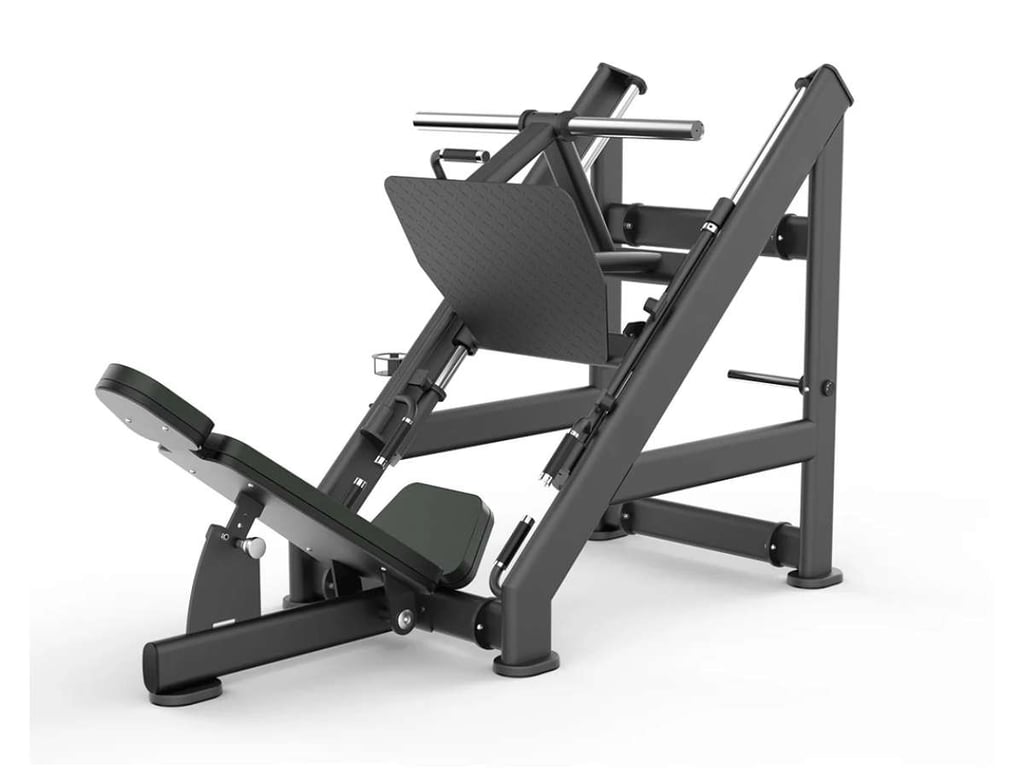
The leg press machine is one of those must-have staples for bodybuilding gyms. It gives members a safe, powerful way to target the lower body without loading the spine like a squat. When you’ve been around as long as we have, you notice one thing fast, the leg press is always busy because everyone trusts it for real results.
Key Features to Look For
- Heavy-Duty Frame and Sled Design: Your leg press needs to be built to take constant, heavy use. A thick-gauge steel frame and reinforced welds prevent wobbling and ensure smooth movement under load.
- Adjustable Seat and Backrest Angle: Members come in all shapes and sizes, so flexibility matters. Adjustable positions help target different muscle groups, from quads to glutes, and provide comfort for users with varying leg lengths.
- High Weight Capacity: Serious lifters expect to load up heavy, and your equipment should handle it. A commercial-grade leg press should support at least 500 kg or more. The last thing you want is a machine that can’t keep up with your members’ progress.
Space and Setup Considerations
- Dedicated Lower Body Zone: Place your leg press in your strength or lower body section, ideally near your squat racks and hack squat machines. Grouping similar equipment creates a logical flow for members and keeps heavy training areas organized.
- Adequate Clearance for Movement: Leave enough room behind and beside the machine for safe entry and exit. These machines are large and can dominate a corner, so planning ahead prevents crowding and improves safety.
- Stable Flooring Support: Because the leg press carries so much weight, install it on a solid, level surface. Heavy-duty rubber flooring works best, it absorbs vibration and protects both the floor and the frame from wear over time.
Final Thoughts
A good leg press machine does more than train legs. It helps define the quality of your strength area. Members notice when a machine feels smooth, stable, and built for heavy work. That type of experience builds trust, which supports retention and stronger word-of-mouth in the local lifting community. For many gyms, the leg press becomes one of the most used machines on the floor.
At YR Fitness, we design commercial leg press machines for gyms that need long-term durability and consistent performance. Our machines are built for daily use under heavy training volume, with a movement path designed for comfort and safe positioning. We focus on stable frames, smooth motion, and parts that hold up in high-traffic environments.
If you are improving your strength zone, YR Fitness offers a full line of commercial-grade leg presses that support serious training and strong long-term value. Reach out today and we will help you select the right model for your gym.
6. Dumbbell Set (Full Range)
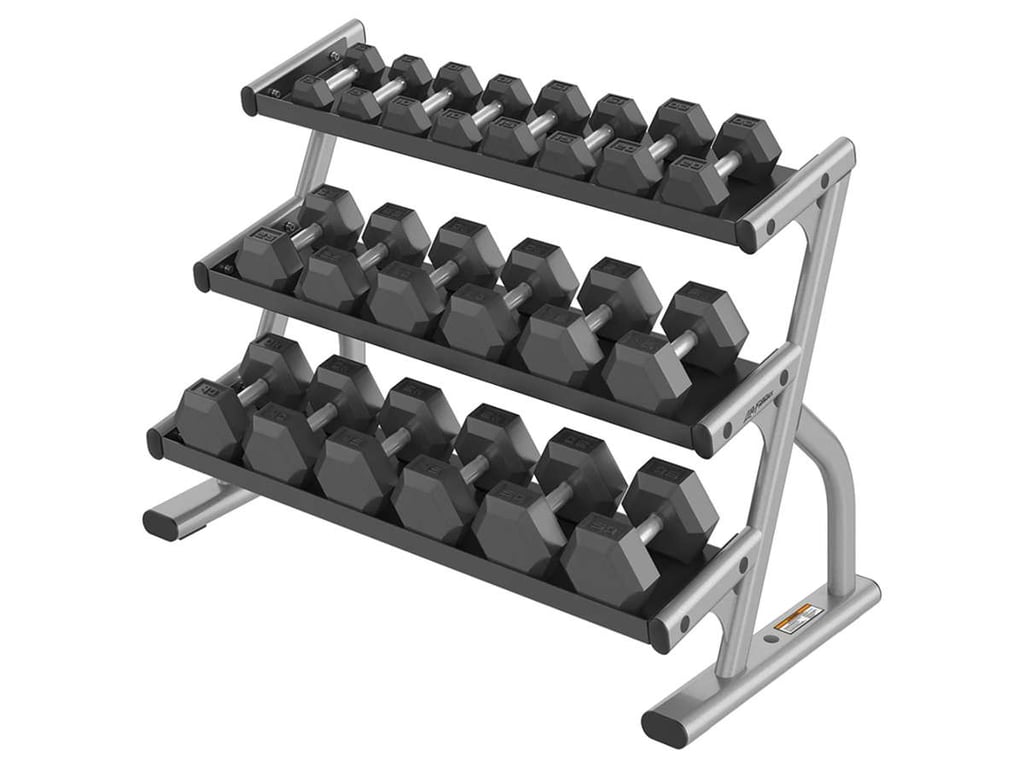
No bodybuilding gym is complete without a full range of dumbbells. They’re simple, versatile, and get used more than any other piece of equipment in your facility. Whether it’s warm-ups, accessory lifts, or isolation work, your members will reach for dumbbells every single day, so investing in quality ones is never wasted money.
Key Features to Look For
- Full Weight Range Coverage: Offer a complete set from light weights to heavy, typically from 2.5 kg up to 60 kg or more. This ensures that both beginners and advanced lifters have options that fit their training goals.
- Durable Coating and Grip: Choose dumbbells with rubber or urethane coatings to protect floors and reduce noise. The handles should have a knurled texture for a secure grip, especially for sweaty hands during long workouts.
- Solid Construction: Avoid dumbbells that use bolts or screws that loosen over time. Fixed-head or welded designs are more durable for high-traffic gyms. This helps you cut down on maintenance and replacements, a big win for your budget.
Space and Setup Considerations
- Proper Dumbbell Rack: Invest in strong, multi-tier racks to organize your set neatly. It not only keeps your gym floor safe and clutter-free but also makes it easier for members to find what they need quickly.
- Accessible Placement: Position your dumbbell area near adjustable benches for convenience. Keep enough room between racks and benches so multiple lifters can move freely without bumping into each other.
- Floor Protection: Heavy dumbbells can damage flooring if dropped often. Use commercial-grade rubber flooring or mats underneath the area. It absorbs impact, reduces noise, and keeps your facility looking professional.
Final Thoughts
Dumbbells may seem basic, but they’re the heart of your gym’s daily operations. They give members freedom, versatility, and countless exercise options without needing complex machines.
When you offer a complete, well-organized dumbbell setup, your gym feels more professional and reliable. Members instantly notice when weights are complete, easy to reach, and well-maintained.
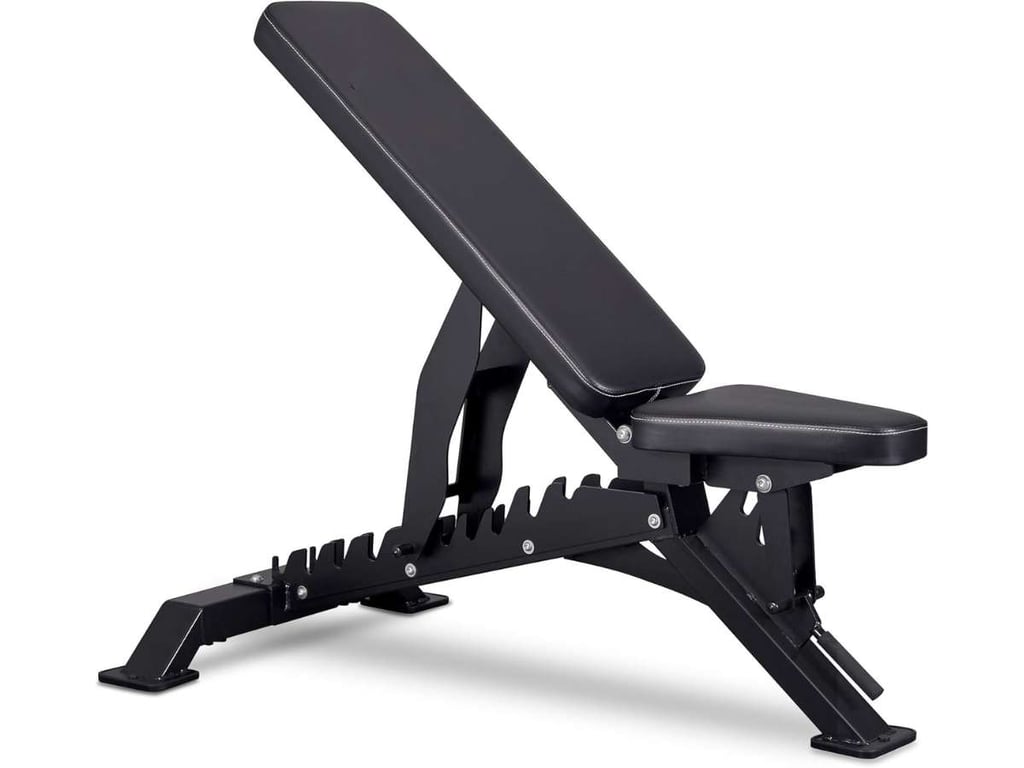
7. Adjustable Benches
Adjustable benches might not grab attention like big machines, but they’re among the most-used tools in any bodybuilding gym. They support a huge range of exercises, from dumbbell presses to core work, and help your members train safely and efficiently.
Key Features to Look For
- Strong, Stable Frame: A bench needs to feel solid the moment someone sits on it. Look for heavy-duty steel frames with wide bases for maximum stability. Wobbly benches can make lifters lose confidence and may even lead to injury.
- Multiple Adjustable Angles: The more inclined and declined options, the better. A quality adjustable bench should move smoothly from flat to upright with secure locking positions.
- Comfortable, Durable Padding: Firm but comfortable padding gives users the support they need for longer sessions. Non-slip upholstery prevents sliding during heavy lifts, while thick foam maintains shape even after years of use.
Space and Setup Considerations
- Strategic Placement: Place benches close to your dumbbell racks and Smith machines for easy access. This helps members move between exercises quickly and keeps your training zones organized.
- Adequate Floor Space: Benches need enough room for members to extend their arms and move around freely. Keep at least a few feet of space between benches to avoid overcrowding during busy hours.
- Storage and Mobility: If your gym setup changes often, choose benches with wheels or handles. It makes rearranging your layout faster and keeps your facility flexible for group or personal training sessions.
Final Thoughts
Adjustable benches might seem simple, but they’re one of the most critical pieces of equipment in your gym. They bridge the gap between machines and free weights, giving members versatility in how they train.
A sturdy, comfortable bench not only supports better performance but also reflects the overall quality of your gym. When your benches are solid and easy to adjust, it tells your members that you’ve paid attention to the details that matter.
Keep your focus on stability, adjustability, and durability, those three things turn a basic bench into a long-term asset that keeps your members training hard and safely every day.
8. Lat Pulldown / Seated Row Combo
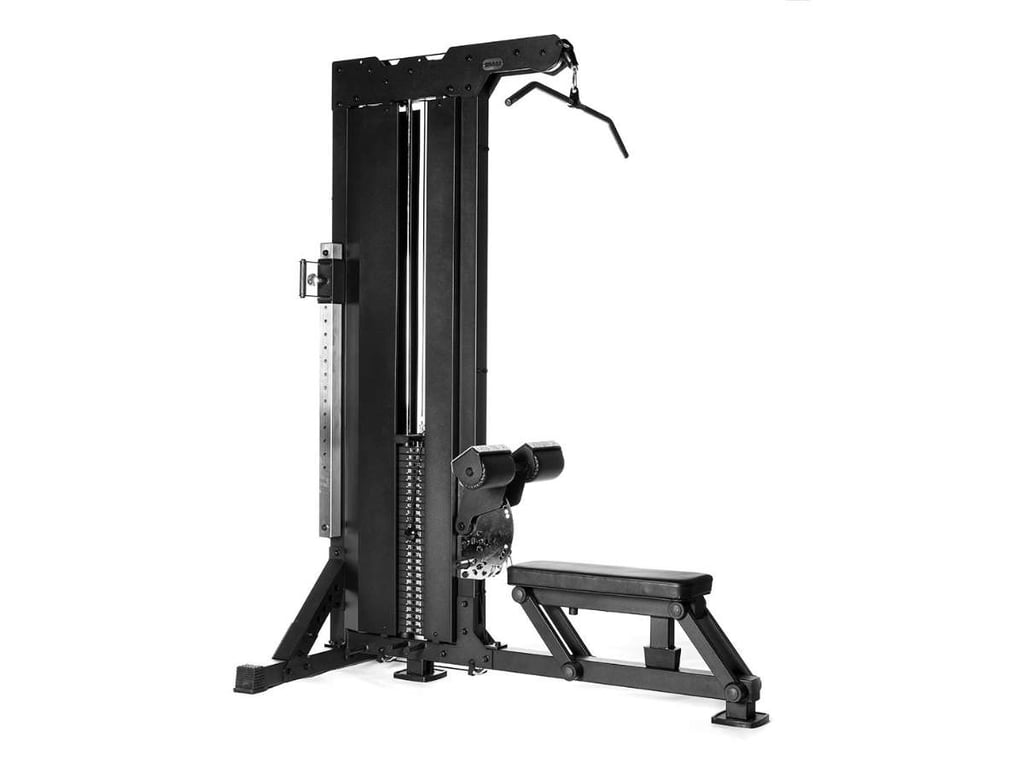
The lat pulldown and seated row combo machine is a powerhouse for back training. It helps your members build width and thickness in one compact unit, making it a smart space-saver for bodybuilding gyms.
Key Features to Look For
- Smooth Cable and Pulley Motion: A high-quality pulley system makes every rep feel consistent. Smooth resistance helps lifters maintain control and form, which is crucial for back training where precision matters most.
- Adjustable Thigh Pads and Foot Braces: Adjustable pads and braces make a big difference in comfort and control. Members of all sizes should be able to lock themselves in for lat pulldowns or rows without shifting during heavy sets.
- Strong Frame and Weight Stack: A combo unit should be able to handle heavy, repeated use. Go for a solid steel frame and a generous weight stack, at least 90–120 kg per station, to suit a wide range of strength levels.
Space and Setup Considerations
- Central Placement for Easy Access: Place the combo unit where it’s accessible from both sides. It’s often used by pairs or alternating lifters, so central placement keeps the flow natural and avoids congestion in tight areas.
- Clear Zone Around the Machine: Make sure there’s enough space for lifters to extend arms fully during rows and pulldowns. Keep at least 3 feet of clearance on each side to ensure safety and comfort for users moving in and out.
- Cable Maintenance Access: Position the machine where it’s easy to inspect cables and weight stacks. Regular maintenance checks are essential, and easy access saves you time and hassle when servicing or replacing parts.
Final Thoughts
A lat pulldown and seated row combo brings serious value to your gym, two major exercises in one durable frame. It gives your members everything they need for complete back development without taking up extra space.
This kind of versatility is what makes bodybuilding gyms more efficient and attractive to both new and experienced lifters. The smoother the motion and the sturdier the design, the more your members will enjoy training on it.
9. Plate-Loaded Machines
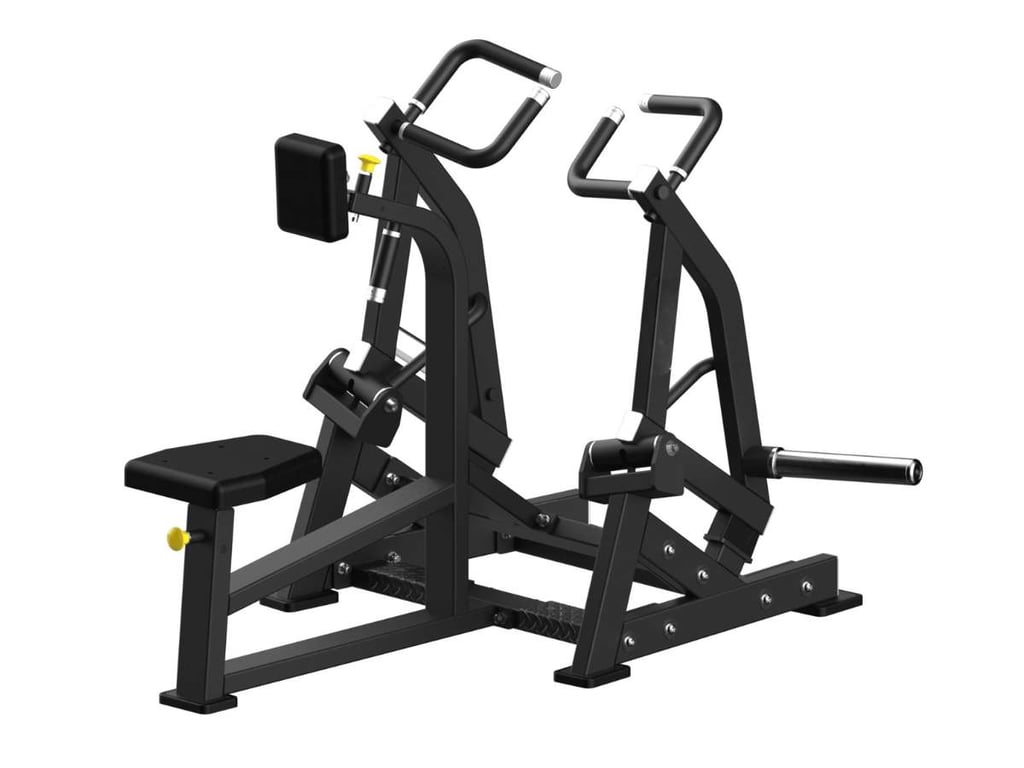
Plate-loaded machines are the perfect middle ground between free weights and pin-loaded stations. They let your members lift heavily while still keeping movement safe and controlled.
From chest presses to leg extensions, these machines mimic natural lifting motions, and if you’re running a bodybuilding gym, you know lifters love that “real weight” feel.
Key Features to Look For
- Biomechanically Accurate Motion: The movement should feel natural, matching the body’s strength curve. Smooth pivot points and correct angle design help reduce joint strain and maximize muscle engagement.
- Heavy-Duty Frame and Bearings: These machines take a beating, especially in high-traffic gyms. Look for a commercial-grade steel frame with reinforced welds and sealed bearings.
- Easy Plate Loading and Unloading: The loading sleeves should be at a comfortable height and wide enough to fit standard Olympic plates. When lifters can rack and unrack plates easily, it keeps their focus on training, not fumbling with awkward setups.
Space and Setup Considerations
- Dedicated Strength Zone: Place plate-loaded machines together in a section designed for serious lifting. It gives your gym a clean, organized layout and helps members move efficiently from one station to another.
- Clear Walking Paths: Since members will often be loading and unloading plates, make sure there’s plenty of room around each machine. A clutter-free setup minimizes risks and keeps the training flow smooth, even during peak hours.
- Floor Protection and Stability: These machines carry a lot of weight. Install them on stable, non-slip flooring with proper shock absorption. It helps maintain alignment, prevents damage, and reduces noise during training.
Final Thoughts
Plate-loaded machines are a strong investment for bodybuilding gyms that want serious strength training with less supervision. They give members the loaded feel of free weights while keeping movement more guided and controlled. That balance helps beginners train with confidence while still meeting the demands of advanced lifters.
At YR Fitness, we have spent over two decades designing commercial-grade plate-loaded machines built for constant use. Our focus is biomechanically accurate movement, stable frames, and long-term durability in real gym environments. Our in-house design team fine-tunes angles, lever arms, and grip positions to support natural muscle motion and comfortable training patterns across different body types.
If you are ready to upgrade your strength section, YR Fitness can help you build a professional, high-performance lineup that supports member results and long-term facility value. You get equipment that competes with big names while keeping costs more competitive for your business.
10. Barbells & Plates (Olympic Standard)
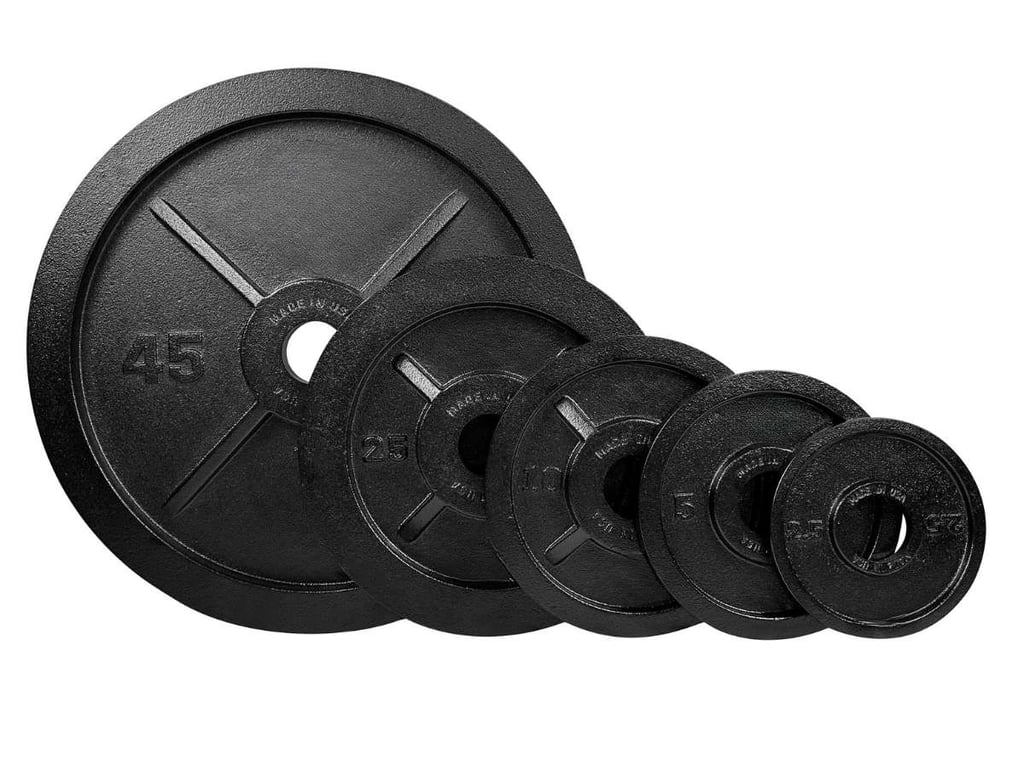
Barbells and plates are the foundation of any bodybuilding gym. They’re simple, reliable, and timeless, the kind of tools serious lifters never get tired of using. When you walk into a gym and see clean, balanced Olympic bars and solid plates, it immediately sends a message: this is a place built for strength.
Key Features to Look For
- Precision-Balanced Olympic Bar: A good barbell should feel smooth, balanced, and ready for heavy lifting. Look for bars with high tensile strength (around 190,000–200,000 PSI) and strong needle bearings for a clean, natural spin.
- Durable, Calibrated Plates: Plates should be accurate in weight and built to withstand years of dropping and racking. Rubber-coated or urethane plates are ideal, they reduce noise, protect floors, and stay looking new longer.
- Knurling and Grip Comfort: The knurling pattern on the bar affects grip and comfort. Medium to aggressive knurling provides a solid hold for heavy lifts without tearing the hands. Consistency here builds trust among members who lift regularly.
Space and Setup Considerations
- Dedicated Free Weight Zone: Keep barbells and plates in a clearly defined area. This helps lifters stay organized and minimizes clutter. Pair racks, platforms, and storage in one zone so members can transition smoothly between exercises.
- Proper Storage Racks: Invest in sturdy barbell racks and vertical or horizontal plate trees. Good storage not only extends the lifespan of your equipment but also keeps your gym floor neat and professional-looking.
- Flooring and Safety: Heavy lifting demands solid flooring. Install rubber or platform-style surfaces that can handle dropped weights without damage. It’s a simple step that prevents costly repairs and reduces noise in your training area.
Final Thoughts
Barbells and plates are the heart of every bodybuilding gym. They represent strength, discipline, and progress, values that your members see and feel every time they lift.
Choosing high-quality Olympic-standard equipment keeps your gym safe, professional, and trusted by serious athletes. When the bars spin smoothly and the plates fit perfectly, lifters notice, and they’ll come back for that consistency.
If you get this part of your setup right, everything else falls into place. Your gym will not only look serious but will perform like it, too.
Factors to Consider When Buying Bodybuilding Equipment
Choosing the right bodybuilding equipment isn’t just about filling your gym with machines, it’s about making smart, long-term investments that serve your business and your members. Here are the key things you’ll want to think through before you buy.
- Quality and Durability: Always go for commercial-grade equipment that can handle heavy daily use. It might cost more upfront, but it saves you from constant repairs and replacements down the road.
- Space and Layout: Before ordering, take a good look at your available floor space and layout. You want your gym to feel open and safe, not cramped, plan for smooth movement and clear training zones.
- Supplier Reliability: Work with manufacturers who back their products with warranties and solid after-sales support. A trusted supplier makes all the difference when it comes to setup, parts, and long-term maintenance.
- Member Needs and Experience: Think about who uses your gym and what they need most, beginners, advanced lifters, or both. The right mix of equipment keeps members engaged and coming back, which directly impacts your bottom line.
Conclusion
We started this guide with a story about investing smart, and that’s exactly what great gym owners do. When you choose equipment that’s strong, safe, and built for daily use, you set your business up for long-term success.
Each piece in our top 10 gym equipment for bodybuilding gyms list was chosen to help you make those decisions with confidence.
At YR Fitness, we don’t just build machines; we build partnerships that help gyms perform better. Ready to get started? Contact us today and let’s design the gym your members deserve.
Related articles: