









Do your free consultations often end with “I’ll think about it”? A good consultation should make the next step feel clear.
The key is simple: understand their goal, find their main struggle, show your value, and recommend one clear next step.
As an Exercise Physiology & Biomechanics Expert at YR Fitness, I work closely with exercise movement, training setup, and how people use fitness equipment. This gives me practical insight into what helps people feel more confident, comfortable, and ready to commit to training.
Below are eight simple ways to turn a free consultation into a personal training client.
- 1. Learn Why They Booked the Consultation
- 2. Ask About Their Biggest Struggle
- 3. Make the Consultation Personal
- 4. Give Them One Useful Win
- 5. Explain How You Would Help Them Reach Their Goal
- 6. Show Them What Training With You Looks Like
- 7. Recommend One Clear Package
- 8. Ask for the Sale Directly
- Conclusion
1. Learn Why They Booked the Consultation
Start with them, not your packages.
Ask:
- What made you book this consultation?
- What would you like to improve?
- Why is that goal important to you?
- What have you tried before?
Then listen.
Someone who says, “I want to lose weight,” may really want to feel more confident in their clothes. Someone who wants to get stronger may feel lost every time they enter the gym.
What are you looking for? The reason behind the goal.
Before moving into exercise, it also makes sense to understand their health and current activity level. ACSM professional standards include preparticipation screening, current physical activity, and informed consent as part of the process of determining whether someone is ready for exercise.
Do not try to diagnose medical problems. If something falls outside your scope, guide the person toward the right healthcare professional.

2. Ask About Their Biggest Struggle
Once you know the goal, find out what has been stopping them.
Common struggles include:
- Not knowing which exercises to do
- Poor consistency
- Lack of motivation
- Low confidence in the gym
- Not knowing how much weight to use
- Feeling unsure about exercise form
A simple question works well:
“What has been the hardest part for you so far?”
Then give them room to answer.
Here is why this matters: their struggle tells you what your coaching needs to solve.
What They Tell You | What May Be Missing | What You Can Focus On |
“I never know what to do.” | Structure | A simple workout plan |
“I keep stopping after a few weeks.” | Consistency | Accountability and routine |
“Machines confuse me.” | Confidence | Setup and exercise coaching |
“I don’t know if my form is right.” | Technique | Movement feedback |
“I’m not seeing progress.” | Progression | Tracking and planned increases |
If consistency is the problem, another complicated workout plan may not help. They may need structure and accountability first.

3. Make the Consultation Personal
Avoid giving everyone the same presentation.
Use what they have already told you.
If they want stronger legs, explain how you would structure their lower-body training. If machines make them nervous, show how you would teach setup and movement.
Keep your language simple too.
Instead of:
“Your program will focus on progressive overload and biomechanical efficiency.”
Say:
“We’ll gradually make the exercises harder as you get stronger.”
Same idea. Much easier to understand.
What if their goal is vague?
Ask what success would look like to them.
“I want to get fit” could mean losing weight, getting stronger, having more energy, or simply feeling comfortable in the gym. You need to know which one matters to them.

4. Give Them One Useful Win
Do not spend the entire consultation talking.
Let them experience your coaching.
You could:
- Correct their squat position
- Adjust a machine seat
- Improve their foot placement
- Teach better breathing
- Show one exercise for their goal
Keep it small.
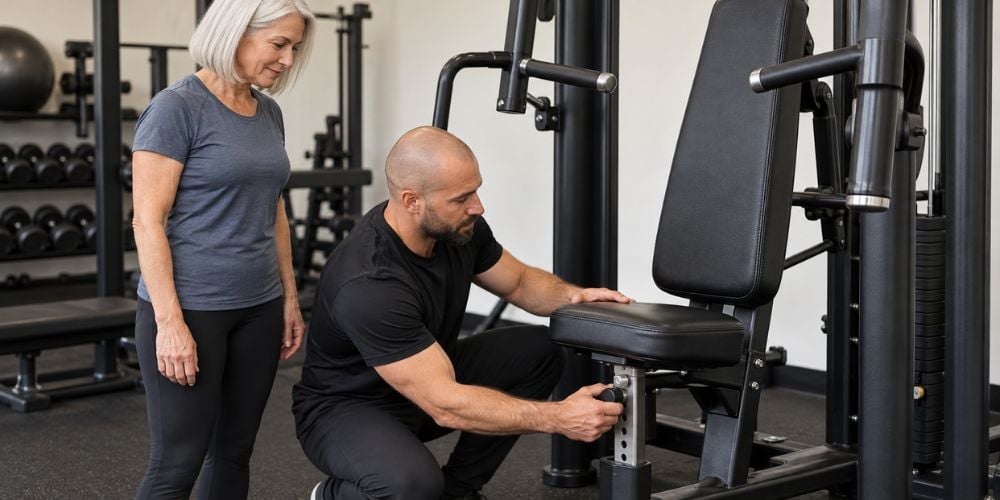
For example, if someone feels uncomfortable on a chest press, adjust the seat and handles. A few better repetitions can quickly show them why having a trainer beside them is useful.
I often find this more convincing than spending ten minutes explaining qualifications. Let the person feel the difference your coaching makes.
A good coaching experience is easier when the equipment is simple to adjust and comfortable to use. At YR Fitness, we design commercial strength equipment with practical adjustments and stable movement paths to help make coached sessions easier to manage.
5. Explain How You Would Help Them Reach Their Goal
Now connect their problem to your solution.
Keep the process clear:
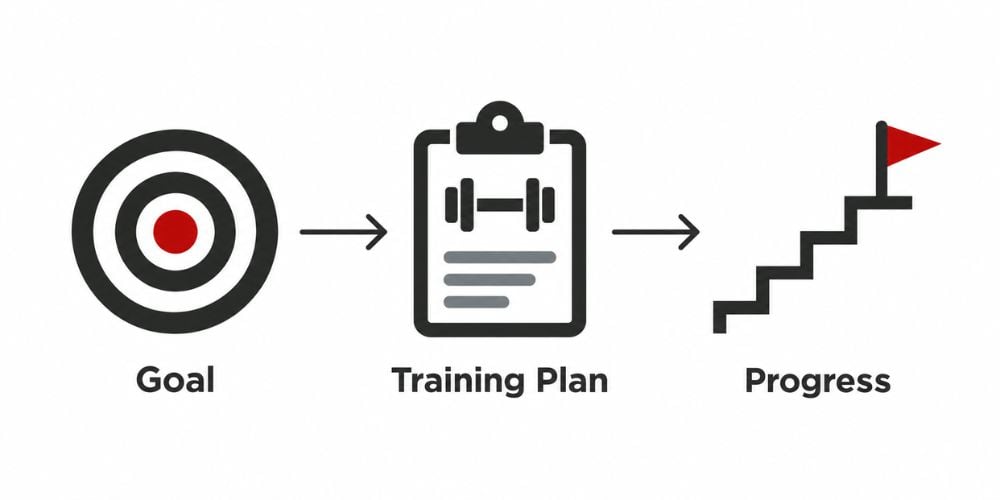
Goal → Training Plan → Progress
For example:
Goal: Build muscle
Plan: Strength train three times per week and gradually increase resistance
Progress: Become stronger and build more muscle over time
Or:
Goal: Feel more confident in the gym
Plan: Learn basic movements, machine setup, and simple workout routines
Progress: Become more comfortable and independent
Do not promise unrealistic results.
Show them that you have a clear process instead.
6. Show Them What Training With You Looks Like
The potential client may still be thinking:
“What am I actually paying for?”
Answer that clearly.
Explain:
- How long sessions last
- How often you recommend training
- What exercises you may use
- How you track progress
- How you adjust workouts
- What happens as they become stronger
You might say:
“Based on your goal, I’d start with two sessions each week. We’ll focus on basic strength exercises, improve your technique, and gradually increase the difficulty.”
Now they can picture what working with you actually looks like.
That matters because you are no longer selling an abstract “personal training package.” You are showing them exactly what they will be doing.

7. Recommend One Clear Package
Do not finish by showing six different packages.
Too many choices can make the decision harder.
Instead, recommend the option that best fits their:
- Goal
- Schedule
- Experience
- Budget
For example:
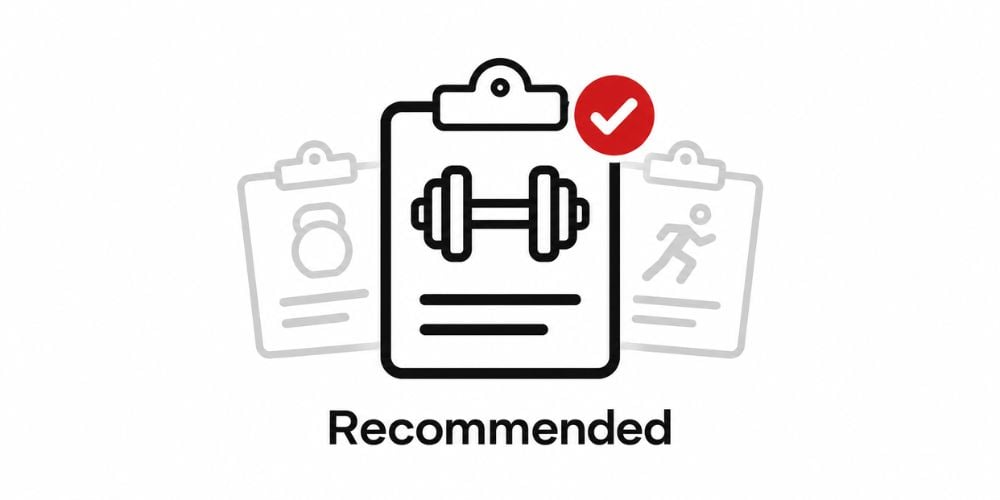
“Based on what you told me, I recommend two sessions per week for the next eight weeks.”
Then explain why.
“You’re still learning the exercises, so two coached sessions each week will give you enough practice without making your schedule difficult.”
You can still offer another option if the first one does not fit.
The important part is that you make a recommendation instead of handing them a price sheet and asking them to decide alone.
8. Ask for the Sale Directly
This is where many trainers hesitate.
They explain everything well and then finish with:
“Think about it and let me know.”
What happens next? Often, nothing.
Instead, make the next step clear.
Ask:
- “Would you like to start this week?”
- “Does two sessions per week work for you?”
- “Would mornings or evenings be easier?”
- “Would you like me to book your first session?”
You are not pressuring them.
You are simply helping them make a decision.
If they hesitate, ask what is holding them back.
It may be:
- Price
- Schedule
- Confidence
- Commitment
- Uncertainty about the program
Once you know the real concern, you can respond to that issue instead of guessing.

Conclusion
Turning a free consultation into a client does not require hard selling. Understand what they want, find what has been holding them back, demonstrate your coaching, recommend a clear plan, and ask them to take the next step.
A good consultation should leave the person thinking, “I understand what I need to do, and this trainer can help me do it.” That is much stronger than simply giving them a list of packages and prices.
If you also want equipment that supports simple setup and smoother coached workouts, explore the commercial equipment from YR Fitness and choose machines that fit the way you train your clients.
Related articles:



