








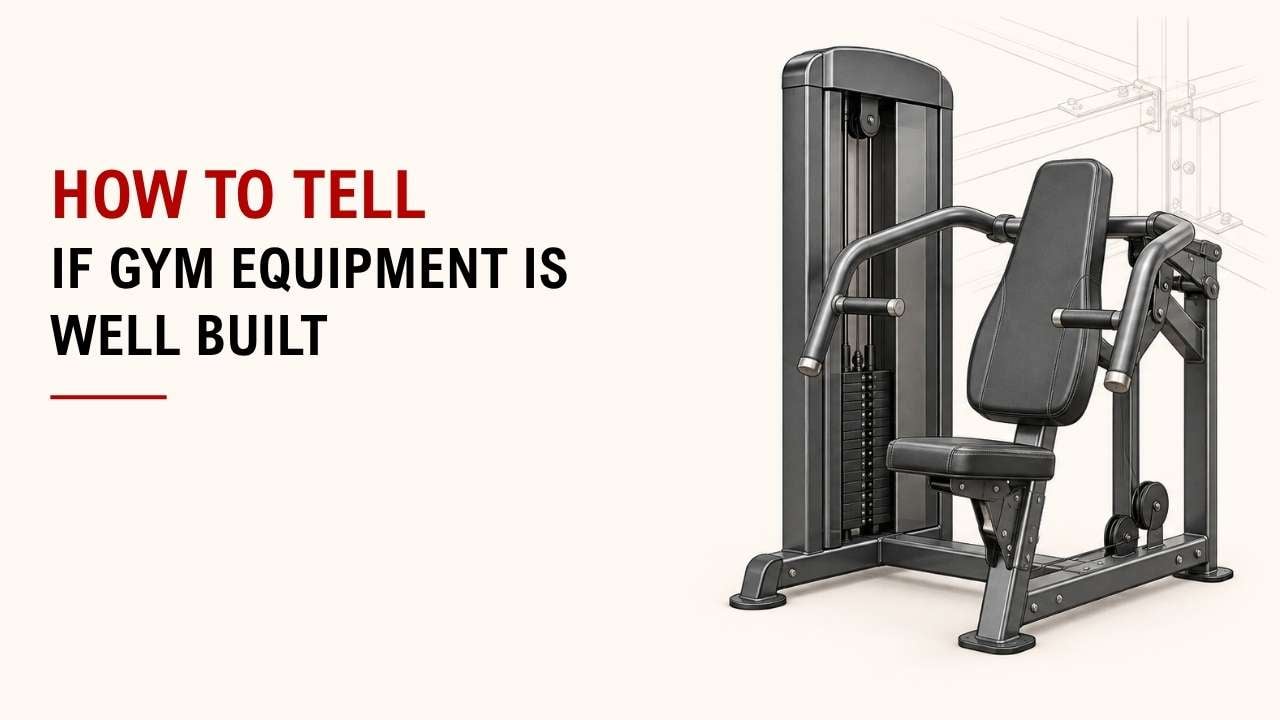

Have you ever used a gym machine that felt solid, then moved to another one that shook or rattled? You can often notice the difference within a few minutes.
The short answer is simple: check the frame, welds, stability, moving parts, cables, pulleys, and adjustment points. Good gym equipment should feel solid, smooth, and secure when you use it.
As a Machinery & Structural Engineer at YR Fitness, I look closely at how machines handle repeated movement, load, and daily wear. I often see small construction details reveal much more than a machine’s appearance.
This guide gives you six simple checks you can make without special tools or engineering knowledge. Start with the frame, then work through the parts that move, lock, and carry resistance.
1. Check the Frame
Start with the biggest part of the machine: the frame.
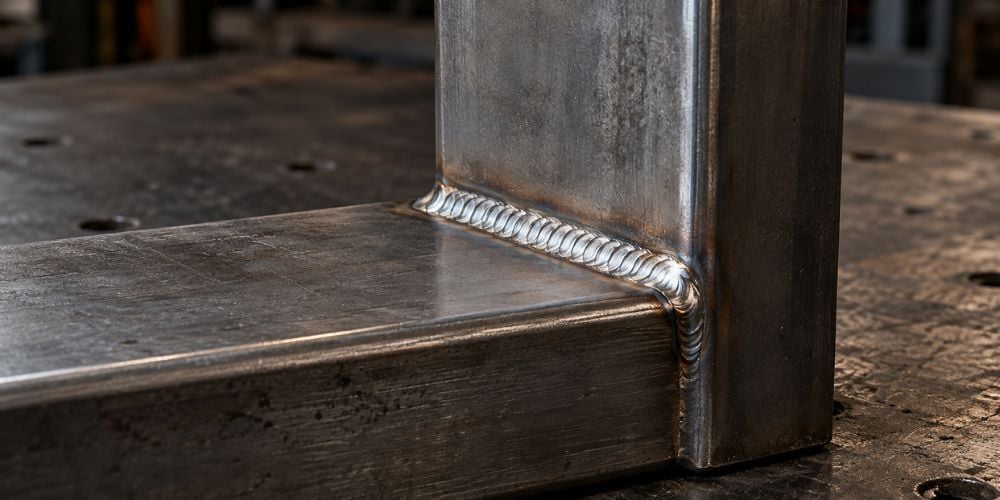
A well-built frame should feel rigid when you push, pull, or use the machine. It should not noticeably twist or flex under normal training loads.
Look for:
- Thick steel tubing
- Reinforced high-stress areas
- Secure frame connections
- A solid overall structure
- No visible bending or damage
I normally give a machine a gentle push from different directions. If the whole structure moves too easily or feels weak, I look more closely before putting much weight on it.
Here is why this matters. International standards such as ISO 20957-1:2024 cover general safety requirements and testing for stationary training equipment, so structural safety is more than just how solid a machine looks.
Also check the finish. Good powder coating or another durable surface finish helps protect steel against sweat, moisture, scratches, and daily wear.
Quick check: Push the machine gently from the side. Does the frame stay firm, or does it flex and move?
2. Look at the Welds
Next, check where the steel parts connect.
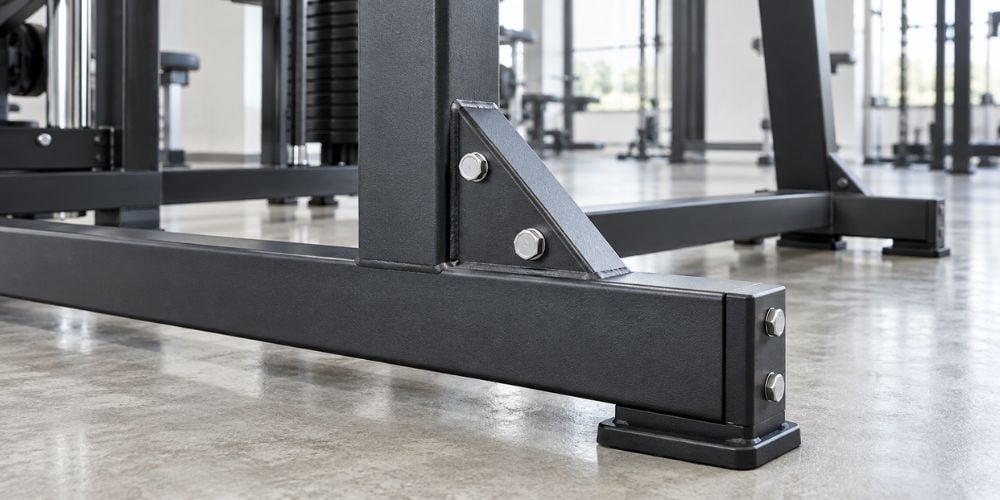
Good welds should normally look:
- Consistent
- Even
- Fully joined
- Free from obvious cracks
- Free from large gaps
They do not need to look perfect everywhere. What matters more is whether important structural joints look complete and secure.
Pay extra attention around:
- Main frame connections
- Handles
- Weight supports
- Seat supports
- Pivot arms
Why these areas?
They repeatedly take force while you train. Poor connections can become more noticeable as repeated loading continues.
I pay particular attention to welds near moving arms. These areas can experience stress during every repetition.
Frame and Weld Quick Check
What to Check | Good Sign | Warning Sign |
Frame tubing | Firm and rigid | Noticeable flexing |
Frame connections | Secure | Loose movement |
Welds | Even and complete | Cracks or large gaps |
High-stress areas | Reinforced | Visible bending |
Surface finish | Smooth and protected | Rust or major coating damage |
You are not trying to perform an engineering inspection here. You are simply looking for obvious signs that the structure was made and maintained properly.
3. Test the Machine for Stability
Now sit on the machine and actually use it.
Does it stay planted on the floor?
A good machine should not rock heavily, wobble from side to side, or shift during normal exercise. Some movement can happen if the floor is uneven, but the machine itself should still feel stable.
Check:
- The width of the base
- Whether all feet touch the floor
- Whether bolts are tight
- Whether the machine rocks when loaded
- Whether handles and seats stay stable
Try a few controlled repetitions instead of judging the machine only by appearance.
A machine can look strong while standing still and feel completely different once weight starts moving.
This is also something formal equipment standards examine. The current ASTM F2216 standard for selectorized strength equipment specifically includes stability requirements for this type of equipment.
What should you feel?
You should feel like you are controlling the exercise, not trying to keep the machine stable.
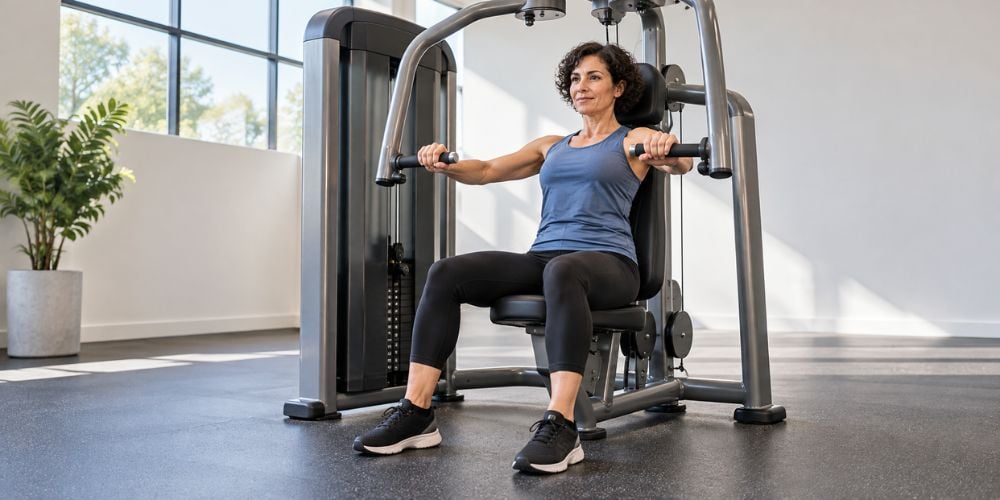
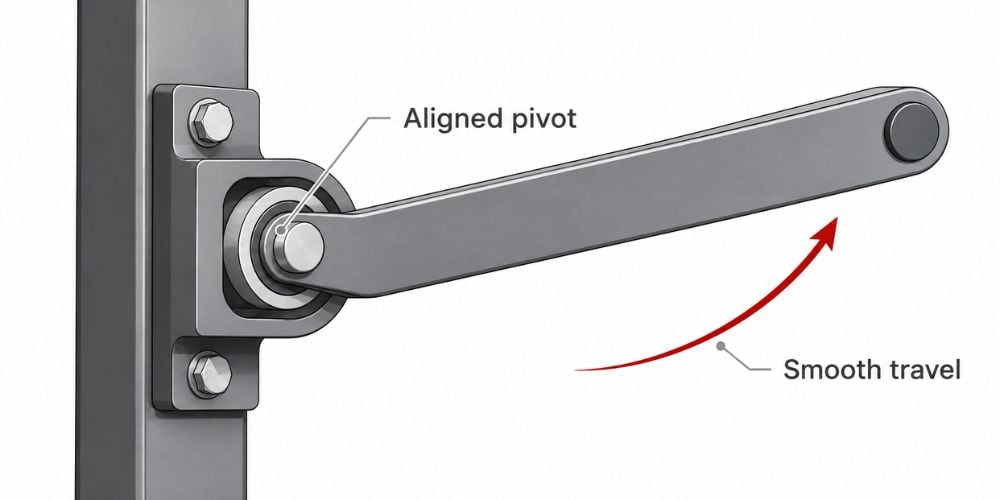
4. Check the Moving Parts
This is one of the easiest ways to notice construction quality.
Use the machine slowly. Pay attention to how it feels from the beginning of the repetition to the end.
Well-built moving parts should generally feel:
- Smooth
- Controlled
- Consistent
- Properly aligned
Watch out for:
- Grinding
- Sudden sticking
- Excessive vibration
- Uneven resistance
- Loose pivot points
- Repeated knocking sounds
Bearings and pivot points are especially important because they help the machine move smoothly.
In my experience, you can often feel a problem before you can see it. If one section of the movement suddenly becomes rough or unstable, something may need adjustment, lubrication, or repair.
Formal testing goes deeper than a user can in the gym. For example, ASTM F2277 test methods cover areas such as stability, weight-stack travel, locking mechanisms, pulley design, loading, and deflection on selectorized strength equipment.
For you as a normal gym user, the simple version is this:
Smooth and predictable is good. Rough, loose, or jerky deserves attention.
At YR Fitness, we pay attention to frame construction, movement paths, adjustment systems, and components because these details affect how a machine feels after repeated use. If you want to compare these details visually across different commercial machines, you can explore our gym equipment here.
5. Check the Cables and Pulleys
Using a cable machine? Do not ignore the cable system.
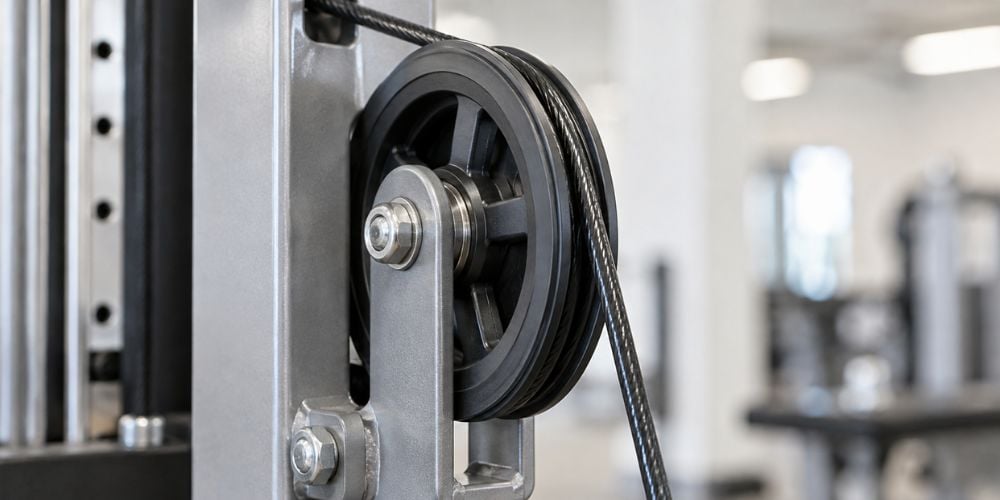
The cable should travel smoothly through the pulleys without rubbing heavily against the frame or jumping out of position.
Check the cable itself.
Avoid using a machine if you notice:
- Fraying
- Broken strands
- Damaged coating
- Flattened cable areas
- Loose cable ends
- Poor cable routing
Then look at the pulleys.
They should rotate smoothly when you move the weight. You should not hear strong grinding or feel the cable repeatedly catching.
Quick test: Select a light weight and perform one slow repetition.
Does the resistance remain smooth?
If it suddenly changes, catches, or becomes jerky, the cable or pulley system deserves a closer look.
Alignment matters too. The cable should enter and leave each pulley cleanly rather than rubbing heavily against its edges.
Good cable routing may look like a small detail. It can affect both the feel of the exercise and the life of the cable.
6. Test the Adjustment Points
Finally, check anything you can adjust.
This includes:
- Seat height
- Backrest position
- Starting position
- Handle position
- Leg pads
- Range-of-motion settings
Move each adjustment through several positions.
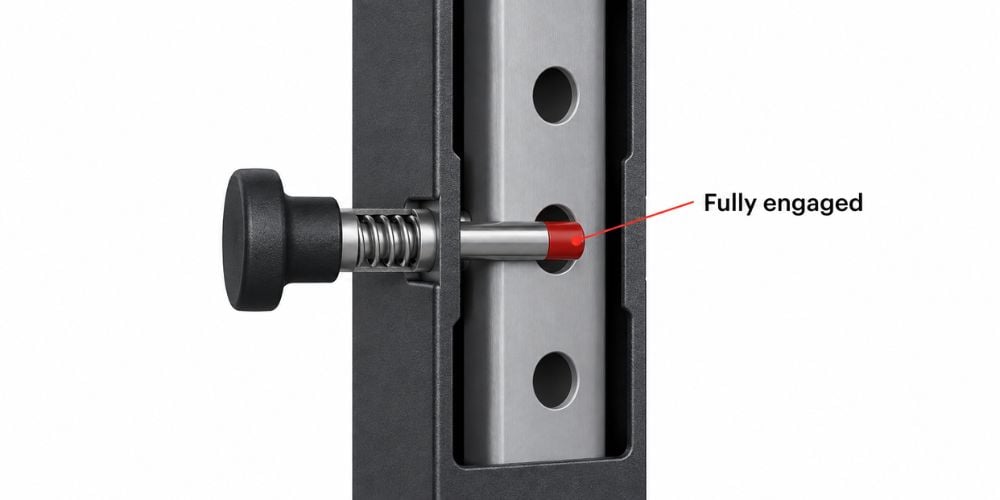
The pin or locking mechanism should slide into place easily and remain firmly locked once set.
Does the seat stay exactly where you put it?
If it moves while you exercise, stop and check it. A slipping adjustment is not something you should simply train through.
Also check handles and adjustment knobs. They should feel secure without requiring excessive force to operate.
Small amounts of movement between some metal parts can be normal. Excessive side-to-side play, on the other hand, may indicate wear, poor fit, or loose hardware.
60-Second Gym Equipment Check
Part | What to Do | Good Sign | Warning Sign |
Frame | Push gently from the side | Firm | Flexing or twisting |
Welds | Inspect major joints | Complete and even | Cracks or gaps |
Base | Perform a few reps | Stays planted | Rocks or shifts |
Moving parts | Move slowly | Smooth and consistent | Grinding or sticking |
Cable | Watch during a rep | Clean travel | Fraying or rubbing |
Pulleys | Listen and feel | Smooth rotation | Catching or jerking |
Adjustments | Lock several positions | Firmly secured | Loose or slipping |
You can run through most of these checks quickly before starting your workout.
If something feels seriously loose, damaged, or unstable, do not keep loading the machine just to test it. Use another machine and let gym staff know.
Conclusion
You do not need to take a gym machine apart to judge its basic build quality. Check the frame, welds, stability, movement, cables, pulleys, and adjustment points.
I would choose a machine that feels solid and smooth over one that only looks impressive.
YR Fitness focuses on commercial-grade equipment designed for repeated daily training, with attention to frame strength, movement design, and durable components. If you want to see how these details come together across different machine designs, browse YR Fitness equipment here.
Related articles:



