



Struggling to get your first personal training clients? Getting people to trust you can be harder than knowing how to train them.
The simple answer is to start with people you know, offer a useful first session, stay visible, and ask for referrals. You do not need a big audience to get started.
As an Exercise Physiology & Biomechanics Expert at YR Fitness, I work closely with exercise movement, training methods, and how people use gym equipment. This experience has shown me that clear guidance and a good first training experience are often what build trust.
Below, I’ll show you six practical ways to find your first clients. Use these steps to turn simple conversations into real training opportunities.
1. Start With People You Already Know
Your first client does not need to be a stranger.
Start with people already around you:
- Friends
- Coworkers
- Family connections
- People you regularly see at the gym
- Former classmates
- People in local fitness groups
Tell them clearly that you are starting personal training and have room for a few clients.
Keep the message simple. Explain that you help people improve their strength, fitness, or workout routine and that you are currently taking on clients.
Why start here?
Because these people already know something about you. You are not starting every conversation from zero.
ACE also recommends building real connections and staying visible when trying to attract clients. Its guide on acquiring and retaining personal training clients highlights social media, community visibility, testimonials, and personal relationships as useful ways to grow.
Should You Train Everyone for Free?
No.
A free consultation or one trial session can help someone understand what you offer. Giving away weeks of training, on the other hand, may make it harder to move toward paid sessions.
I prefer giving someone a useful experience first. Then I explain what continued coaching could help them achieve.

2. Choose the Type of Client You Want to Help
Who do you want to train?
You do not need a highly specific niche at the beginning. You just need people to quickly understand what problem you can help them solve.
Client Type | What They May Need | Simple Message |
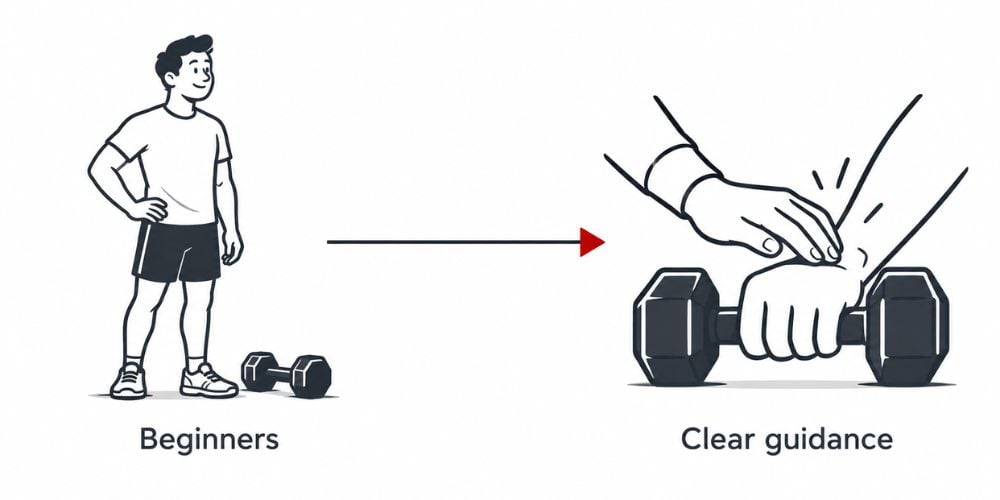
Gym beginners | Confidence and basic guidance | “I help beginners learn how to train properly.” |
Weight-loss clients | Simple, consistent training | “I help people build a manageable exercise routine.” |
Strength beginners | Technique and progression | “I help beginners get stronger with good form.” |
Busy adults | Shorter workouts | “I help busy people train efficiently.” |
People unsure about machines | Equipment guidance | “I help people feel more confident using gym equipment.” |
Compare these two messages:
Too General:
“I am a personal trainer offering customized fitness solutions.”
Much Clearer:
“I help beginners learn how to strength train safely and confidently.”
Which one would a beginner understand faster?
The second one immediately tells people why they might need your help.
3. Offer a Simple First Session
A new client may not be ready to buy ten sessions immediately.
Make the first step easy.
You could offer:
- A short fitness consultation
- A basic movement assessment
- A beginner gym orientation
- A 30- to 60-minute trial session
- A simple introductory workout
Your first session does not need to be complicated.
Part of Session | What to Do | Why It Matters |
Quick conversation | Ask about goals and experience | Helps you understand the person |
Basic assessment | Look at simple movements | Shows where guidance may help |
Short workout | Use a few suitable exercises | Lets them experience your coaching |
Technique help | Correct one or two useful details | Gives immediate value |
Next step | Explain what future sessions could cover | Keeps the conversation moving |
During the session, ask about their goal first.
What do they want to achieve? What has stopped them before? Which exercises make them uncomfortable?
ACE’s guidance on building relationships with personal training clients recommends rapport, empathy, open-ended questions, reflective listening, and connecting training to what matters personally to the client.
Then give them something useful.
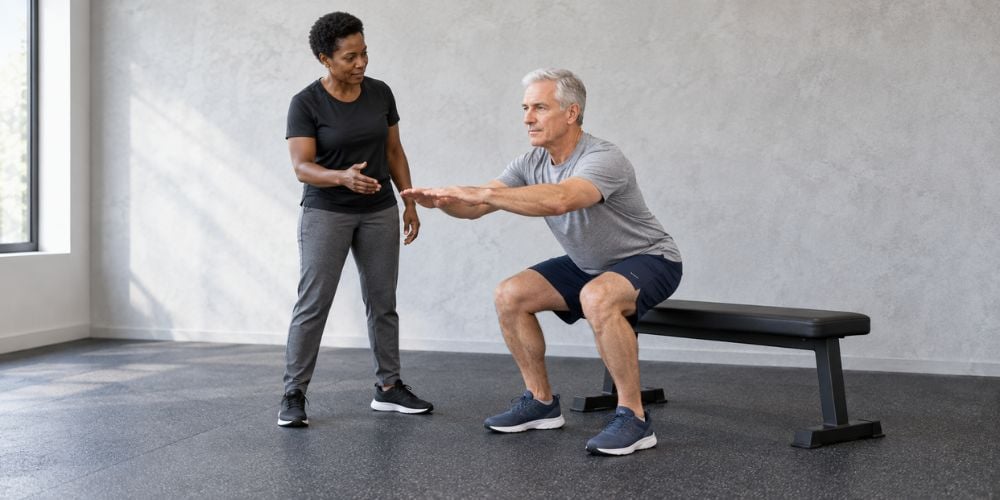
Maybe you correct their squat setup. Maybe you show them how to use a chest press properly, or give them a simple three-exercise routine.
I often find this works better than a long sales conversation. People understand the value of coaching faster when they actually experience it.
4. Train Where Potential Clients Can See You
If you work in a gym, be visible on the gym floor.
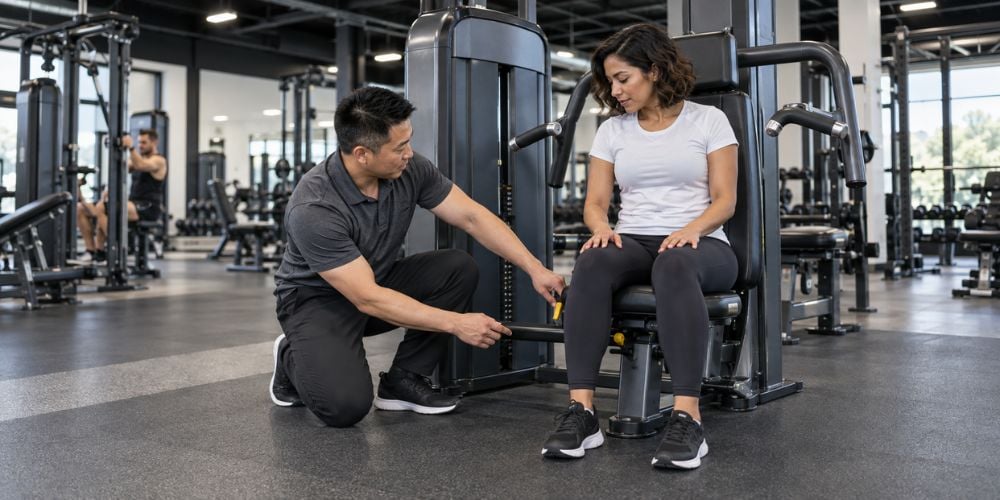
Train clients professionally. Explain exercises clearly, adjust equipment when needed, and keep sessions organized.
Other members notice.
Good coaching can become its own form of marketing. When someone watches you help a client move better or use a machine correctly, they can picture what working with you might be like.
The training environment matters too. Reliable equipment can make sessions easier to organize and help you deliver a more consistent experience.
If you eventually build your own personal training space, YR Fitness can help you compare commercial strength, cardio, and functional equipment for regular training. We design our equipment for repeated daily use, so you can choose machines that fit the clients and training style you plan to offer.
5. Post Useful Fitness Content
You do not need thousands of followers.
You need the right people to see that you can actually help them.
Post useful content such as:
- How to use a gym machine
- Common beginner exercise mistakes
- Short workout ideas
- Exercise form tips
- Beginner strength routines
- Client progress stories, with permission
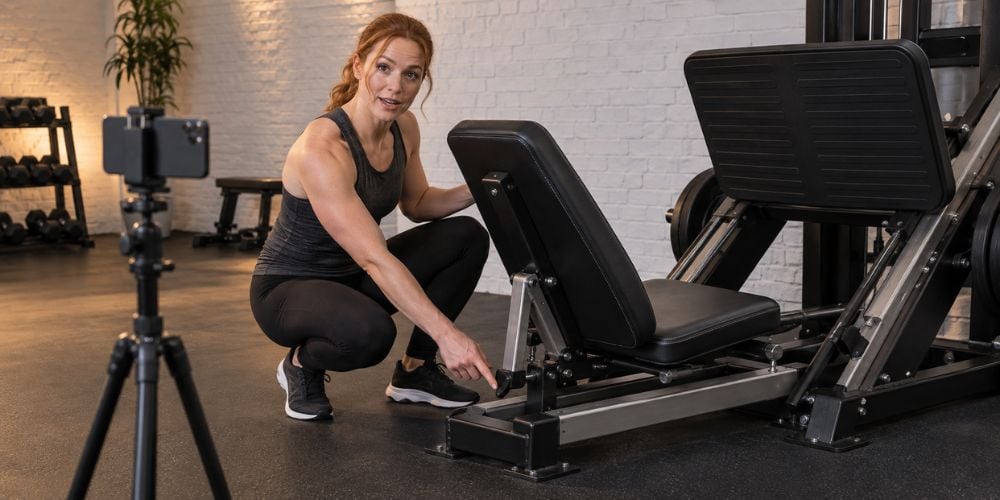
A short video showing how to adjust a leg press seat may be more useful than a long motivational post.
Why?
Because it shows your coaching ability.
Someone watching might think, “I never knew how to use that machine correctly.”
That person may become your next consultation.
What About Client Results and Testimonials?
They can help, but use them carefully.
Get permission before posting someone’s story, photo, or testimonial. ACE also specifically recommends getting written permission before using a client’s words or image in marketing.
If you promote client results, keep the claims honest and clear. The FTC’s guidance on endorsements and testimonials explains that testimonials must not be misleading and that unusual results should not be presented as if everyone can expect the same outcome.
So instead of trying to make every result look dramatic, show real progress and explain the work behind it.
That builds more trust anyway.
6. Ask for Referrals
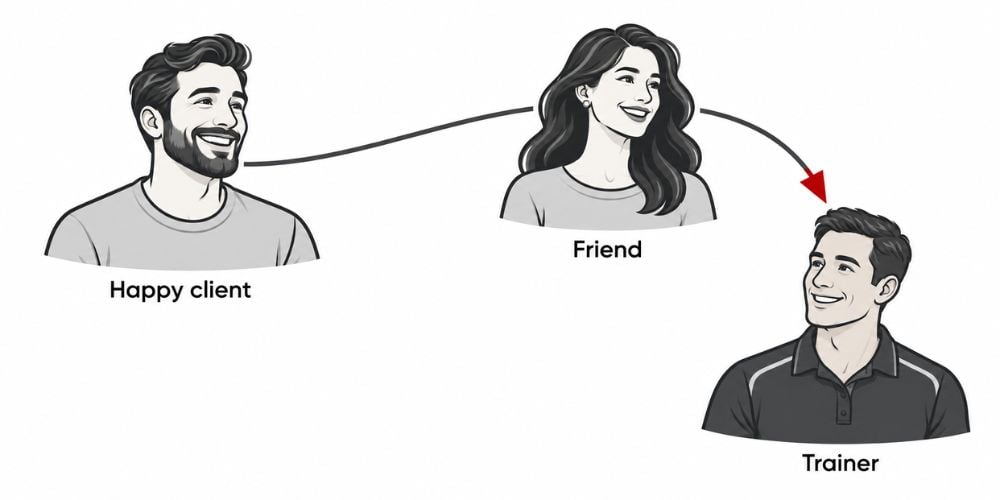
Once you have a happy client, ask whether they know someone else who may benefit from training.
Keep the request natural.
You could simply say:
“If you know someone who is also trying to get started in the gym, feel free to introduce us.”
You do not need a complicated referral program when you are starting.
Focus first on creating a good training experience. Help the client feel more confident, understand their exercises, and make steady progress.
One good client can introduce you to another. That second client may introduce you to two more.
That is how a small client base starts to grow.
Conclusion
Getting your first personal training clients comes down to a few basic actions: talk to people, show how you can help, offer a useful first experience, stay visible, share helpful content, and ask for referrals.
I would focus on getting your first two or three clients and coaching them well before worrying about building a large business. Good results and good experiences give you something much stronger to grow from.
If your client base eventually grows into your own studio or training space, YR Fitness offers commercial strength equipment, cardio machines, and fitness accessories built for regular use.
Related articles:



