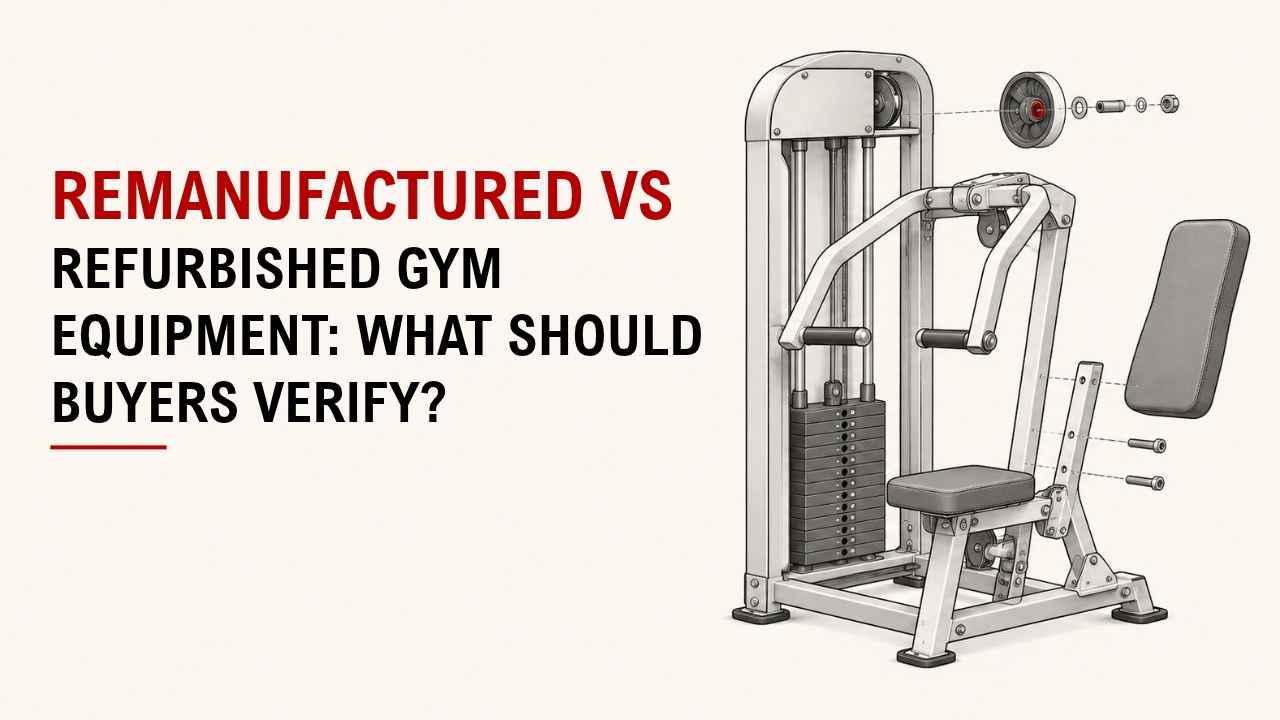

Not sure whether remanufactured or refurbished gym equipment is worth buying? The labels can sound similar, but the work done to the machine may be very different.
The simple answer is: check the frame, moving parts, replacement components, repair work, and previous use before you buy. Do not judge the machine by fresh paint or new upholstery alone.
As a Machinery & Structural Engineering Expert at YR Fitness, I work closely with commercial gym equipment frames, welds, and other high-wear parts. This experience helps me spot the difference between a machine that has been properly rebuilt and one that only looks new.
Below, I’ll show you the main things to verify before choosing either option. Use these checks to make a safer and more informed buying decision.
1. Verify What “Remanufactured” Actually Means
Does remanufactured always mean completely rebuilt?
No. You still need to ask what work was actually done.
A more complete process may include:
- Disassembling major parts
- Inspecting the frame
- Replacing worn components
- Repairing mechanical systems
- Repainting or recoating the frame
- Installing new upholstery
For example, one industry remanufacturing program describes inspecting machines individually and repairing or replacing worn and nonworking components before reassembly.
That does not mean every seller follows the same process.
So ask one direct question:
“Which parts were inspected, repaired, and replaced?”
I would rather see a clear repair list than rely on the word remanufactured alone.
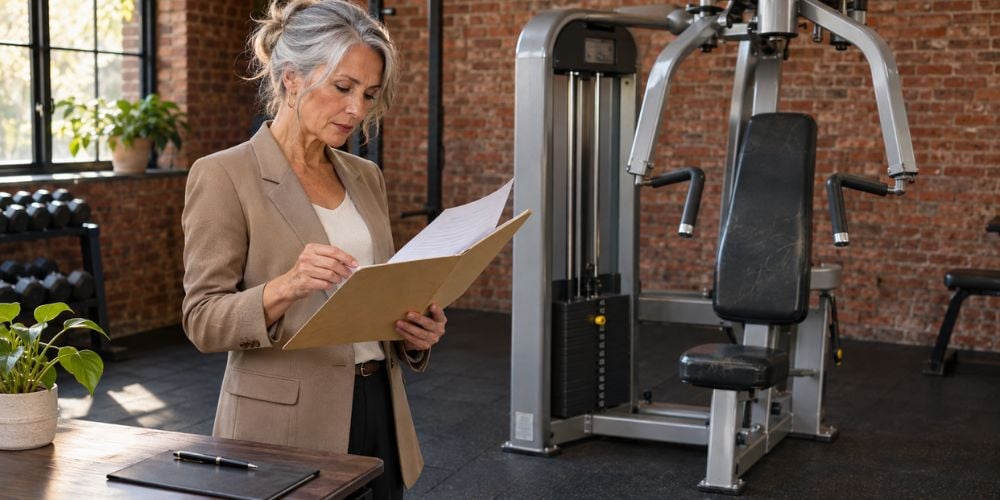
2. Verify What Was Done During Refurbishment
“Refurbished” can cover a wide range of work.
One machine might get new cables, bearings, upholstery, and paint. Another may only be cleaned and given new seat covers.
The FTC also advises online buyers to pay attention when products are described as refurbished or used and to inspect actual-item photos, descriptions, seller terms, and return policies.
Ask whether the seller worked on:
- Cables
- Belts
- Pulleys
- Bearings
- Bushings
- Grips
- Upholstery
- Adjustment mechanisms
- Paint or powder coating
- Electronics
Also ask what was not replaced.
Here is the simple difference to keep in mind:
What to Verify | Remanufactured | Refurbished |
Machine disassembled | Ask how far it was stripped down | May or may not be done |
Frame inspected | Verify inspection was completed | Ask specifically |
Worn components | Ask which were replaced | May be repaired or reused |
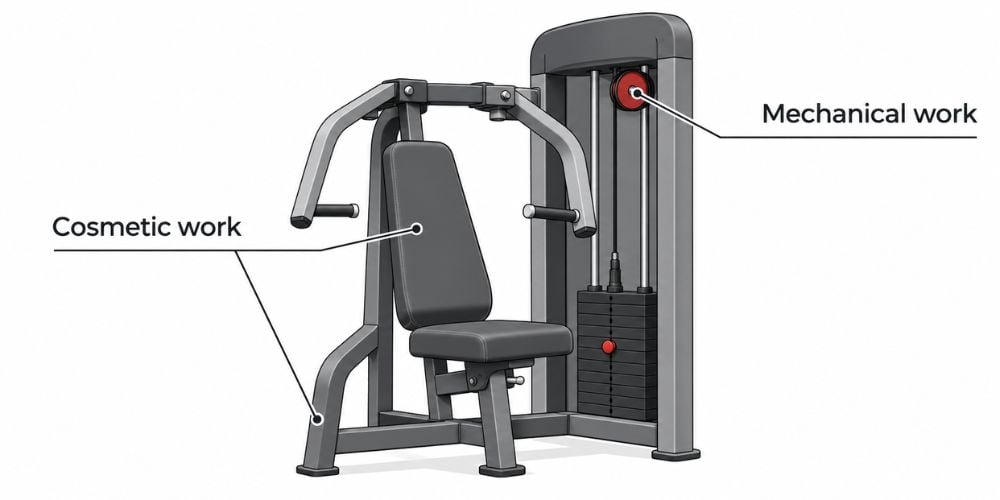
Cosmetic work | Often included | Commonly included |
Mechanical work | Should be clearly documented | Level of work can vary |
Final testing | Ask for testing details | Ask what was actually tested |
The label is not proof. The work list is.
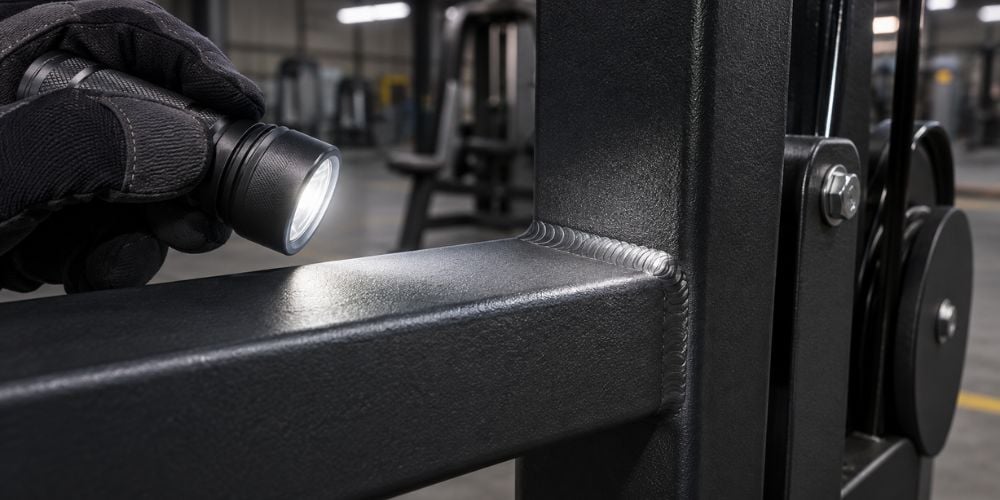
3. Check the Frame and Welds
The frame deserves more attention than the paint.
Why?
Cosmetic work can make an old machine look new, but it cannot remove serious structural damage.
Check for:
- Cracks
- Bent tubing
- Deep corrosion
- Damaged welds
- Unusual gaps
- Previous welding repairs
Look especially closely around:
- Frame joints
- Lever-arm mounting points
- Weight-stack areas
In my experience, a scratched frame is usually much less concerning than a cracked or badly repaired frame.
See a new weld? Ask why it is there.
A repair is not automatically bad, but you should know what happened and whether the repair was properly completed.
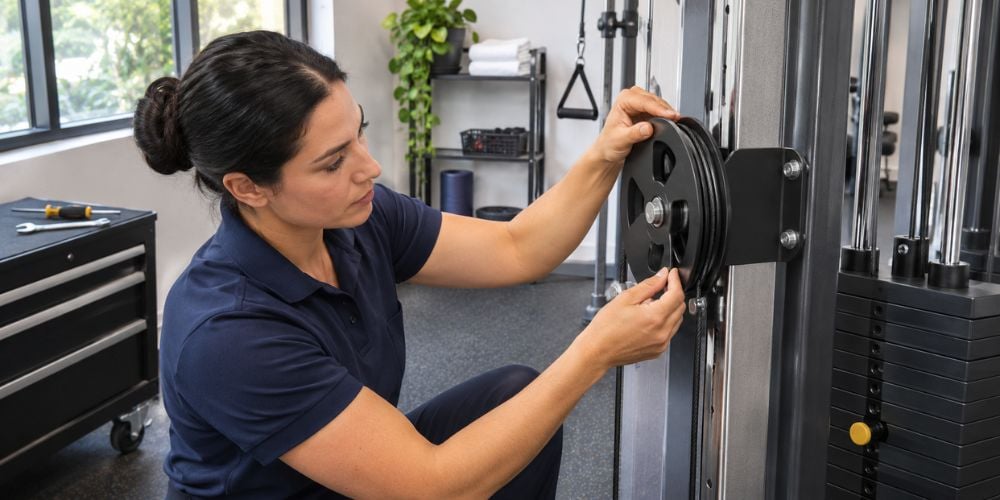
4. Check All Moving and Wear Parts
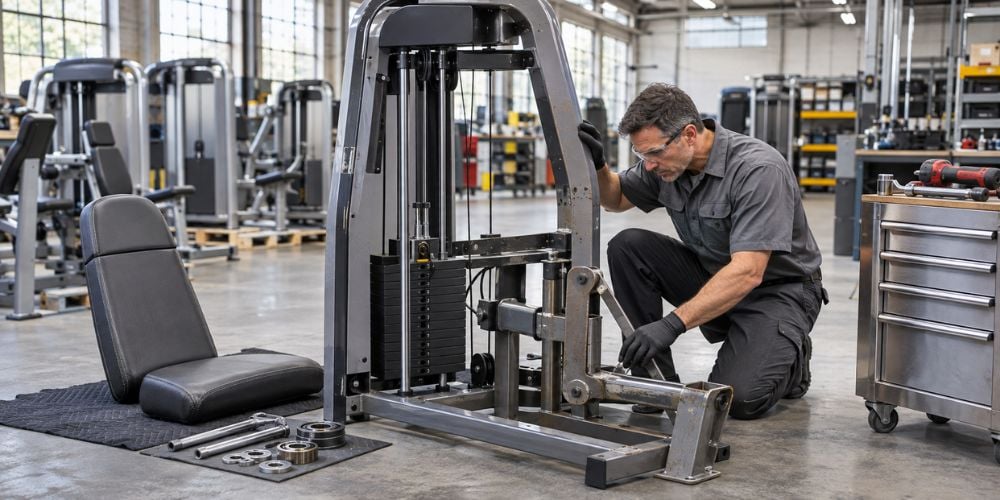
Do not just stand back and look at the machine.
Move it.
Test:
- Cables
- Pulleys
- Bearings
- Bushings
- Belts
- Adjustment pins
- Guide rods
- Handles
- Seat adjustments
- Lever arms
Movement should feel smooth and controlled.
Here is a quick inspection table:
Part | What to Check | Warning Signs |
Cables | Coating and full cable length | Fraying, cracks, flattening, exposed wire |
Pulleys | Rotation and alignment | Sticking, wobbling, unusual noise |
Bearings | Smooth movement | Grinding or rough movement |
Bushings | Joint movement | Excessive looseness or side play |
Belts | Surface and tension | Cracks, slipping, heavy wear |
Adjustment pins | Locking action | Bent pins or poor engagement |
Guide rods | Smooth weight-stack travel | Sticking or uneven movement |
Handles | Grip and attachment | Loose or rotating unexpectedly |
Seats | Adjustment and locking | Movement after locking |
Lever arms | Full movement path | Shaking or excessive side play |
If possible, test the machine with light and heavier resistance.
I often see wear become much easier to notice once a machine is actually under load.
At YR Fitness, we build commercial strength equipment around solid frames, durable components, and controlled movement paths. You can compare the machine you are considering with our commercial strength equipment before deciding whether the used price still makes sense.
5. Verify the Machine’s Age and Previous Use
How old is too old?
There is no simple number.
How the machine was used and maintained can matter just as much as its age.
Ask:
- What year was it manufactured?
- Where was it previously used?
- How long was it in service?
- Was it used commercially?
- How often was it serviced?
- How long has it been stored?
A machine from a busy commercial gym may have experienced much more daily use than one from a small studio or home gym.
An older strength machine can still perform well if it has been maintained properly. Its history simply helps you judge possible wear in cables, bearings, pulleys, belts, and adjustment systems.
One more check: has the model ever been recalled?
Search for a model or manufacturer in the U.S. Consumer Product Safety Commission recall database. The database covers product recalls and safety warnings and can help you spot known safety problems before buying used equipment.
6. Ask Which Parts Are Original and Which Were Replaced
A machine can look completely refreshed while still containing many original components.
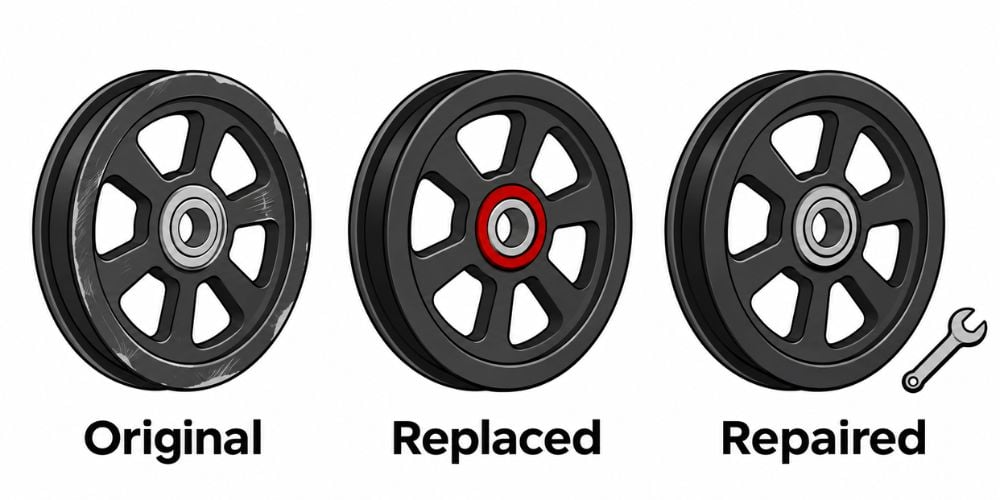
So ask the seller to separate the parts into three groups:
Original Parts
These are components still fitted from the original machine.
Replaced Parts
These are new components installed during rebuilding.
Repaired Parts
These are original components that were fixed and reused.
Why does this matter?
Two machines advertised as “refurbished” can contain very different amounts of new hardware.
Also ask where the replacement parts came from.
Were they:
- Original manufacturer parts?
- Compatible aftermarket parts?
- Used parts from another machine?
Aftermarket parts are not automatically bad. You simply need to know what you are paying for.
If the seller cannot tell you which major parts were replaced, treat that as missing information.
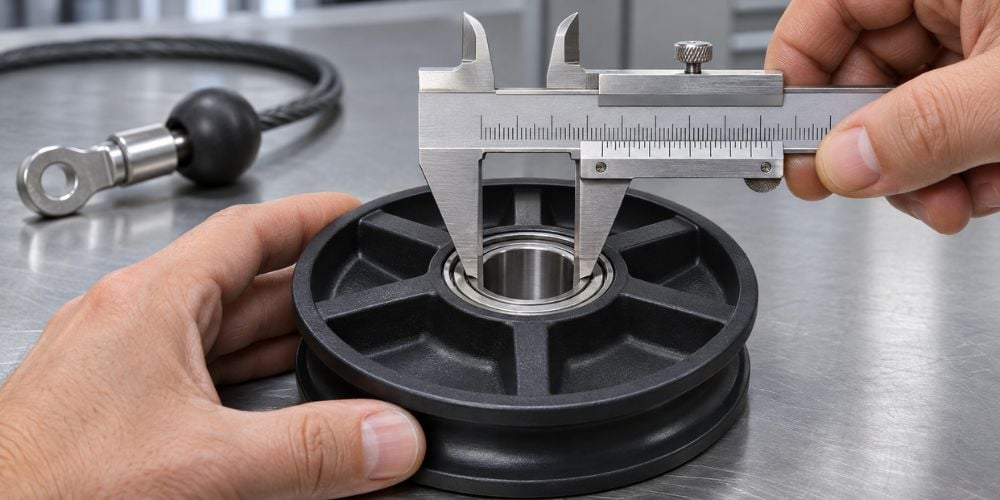
7. Verify Replacement-Part Quality
A new part is not automatically a good part.
Pay close attention to replacement:
- Cables
- Pulleys
- Bearings
- Belts
- Bushings
- Fasteners
These parts should fit correctly and be suitable for the loads created during normal exercise.
Take cables as an example.
A cable may look brand new, but incorrect sizing, poor construction, or poor installation can still affect how the machine moves.
The same applies to bearings and pulleys. New parts should move feel smooth, not simply make the machine look newer.
What should you ask?
Try these:
- Who made the replacement part?
- Is it made for this machine?
- When was it installed?
Keep it simple.
You are trying to find out whether the rebuild improved the actual machine or mainly improved its appearance.
Conclusion
Remanufactured and refurbished gym equipment can both be worth buying. The key is to verify the work instead of trusting the label.
Check the frame and welds and ask exactly what was repaired or replaced. Fresh paint and upholstery are easy to notice, but structural condition, cables, bearings, and other working parts tell you much more.
If the used price starts getting close to the cost of a new machine, compare both options before paying. You can explore YR Fitness commercial gym equipment to compare new construction, components, and long-term value against the remanufactured or refurbished machine you are considering.
Related articles: