
Do you need lots of equipment to train clients anywhere? No—a small, flexible kit is usually enough.
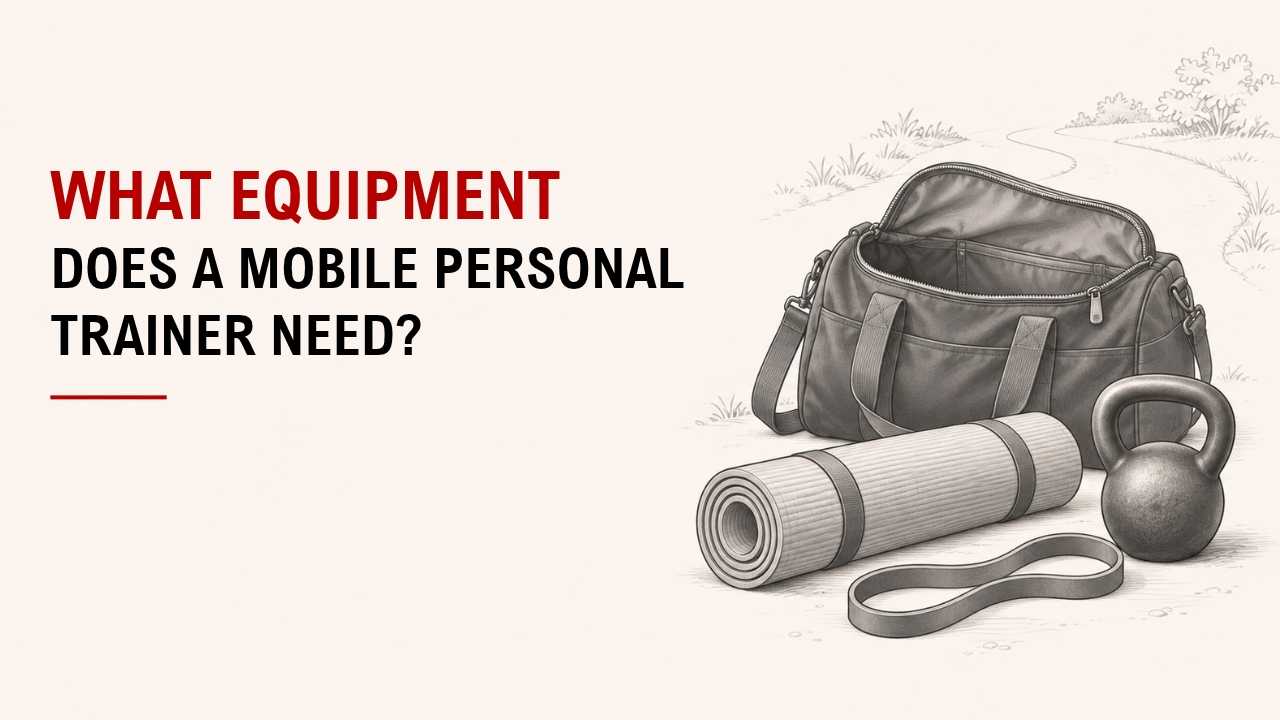
Start with resistance bands, adjustable weights, a suspension trainer, a mat, and a few conditioning tools. Choose equipment that is easy to carry and useful for many exercises.
As the founder and chief designer of YR Fitness, I have spent decades working with fitness equipment and training spaces. In my experience, simple and versatile equipment works best for mobile training.
Below are 10 practical essentials to consider. Start with the basics, then add heavier gear only when you need it.
1. Resistance Bands
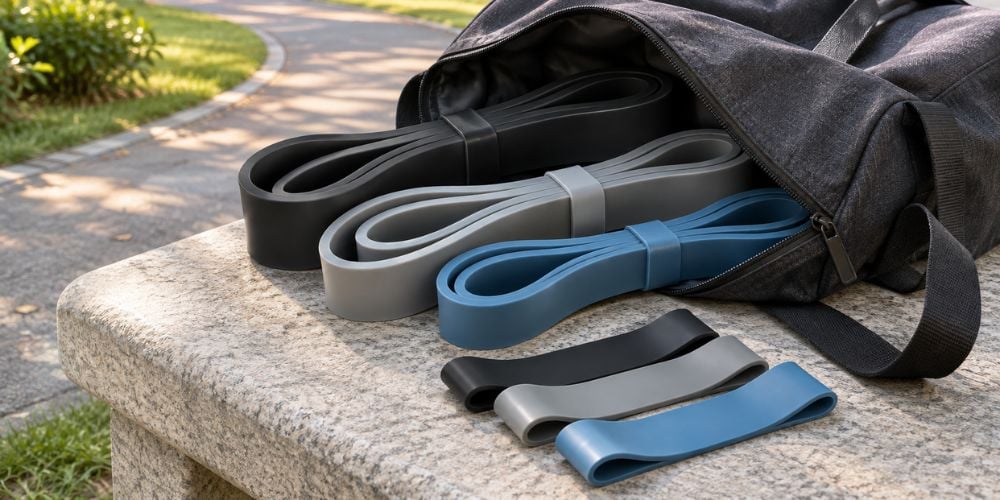
If you only buy one portable strength tool, resistance bands are a good place to start. They are light, affordable, and easy to fit inside a training bag.
Use them for:
- Rows
- Chest presses
- Squats
- Glute exercises
- Shoulder exercises
- Warm-ups and mobility
The CDC includes resistance-band exercises as a form of muscle-strengthening activity. Mayo Clinic also lists resistance bands as a practical alternative to traditional weights.
What should you carry? Take several resistance levels plus both long bands and small loop bands. That gives you much more flexibility with different clients.
2. Adjustable Dumbbells
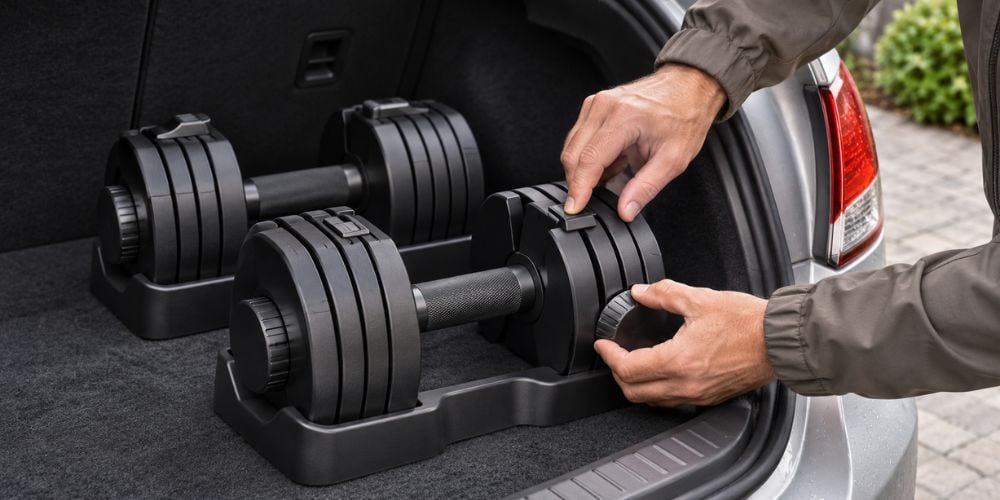
Want traditional strength exercises without carrying several pairs of dumbbells? Adjustable dumbbells solve that problem.
They work well for:
- Goblet squats
- Lunges
- Shoulder presses
- Rows
- Chest presses
- Biceps curls
The main drawback is weight. If you travel between clients by car, they make much more sense than if you carry your kit on foot.
Always check that the adjustment mechanism is locked before starting an exercise.
3. Suspension Trainer
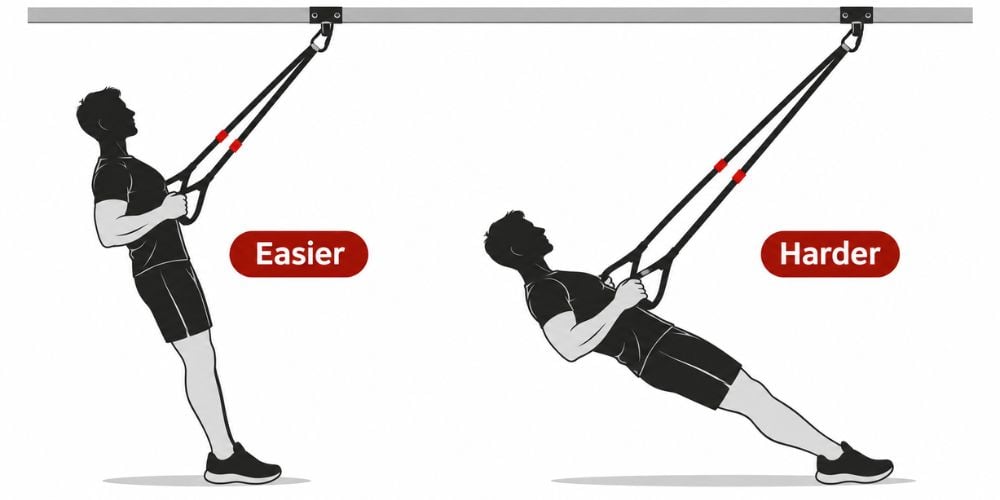
A suspension trainer takes up very little room but can cover much of the body.
You can use it for:
- Rows
- Push-ups
- Squats
- Lunges
- Core exercises
Here is why it works well for mobile training: you can change difficulty simply by changing body position.
Just make sure the anchor point is secure before every session.
4. Exercise Mat
A mat gives your client a cleaner and more comfortable surface for floor exercises.
Use it for:
- Stretching
- Mobility work
- Core exercises
- Push-ups
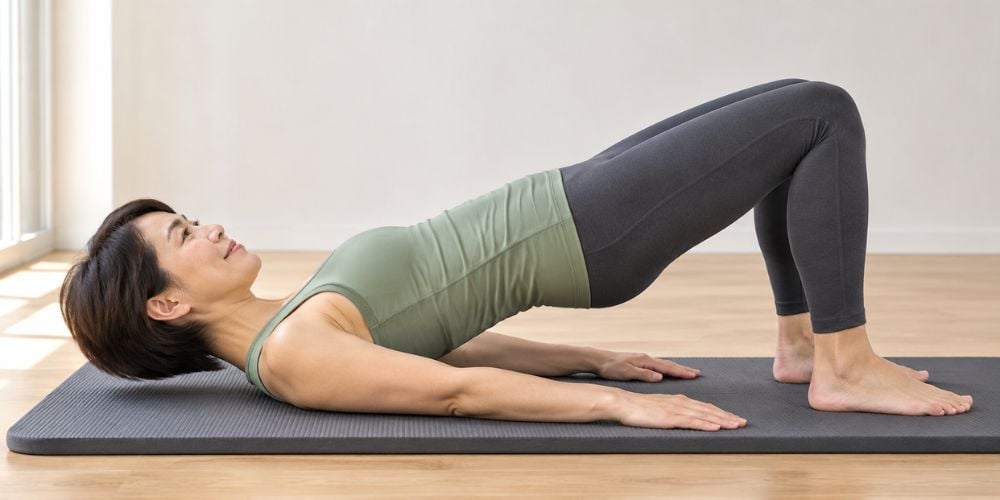
- Glute bridges
Look for one that is easy to clean, durable, and simple to roll or fold. If you regularly train outdoors, choose a mat that can cope with rougher ground.
5. Kettlebells
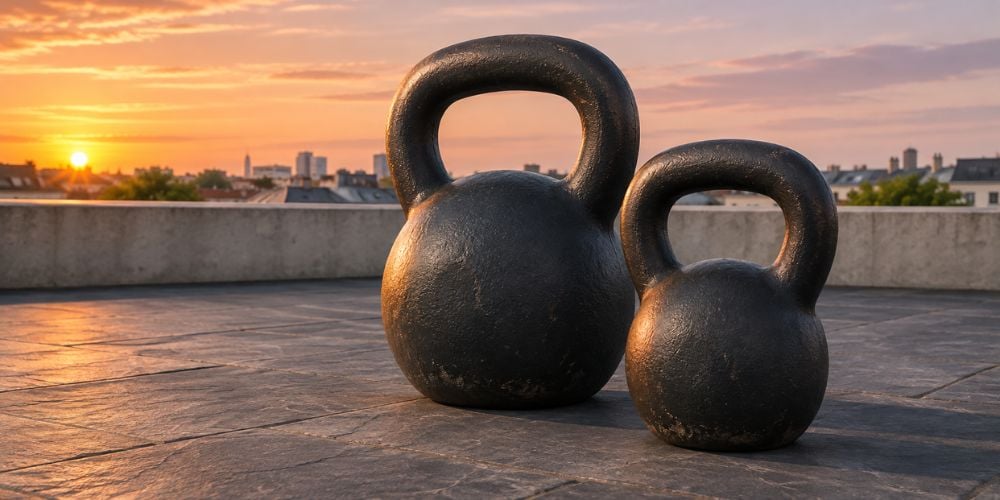
Kettlebells are useful when you want strength and conditioning from one piece of equipment.
Common options include:
- Swings
- Goblet squats
- Deadlifts
- Carries
- Presses
- Rows
Do you need a complete set? Probably not.
One or two carefully chosen weights may be enough for mobile sessions. Pick them around the clients you train most often rather than carrying extra weight just in case.
The latest ACSM resistance-training guidance also emphasizes matching resistance training to the individual’s goal rather than following one fixed approach.
If your client list grows and carrying weights becomes limiting, a fixed training space may make more sense. At YR Fitness, we offer commercial gym equipment that can help you move from a portable setup to a more complete strength and cardio training space.
6. Medicine Ball
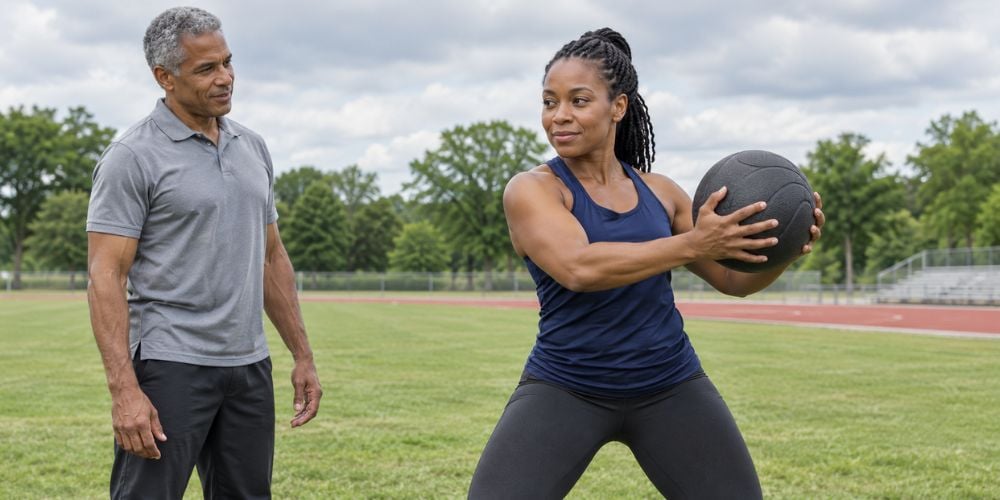
A medicine ball is useful for adding power, coordination, and core work.
You can use it for:
- Rotational exercises
- Squats
- Lunges
- Core work
- Partner drills
- Throws where the space allows
Keep the weight manageable. A client should be able to control the movement properly rather than struggle simply because the ball is heavy.
7. Jump Rope
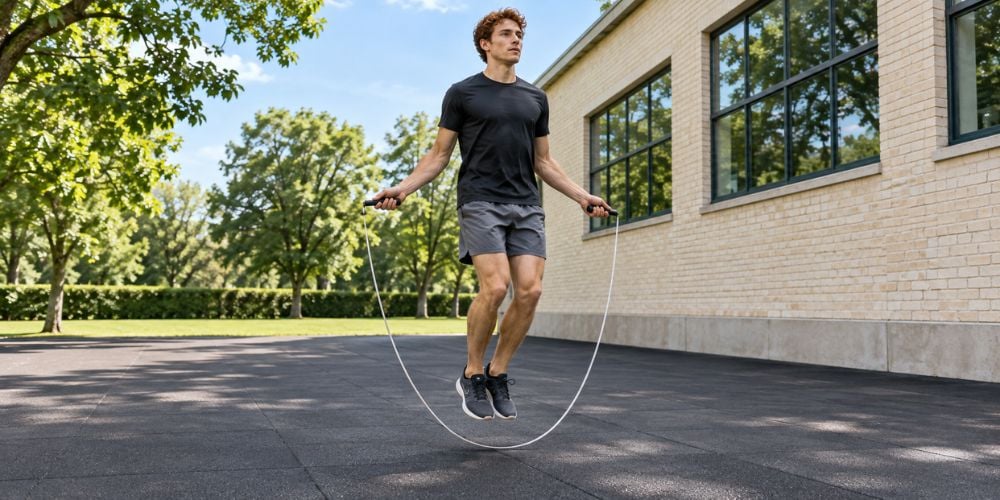
A jump rope may be one of the simplest cardio tools you can carry.
It works well for:
- Warm-ups
- Cardio intervals
- Circuit training
- Coordination drills
Harvard Health notes that jumping rope can quickly raise heart rate and can also challenge coordination.
It also takes almost no room in your bag.
One quick check: Is the ground flat and dry? Skip the rope if the surface is uneven or slippery.
8. Agility Cones and Mini Hurdles
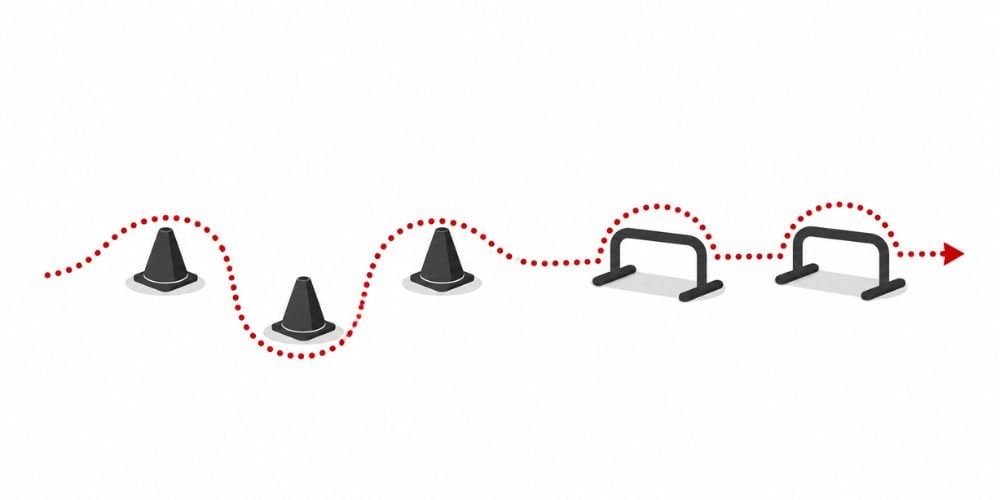
Training outdoors? A small stack of cones can turn an open area into a simple conditioning setup.
Use them for:
- Shuttle runs
- Direction changes
- Footwork drills
- Sprint intervals
- Circuit stations
Mini hurdles give you another option for agility and coordination work.
You do not need many. A few lightweight pieces are usually enough.
What Should You Carry to Every Session?
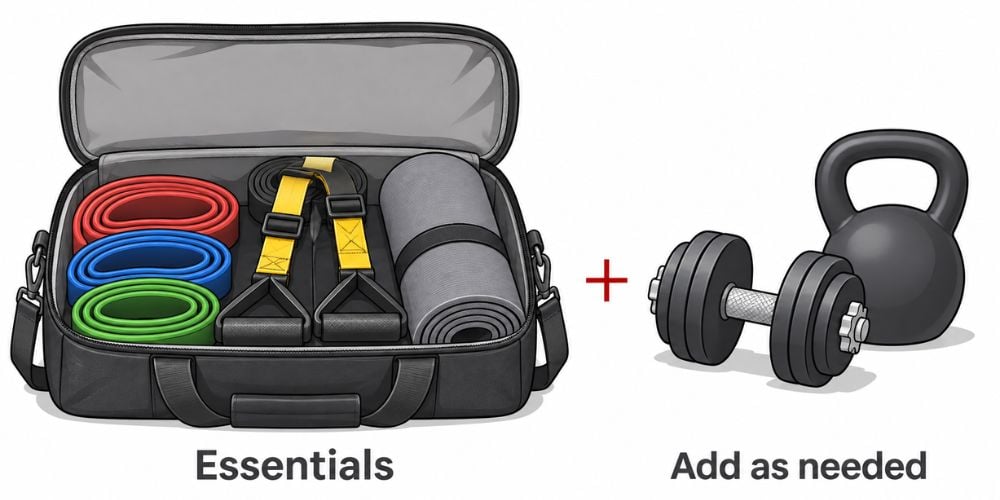
You do not need all 10 items every time. Match your equipment to the workout you have planned.
Equipment | Best For | Portability |
Resistance bands | Strength and mobility | Excellent |
Suspension trainer | Full-body workouts | Excellent |
Exercise mat | Floor exercises | Good |
Jump rope | Cardio | Excellent |
Mini bands | Warm-ups and activation | Excellent |
Agility cones | Conditioning | Excellent |
Adjustable dumbbells | Strength | Moderate |
Kettlebells | Strength and conditioning | Moderate |
If you carry everything yourself, start with bands, a suspension trainer, a mat, and small accessories. Add dumbbells and kettlebells when the session actually calls for them.
That simple mix can support both strength and cardio work. Current CDC activity guidance for adults recommends a combination of aerobic activity and muscle-strengthening work each week.
Conclusion
A mobile personal trainer does not need a full gym. Resistance bands, adjustable dumbbells, a suspension trainer, a mat, kettlebells, and a few conditioning tools can cover most basic workouts.
Start with equipment that is portable and versatile, then build your kit around the clients you actually train. There is no reason to carry heavy gear that rarely leaves your car.
If you want to move from mobile sessions into your own personal training studio, at YR Fitness, we can help you choose durable commercial strength, cardio, and training equipment that fits your space.
Related articles: