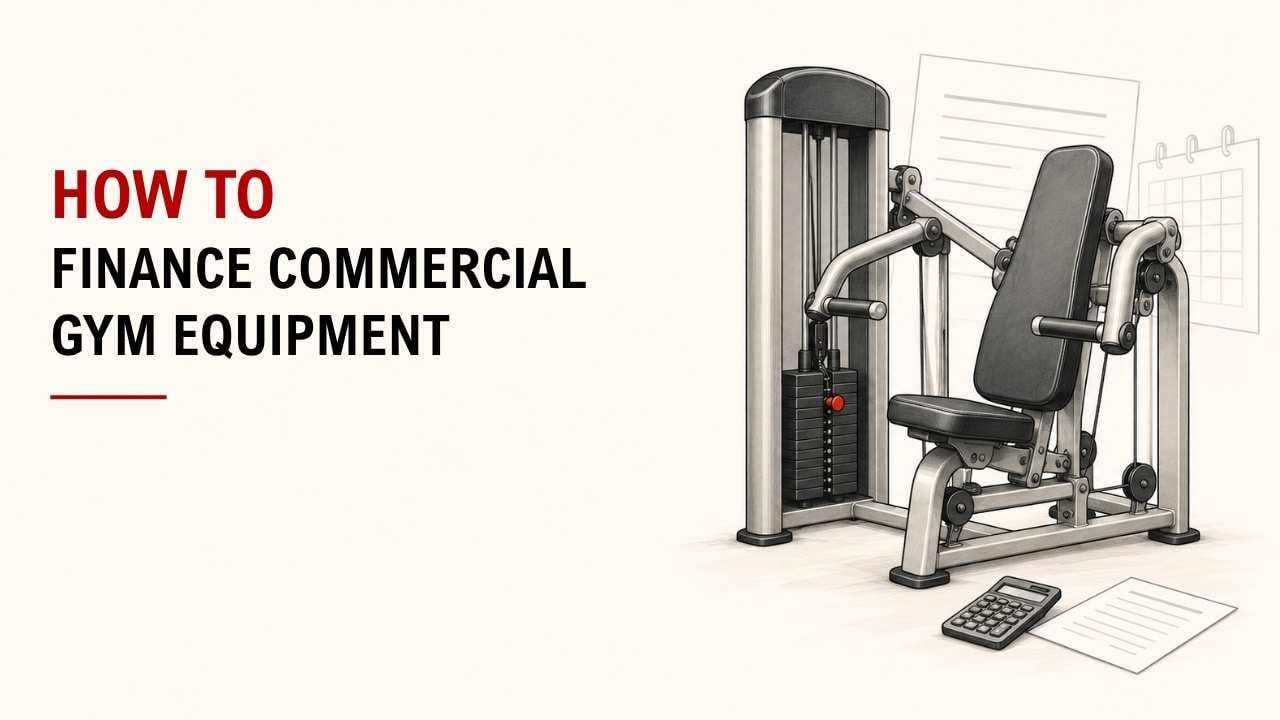

Want commercial gym equipment without paying the full cost upfront? Financing can help you spread the expense into smaller, more manageable payments.
The short answer is simple: set your budget, compare financing and leasing, check business loans, and ask suppliers about payment plans. Choose the option that fits your monthly cash flow without creating unnecessary financial pressure.
As a Machinery & Structural Engineer at YR Fitness, I look at equipment based on price, construction, expected use, and long-term value. I often see buyers focus on the monthly payment but forget to check what they will pay in total.
In this guide, I’ll walk you through six simple ways to finance commercial gym equipment. You can compare each option quickly and choose what works for your budget.
1. Set Your Equipment Budget First
Before looking at financing, decide how much equipment you really need.
Start with the basics:
- Strength machines
- Cardio machines
- Benches
- Free weights
- Cable stations
- Fitness accessories
- Delivery and installation
Then divide everything into must-have and nice-to-have equipment.
I usually suggest doing this first because it stops you from financing machines you may not need yet. The U.S. Small Business Administration’s guidance on buying and leasing equipment also recommends first identifying the assets your business actually needs.
Quick question: How much can you comfortably pay each month?
Do not put every available dollar into equipment. Keep money available for maintenance, utilities, rent, and unexpected expenses.
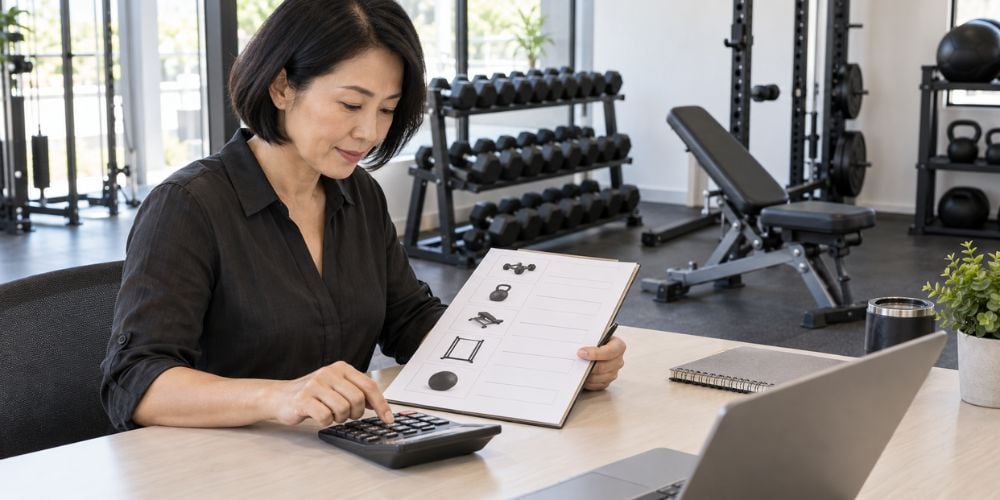
Simple Budget Check
Cost Area | What to Include |
Equipment | Strength, cardio, benches and free weights |
Setup | Delivery, installation and flooring |
Monthly costs | Financing or lease payments |
Cash reserve | Maintenance, utilities and unexpected expenses |
Here is why this matters: your equipment budget should work after the machines arrive, not just on purchase day.
2. Use Commercial Gym Equipment Financing
Equipment financing lets you buy machines now and repay the cost over time.
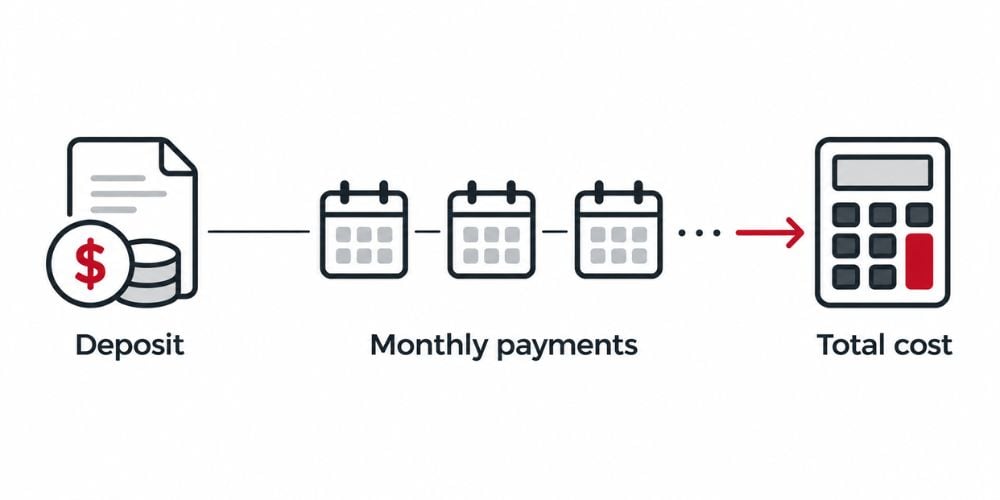
You normally make a deposit, then pay monthly installments for an agreed period.
It can work well if:
- You want to own the equipment
- You need several machines at once
- You want to protect your available cash
- The monthly payment fits your budget
Before signing, compare the important numbers:
- Down payment
- Interest rate
- Loan term
- Monthly payment
- Total amount paid
- Extra fees
Do not choose a plan only because the monthly payment looks low. A longer repayment period may lower the monthly figure while increasing what you pay overall.
What matters most? Look at both the monthly payment and the final cost.
3. Consider Equipment Leasing
Leasing lets you use commercial gym equipment without paying the full purchase price upfront.
You normally make regular payments for a fixed period. Depending on the agreement, you may return the equipment or have an option to buy it later.
The SBA notes that some leases include buyout options, while ending a lease early may involve significant termination costs. Its equipment buying and leasing guide is worth checking before comparing agreements.
Financing vs. Leasing vs. Cash
Option | Main Advantage | Upfront Cash | Ownership |
Financing | Spread purchase cost over time | Medium | Usually yes |
Leasing | Lower initial cash requirement | Lower | Depends on agreement |
Cash purchase | No financing payments | Higher | Yes |
Leasing may suit you if you want predictable payments and do not need immediate ownership.
On the other hand, financing can make more sense if you expect to use the machines for many years.
Before deciding how much to borrow, build your equipment list first. At YR Fitness, we manufacture commercial strength machines, cardio equipment, and accessories for heavy daily use, so you can compare the equipment you actually need before setting your financing budget. Explore our commercial gym equipment and price your priorities before financing extras.
4. Check Business Loans
A business loan can make sense when your project includes more than equipment.
For example, you may also need funding for:
- Flooring
- Renovation
- Mirrors
- Lockers
- Software
- Installation
- Other startup costs
In the U.S., the SBA 7(a) loan program can be used for purposes including machinery and equipment, working capital, furniture, fixtures, and certain other business expenses. Eligibility and terms depend on the lender and borrower.
This gives a business loan more flexibility than equipment-only financing.
Still, check the interest rate, repayment period, fees, and early repayment conditions before signing.
If most of your budget is going toward machines, compare a business loan with equipment financing first. The simpler option is often easier to manage.
5. Ask About Supplier Payment Plans
Do not assume a bank is your only route.
Some equipment suppliers may offer:
- Deposit payments
- Staged payments
- Balance payments before shipment
- Financing through third-party partners
Ask exactly how much is due and when.
For larger orders, staged payments may make it easier to manage equipment production, shipping, and installation instead of handling the full cost at once.
Also ask what is included in the quoted equipment price. Freight, installation, accessories, and other costs can change the amount you actually need to finance.
6. Combine Cash and Financing
You do not need to finance everything.
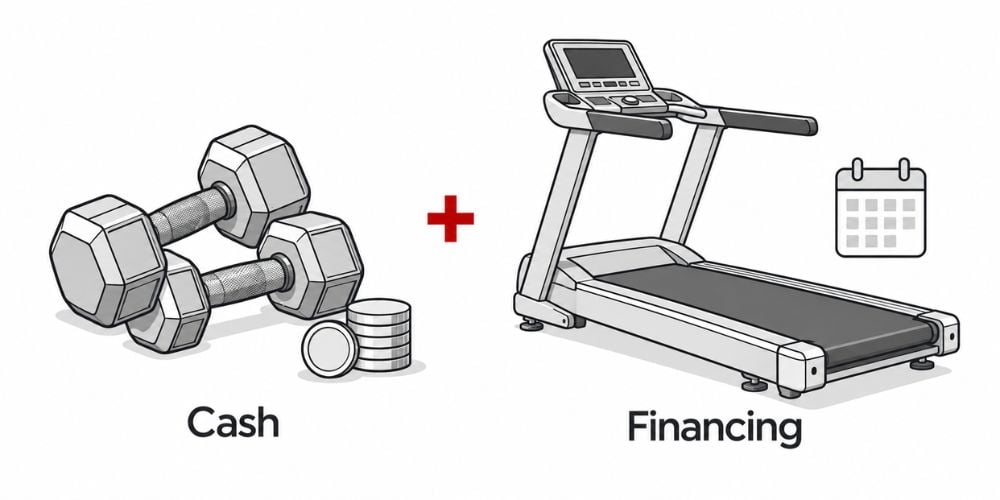
A simple approach is to pay cash for smaller items and finance the expensive machines.
For example:
- Pay cash for dumbbells and accessories
- Finance treadmills
- Finance selectorized machines
- Finance cable stations
- Keep cash available for operating expenses
This lowers the amount you borrow while protecting part of your cash reserve.
In my experience, this balanced approach often makes sense because equipment is only one part of the total cost. You may still need money for repairs, flooring, delivery, or future upgrades.
There may also be tax considerations when purchasing business equipment. For U.S. businesses, the IRS explains that qualifying purchased business property may be eligible for depreciation or a Section 179 deduction, subject to applicable rules and limits. IRS Publication 946 explains these rules in detail, but it is worth checking your situation with a qualified tax professional.
The goal is simple: keep your equipment payments comfortable and manageable.
Final Thoughts
Financing commercial gym equipment is easier when you keep it simple. Set your budget, compare financing and leasing, check loan terms, and avoid borrowing more than you need.
From my engineering perspective, it also makes sense to finance durable equipment that can handle regular use and reduce the chance of early replacement.
Before choosing a financing plan, browse YR Fitness commercial gym equipment and build your must-have equipment list first.
Related articles: