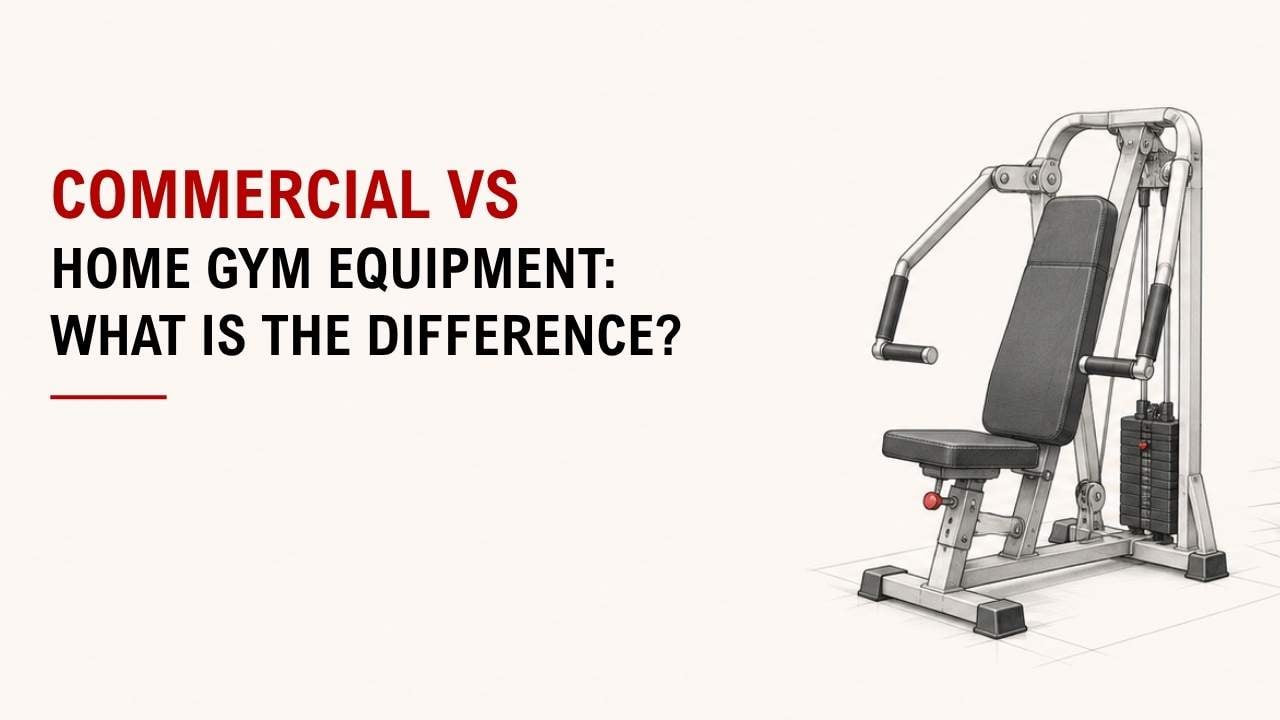

Have you noticed that commercial gym machines often feel heavier and more stable than home equipment? There are a few clear reasons why.
Commercial equipment is built for heavier use and greater durability, while home equipment focuses more on personal use, smaller spaces, and lower cost. Both can work well depending on how you train.
As a Machinery & Structural Engineer at YR Fitness, I work closely with machine frames, components, load capacity, and long-term wear. I’ve seen how construction choices directly affect stability, durability, and how a machine feels during training.
Below, I’ll break down the six main differences between commercial and home gym equipment. Keep reading to quickly see which one fits your needs.
1. Commercial Equipment Is Built for Heavier Use
The biggest difference is how much use the machine is expected to handle.
Commercial equipment may be used repeatedly throughout the day by many people. Home equipment normally serves one person or a small household.
There is even a formal distinction between these usage environments. The ISO 20957-1:2024 standard covers domestic-use equipment under Class H and equipment used in places such as clubs, hotels, studios, and sports facilities under other usage classes.
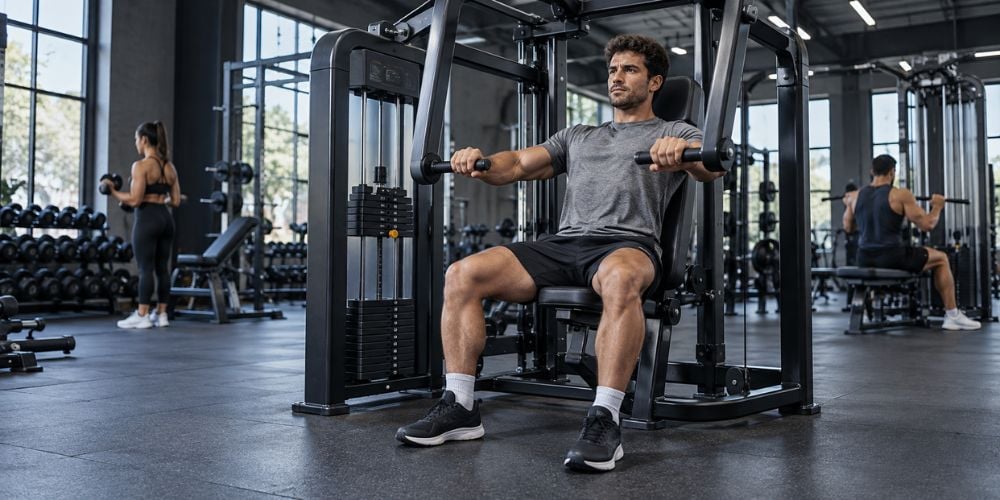
For example, a commercial chest press may be adjusted, loaded, and used dozens of times in one day. A home chest press may only be used a few times each week.
That difference affects many parts of the machine:
- Frame construction
- Cables and pulleys
- Bearings
- Adjustment mechanisms
- Upholstery
- Handles and grips
Simple Difference: commercial equipment is built for high-frequency use, while home equipment is built for lighter personal use.
2. Commercial Equipment Is Usually More Durable
Commercial machines usually have stronger frames and heavier-duty components.
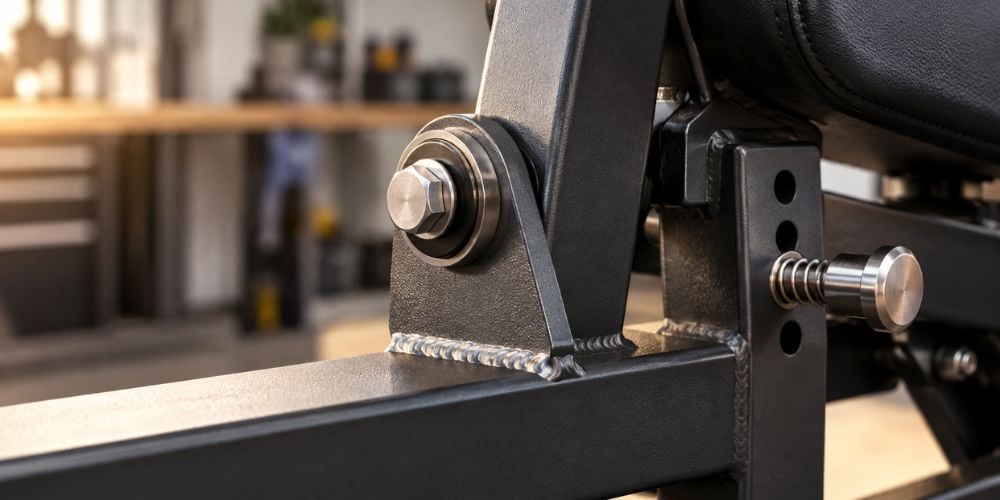
I often notice the difference around moving parts first. Thicker cables, stronger bearings, solid adjustment pins, and more stable joints become more important when equipment is used again and again.
Feature | Commercial Equipment | Home Equipment |
Frame | Heavier and stronger | Usually lighter |
Daily use | High | Low to moderate |
Components | Heavy-duty | Simpler |
Stability | Usually higher | Depends on model |
Long-term wear | Built to handle more | Faster under heavy use |
That does not mean every home machine is poorly made. It simply means it is normally designed for a lighter workload.
Strength equipment also has specific safety requirements. ISO 20957-2:2024 covers stationary strength-training equipment using weight stacks, external weights, hydraulic resistance, pneumatic resistance, springs, and other resistance systems.
Why does this matter to you? If you expect to train hard and often for years, construction quality becomes much more important than how the machine looks on day one.
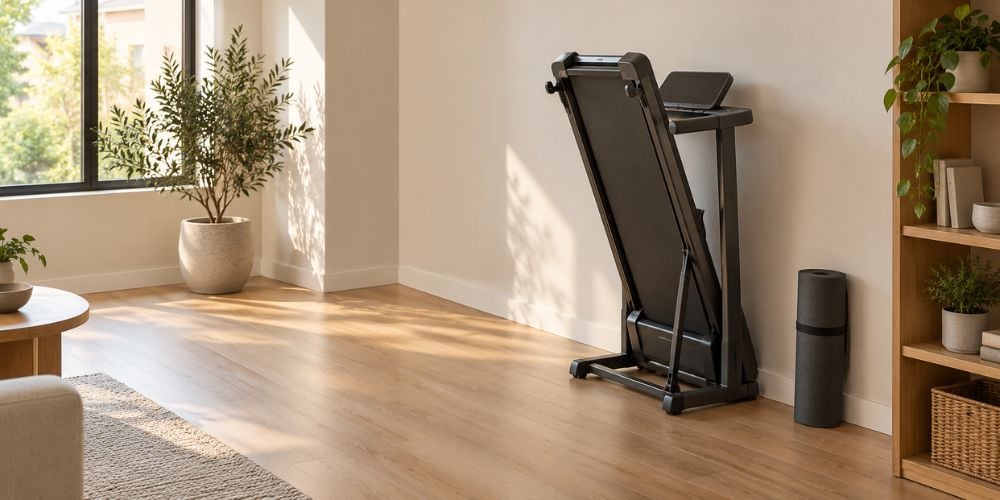
3. Home Equipment Takes Up Less Space
Home equipment usually wins when space is limited.
Most people do not have a full gym floor at home, so these machines are often smaller. Some models fold or combine several exercises into one station.
Commercial equipment is usually larger because stability and durability often take priority over saving floor space.
Situation | Better Fit |
Apartment | Home equipment |
Spare bedroom | Home equipment |
Garage gym | Either |
Large training room | Commercial equipment |
Very limited floor space | Compact home equipment |
Short on space? Home equipment will usually be easier to manage.
On the other hand, if you have a large garage or dedicated training room, commercial equipment becomes much more practical.
4. Commercial Equipment Costs More
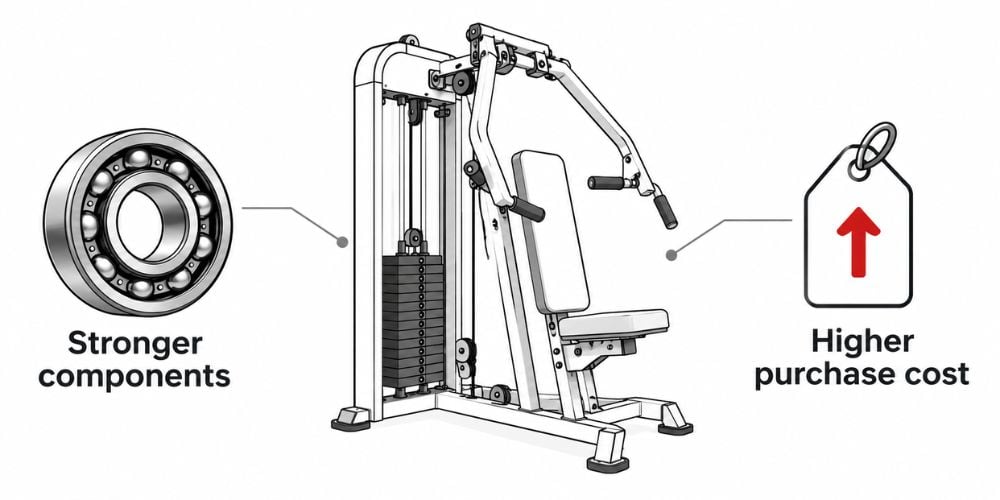
Commercial equipment normally costs more because it uses stronger construction and components.
You may be paying for better bearings, stronger cables, thicker upholstery, stronger welding, more adjustment points, and higher expected usage.
Home equipment keeps prices lower by simplifying some of these areas.
So, do you always need commercial equipment?
No.
If you train three or four times per week at home, a good home machine may already meet your needs. Commercial equipment makes more sense if you value extra durability, stability, or a more gym-like training feel.
Intended use can matter for warranties too. For example, Life Fitness states that putting its consumer fitness equipment in a commercial setting can void the warranty, which shows why home and commercial equipment should not always be treated as interchangeable.
At YR Fitness, we build commercial strength and cardio equipment for repeated daily training. If you are comparing home machines with heavier commercial options, our equipment range can help you see what changes when durability, stability, and long-term use become priorities.
5. Commercial Machines Usually Offer a Better Training Experience
Commercial machines often feel smoother and more stable during exercise.
Larger frames can reduce unwanted movement. Stronger bearings and pulley systems can also help resistance feel more consistent.
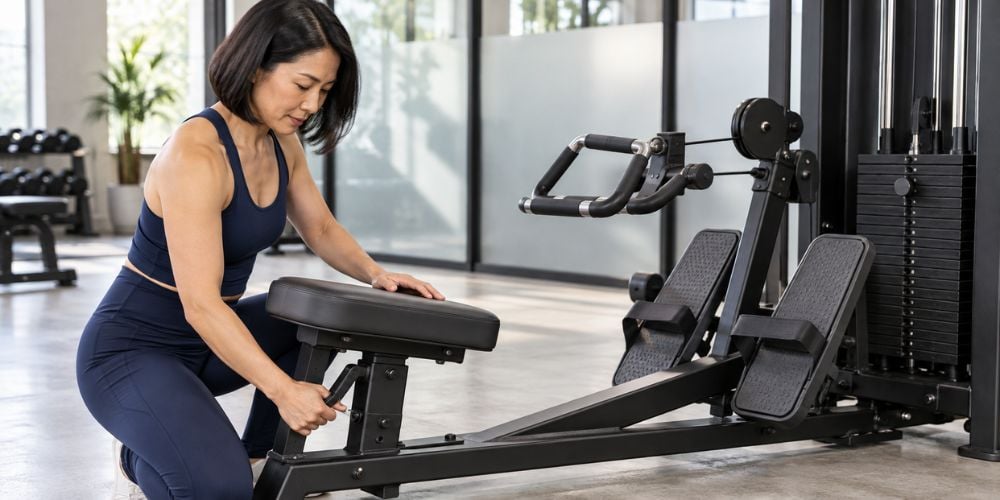
Many commercial machines offer more adjustment positions too.
In my experience, this is one of the first differences fitness lovers notice. You may not see the stronger internal parts, but you can often feel the difference during your first few reps.
Commercial machines may offer:
- Larger seats and pads
- More seat adjustments
- Multiple handle positions
- Smoother weight-stack movement
- Higher resistance capacity
- More comfortable movement paths
Does that automatically make your workout better? Not always.
Good form and suitable resistance still matter more than simply using an expensive machine. But better stability and adjustability can make training more comfortable, especially when you exercise frequently.
6. Which One Should You Choose?
Your choice should depend on how you actually train.
Choose home gym equipment if you:
- Train mainly by yourself
- Have limited space
- Want to spend less
- Use equipment a few times per week
- Prefer compact or folding designs
Choose commercial gym equipment if you:
- Train very frequently
- Want heavier construction
- Prefer a stable gym-style feel
- Need higher resistance capacity
- Care about long-term durability
I would not tell every fitness lover to buy commercial equipment. If a home machine already supports your workouts safely and comfortably, there may be no reason to spend more.
But if you train hard, use your equipment often, and want something closer to what you use in a professional gym, commercial equipment may be worth the extra cost.
Conclusion
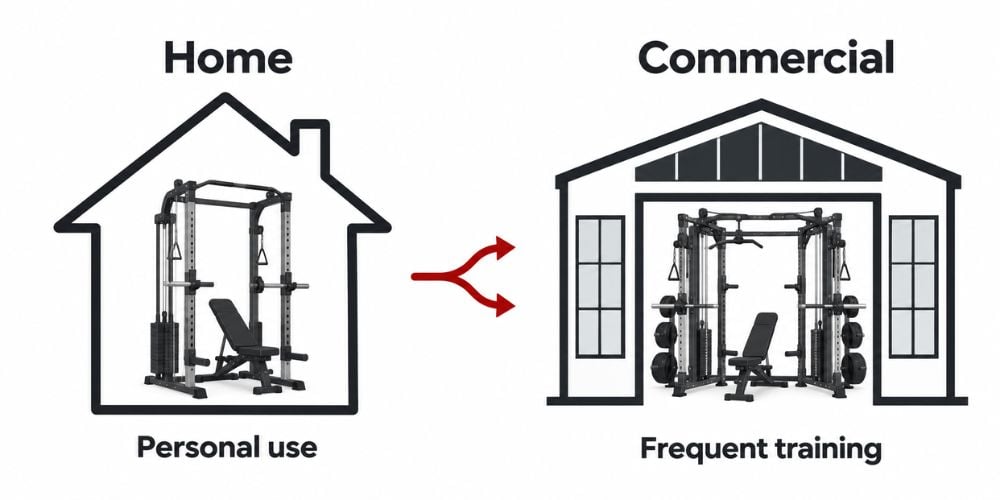
The difference is straightforward: commercial gym equipment is built for heavier use, better durability, and stability, while home equipment focuses on affordability and personal convenience.
Neither option is automatically better.
If you prefer the heavier construction and training feel of professional machines, explore YR Fitness commercial gym equipment and compare it with what you currently use at home.
Related articles: