





Buying commercial gym equipment is a big investment.
And surprisingly easy to get wrong.
Most buyers check brand, quality, price, and warranty.
That’s the obvious part.
But the real problems often appear after payment: damaged freight, power issues, missing parts, poor layout, or machines members barely use.
I’m George Yang, founder and chief designer of YR Fitness. Since 1997, we’ve worked with gym owners, distributors, and commercial fitness projects around the world.
Here are 7 costly mistakes to avoid before opening your first gym.
Table of Contents
- 1. Treating the Floor Plan as the Delivery Plan
- 2. Buying Cardio Equipment Like Strength Equipment
- 3. Assuming the Building Can Handle the Equipment
- 4. Judging Support by Warranty Length
- 5. Signing for Damaged Freight Too Quickly
- 6. Buying Smart Equipment Without Checking Software Control
- 7. Buying More Variety Instead of More High-Demand Equipment
- 8. Final Words
1. Treating the Floor Plan as the Delivery Plan
Many new gym owners can make this mistake before the equipment even ships.
You check the layout.
You check the machine size.
Then you assume everything is fine.
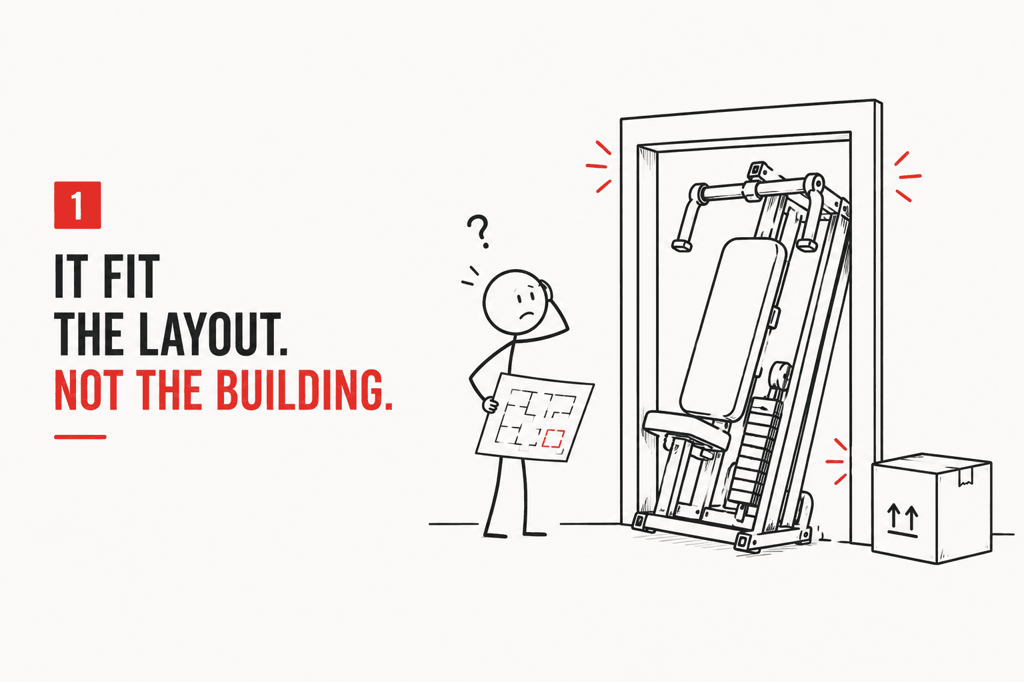
But a floor plan only answers one question: Where will the machine stand?
It does not answer the more painful question: Can the machine actually get there?
A commercial treadmill, leg press, power rack, or cable machine may arrive packed, crated, heavy, and awkward to move.
That is where problems start.
- “Can it fit through the door?”
- “Can it turn in the hallway?”
- “Is the elevator large enough?”
- “Does the delivery include indoor placement?”
- “Will you need extra labor or a forklift?”
Sometimes the most expensive problem is not the equipment.
It is the route.
Here is what to do:
✅ Measure the route from truck to final position. Check the unloading point, entrance width, hallway width, elevator interior size, stair turns, ceiling height, and the final equipment area.
✅ Ask for the shipping size, not just the product size. Get the packed dimensions, crate size, packed weight, and ask whether large parts can be removed before move-in.
✅ Confirm the delivery service level in writing. Ask if the order includes curbside delivery, indoor delivery, room placement, or full installation. These are very different services.
✅ Check who is responsible for special handling. If the machine needs a liftgate truck, pallet jack, forklift, stair climber, extra movers, or installers, confirm who arranges it and who pays for it.
✅ Send site photos before shipping. Show the supplier your entrance, stairs, elevator, tight corners, and installation area. This helps spot problems before the equipment leaves the warehouse.
✅ Walk the route before you buy. Start where the truck will stop. Follow the exact path to the final machine position. Look for every place the machine could get stuck.
Not sure if your equipment will fit the space?
Before you place an order, send us your floor plan, doorway photos, elevator size, and delivery route.
The YR Fitness team can help you review the layout and spot possible delivery or installation problems before the equipment ships.
👉Send My Floor Plan
2. Buying Cardio Equipment Like Strength Equipment
You can treat a plate-loaded machine like a simple purchase: frame, bearings, pads, handles.
Cardio is different.
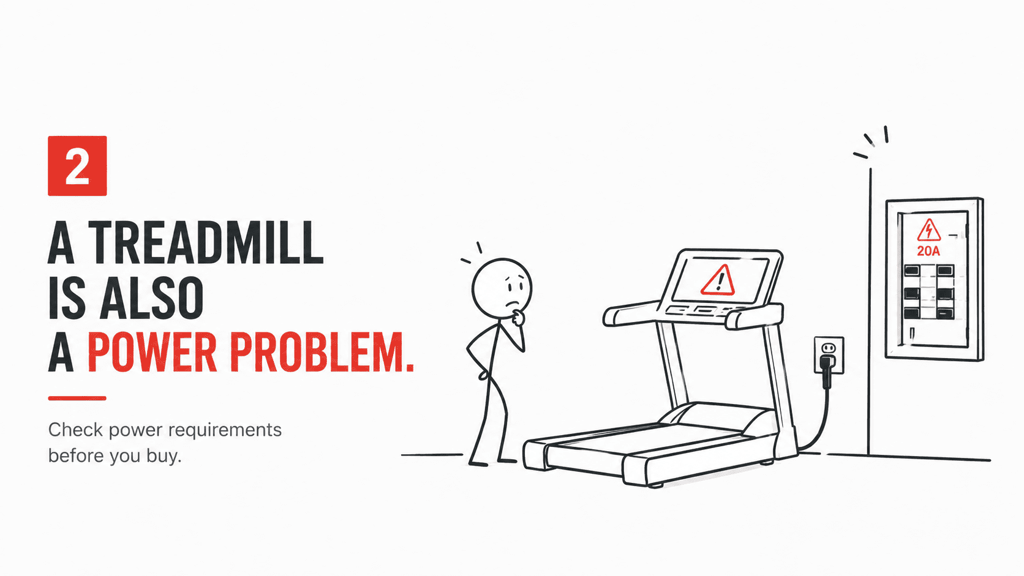
A treadmill is not just a treadmill. These machines come with motors, belts, screens, sensors, control boards, software, and heavy power demands. That is where the hidden risk starts.
Strength equipment can often be fixed with basic parts. Cardio equipment can stop working because of a single electronic issue:
- A screen fails.
- A belt slips.
- A motor overheats.
- A circuit trips again and again.
Now the machine is not just “under maintenance.” It is dead space on your floor.
Here is what to do:
✅ Check the power requirements before ordering. Ask for voltage, amperage, plug type, and whether the machine needs a dedicated circuit. Then confirm with your electrician before shipping.
✅ Calculate the total cardio power load. Do not check one treadmill only. Check what happens when several treadmills, bikes, ellipticals, and stair climbers run at the same time.
✅ Ask for the common failure parts list. For treadmills, ask about belts, decks, motors, consoles, sensors, and control boards. For bikes and ellipticals, ask about resistance systems, pedals, bearings, consoles, and sensors.
✅ Confirm spare parts availability. Ask which parts are in stock, which parts need to be ordered, and the average lead time for your country or region.
✅ Find out who can repair it locally. Ask whether the supplier has local service partners, remote technical support, repair videos, manuals, or a technician your team can contact.
At YR Fitness, we always ask gym owners to check power, spare parts, and service access before choosing cardio equipment. A treadmill is not just a product on a quote. It is a machine your team must keep running every day.
3. Assuming the Building Can Handle the Equipment
You may check the weight limit and think the problem is solved.
It is NOT.
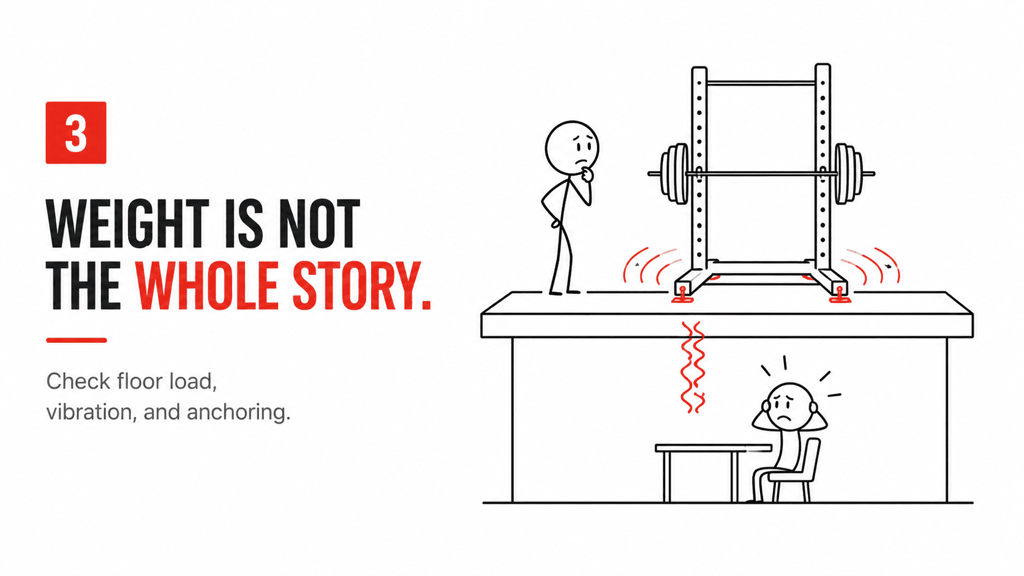
Heavy gym equipment does more than sit on the floor. It moves. It shakes. It gets dropped. It transfers noise. It may need to be anchored into the foundation.
The issue is not only whether the floor can hold the passive weight.
The issue is whether the building can handle the dynamic impact of how the equipment will be used.
Here is what to do:
✅ Check the floor load with the right person. If your gym is above ground level, inside a hotel, office building, mall, or mixed-use property, confirm the floor load with the landlord, contractor, or structural engineer before ordering.
✅ Ask about dynamic impact, not just static weight. A machine sitting still is one thing. Members running, lifting, dropping weights, and moving fast is another. Ask if the building can handle repeated impact.
✅ Separate high-impact zones from low-impact zones. Treadmill rows, deadlift platforms, squat racks, and functional training areas need more planning than selectorized machines or stretching areas.
✅ Confirm anchoring requirements before installation. Ask whether racks, rigs, cable machines, or large strength units need to be anchored to the floor or structure. Also confirm whether drilling is allowed in your lease.
✅ Choose flooring by training zone. Use different flooring plans for cardio, free weights, Olympic lifting, functional training, and machine areas. One type of rubber flooring may not solve every problem.
✅ Plan for noise and vibration control early. If there are tenants, hotel rooms, offices, or apartments nearby, treat vibration as a business risk, not just a comfort issue.
4. Judging Support by Warranty Length
A long warranty sounds safe. Five years. Ten years. Lifetime frame. It feels like ultimate protection.
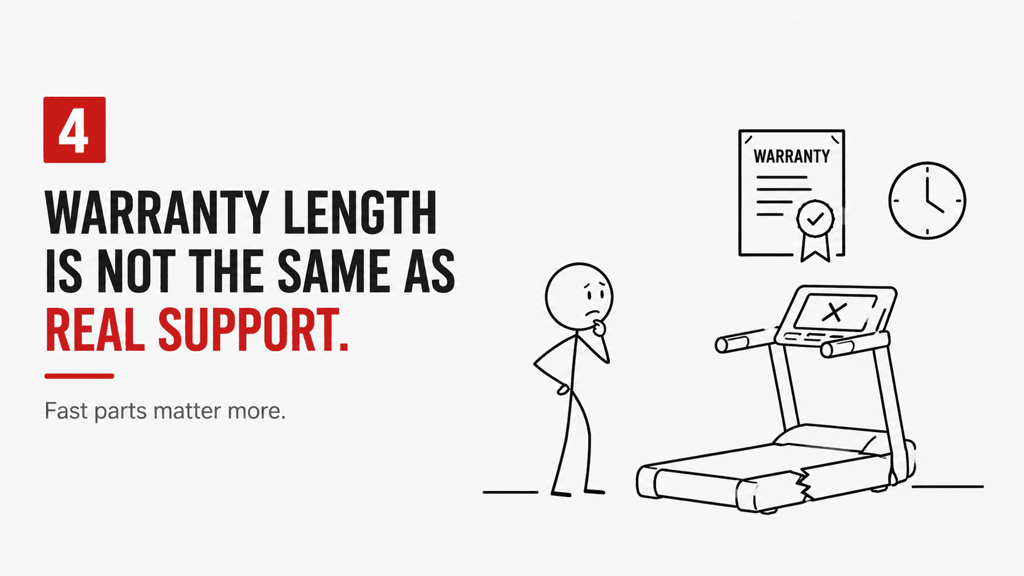
But warranty length is not the same as real support. That is where buyers get fooled. A machine can be “under warranty” and still sit unusable for weeks because:
- The part is not in stock.
- The supplier responds slowly.
- The technician is not available locally.
- Labor is not covered, or shipping costs extra.
Before buying commercial gym equipment, you need to ask better questions:
“How fast can common parts be shipped?”
“Which parts are excluded from the warranty?”
“Is labor included or only the replacement part?”
“Who handles service in my country or city?”
“What happens if the same part fails again?”
This is why warranty length should never be your only measure of support.
A short, clear warranty with fast parts can be better than a long warranty with slow service.
Here is what to do:
✅ Ask which spare parts are kept in stock. Do not only ask, “Do you provide spare parts?” Ask which parts are normally stocked: cables, pulleys, pads, belts, motors, consoles, sensors, and control boards.
✅ Confirm the spare parts lead time for your country. Ask how many days it usually takes to ship common parts to your location, and which parts may need longer production time.
✅ Check what the warranty really covers. Frame, moving parts, upholstery, electronics, labor, shipping, and wear parts may all have different coverage.
✅ Ask what is excluded. Check whether misuse, poor maintenance, cleaning damage, improper installation, and normal wear are excluded.
✅ Get the service process in writing. Ask who to contact, what photos or videos are required, how claims are approved, who pays for shipping, and how replacement parts are sent.
✅ Ask for support materials before you buy. A serious supplier should provide manuals, assembly guidance, maintenance instructions, parts diagrams, and clear after-sales contacts.
A warranty is only useful when it gets the machine working again.
Fast.
Ask About Parts Before You Buy
A good warranty is not enough. You need fast spare parts, clear documentation, and someone who can answer technical questions when a machine goes down.
YR Fitness supports commercial gym buyers with spare parts, assembly guidance, and after-sales communication, so your equipment is easier to keep in service.
👉Ask About Spare Parts Support
5. Signing for Damaged Freight Too Quickly
Delivery day feels like the finish line.
It is not.
It is one of the easiest moments to make an expensive mistake.
The truck arrives.
The cartons look a little crushed.
One crate has a dent.
The driver is waiting.
Your team is busy.
So you sign.
That is where the problem starts.
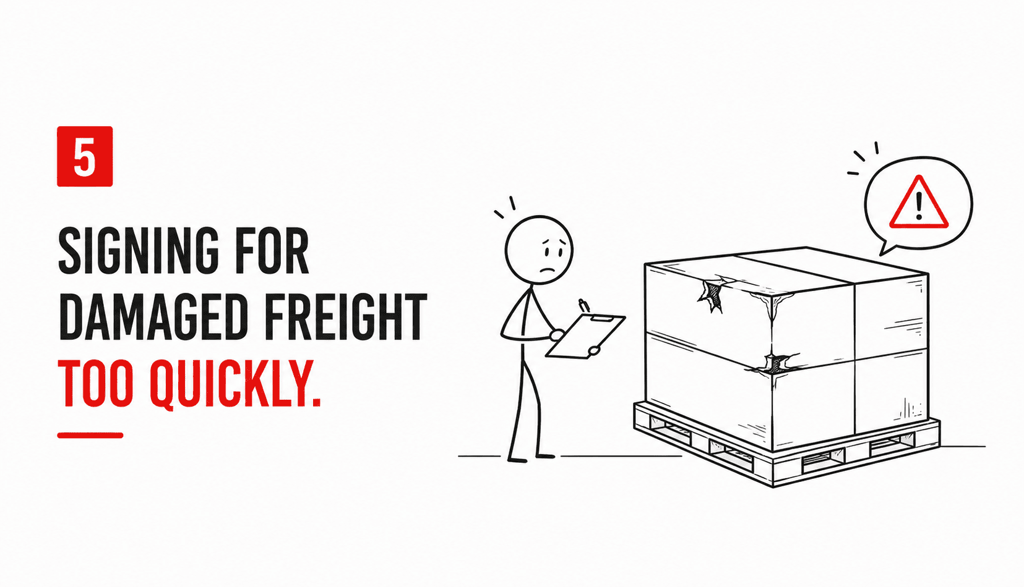
If you accept damaged freight without notes, photos, or inspection, you may weaken your claim before the equipment is even unpacked.
The damage may be real.
But now it is harder to prove when it happened.
Was it damaged before delivery?
Did it happen during unloading?
Was it already accepted as “good condition”?
Did anyone record the problem on the delivery paperwork?
This is why receiving equipment is not just logistics.
It is risk control.
Here is what to do:
✅ Inspect the shipment before signing. Check the cartons, wooden crates, pallets, wrapping, straps, corners, and any visible equipment surfaces.
✅ Take photos from wide to close-up. Take photos of the full shipment, shipping labels, damaged packaging, crate corners, dents, scratches, and any exposed parts.
✅ Write damage notes on the delivery paperwork. Do not only tell the driver. Write clear notes such as: “Carton crushed,” “crate damaged,” “frame scratched,” or “parts exposed.”
✅ Check the package count. Make sure the number of cartons, crates, or pallets matches the packing list or delivery document before signing.
✅ Keep the packaging until the claim is handled. Do not throw away cartons, pallets, foam, wrapping, or crates too early. They may be needed as evidence.
✅ Report the issue the same day. Send the supplier photos, videos, delivery receipt, packing list, order number, and a short description of the damage.
A damaged shipment is already frustrating.
But signing too quickly can make it worse.
Because at delivery, one careless signature can turn a freight problem into your problem.
6. Buying Smart Equipment Without Checking Software Control
Smart equipment feels modern.
Big screens.
Connected workouts.
User data.
Apps.
Cloud features.
It looks like an upgrade.
But the screen is not the whole story.
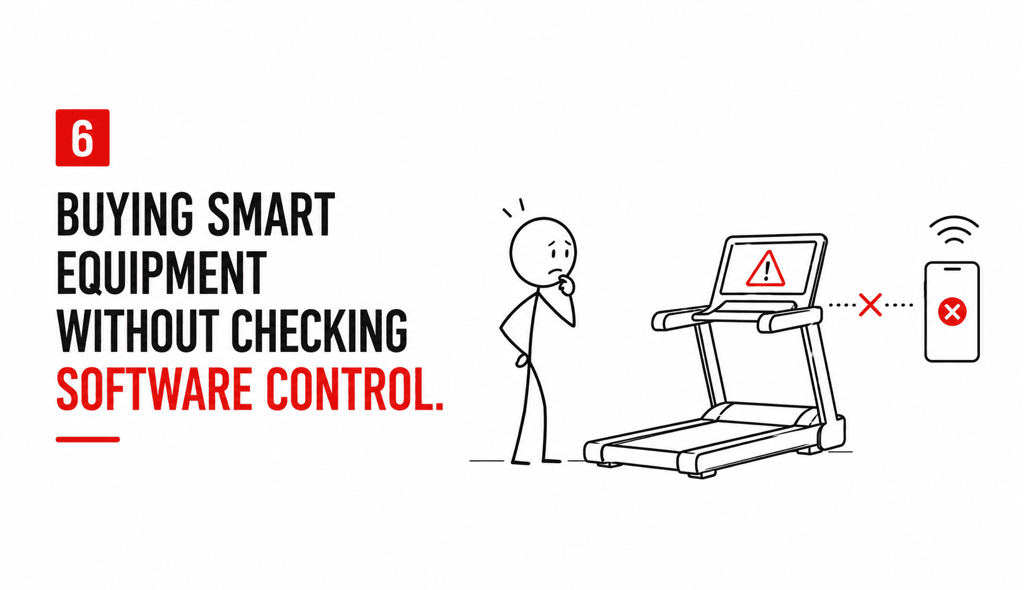
Some smart equipment depends on software you do not fully control.
That is where the risk starts.
A feature requires a subscription.
An app stops working in your region.
A firmware update changes the user experience.
The machine needs a login to access key functions.
The cloud service slows down or disappears.
Now the equipment still looks expensive.
But part of its value is locked behind software.
And that is a dangerous place to be.
Here is what to do:
✅ Ask which features work offline. Check whether basic training modes, resistance control, workout tracking, and user profiles still work without internet.
✅ List every paid feature. Ask which features require subscriptions, paid content, cloud access, app connection, or third-party software.
✅ Confirm who controls the admin account. Make sure your gym owns the main account, login access, settings, user permissions, and equipment management rights.
✅ Ask what happens if the software stops working. Check whether the machine can still run if Wi-Fi fails, the app is unavailable, or the cloud service is down.
✅ Understand the update policy. Ask whether firmware updates are automatic, optional, or required, and whether updates can change features or access.
✅ Check resale and transfer rules. If you sell the machine later, confirm whether software access, subscriptions, admin accounts, and user data can be transferred.
Smart equipment can improve the member experience.
But only if you understand what you actually own.
Because sometimes, you do not just buy the machine.
You rent part of its value from the software.
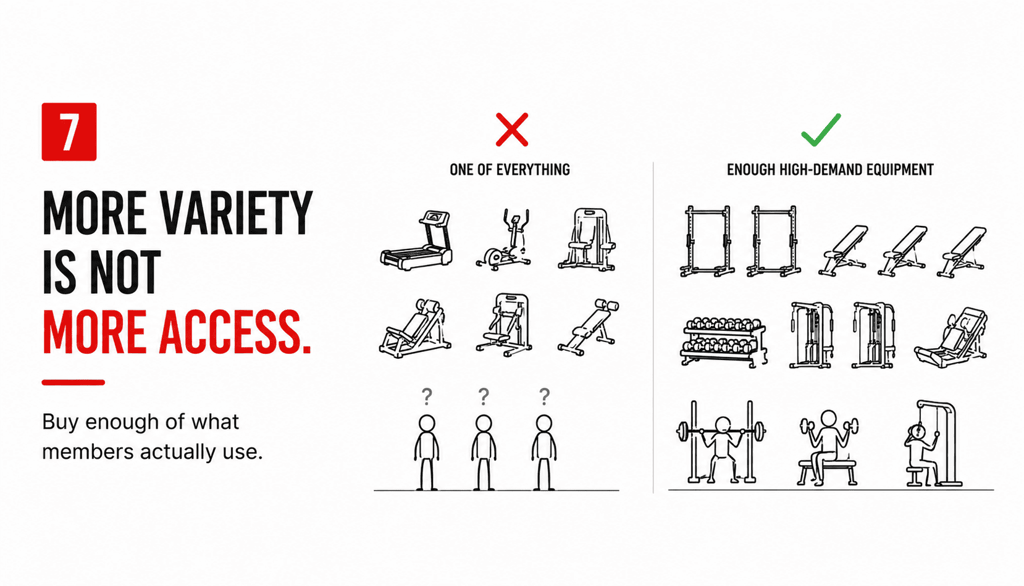
7. Buying More Variety Instead of More High-Demand Equipment
More equipment does not always mean a better gym.
More categories.
More machines.
More “options.”
It sounds impressive.
But members do not judge your gym by how complete the equipment list looks.
They judge it by what happens during their workout.
Can they get a bench?
Can they use the dumbbells they need?
Is the cable station always busy?
Are people waiting for the same leg machine every night?
Does the squat rack feel impossible to access after work?
That is where many gym owners misread the problem.
They buy one of everything.
But not enough of what people actually use.
Now the gym looks full.
But the experience feels frustrating.
Before buying more commercial gym equipment, you need to ask better questions:
“Which machines will members use every day?”
“Which areas will create waiting during peak hours?”
“Do I need more variety, or more duplicates?”
“Which equipment supports my target members best?”
“What machines will directly improve retention?”
Here is what to do:
✅ List the equipment members will use every day. Start with racks, benches, dumbbells, cable stations, leg machines, glute equipment, and the most-used cardio units.
✅ Plan around peak-hour pressure. Do not judge the layout when the gym is empty. Think about 6 p.m., not 2 p.m.
✅ Buy duplicates where waiting will happen. If one bench, rack, cable station, or leg machine will create a line, one is not enough.
✅ Match equipment to your target members. A bodybuilding gym, hotel gym, women-focused gym, and functional training studio do not need the same equipment mix.
✅ Leave space for the machines that matter most. Do not fill the floor with rare machines that look impressive but get used once a day.
✅ Track usage before your next order. Record which machines are always busy, which ones stay empty, and which ones cause complaints or waiting.
A gym does not need every machine in the catalog.
It needs the right equipment in the right quantity.
Because members do not stay for variety.
They stay when training feels easy.
8. Final Words
Bad equipment purchases rarely come from one big mistake.
They usually come from small details you missed.
A narrow doorway.
A weak power setup.
Slow spare parts.
Poor layout.
The wrong machines.
So before you buy, look beyond price and appearance.
Ask better questions.
Plan for delivery, installation, maintenance, and real member use.
That is how you buy equipment that actually works for your gym.
Before You Buy, Let’s Check the Details
A good equipment order is not just about price.
It should fit your space, match your members, arrive safely, and stay easy to maintain.
Send your floor plan or equipment list to YR Fitness. We’ll help you review it before you make the purchase.
👉Send My Equipment List
Related articles: