




Leg Press Machine Manufacturer in China
Built by athletes, for athletes.
Built tough to handle every strength training.
Built with precise movement angles since 1997.
Products We Have for You
Showing 10–14 of 14 results
-

Leg Press / Calf
$5.00YR Fitness 55A11 Leg Press / Calf combines two essential leg workouts in one machine. Designed to strengthen quads,
-

Seated Leg Press
$5.00YR Fitness C428A Seated Leg Press is built for comfort, safety, and smooth performance. Its inclined seat and stabl
-

Seated Leg Press
$5.00YR Fitness C428 Seated Leg Press offers a smooth, joint-friendly leg workout with its natural movement design and a
-

Linear Leg Press
$5.00YR Fitness 82028 delivers powerful lower-body training with a biomechanically sound 45-degree angle and smooth line
-

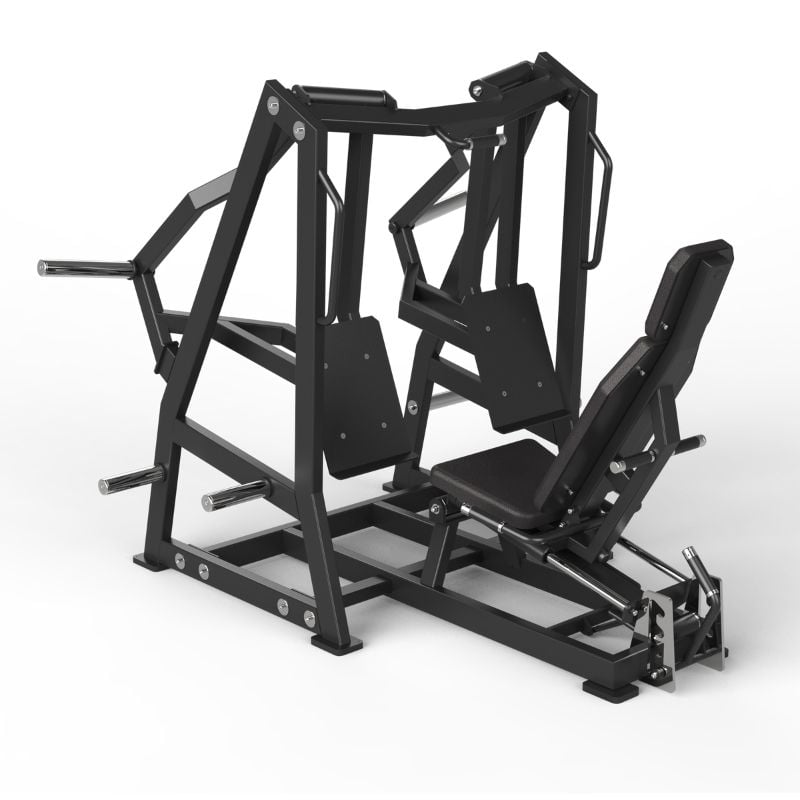
Plate Loaded Leg Press
$5.00YR Fitness 82016 offers controlled, ergonomic leg pressing with a focus on safety and performance. Its plate-loaded
Certified by Global Standards
Backed by CE, TÜV, and ISO certifications so you can buy with full confidence in safety and performance.

DESIGNED By ATHLETES,
FOR ATHLETES
At YR Fitness, Design Transcends Aesthetics.
It’s About Functionality.
Simple, But Significant.


Only True Feedback Counts
Quality Standard of YR Fitness
That’s why we are confident to compete with big brand quality, but at 1/5 price.
Built with Strength: 3.0mm Solid Steel Pipes
We use thick 3.0mm+ Q235 steel pipes for every part of the machine — whether it’s the frame or the training area, no matter the size. With added reinforcement bends, our machines stay strong and steady. No shaking, just solid power.

This is How We Make Your Gym Equipment
Over 20 years, YR Fitness has put $8M into tech—just to bring you better machines.
100% Original Design Since 1997
Because Great Design Makes Great Machines.
Pulley Output Ratio
Leveraging the power of physics, we’ve tailored our pulley output ratio for optimal training. Take our butterfly machines: a 2:1 ratio means a 70kg weight selection delivers a 35kg training load. This higher ratio enhances your workout and saves on weight plate costs.

Compare Our Key Series
73 Series
Heavy-Duty Frame
Pro-Level Movement
High-End Line
61A Series
Durable
Affordable
Best-Selling
C4 Series
Modern Look
Upgraded Fusion
More Features
Quick Comparison At A Glance
Feature | 73 Tough Series | 61A Racing Series | C4 Revival Series |
|---|---|---|---|
Launch Year | 2008 | 2016 | 2025 |
Design Focus | High-end performance and biomechanics | Space-saving, budget-friendly, market-driven | Combines 61A’s simplicity with 73’s advanced features |
Frame Tubing | 75×130×3.0 mm (main) + 58×101×3.0 mm (functional) | 75×118×3.0 mm (main) + 50×120 / 40×80 / 50×100 mm | 150×50×3.0 mm (main) + 50×120 / 40×80 / 50×100 mm |
Aesthetic Design | Parabolic, bold, aluminum accents | Compact and practical | Stylish, modern, fits younger gym aesthetics |
Durability Level | Heavy-duty, custom-engineered components | Very durable, many still running after 20+ years | Same durability level with upgraded styling and adjustability |
Movement Types | Independent converging/diverging paths | Standard movement paths | Includes both standard and independent paths (split models) |
Adjustability | Basic adjustability | Standard user adjustability | Advanced: rotating handles, adjustable pads, backrests, etc. |
Innovation Level | First of its kind globally in 2008 | Refined through years of customer feedback | Integrated innovation from both series + unique new machines |
Series Size | 62 models | 62 models | 74 models (still expanding) |
Target Buyer | High-end gyms, serious training centers | Budget-conscious gyms, franchise chains | Gyms that want both performance and style |
Pricing | Premium | Most affordable | Mid-range, with excellent feature-to-price ratio |
Production Method | Partially handmade due to complex design | Fully industrialized | Industrial production with some specialty detailing |
After-Sales Service | Lifetime support | Lifetime support | Lifetime support |
Let’s Talk

Blake Fisher
Gym Owner from Malaysia
Our members love using this. Super strong with top engineering. Great quality at an affordable price. Smooth to operate, can handle big weights and hits the target muscle. We are very satisfied for these gym machines! We plan on opening another gym once the virus is over.

Jay Dang
Gym Owner from Australia
Commercial quality. Well made. I feel it is just as good as the other top brand benches we have at our club eg Technogym, Matrix etc, but is so much more affordable. All of my order arrived on time and the sales manager was awesome to communicate with. Highly recommend!!!

Steve
Gym Owner from USA
The Quality is very nice, I really like them. All my clients are happy with my new equipment. I will work hard to promote them in Poland.

Allan
Distributor from Poland
Leg Press Machine – Definitive FAQ Guide
1. What are the types of leg press machines?
There are three main types of leg press machines: horizontal, vertical, and 45-degree (angled) leg presses.
Each type targets the lower body differently. Horizontal leg presses are common in commercial gyms and are easier on the spine. Vertical leg presses position your body beneath the weight stack, offering an intense lower-body load. The 45-degree leg press, often seen in professional setups, balances comfort and performance.
At YR Fitness, we manufacture both plate-loaded and selectorized leg presses, allowing gyms to choose the perfect fit for their members’ training needs.
3. What is the difference between a pin-loaded (selectorized) and a plate-loaded leg press machine?
Pin-loaded leg presses use a built-in weight stack with a selector pin, while plate-loaded ones require adding free weight plates manually.
Here’s how they compare:
- Pin-loaded (Selectorized): Faster resistance changes, ideal for busy gyms or circuit training.
- Plate-loaded: Allows heavier loads and mimics free-weight training.
- Maintenance: Selectorized systems have internal pulleys, while plate-loaded types are simpler to maintain.
At YR Fitness, we produce both systems, focusing on smooth mechanics and durable frames to suit gyms of all sizes.
5. What is the function of safety bars/levers in a leg press machine?
Safety bars or levers prevent the sled or weight carriage from descending too far and injuring the user.
These features act as mechanical stops to protect the knees and lower back. On commercial machines, they’re typically adjustable, allowing users to set their preferred range of motion. A well-designed safety system gives users confidence during heavy training sessions. At YR Fitness, our plate-loaded and 45-degree presses include robust safety levers engineered for quick engagement and smooth locking.
7. What is the average size of a commercial-grade leg press machine?
A standard commercial leg press measures around 230–260 cm in length, 150–180 cm in width, and 150 cm in height.
However, size can vary based on whether it’s horizontal or angled. Larger gyms often prefer 45-degree models for versatility, while smaller studios may choose compact horizontal designs. YR Fitness engineers our machines with optimized footprints to balance comfort, range of motion, and floor space—especially important for gyms managing multiple equipment zones.
9. What is the finish of a leg press machine?
Commercial leg press machines usually feature powder-coated or electrostatic finishes for durability and corrosion resistance.
The coating not only protects against rust but also enhances the machine’s appearance. High-quality finishes resist chipping and scratches even under heavy commercial traffic. At YR Fitness, every frame goes through sandblasting and multi-layer powder coating to ensure both aesthetics and longevity, available in multiple color options to match your gym’s branding.
11. Is there any weight plate storage in a commercial leg press machine?
Yes, many commercial leg press machines include built-in weight plate storage horns or pegs.
These storage options keep gym floors organized and streamline workouts by keeping plates close to the machine. Depending on the design, you might find two to six storage pegs located along the frame or rear support beams. These pegs are typically made from solid steel and can hold multiple Olympic plates at once. The convenience of built-in storage saves space and eliminates clutter, which is essential for high-traffic gyms.
At YR Fitness, we design our leg press machines with integrated storage horns that balance the weight evenly, enhancing both function and machine stability.
13. Is it easy to assemble a leg press machine?
Yes, assembling a commercial leg press is straightforward when following the manufacturer’s instructions.
While the parts can be heavy, most modern machines are built for modular assembly. The main frame, seat section, and weight carriage typically come pre-built, requiring only connection and bolt tightening. Here are a few helpful setup tips:
- Prepare all tools before starting (a wrench set and Allen keys usually suffice).
- Follow the assembly order—starting from the base for better stability.
- Avoid overtightening until the entire frame is aligned.
At YR Fitness, we ensure every model includes clear step-by-step diagrams, labeled parts, and pre-threaded fittings to minimize installation time while maintaining precise alignment and user safety.
15. Are there any weight plates included with a commercial leg press machine?
No, commercial leg press machines are typically sold without weight plates.
This is because gyms often already own compatible Olympic plates or prefer to customize their set for specific aesthetics and durability needs. Excluding plates also reduces shipping weight and costs.
However, many manufacturers—including YR Fitness—offer optional bundles that include calibrated Olympic plates, bumper plates, or urethane-coated weights. By offering matching plates, YR Fitness helps gyms maintain a cohesive look and ensures that all components meet the same commercial-grade quality standards.
17. What is the foot-plate of a commercial leg press machine made of?
It’s generally made from thick, high-strength steel, often 6–10 mm in thickness, with an anti-slip surface pattern.
This solid construction ensures the plate can withstand repeated heavy loads without flexing or deformation. Many models also include reinforcement ribs underneath for added rigidity. Some manufacturers apply a powder-coated or chrome finish to prevent corrosion from sweat exposure.
At YR Fitness, we fabricate footplates using laser-cut steel sheets that go through sandblasting and multi-layer coating processes. This results in a tough, rust-resistant plate that maintains excellent traction and a professional look even after years of commercial use.
19. Is the seat and backrest of a leg press machine adjustable?
Yes, the seat and backrest are adjustable to accommodate users of different sizes and training preferences.
Adjustable seating is crucial for proper biomechanics—ensuring that the knees, hips, and feet align safely during presses. Most commercial models feature quick-adjust handles or lever systems, allowing changes even between sets. This customization also makes the machine more versatile across diverse user groups.
YR Fitness uses ergonomic seat designs with high-density foam and sweat-resistant upholstery, providing both comfort and long-term durability. Our multi-position backrests allow for optimal hip angle adjustment, reducing pressure on the lower back during heavy sessions.
21. Can I customize the logo on the commercial leg press machine?
Yes, most manufacturers allow logo customization on the frame, seat, or even the weight stack shield.
Branding your equipment not only enhances visual consistency but also strengthens your professional image. Logos can be laser-etched, printed as vinyl decals, or embroidered on upholstery depending on preference.
YR Fitness offers OEM and ODM branding services that integrate your logo directly into the production process—ensuring the finish looks clean, durable, and perfectly aligned. Whether you’re a gym chain or a distributor, this feature helps elevate brand visibility without affecting machine structure or warranty.
2. What is the difference between a horizontal and a vertical leg press machine?
A horizontal leg press allows you to push the weight away from your body while seated, while a vertical leg press has you push upward against gravity.
The key difference lies in biomechanics. Vertical leg presses provide a steeper load angle, making them ideal for advanced users seeking higher resistance. Horizontal presses, on the other hand, offer smoother motion and better back support.
Many gym owners prefer horizontal or 45-degree options for general use because they’re more user-friendly and space-efficient. YR Fitness offers commercial models designed to optimize safety and ergonomics for both types.
4. What is the weight limit of a selectorized or pin-loaded leg press machine?
Most selectorized leg press machines support 200–350 kg (440–770 lbs) of resistance.
The actual limit depends on the design and pulley ratio. Commercial-grade models use reinforced steel frames and precision pulleys to ensure consistent load resistance. Some advanced models also feature dual weight stacks for balanced resistance. YR Fitness designs selectorized presses that combine high load capacity with stable motion, giving users a safe and efficient workout experience.
6. What is the average weight of a commercial leg press?
The average commercial leg press machine weighs between 250 kg and 400 kg (550–880 lbs).
This weight ensures stability during heavy use. Heavier frames provide a solid base, reducing wobbling or shifting. The material—usually thick-gauge steel—also contributes to total mass. YR Fitness uses 3mm or thicker steel tubing to guarantee structural integrity. The extra mass helps our machines stay grounded even during intense strength training.
8. What is the weight capacity for a leg press machine?
Commercial leg press machines typically support 400–1000 kg (880–2200 lbs) of total weight.
Plate-loaded models handle more load than selectorized ones, making them ideal for advanced athletes. The machine’s design, bearings, and frame gauge all influence its maximum capacity. For example, YR Fitness’ heavy-duty plate-loaded presses are built with industrial-grade linear bearings and welded joints to withstand long-term, high-intensity use without frame fatigue.
10. Is a commercial leg press machine easy to move?
Most commercial leg press machines are not designed to be easily moved due to their heavy frame and solid construction.
However, some models include built-in transport wheels or handles for repositioning. Moving large equipment should always be done by two or more people to prevent injury or damage. YR Fitness offers leg presses with optional mobility features, such as rear transport wheels or detachable components, to simplify installation and layout adjustments in commercial gyms.
12. Is there any assembly needed after I receive the leg press machine?
Yes, partial assembly is usually required upon delivery of a commercial leg press machine.
Because of their large size and heavy structure, machines are typically shipped in pre-assembled sections. Assembly involves connecting the main frame, attaching the seat carriage, aligning guide rods, and bolting in place the footplate system. Most setups take one to two hours with standard tools.
YR Fitness includes comprehensive assembly manuals and pre-labeled hardware kits with every shipment. Our designs also feature alignment pins and pre-drilled bolt patterns to make installation faster and easier, even for first-time installers.
14. Can one person assemble a leg press machine alone?
It’s technically possible, but not recommended to assemble a leg press machine alone.
These machines are heavy, with individual sections weighing 40–100 kg or more. Handling them solo increases the risk of strain or improper alignment. Ideally, at least two people should assist—one to stabilize while the other bolts or connects parts. Commercial gym owners often rely on professional installation teams to ensure accuracy and protect the warranty.
YR Fitness encourages customers to have trained personnel handle setup, as correct assembly ensures smooth performance and prevents premature wear on guide rails or bearings.
16. What is the size of the footplate for a commercial leg press machine?
The average footplate measures about 60–80 cm wide and 50–70 cm high, depending on model and design.
The footplate is one of the most critical elements for comfort and biomechanics. A wider plate accommodates multiple foot positions for targeting quads, glutes, or hamstrings. Taller users benefit from a higher plate that prevents overextension of the knees. YR Fitness offers oversized, non-slip footplates with precision laser cuts and textured finishes, giving users superior grip and versatility across all strength levels.
18. Is the foot-plate of a commercial leg press machine adjustable?
Yes, most premium commercial leg presses include adjustable footplates that can be set at different angles or heights. Adjustability allows users to fine-tune the resistance path and muscle emphasis. For example, a higher angle targets the hamstrings and glutes more, while a lower setting emphasizes the quads. Some models feature pivoting mechanisms that follow the user’s natural ankle movement for smoother motion. YR Fitness offers both fixed and multi-angle adjustable designs, using heavy-duty locking systems that ensure stability under load. This flexibility makes our leg presses suitable for rehabilitation facilities, athletic training centers, and multipurpose gyms alike.
20. Can I customize the color of the frame & seat/backrest cover of a leg press machine?
Yes, you can fully customize both the frame and upholstery colors of most commercial leg press machines.
Customization allows gyms to create a cohesive, branded environment. Frame colors are typically powder-coated for durability, while upholstery comes in industrial-grade vinyl that resists tearing and sweat damage.
At YR Fitness, we provide over 20 standard frame finishes—from matte black to metallic red—and multiple upholstery options like smooth, carbon-textured, or stitched patterns. This flexibility allows gym owners to match their brand identity while maintaining the same high-quality build across all machines.
22. What makes the commercial leg press machine stable and safe?
The stability and safety of a commercial leg press come from its structural design, materials, and built-in safety mechanisms.
A combination of heavy-duty steel framing, wide base support, and precision bearings ensures that the machine remains solid during high-load sessions. Rubber feet or anchor points prevent shifting, while safety stoppers and mechanical locks protect users from excessive range of motion. Many models also include linear bearings for smoother movement and better control under load.
At YR Fitness, our leg presses are tested for frame deflection, load endurance, and user ergonomics before leaving the factory—ensuring long-term reliability and maximum safety for both beginners and professional athletes.